Medication Adherence: Why Sticking to Your Prescribed Plan Saves Lives
When you take your medicine exactly as your doctor meant it—medication adherence, the practice of taking drugs exactly as prescribed, including the right dose, at the right time, for the full duration. Also known as drug compliance, it’s the quiet backbone of effective treatment. It doesn’t matter how powerful a drug is if you skip doses, stop early, or mix it with something that cancels it out. Real-world data shows nearly half of people with chronic conditions don’t take their meds as directed. That’s not laziness—it’s confusion, cost, side effects, or just forgetting in the chaos of daily life.
Medication adherence ties directly to medication errors, mistakes in how drugs are taken, prescribed, or managed that lead to harm. A missed dose of blood pressure medicine can spike your risk of stroke. Skipping antibiotics early lets resistant bacteria survive. Taking too much acetaminophen from multiple cold meds? That’s how liver failure starts. And it’s not just pills—patches, inhalers, injections, even liquid forms all need proper handling. The treatment failure, when a prescribed therapy doesn’t work because the patient didn’t follow the plan isn’t always the drug’s fault. Often, it’s the gap between the prescription and the person taking it.
Why does this happen? For some, it’s the cost—$500 a month for a pill you can’t feel working. For others, it’s the side effects—nausea from GLP-1 drugs, brain fog from statins, or the fear of B12 deficiency from long-term metformin. Some don’t understand why they need to keep taking it if they feel fine. Others juggle five different meds and lose track. Even simple things like storing pills next to cleaning supplies—something we’ve seen in posts about medication storage, how drugs are kept at home to avoid contamination, degradation, or accidental ingestion—can mess with effectiveness. And if you’re colorblind, misreading pill colors? That’s another hidden risk.
But fixing this isn’t about shaming people. It’s about making adherence easier. A pharmacist review can cut your pill count and spot dangerous combos. Setting phone alarms. Using blister packs. Talking to your doctor about cheaper generics. Knowing when to ask if a supplement like ashwagandha or danshen might interfere. These aren’t just tips—they’re tools that show up in the posts below. You’ll find real stories about people who nearly overdosed on cold meds, how NTI drugs demand precision, why women face more side effects that make them quit, and how to double-check every label to avoid deadly mistakes. This isn’t theoretical. It’s daily life. And the next step? It’s not just knowing what to take—it’s knowing how to take it right.
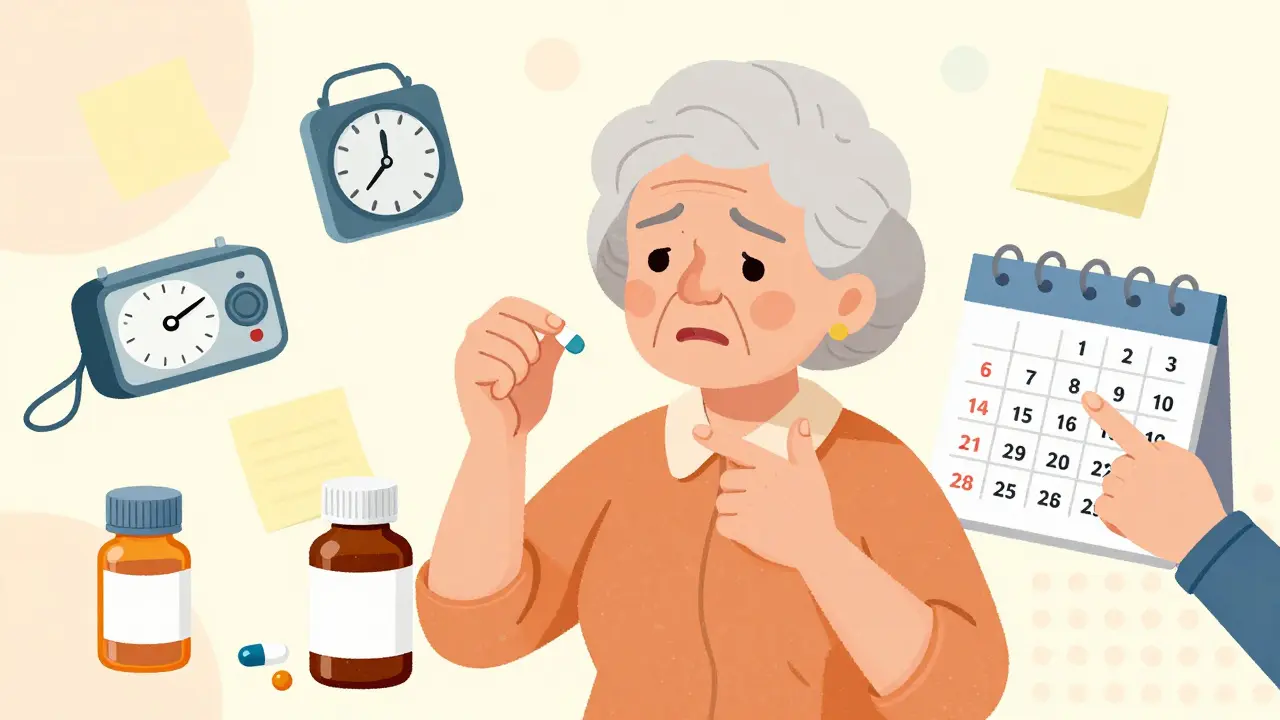
Why Patients Skip or Forget Medications: Common Barriers to Adherence
Half of all patients skip or forget their medications-not because they don’t care, but because the system makes it too hard. Learn the real reasons behind nonadherence and what actually helps.
Read More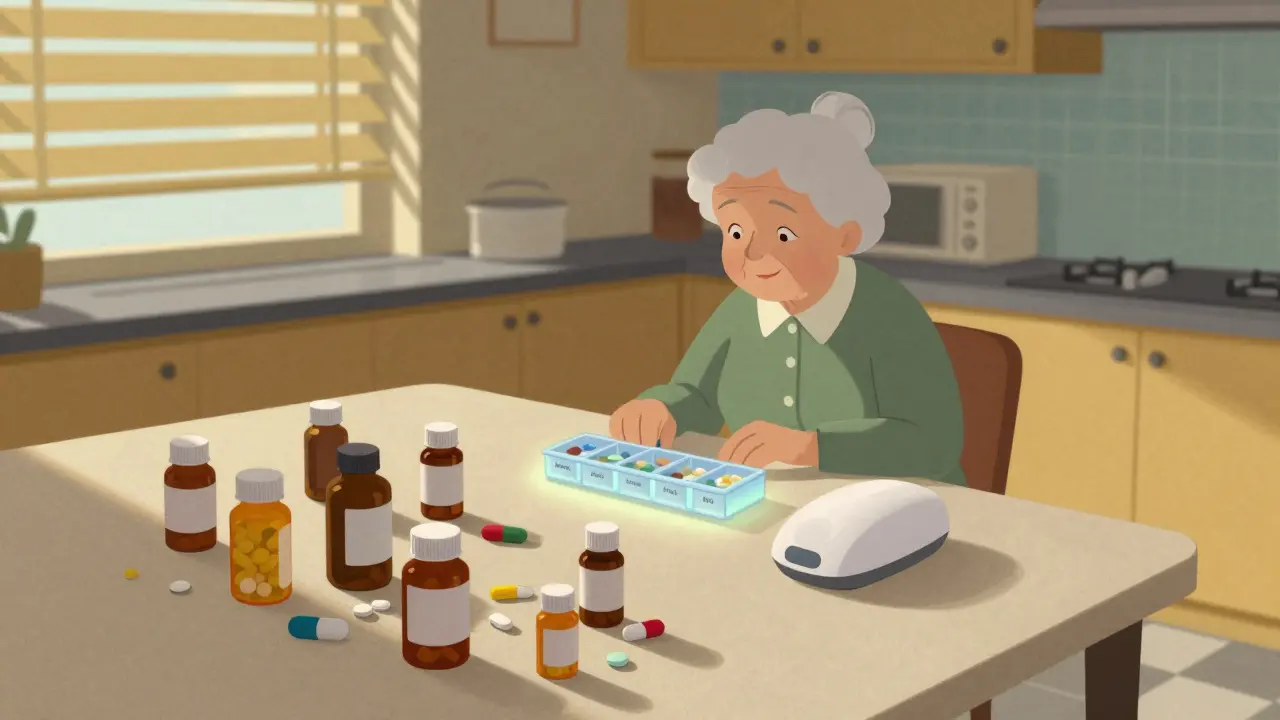
How to Simplify Complex Medication Regimens with Fewer Daily Doses
Too many daily doses make it hard to stick to your meds. Learn how fixed-dose combos, once-daily pills, and compliance packaging can cut pill burden and boost adherence-without sacrificing effectiveness.
Read More
Mental Health and Medication Non-Adherence: What Actually Works
Mental health medication non-adherence affects up to 60% of patients. Discover what actually works-pharmacist-led care, long-acting injections, simplified regimens, and cost support-to improve adherence and save lives.
Read More
How to Pair Medications with Daily Habits for Better Adherence
Learn how to pair your medications with daily habits like brushing your teeth or drinking coffee to improve adherence by up to 50%. Proven, low-cost strategy backed by research.
Read More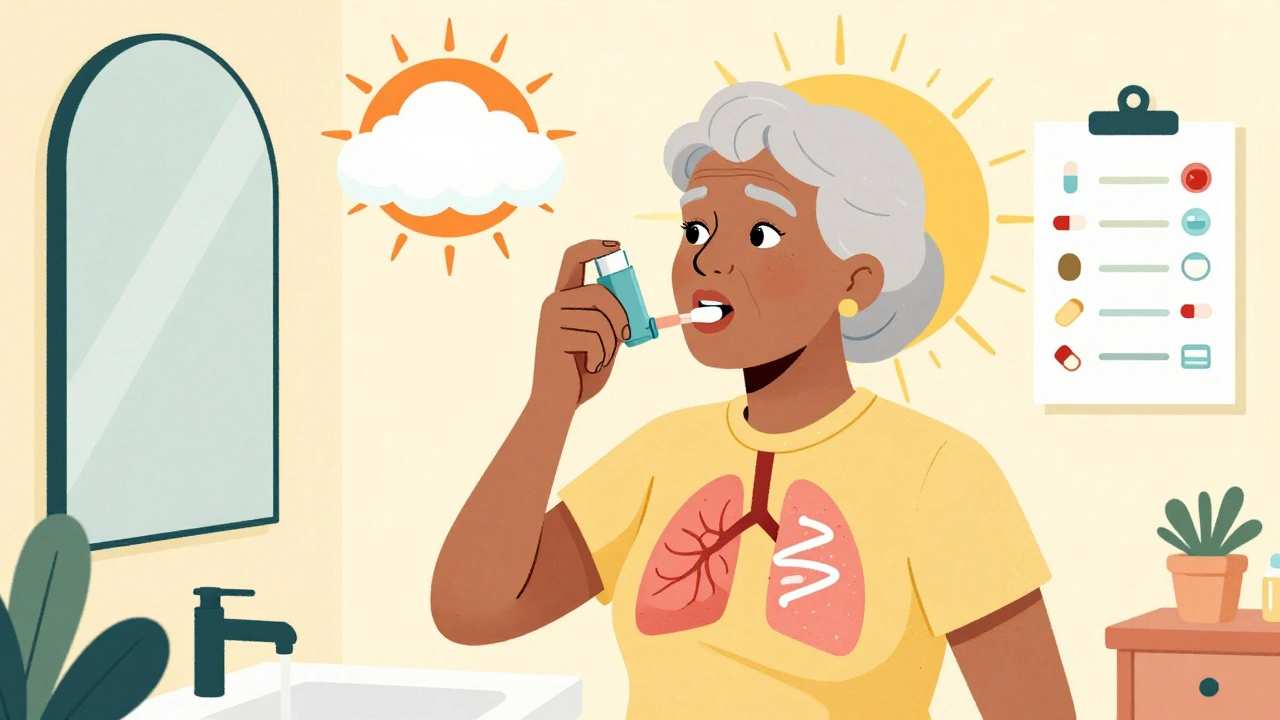
How to Improve Adherence for Inhalers, Patches, and Injectables
Learn practical, evidence-based ways to improve adherence for inhalers, patches, and injectables. Discover simple habits, smart tech, and expert-backed strategies that actually work for chronic disease management.
Read More