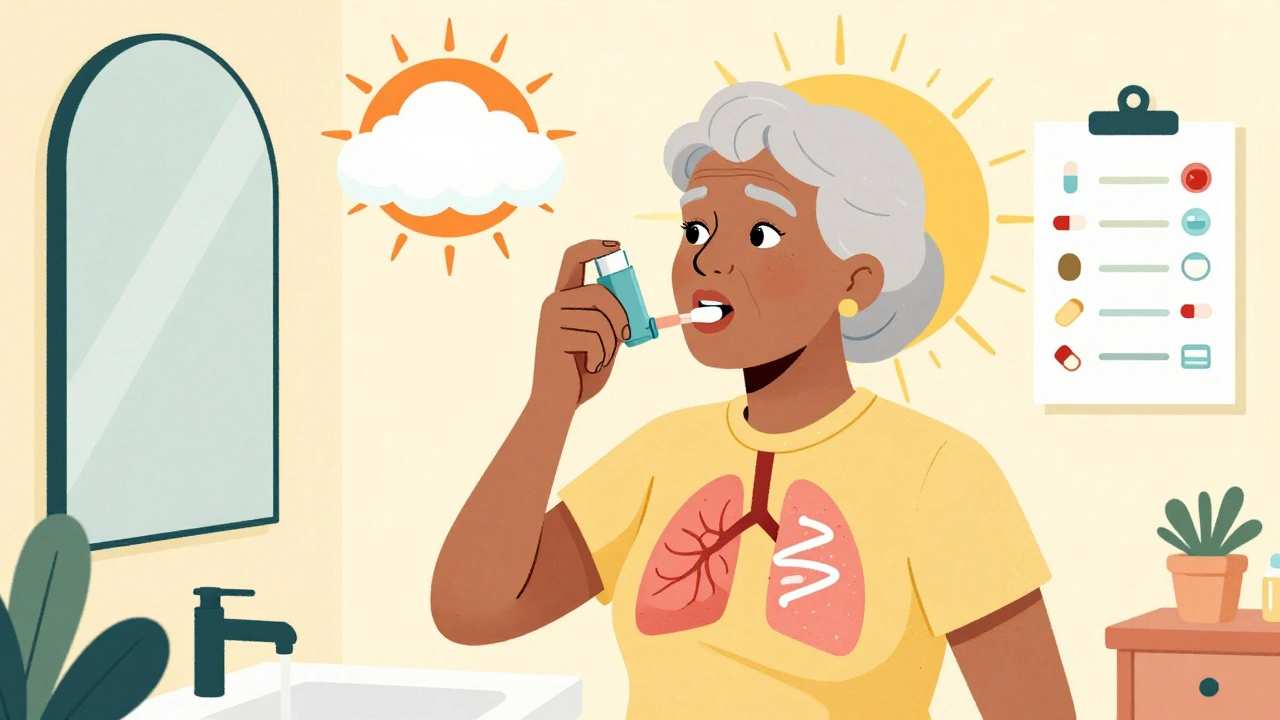
Getting your medication right isn’t just about taking it-it’s about taking it correctly, consistently, and on time. For people using inhalers, patches, or injectables, this is harder than it sounds. Studies show that between 30% and 70% of patients don’t take their meds as prescribed. That’s not laziness. It’s confusion, fear, cost, or just plain forgetfulness. And the consequences? More hospital visits, worse health, and higher costs for everyone.
Why Adherence Matters More Than You Think
Skipping an inhaler dose might seem harmless, but for someone with asthma or COPD, it can trigger an attack. Missing a patch can cause blood pressure to spike. For insulin users, a missed injection can lead to dangerous highs or lows. The CDC estimates that poor medication adherence causes around 125,000 deaths in the U.S. every year-and costs the system between $100 billion and $289 billion.
The real problem? Most people aren’t bad patients. They’re just stuck in a system that doesn’t make it easy. Inhalers require perfect timing and breathing technique. Patches need clean, dry skin and regular rotation. Injectables demand precision with dosing and timing. And if you’re elderly, have arthritis, or live alone? It gets even harder.
Adherence Problems by Delivery Method
Each type of medication has its own set of hurdles.
Inhalers are the trickiest. Many people don’t know how to use them right. Studies show up to 70% of asthma patients use their inhalers incorrectly. They don’t shake it, don’t breathe in slowly, don’t hold their breath. Even if they press the button, the medicine never reaches the lungs. And if you’re using a rescue inhaler only when you’re wheezing, you’re missing the point-it’s meant to be used daily to prevent attacks.
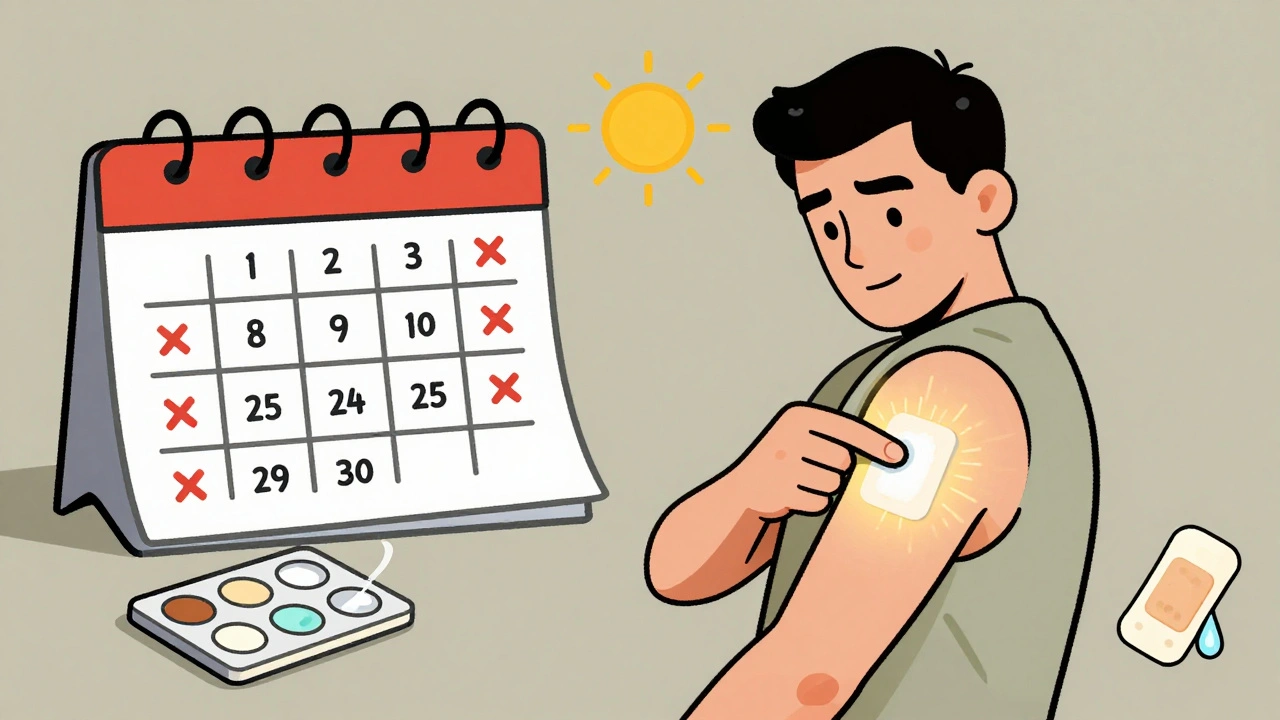
Patches seem simple, but skin irritation, sweating, or just forgetting to change it can ruin effectiveness. A 2022 survey found that 31% of insulin patch users had trouble with skin reactions. Others just forget they’re wearing one-until the patch falls off.
Injectables like insulin pens or biologics for rheumatoid arthritis require needles, timing, and often refrigeration. Many patients fear needles. Others struggle with dexterity. And if you’re on a complex schedule-say, a weekly injection with a monthly booster-you’re likely to mix up the dates.
Simple, Proven Strategies That Work
You don’t need fancy tech to get better adherence. Some of the most effective tools are low-tech and free.
- Use a pillbox-even for patches and injectables. Label each compartment with the day and time. For patches, put them in a weekly organizer with pictures. For injectables, write the date and time on the pen cap with a marker.
- Link it to a habit. Take your inhaler after brushing your teeth. Put your patch on when you shower. Inject your medication right after dinner. Habit stacking makes it automatic.
- Set alarms. Not just one. Set two: one for the time, one 15 minutes later as a backup. Use different tones for different meds.
- Ask your pharmacist. They can show you how to use your inhaler correctly. Many pharmacies offer free technique checks. Don’t assume you’re doing it right.
Smart Tech That Actually Helps (And When It Doesn’t)
Technology has made big leaps. But not all gadgets are created equal.
Smart inhalers like those from Propeller Health or Teva attach a sensor to your inhaler. They track when you use it, how hard you breathe in, and send reminders to your phone. In one study, patients using these devices improved adherence from 55% to 82% in three months. But here’s the catch: 20-30% stop using them after six months because the app crashes, the battery dies, or the reminders feel nagging.
Smart patches are still rare. Proteus Digital Health developed an ingestible sensor that activates when you swallow a pill-useful for oral meds, but not patches. For patches, there’s no reliable tech yet. The best solution? A calendar reminder and a skin log to track irritation.
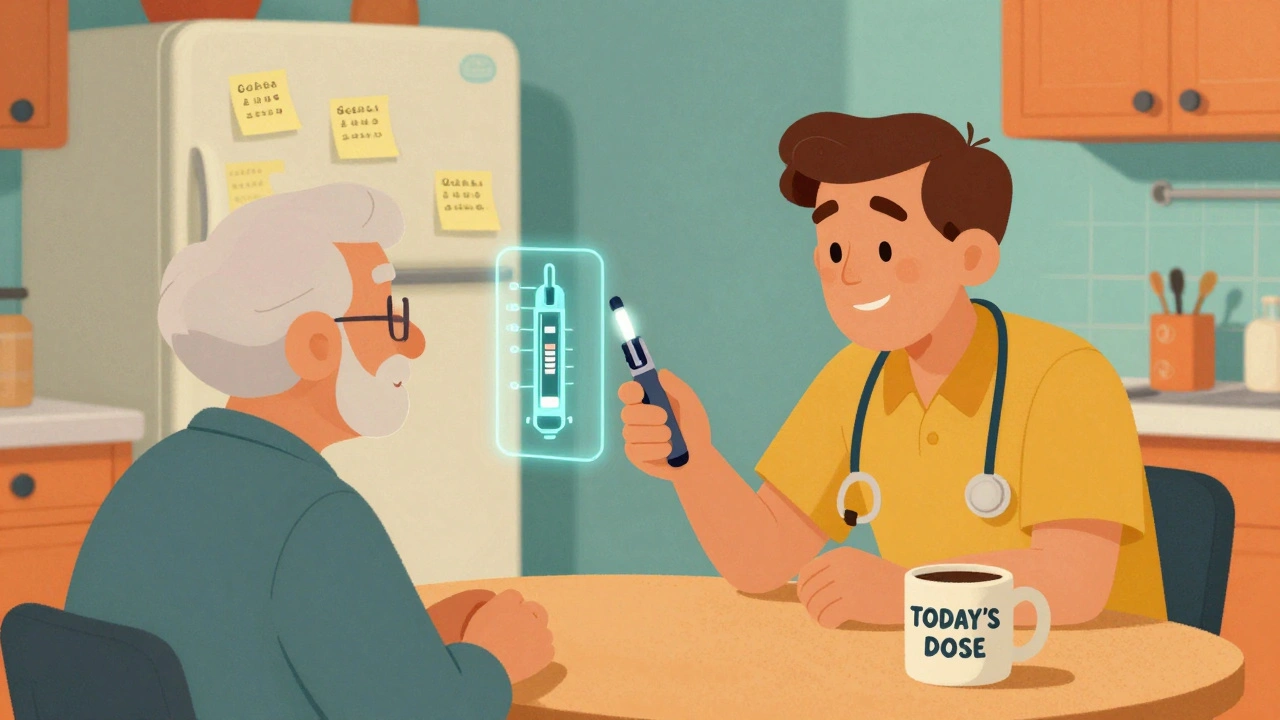
Connected insulin pens from Novo Nordisk track dose, time, and location. They’re 98% accurate and help avoid double-dosing. But 22% of users say the app is too complicated, especially for older adults or caregivers. Simpler models with just a button press and LED light are often more effective than apps.
Here’s the truth: tech helps-but only if it fits your life. If you hate your phone, don’t force an app. If you’re forgetful, use sticky notes on the mirror. If you’re scared of needles, ask about needle-free injectors.
The 5 Dimensions of Adherence (What No One Tells You)
Dr. Richard B. Martinello from Yale says good adherence programs must fix five things: affordability, accessibility, acceptability, awareness, and activation.
- Affordability: If your inhaler costs $300 a month and your insurance won’t cover it, you won’t take it. Ask about patient assistance programs or generic versions.
- Accessibility: Can you get your meds delivered? Do you need help opening the packaging? Are the instructions in your language?
- Acceptability: Do you hate the taste? Does the patch itch? Does the injection hurt? Talk to your doctor. There might be alternatives.
- Awareness: Do you know why you’re taking it? Many patients don’t understand the difference between a controller and a rescue inhaler. Ask for a simple explanation.
- Activation: Do you feel in control? Or like you’re just following orders? People who understand their condition and feel involved in decisions stick with treatment longer.
What Works Best for Each Type
Let’s cut through the noise. Here’s what the data says works best for each delivery method.
| Medication Type | Most Effective Strategy | Second Best | What to Avoid |
|---|---|---|---|
| Inhalers | Pharmacist-led technique training + smart sensor | Daily alarm + visual checklist | Relying on memory alone |
| Patches | Calendar reminders + skin rotation chart | Weekly pillbox with patch slots | Using the same spot every time |
| Injectables | Connected pen + caregiver support | Pre-filled syringes + phone alarm | Complex apps without voice prompts |
For inhalers, nothing beats a 15-minute session with a pharmacist showing you exactly how to breathe in. For patches, a simple printed calendar with a red X for each day helps more than any app. For injectables, having a family member or home nurse double-check the dose cuts errors in half.
When to Ask for Help
You don’t have to figure this out alone. Reach out if:
- You’ve missed more than two doses in a week
- You’re afraid to take your medication
- Your device keeps malfunctioning
- You can’t afford your meds
- You don’t understand why you’re taking it
Pharmacists, nurses, and patient advocates are trained to help. Many insurance plans now cover medication therapy management (MTM) services-free one-on-one sessions with a pharmacist to review all your meds. Ask your pharmacy if they offer it.
What’s Next? The Future Is Here
By 2027, 75% of inhalers are expected to come with built-in tracking. AI will predict when you’re likely to miss a dose and send a personalized message-not a generic reminder. New patches will monitor your skin temperature and alert you if the medicine isn’t absorbing. Injectables may soon use tiny microchips that confirm delivery through your body’s own signals.
But none of that matters if you don’t feel supported. The best technology in the world won’t help if you’re lonely, scared, or broke. Real adherence comes from connection-not sensors.
Start Small. Stay Consistent.
You don’t need to fix everything at once. Pick one thing:
- Set a daily alarm for your inhaler.
- Write down the next patch change date on your calendar.
- Ask your pharmacist to watch you use your inhaler today.
Small wins build confidence. Confidence builds consistency. And consistency saves lives.
Why do so many people miss their inhaler doses?
Many people don’t know how to use inhalers correctly. Studies show up to 70% of users don’t coordinate breathing with pressing the canister. Others forget because they don’t feel symptoms daily. Some can’t afford them. And some find the devices intimidating or complicated. The problem isn’t willpower-it’s design and education.
Are smart inhalers worth the cost?
For people who struggle with consistency, yes. Smart inhalers like Propeller Health have been shown to improve adherence by 35% in asthma patients. But they cost $100-$300 a year and require a smartphone. If you’re already using your phone for reminders or have trouble remembering, they’re worth it. If you’re tech-savvy and already on track, they offer little extra benefit.
Can I reuse a patch if it falls off?
No. Once a patch falls off, the medication is no longer delivering properly. Even if it looks intact, the adhesive and drug layer are compromised. Always replace it with a new one and rotate the application site to avoid skin irritation. Never tape it back on.
Why do some people stop using connected insulin pens?
The main reason is complexity. Many users, especially older adults or caregivers, find the companion apps too confusing. Buttons are small, menus are layered, and alerts are overwhelming. Simpler pens with LED lights or voice prompts work better for these users. The goal isn’t data tracking-it’s safe, simple dosing.
Does insurance cover smart medication devices?
It’s mixed. Only 37% of private U.S. insurance plans cover smart inhalers. Medicare Advantage plans have improved coverage-from 12% in 2020 to 29% in 2023. Most patch and injectable tracking tech isn’t covered yet. Always check with your insurer before buying. Some manufacturers offer free trials or financial aid programs.
What’s the biggest mistake people make with injectables?
Not tracking the date and time. Many injectables, like biologics, are given weekly or monthly. Missing a dose or doubling up can be dangerous. The easiest fix? Write the next injection date on your calendar and set two alarms-one for the day and one for the time. Keep the pen in the same spot every time-like next to your toothbrush-to create a habit.
How can I tell if my patch isn’t working?
If your symptoms return-like increased pain, high blood pressure, or mood swings-it could mean the patch isn’t delivering properly. Check for peeling, wetness, or redness. If you’re sweating a lot or bathing often, the patch may not stick. Talk to your doctor about switching to a different brand or form, like a pill or injection, if this keeps happening.
If you’re struggling with your medication routine, you’re not alone. The system isn’t perfect-but small changes, the right support, and a little patience can make a huge difference. Start with one step today. Your future self will thank you.



Ada Maklagina
4 December 2025 - 08:48 AM
I just set a daily alarm for my inhaler after brushing my teeth. It’s dumb simple but it works. No app. No fancy tech. Just me and my toothbrush.
Changed my life.
sean whitfield
4 December 2025 - 11:46 AM
They say adherence is about education but really it’s about control. The system wants you dependent. Smart inhalers? More data for Big Pharma. You think they care if you live? They care if you keep buying.
James Moore
4 December 2025 - 14:24 PM
Let’s be clear: the real failure here isn’t patient non-compliance-it’s the institutional collapse of medical literacy. We’ve outsourced responsibility to algorithms and apps while abandoning the fundamental human act of teaching. The pharmacist’s office used to be a sanctuary of guidance-not a checkout counter for $300 inhalers. Now we expect patients to navigate complex regimens with no context, no training, and no empathy. And then we blame them for not reading the manual? This isn’t negligence-it’s systemic cruelty disguised as innovation.
Deborah Jacobs
6 December 2025 - 02:34 AM
I used to hate my insulin pen. The needle scared me, the app was a nightmare, and I’d forget for days. Then my sister started leaving sticky notes on the fridge with doodles of the pen and the time. One said ‘You got this, sis’ in crayon. I cried. I haven’t missed a dose since. Sometimes the tech is useless. The heart isn’t.
Lucy Kavanagh
6 December 2025 - 09:03 AM
You ever notice how every ‘solution’ involves your phone? What about people who don’t have one? Or can’t afford data? Or live in a place where the signal dies? They’re just supposed to… die quietly? This isn’t health care. It’s a tech demo with a side of guilt.
Harry Nguyen
6 December 2025 - 22:32 PM
Americans think they can buy their way out of every problem. Buy a smart inhaler. Buy a fancy patch. Buy a subscription to ‘health.’ Meanwhile, real people are choosing between insulin and rent. Stop selling gadgets. Start fixing the system.
Stephanie Fiero
7 December 2025 - 11:51 AM
I work with seniors. Most of them use pillboxes for everything-even patches. They tape the patch to a card inside the box with the day written on it. One guy even glued a tiny mirror to his inhaler so he could see if he was breathing right. Genius. No app needed. Just grit and duct tape.
William Chin
8 December 2025 - 11:32 AM
I am a licensed clinical pharmacist with over 22 years of experience in medication therapy management. I must emphasize that the data presented in this article is statistically sound and clinically validated. However, I am compelled to note that the absence of structured, mandatory patient education protocols within primary care settings constitutes a gross dereliction of duty by the American Medical Association and its affiliated institutions. Without standardized competency assessments for inhaler technique at every new prescription fill, we are perpetuating a public health crisis under the guise of patient autonomy. This is not a behavioral issue. It is a structural failure.
Stephanie Bodde
9 December 2025 - 18:19 PM
I love this! 😊 My mom started using a calendar with colored stickers for her patches. Red for Monday, blue for Wednesday… now she says it’s like a game. She’s proud of her streak. Small wins, right?
Kylee Gregory
11 December 2025 - 00:08 AM
It’s interesting how we assume tech will fix human problems. But maybe the real solution is less about devices and more about presence. Someone checking in. A voice on the other end of the line. A hand to hold while you inject. The machine can track. But only a person can remind you you’re worth it.
Krishan Patel
12 December 2025 - 22:42 PM
The entire narrative is flawed. You speak of ‘adherence’ as if it is a moral obligation. But what if the medication is unnecessary? What if the diagnosis is wrong? What if the pharmaceutical industry has manipulated the very definition of ‘chronic condition’ to create lifelong customers? The real issue is not that patients forget-they are questioning the legitimacy of the entire system. And they should.
Carole Nkosi
13 December 2025 - 06:59 AM
In South Africa, we don’t have smart inhalers. We have mothers who memorize their children’s doses because the clinic ran out last week. We have grandfathers who use a piece of chalk to mark the wall for each injection. No alarms. No apps. Just memory, love, and sheer stubbornness. We don’t need tech. We need dignity.
Katie Allan
14 December 2025 - 06:19 AM
This is the most compassionate, practical guide I’ve ever read on medication adherence. Thank you. I’ve shared it with every patient I work with. The part about linking meds to habits? That’s gold. And the reminder that connection matters more than sensors? That’s the truth we’ve forgotten in this digital age.
Chris Brown
14 December 2025 - 22:31 PM
I find it deeply troubling that this article romanticizes ‘low-tech’ solutions while ignoring the responsibility of the individual. You cannot outsource your health to a sticker or a calendar. If you are too lazy to set an alarm, too careless to read instructions, or too entitled to afford your medication-you are not a victim. You are a burden. Personal accountability is not a buzzword. It is a requirement for survival.
Laura Saye
15 December 2025 - 09:41 AM
The 5 Dimensions of Adherence framework resonates profoundly. I’ve observed that activation-the sense of agency-is the most under-addressed. Patients who feel like co-creators of their care, rather than passive recipients, demonstrate significantly higher adherence trajectories. This is not merely behavioral psychology; it is epistemological. When one’s lived experience is validated as a legitimate data point in clinical decision-making, compliance transforms into commitment.