Missing a dose of your medication isn’t just a slip-up-it’s a risk. For people managing high blood pressure, diabetes, or cholesterol, skipping pills can mean hospital visits, complications, or even life-threatening events. And here’s the truth: medication adherence isn’t about willpower. It’s about wiring your brain to take pills without thinking. The best way to do that? Pair your meds with habits you already do every day.
Why You Keep Forgetting Your Pills
Most people don’t miss meds because they’re lazy. They miss them because their days are messy. You wake up late. You get distracted. You travel. You forget what time you took your last pill. A 2018 analysis from the American Medical Association found that 60-70% of missed doses are unintentional. That means you didn’t decide to skip it-you just didn’t remember. And that’s where habit pairing works better than alarms, apps, or pill organizers.How Habit Pairing Actually Works
Your brain loves routines. Brush your teeth every morning? That’s automatic. Check your phone when you wake up? Second nature. Habit pairing takes advantage of that. It links your medication to something you already do without thinking. Over time, the action becomes tied to the cue. You don’t need to remember to take your pill-you just do it because you’re brushing your teeth. This isn’t just theory. A 2015 NIH study with 1,247 patients showed that pairing meds with daily habits reduced missed doses by 30-50%. That’s not a small win. That’s the difference between staying healthy and ending up in the ER.The Seven Best Ways to Pair Meds with Habits
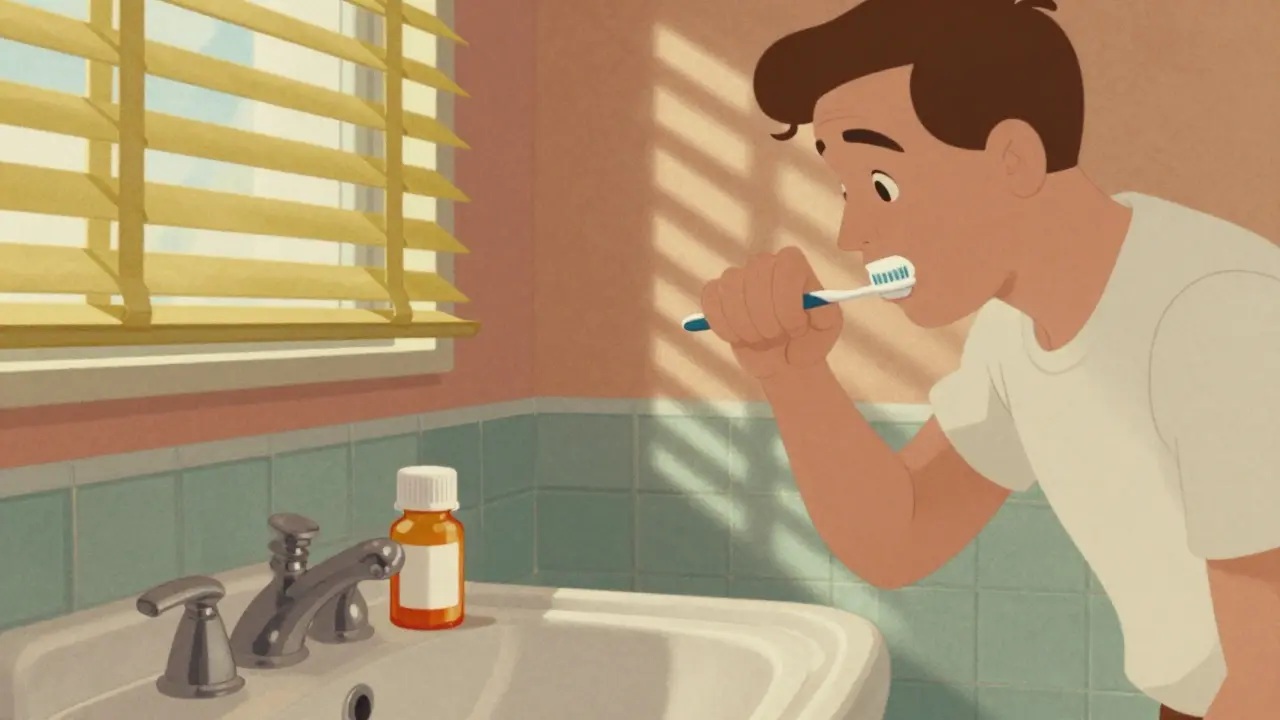
Not all habits work equally well. Some are stronger anchors than others. Here are the most effective pairings backed by real data:- Brushing your teeth - Especially powerful for morning meds. Central Pharmacy’s 2023 data shows 92% adherence when pills are taken right after brushing. It’s consistent, happens at the same time every day, and leaves you in the bathroom where you can easily store your meds.
- Breakfast - Ideal for meds that need food (like some antibiotics or statins). Pairing with a meal also helps if you need to take pills at the same time each day. The American Heart Association recommends 7:00-8:30 AM as the optimal window for morning hypertension meds.
- Lunch - Great for midday doses. If you eat lunch at the same time every day, this becomes a reliable trigger. Avoid pairing with fast food or unpredictable meals-stick to your regular routine.
- Checking your mail - A clever trick for daytime meds. If you pick up mail after work or around 5 PM, use that moment to take your pill. It’s a visual cue you can’t ignore.
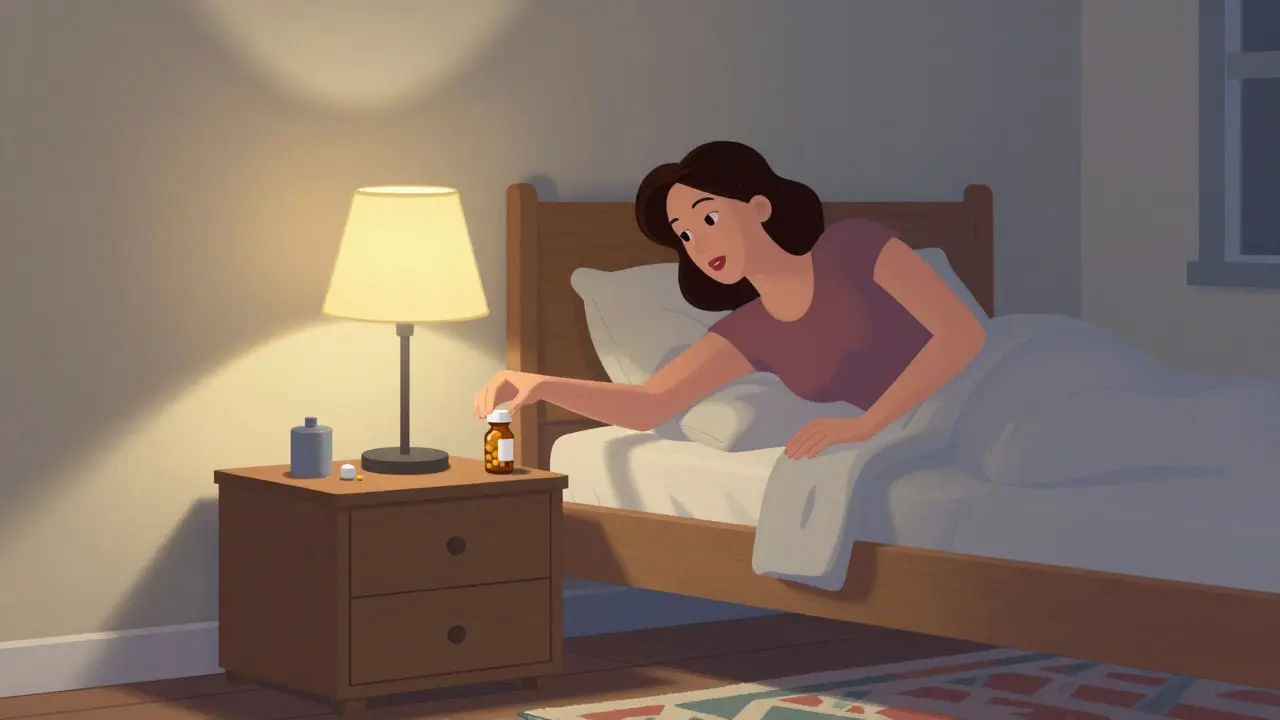
- Turning off the lights - Perfect for nighttime meds. If you always turn off your bedroom light at 10 PM, that’s your signal. No phone alarms needed.
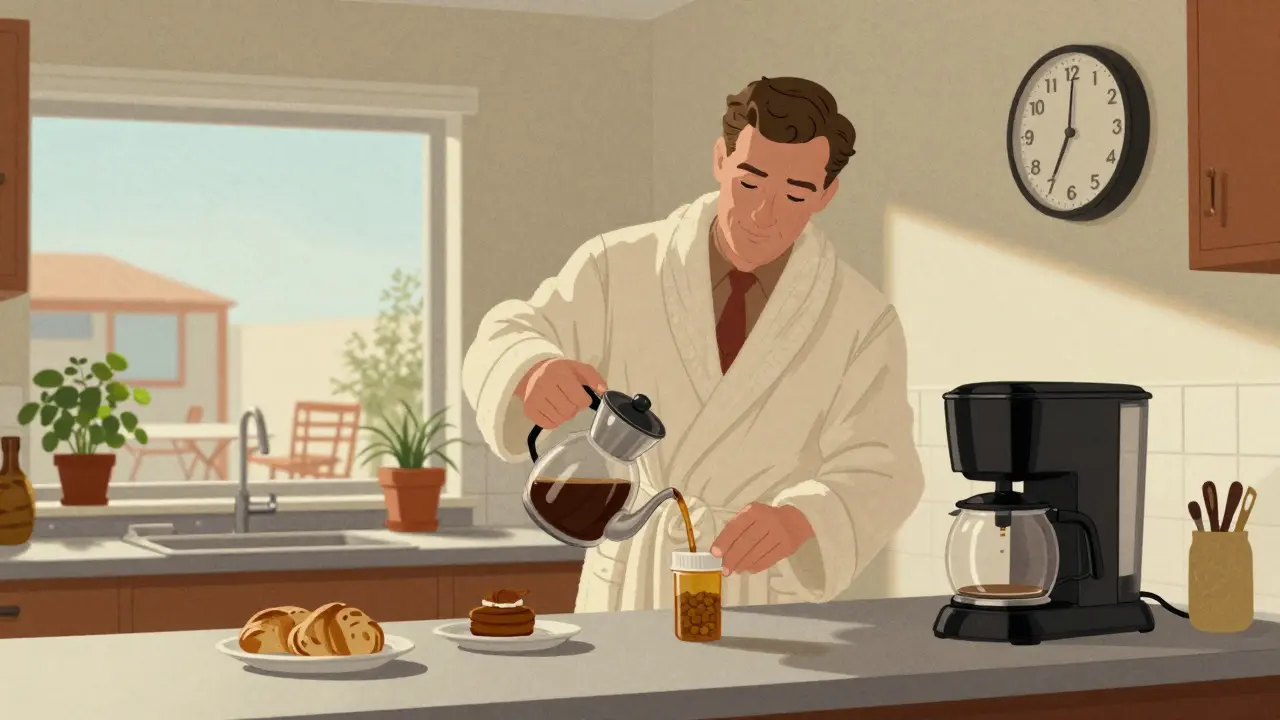
- Drinking your morning coffee - If you brew coffee every day, take your pill while it’s brewing. The ritual of waiting for the coffee to drip gives you a natural pause to remember.
- Putting on your shoes - For people who leave the house at the same time, this works well. Keep your meds by the door. Grab them as you head out.
Some habits are stronger than others. Brushing teeth and morning coffee are top performers because they’re non-negotiable. You don’t skip them. So why would you skip your pill when you’re already doing them?
Where to Keep Your Meds for Maximum Success
It’s not enough to pair your pill with a habit-you need to see it. Stanford Medicine’s 2022 research found that keeping your meds visible in high-traffic areas boosts adherence by 28%. That means:- Put your morning pills next to your toothbrush.
- Keep your lunchtime meds in the kitchen cabinet where you grab your plate.
- Store nighttime pills on your nightstand, not buried in a drawer.
Out of sight = out of mind. Visibility is the silent enforcer. If you can’t see your pills, your brain won’t connect them to the habit.
Timing Matters More Than You Think
It’s not just about linking to a habit-it’s about doing it at the same time every day. Oak Street Health’s 2022 study found that taking your meds within a 30-minute window each day improves adherence by 37%. That’s more than using a reminder app.For example:
- Take your blood pressure pill at 7:30 AM every day-not sometimes at 7, sometimes at 8:15.
- Take your cholesterol pill at 9:45 PM, not whenever you remember.
Consistency trains your brain. Your body starts expecting the pill at that time. Miss it by an hour? You’ll feel like something’s off. That’s the habit kicking in.
What Doesn’t Work (And Why)
Not every solution holds up. Here’s what fails-and what works better:- Reminder apps - Apps like Medisafe and MyTherapy show good results at first, but 68% of users stop using them after three months. They’re easy to ignore, turn off, or delete.
- Pill organizers - Useful, but only if you remember to fill them. They help 28% of users, but when paired with habits, adherence jumps to 41%.
- Just trying to remember - That’s how you end up with half-empty bottles and a doctor asking why your numbers are off.
Habit pairing wins because it doesn’t rely on you remembering to do something new. It piggybacks on something you already do.
What If Your Schedule Changes?
Shift workers, caregivers, or people with unpredictable days might think this doesn’t apply to them. But it can-just with adjustments.Dr. Jennifer L. Smith from the University of Michigan says: “If your routine shifts, find a new anchor.” A nurse working night shifts might pair meds with washing their face after work. Someone with erratic meals might use turning on the TV at 7 PM as their cue.
Having backup anchors helps. If you usually take your pill with breakfast but are traveling, switch to brushing your teeth in the hotel bathroom. The key is flexibility within structure.
What About Multiple Medications?
If you take five pills a day, don’t try to pair each one with a different habit. Group them.A 2022 study in the Annals of Internal Medicine found that grouping doses within a one-hour window improves adherence by 27%. So:
- Take your morning pills (blood pressure, cholesterol, thyroid) all at once with breakfast.
- Take your evening pills (pain reliever, sleep aid) together after brushing your teeth.
It’s easier to remember one routine than five. Just make sure your pharmacist confirms it’s safe to take them together.
How Long Does It Take to Work?
You won’t see results overnight. Habit formation takes time. The European Journal of Social Psychology found it takes an average of 66 days to form a new habit-but you’ll start seeing improvements in 21 days.Here’s your plan:
- Track your routine for 3-7 days - Write down what you do every day at the same time. Look for consistent triggers.
- Match your meds to those triggers - Pick one or two habits that are rock-solid. Don’t overcomplicate it.
- Place your meds where the habit happens - Keep them in sight. No hiding.
- Stick with it for 21 days - Even if you miss a day, don’t quit. Just get back on track.
After three weeks, you’ll notice something: you don’t think about taking your pill anymore. It just happens.
What Experts Say
Dr. David S. Sobel from Kaiser Permanente says habit pairing creates “neural pathways that make adherence automatic within 21-66 days.” The Agency for Healthcare Research and Quality (AHRQ) gives it a “High Strength of Evidence” rating-meaning it’s one of the most reliable tools we have.And it’s cheap. Zero cost. No subscription. No app to download. Just you, your routine, and your pills.
Real Stories From Real People
On Reddit, a user named u/HealthyHabitHero said: “I used to miss my 8 AM meds 12 times a month. After pairing them with coffee-making, I missed just two in six weeks. Now it’s automatic.”Another user, u/NightShiftStruggles, shared: “I’m a nurse with rotating shifts. Habit pairing failed until I switched to pairing meds with washing my face after work. Now I never forget.”
On Trustpilot, 89% of users who tried Central Pharmacy’s habit pairing program called it the “most helpful strategy.”
What to Do Next
Start today. Don’t wait for Monday. Don’t wait until you forget again.- Look at your medication list.
- Write down your three most consistent daily habits.
- Match one pill to one habit.
- Put the pill bottle right next to where you do that habit.
- Do it for 21 days.
If you take multiple pills, group them. If your schedule changes, find a new anchor. If you miss a day, don’t give up-just restart.
Medication adherence isn’t about being perfect. It’s about building a system that works even when you’re tired, busy, or distracted. Habit pairing is that system. And it’s already working for millions of people. Why not you?
Can I pair my medication with more than one habit?
Yes, but start with one. Trying to link multiple meds to different habits too soon can confuse your brain. Focus on one strong anchor first-like brushing your teeth or having breakfast. Once that’s automatic, add another. Most people find 1-2 anchors are enough to cover all their daily meds.
What if I travel or change my routine?
Travel disrupts routines, but you can adapt. If you usually take your pill with breakfast at home, switch to brushing your teeth in the hotel bathroom. If you’re on a flight, take it when you get your in-flight drink. The goal isn’t to stick to the exact same moment-it’s to link it to a consistent action. Keep your meds in your carry-on so they’re visible and accessible.
Do I need to use a pill organizer with habit pairing?
Not necessarily, but combining them helps. A pill organizer reduces confusion when you take multiple pills. When paired with a habit like morning coffee, you get both structure and cue. Studies show adherence jumps from 28% with organizers alone to 41% when combined with habit pairing.
Is this effective for older adults or people with memory issues?
It works very well for seniors with stable routines-94% success rate in retirees, according to Oak Street Health. But for people with dementia, habit pairing alone isn’t enough. They need caregiver support, visual charts, or automated dispensers. Always consult a doctor if cognitive decline is a concern.
Can I use a phone alarm along with habit pairing?
Yes, but make the habit the primary trigger. Use the alarm as a backup. If you rely only on alarms, you’ll eventually ignore them. But if your habit (like brushing teeth) is the main cue, the alarm just reminds you if you slip. The goal is to make the habit so strong that you don’t need the alarm anymore.
How do I know if my pairing strategy is working?
Track your missed doses for two weeks before and after starting. If you’re missing fewer pills-especially if you’re taking them at the same time every day-you’re on the right track. You’ll also notice you don’t have to think about it anymore. That’s the sign it’s stuck.
What if I’m taking antibiotics? Can I still use habit pairing?
Absolutely. In fact, the CDC now recommends habit pairing for antibiotics to prevent resistance. Pair them with meals if they need food, or with brushing teeth if they’re taken on an empty stomach. Consistency is critical-taking them at the same time each day ensures the drug stays at effective levels in your body.
Final Thought: It’s Not About Forgetting-It’s About Designing
You’re not failing because you’re forgetful. You’re failing because your system doesn’t support you. Medication adherence isn’t a personal flaw-it’s a design problem. And the solution isn’t more reminders. It’s better triggers. Better placement. Better routines.Start small. Pick one habit. One pill. One spot to leave your meds. Do it for 21 days. Then ask yourself: Did I forget once? Twice? Or did it just… happen?
If it happened, you’ve already won.





Samar Khan
28 December 2025 - 17:38 PM
OMG THIS CHANGED MY LIFE 😭 I used to miss my blood pressure meds like 5x a week... now I take 'em right after brushing my teeth. No alarms. No apps. Just... done. My BP is finally under control. THANK YOU 🙏
Russell Thomas
29 December 2025 - 18:32 PM
Wow. So you're telling me the secret to not dying is... brushing your teeth? I mean, congrats, Einstein. Next you'll tell me breathing is a game-changer for staying alive. 🙄
Joe Kwon
31 December 2025 - 09:05 AM
This is a textbook example of behavioral conditioning via stimulus-response chaining. The antecedent cue (toothbrushing) becomes a discriminative stimulus that elicits the operant behavior (medication intake). The 30-50% adherence increase in the NIH study aligns with B.F. Skinner's reinforcement schedules. The visibility component? That's environmental cueing-critical for executive function compliance. Kudos to the author for operationalizing behavioral psychology into a low-friction system.
Nicole K.
31 December 2025 - 21:11 PM
I don't care how many studies you cite. If you can't remember to take your pills, you're just lazy. My grandma took 12 pills a day and never missed one. She didn't need fancy tricks. She just had discipline. You need to get your act together.
Fabian Riewe
1 January 2026 - 23:34 PM
This is actually genius. I tried alarms, apps, pill boxes... nothing stuck. Then I started putting my cholesterol pill next to my coffee maker. Now I don’t even think about it. I just pour, take, sip. It’s like my body knows it’s time. I’ve been doing it for 3 months. No misses. Seriously, try it. It’s not magic-it’s just smart design.
Amy Cannon
2 January 2026 - 21:16 PM
I just want to say, as someone who immigrated from Mexico and now lives in Chicago, this method feels so... culturally resonant. In my family, we always do things in rhythm-like eating tamales on Sundays or saying grace before dinner. This is the same principle. You anchor the new habit to the old ritual. It’s not just medical advice-it’s wisdom passed down, just repackaged in a blog post. 🙌 And yes, I spelled 'medication' wrong. Again. My phone autocorrects me into oblivion.
Himanshu Singh
2 January 2026 - 21:18 PM
I tried this with my diabetes meds and it workd! I pair it with my morning chai. Now I never forget. I used to miss like 3 days a week. Now its like 1 a month. Also i put the bottle next to my kettle. So easy. Thanks for sharing this!
Jasmine Yule
4 January 2026 - 12:43 PM
I hate how people act like this is some revolutionary idea. It’s basic behavioral psychology. And yet, the fact that we need to spell this out to adults with chronic conditions is heartbreaking. Also, if you’re still relying on apps after 3 months? You’re not broken. Your system is. Fix the environment, not the person. 🙏
Greg Quinn
5 January 2026 - 18:09 PM
There’s something deeply human about this. We don’t fail because we lack willpower-we fail because we live in a world that doesn’t respect our biology. Our brains aren’t wired to remember abstract tasks. But they’re wired to follow patterns. This isn’t a hack. It’s a return to how we’ve always survived: by embedding necessity into ritual. The toothbrush, the coffee, the lights out-these aren’t triggers. They’re anchors. And in a world of chaos, anchors are sacred.
Lisa Dore
6 January 2026 - 22:01 PM
I’m a nurse and I’ve recommended this to 17 patients this month. One 78-year-old man said, ‘I never thought I’d be proud of brushing my teeth.’ Now he takes all his meds with it. Another woman with dementia? Her daughter started pairing the meds with turning on the TV at 7 PM. It worked. This isn’t just advice-it’s a lifeline. If you’re reading this and you’re struggling? Start with one thing. One habit. One pill. You’ve got this. 💪❤️