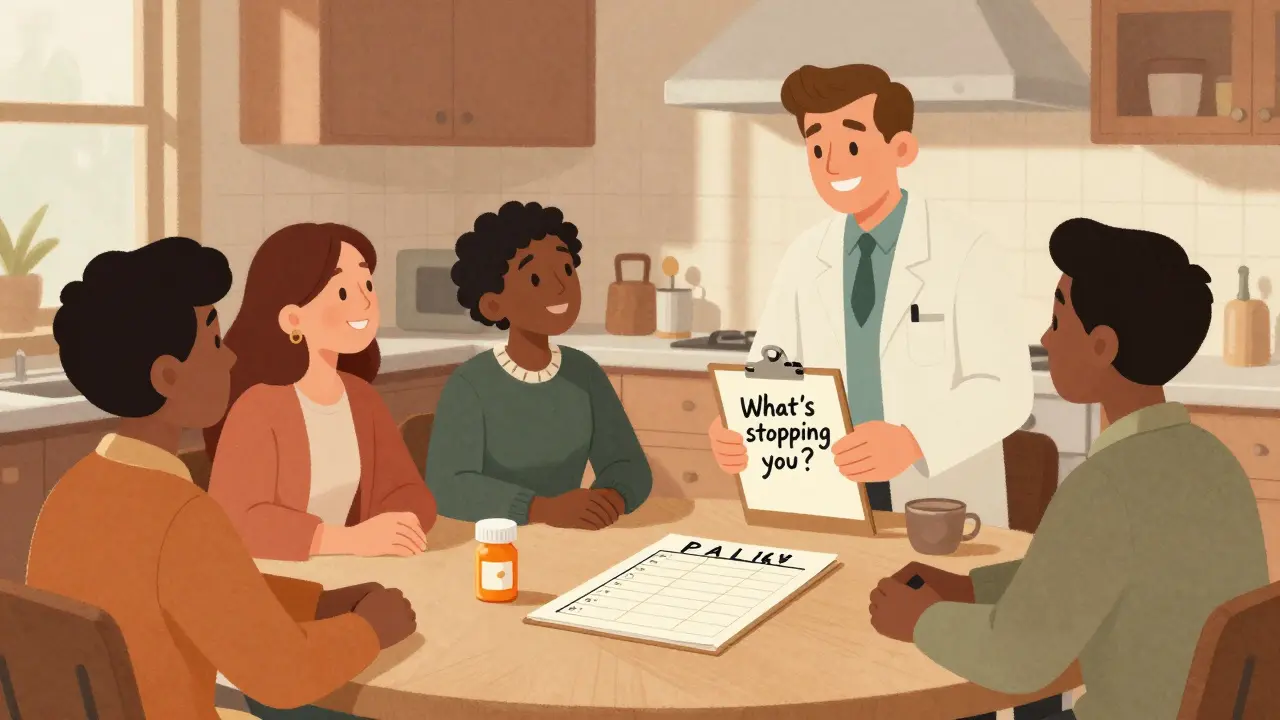
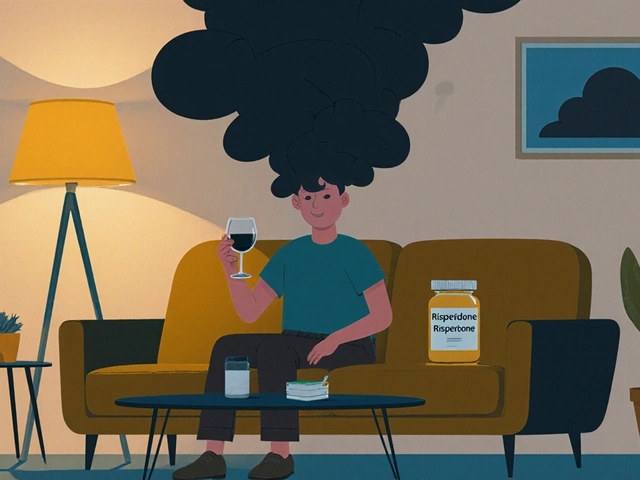
Imagine taking your medication every day for weeks, then one morning you just… stop. Not because you feel better. Not because your doctor said to. But because the pills made you feel numb, or you forgot again, or you couldn’t afford them this month. You’re not alone. Around 40 to 60% of people with mental health conditions don’t take their meds as prescribed. That’s more than half. And it’s not laziness. It’s not weakness. It’s a system failure.
Why People Stop Taking Their Mental Health Medication
It’s easy to blame the patient. But the real reasons are messy, human, and deeply tied to life circumstances. People with schizophrenia, bipolar disorder, or severe depression often struggle with insight-they don’t fully believe they’re sick. That makes taking pills feel pointless. Others experience side effects: weight gain, drowsiness, tremors, emotional numbness. One Reddit user wrote, “I felt like a zombie. I’d rather be angry and awake than calm and empty.” Then there’s cost. A single antipsychotic pill can cost $10-$20 without insurance. For someone living paycheck to paycheck, that’s groceries or meds. A 2025 survey found that 64% of people who wanted better adherence couldn’t access pharmacist-led programs because their insurance wouldn’t cover them. Complex regimens make it worse. If you’re supposed to take three pills at three different times a day, you’re going to miss one. Simple math. A National Alliance on Mental Illness (NAMI) survey showed that when patients switched from multiple daily doses to once-daily pills, adherence jumped from 52% to 87%. Yet, 73% of patients said their doctor never even asked if they wanted a simpler schedule. Homelessness, isolation, and trauma pile on. For homeless individuals with mental illness, adherence rates drop to 26-41%. No stable place to store meds. No routine. No one to remind you. No trust in the system. These aren’t choices. They’re survival realities.What Actually Improves Adherence? Real Solutions, Not Just Advice
The good news? We know what works. And it’s not just “remember to take your pills.” The most powerful intervention? Pharmacist-led care. Not a quick chat at the counter. Not a printed handout. Real collaboration between pharmacists and psychiatrists-working together, tracking patients, adjusting doses, answering questions in real time. A 2025 study in Frontiers in Psychiatry found patients in these teams improved adherence by 1.67 points on a standardized scale. The usual care group? Only 0.69. That’s a 142% greater improvement. Kaiser Permanente’s Northern California program cut psychiatric hospitalizations by 18.3% in just 90 days by embedding pharmacists into mental health teams. They didn’t just hand out pills. They used data to find high-risk patients-those who missed appointments, had past hospital stays, or lived in areas with high poverty rates. Then they reached out. Proactively. With empathy. Long-acting injectables are another game-changer. For schizophrenia, injectables given every 2-4 weeks have an adherence rate of 87%. Oral pills? 56%. That’s not magic. It’s removing the daily decision. One patient told me, “I don’t have to think about it. It just happens.”Technology Helps-But Only If It’s Used Right
Apps and smart pill bottles sound great. But most fail. Why? They assume people have smartphones, data, motivation, and stable housing. They don’t account for trauma or psychosis. Still, some digital tools show promise. A 2025 Nature Mental Health study used smartphone sensors-how often you open your phone, how much you move, your voice patterns-to predict when someone was about to miss a dose. Accuracy? 82.4%, 72 hours in advance. That’s enough time for a nurse to call, a family member to check in, or a pharmacist to send a refill. But tech alone doesn’t fix trust. If you’ve been ignored by the system before, a notification from an app won’t make you feel seen. The best digital tools are paired with human contact. A text reminder from a real person who knows your name? That’s different.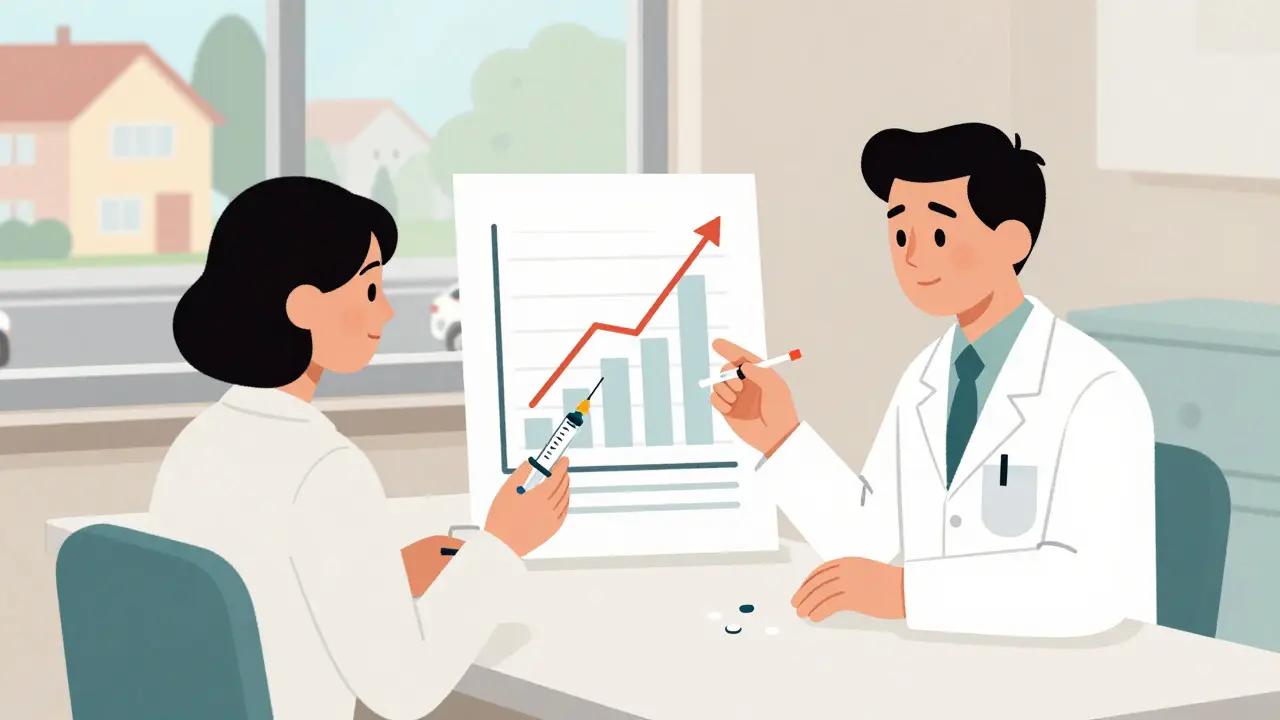
Simplifying the Regimen Is the Lowest-Hanging Fruit
Doctors often prescribe multiple meds for complex symptoms. But complexity kills adherence. One pill a day is easier than three. A patch is easier than swallowing a tablet. A monthly shot beats daily pills. A 2024 meta-analysis found that when clinicians simplified regimens, adherence increased by 35%. Yet, most don’t ask. They assume the patient knows the options. They don’t realize that switching to a once-daily antipsychotic isn’t just convenient-it’s life-changing. Ask this: “Would you be more likely to take this if you only had to take it once a day?” That simple question opens the door to alternatives you might not have considered.Cost Is the Silent Killer
No intervention works if the patient can’t afford the meds. A 2025 study showed that when patients received free or low-cost medication through pharmacy assistance programs, adherence rose by 40% in six months. Pharmacists can help here too. They know which manufacturers offer copay cards. Which generics are equivalent. Which programs cover mental health meds in your state. But only if they’re part of the care team-not just the person handing out the bottle. In Canada, where I live, public drug plans help, but gaps remain. In the U.S., Medicare Advantage plans now tie payments to adherence. If your plan’s adherence rate drops below 80%, they lose money. That’s starting to change how providers think. But it shouldn’t be about money. It should be about care.What Patients Say Works-And What Doesn’t
I spent months reading forums, listening to stories. Here’s what people repeated:- “My pharmacist remembered my dog’s name.” That’s not a gimmick. It’s connection. It’s proof someone sees you.
- “They didn’t lecture me. They asked why I stopped.” Shame doesn’t motivate. Curiosity does.
- “I didn’t know I could switch to an injection.” Knowledge is power. But only if it’s given.
- “I got a text from someone who wasn’t a robot.” Automation fails. Human touch wins.
Where the System Is Still Failing
Even with proven solutions, adoption is slow. A 2024 study found that 63% of community mental health centers tried adding pharmacists to their teams-but only 41% kept it after a year. Why? Workflow chaos. Lack of training. No funding. Pharmacists need 40+ hours of specialized training in psychiatric meds. Psychiatrists need 16+ hours to learn how to collaborate. Most clinics don’t have the time or budget. And insurers? They pay for visits, not coordination. The CDC’s Healthy People 2030 goal? Increase treatment adherence in serious mental illness. It’s a national priority. But priorities don’t mean funding. And without funding, progress stalls.What You Can Do-If You’re a Patient, Caregiver, or Provider
If you’re taking mental health meds:- Ask: “Is there a once-daily version?”
- Ask: “Can I get a long-acting injection?”
- Ask: “Can my pharmacist help me with cost?”
- Ask: “Can someone call me if I miss an appointment?”
- Don’t nag. Offer to go with them to the pharmacy.
- Help them set up a simple pill organizer-no apps needed.
- Notice changes in mood or behavior. That might mean the meds aren’t working-or they’ve stopped.
- Stop assuming adherence. Ask directly. “What’s getting in the way?”
- Partner with your local pharmacist. They’re underused.
- Offer to switch to simpler regimens. Even if you think the patient “should” know how.
- Use data. Track who’s missing appointments. Reach out before they crash.
The Bottom Line
Medication non-adherence isn’t about patients being difficult. It’s about systems being broken. We have the tools: pharmacist teams, long-acting injections, cost assistance, simplified regimens, predictive tech. But they’re not being used at scale. The fix isn’t more pills. It’s more humanity. More coordination. More willingness to ask: “What’s stopping you?” And if you’re reading this because you’re struggling to take your meds? You’re not failing. The system is. But help exists. And it’s closer than you think.Why do so many people stop taking their mental health meds?
People stop for many reasons-not because they’re lazy. Side effects like weight gain or emotional numbness are common. Some don’t believe they’re sick. Others can’t afford the pills. Complex dosing schedules (multiple times a day) make it hard to remember. Homelessness, trauma, and isolation make adherence nearly impossible. It’s not a personal failure-it’s a system issue.
What’s the most effective way to improve medication adherence?
Pharmacist-led collaborative care is the most effective. When pharmacists work directly with psychiatrists-tracking patients, simplifying regimens, helping with costs-adherence improves by up to 40%. A 2025 study showed a 142% greater improvement compared to standard care. Long-acting injectables also boost adherence to 87%, versus 56% for daily pills.
Can apps or reminders help with mental health medication adherence?
Basic apps often fail because they don’t account for real-life barriers like trauma or poverty. But advanced tools that use smartphone data to predict missed doses-like those in a 2025 Nature study-are promising. They’re most effective when paired with human contact: a text from a nurse or pharmacist who knows your name. Automation alone doesn’t build trust.
Is it possible to switch to a simpler medication schedule?
Yes-and it’s one of the easiest fixes. A NAMI survey found that 87% of patients stayed adherent when switched to once-daily dosing, compared to just 52% on multiple daily doses. Many providers never offer this option. If you’re struggling, ask: “Is there a version I can take once a day?” or “Can I try an injection?”
How much do mental health meds cost, and are there ways to reduce the price?
A single antipsychotic pill can cost $10-$20 without insurance. For someone on a tight budget, that’s a meal or rent. Many pharmaceutical companies offer copay cards. Pharmacists can help you find free or low-cost programs. In one study, patients who got financial support saw adherence jump 40% in six months. Don’t assume you can’t afford it-ask for help.
What should I do if I think someone I know isn’t taking their meds?
Don’t accuse or shame. Instead, notice changes: increased isolation, mood swings, missed appointments. Say something like, “I’ve noticed you seem different lately. Are your meds still working for you?” Offer to go with them to the pharmacy or help them talk to their doctor. Your support matters more than you know.
Why don’t more doctors use these proven methods?
Many don’t know about them. Others lack time, training, or funding. Integrating pharmacists into mental health teams requires workflow changes and new partnerships. Some clinics tried and quit because it was too disruptive. But places like Kaiser Permanente proved it works-cutting hospitalizations by 18%. The system is slow to change, but progress is happening.
Dusty Weeks
1 January 2026 - 04:01 AM
I just took my meds today 😊 I know it sounds basic but like... if you're struggling, just take one. Then another tomorrow. You don't have to be perfect. I used to feel like a failure every time I missed one. Now I just breathe and try again. 🙏
Sally Denham-Vaughan
3 January 2026 - 00:16 AM
My cousin was on five different pills a day and kept missing them. We switched her to one once-daily antipsychotic and her whole life changed. She started painting again. Went back to college. Her doctor never even mentioned it as an option. Why do we make this so complicated? Simple fixes work. Why aren't we doing them more?
Bill Medley
4 January 2026 - 01:27 AM
The data is unequivocal. Pharmacist-integrated care models demonstrate statistically significant improvements in adherence metrics. The cost-benefit analysis favors implementation. Systemic inertia is the only barrier.
Richard Thomas
4 January 2026 - 06:55 AM
There's something deeply human about this, isn't there? We talk about adherence like it's a math problem-take the pill, get the result. But the body doesn't just respond to chemistry. It responds to dignity. To being seen. To not feeling like a burden. When someone says, 'I felt like a zombie,' they're not complaining about side effects-they're mourning the loss of their own voice. And when we reduce their struggle to a compliance metric, we're not fixing a system. We're silencing a person. The real solution isn't just a once-daily pill or an injection. It's a world where people don't have to choose between groceries and their sense of self.
Paul Ong
5 January 2026 - 18:38 PM
Stop blaming patients and start fixing the system. Pharmacist teams work. Injectables work. Simple regimens work. Ask your doctor if you can switch. If they say no ask why. Then ask again. This isn't about willpower. It's about access and respect
Andy Heinlein
6 January 2026 - 19:52 PM
I used to think I was broken because I couldn't take my meds. Turns out I just needed someone to ask me what was stopping me instead of telling me to try harder. My pharmacist remembered my cat's name and texted me when my refill was ready. That tiny thing made me feel like I mattered. You're not alone. Help is out there. Just reach out
Ann Romine
8 January 2026 - 13:47 PM
In my country, we have universal healthcare but mental health meds are still not fully covered. I’ve seen friends skip doses to pay rent. It’s not laziness. It’s survival. We need policy changes, not just personal encouragement. This isn’t just a medical issue-it’s a social justice issue.
Todd Nickel
9 January 2026 - 01:53 AM
The most compelling insight in this entire piece isn't the 87% adherence rate with long-acting injectables, or the 40% increase from cost assistance-it's the fact that 73% of patients said their doctor never even asked if they wanted a simpler regimen. That’s not negligence. That’s institutionalized assumption. We operate under the myth that patients are passive recipients of care, when in reality, they’re experts in their own lived experience. If we truly believe in patient-centered care, then asking 'Would you prefer one pill a day?' isn't an option-it's an ethical imperative. The fact that this question is so rarely asked reveals a deeper failure: we’ve outsourced empathy to algorithms and checklists, and in doing so, we’ve abandoned the very people we claim to help.
Austin Mac-Anabraba
9 January 2026 - 04:18 AM
Let’s be real. Most people who don’t take their meds are just weak. They don’t want to face reality. Side effects? Get over it. Cost? Apply for assistance. Complexity? Use a pill organizer. This isn’t rocket science. It’s basic responsibility. Stop coddling people who refuse to take ownership of their health. The system isn’t broken-it’s being exploited by people who want to be pitied, not helped.