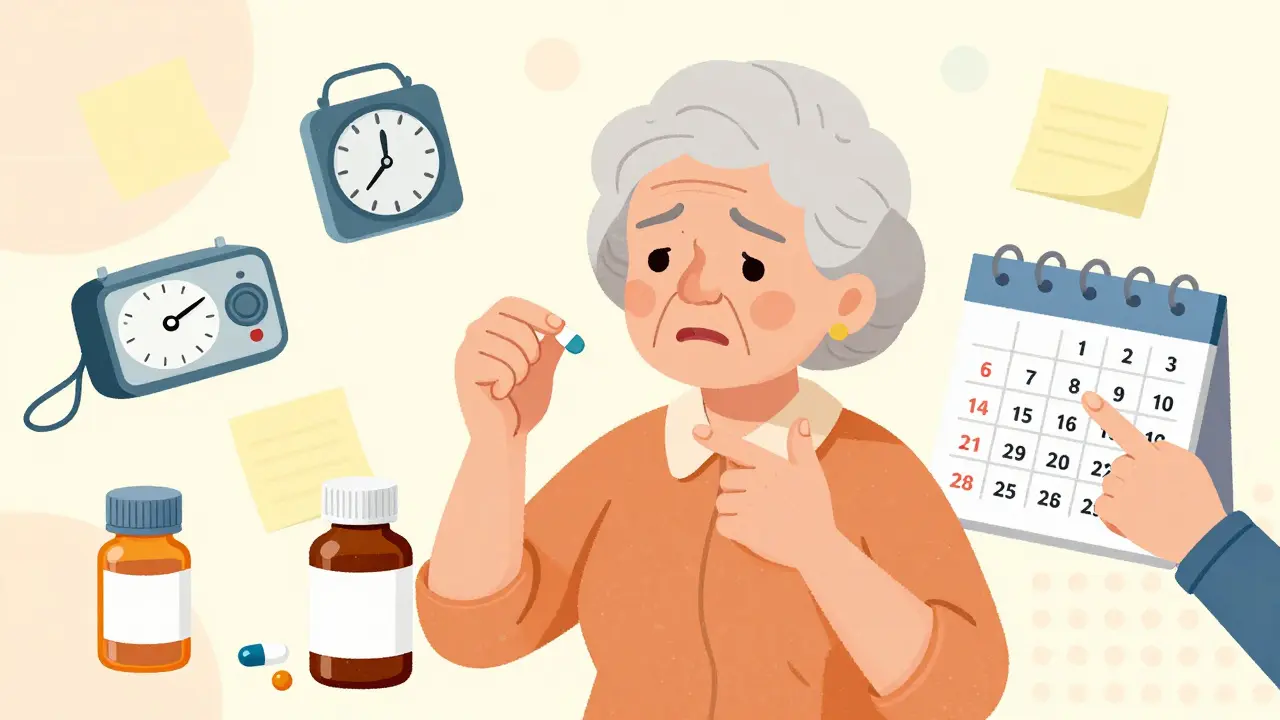
Half of all people taking medication for chronic conditions don’t take it as prescribed. That’s not laziness. It’s not ignorance. It’s not a lack of care. It’s a system that’s often out of sync with real life. People skip pills, forget doses, or stop taking meds altogether-and the reasons are more complex than most doctors realize.
It’s Not Just Forgetting
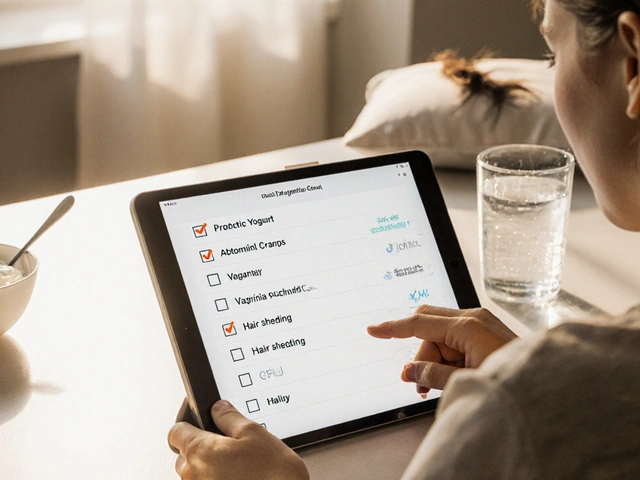
When you hear "people forget their meds," you might picture an elderly person staring at a pillbox, confused. But forgetfulness is just the tip of the iceberg. In fact, it’s the most commonly reported reason-but not the most common cause. A 2024 study found that 44% of diabetic patients over 59 said they forgot doses. But when you dig deeper, you see the real problem: medication regimens are too complicated. Take someone with high blood pressure, diabetes, and arthritis. That’s three conditions. Maybe five or six pills a day. Some need to be taken with food. Others on an empty stomach. One at breakfast, one at lunch, one at bedtime. Two of them come in tiny bottles with fine print. One requires refrigeration. The patient works two jobs. Their schedule changes every week. Their phone buzzes with reminders, but they’re not tech-savvy. They’re overwhelmed. So they skip. Not because they don’t care. Because they can’t keep up.Cost Is a Silent Killer
One in five new prescriptions are never picked up-not because the patient doesn’t want the medicine, but because they can’t afford it. The American Medical Association reported in 2023 that half of all patients say cost is their top barrier to adherence. That’s not a small number. That’s half. For a statin, a blood pressure pill, or insulin, the out-of-pocket cost can be $50, $100, even $300 a month. Even with insurance, copays add up. People choose between meds and groceries. Between pills and rent. Between keeping their blood sugar stable and paying their heating bill in a Calgary winter. A patient on Drugs.com summed it up: "I filled my prescription once. Couldn’t afford it again. I’m not going to die tomorrow. But I can’t eat next week." This isn’t theoretical. The CDC says 20% to 30% of prescriptions go unfilled due to cost. That’s not nonadherence-it’s forced abandonment.Too Many Pills, Too Many Times
Every extra pill you add to a regimen cuts adherence by about 16%. That’s not a guess. That’s data from a 2011 study tracking thousands of patients. If you’re on two medications, your chance of sticking to them is around 70%. Add a third? It drops to 54%. Four? Around 40%. That’s the math of polypharmacy-and it’s a trap. Dosing frequency makes it worse. Once-daily meds have an adherence rate of 79%. Four times a day? Down to 51%. That’s nearly a 30-point drop. And it’s not just numbers. It’s human behavior. Taking a pill at 7 a.m., 1 p.m., 7 p.m., and 1 a.m. isn’t realistic for most people. Especially if they’re working nights, caring for kids, or dealing with dementia. Doctors often prescribe multiple drugs because they’re treating symptoms, not systems. But what if you could combine two pills into one? Or switch to a weekly injection? That’s not science fiction. The FDA approved seven extended-release formulations in 2022 alone. Long-acting injectables for schizophrenia now have 85% adherence-compared to 45% for daily pills. The solution isn’t always more medicine. It’s smarter medicine.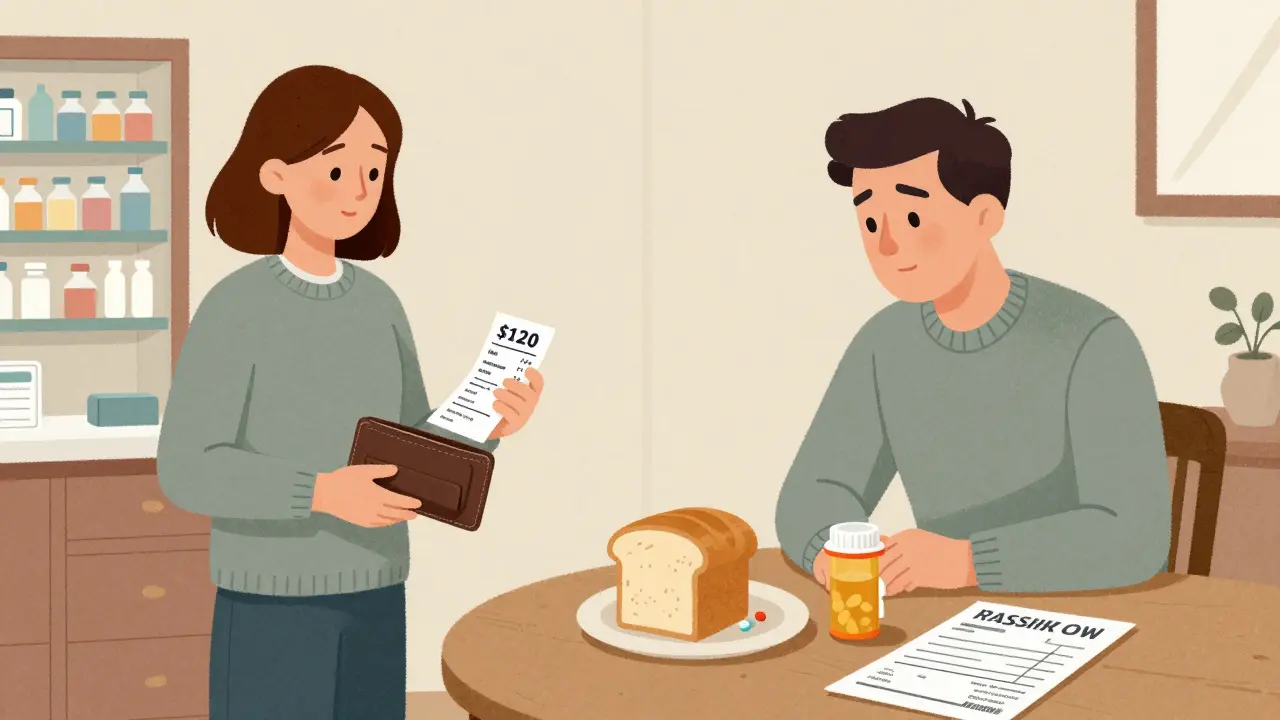
They Don’t Understand Why They’re Taking It
You can’t follow a rule you don’t believe in. That’s the core of the Necessity-Concerns Framework, developed by Professor Rob Horne. People weigh two things: Do I need this? And am I scared of the side effects? Forty-seven percent of nonadherence comes from doubting the necessity. Thirty-eight percent from fear of side effects. A patient might think, "I feel fine. Why am I taking this?" Or, "My friend gained weight on this. I don’t want that." They don’t know the medicine prevents a stroke, not just lowers a number. They don’t know the side effect they read about online happens in 1 out of 100 people. And here’s the kicker: most patients get five minutes of counseling at best. Their doctor says, "Take this once a day." No explanation. No visuals. No chance to ask, "What happens if I skip it?" A patient on HealthUnlocked said, "My doctor never told me why I had to take my blood pressure pill at night. I took it in the morning. My numbers got worse. I thought it was broken. I stopped taking it."Confusing Instructions and Poor Packaging
Medication labels are written for pharmacists, not patients. Tiny fonts. Latin terms. Symbols that mean nothing. One patient described their insulin pen: "The dosage markings were so small I couldn’t read them. I overdosed twice because I thought I was giving 5 units, not 15." Older adults with poor eyesight, low health literacy, or cognitive decline struggle with this daily. A pill bottle with 10 different instructions isn’t helpful-it’s a hazard. Packaging designed for convenience-like blister packs or daily organizers-can help. But only if they’re provided. And only if someone teaches the patient how to use them.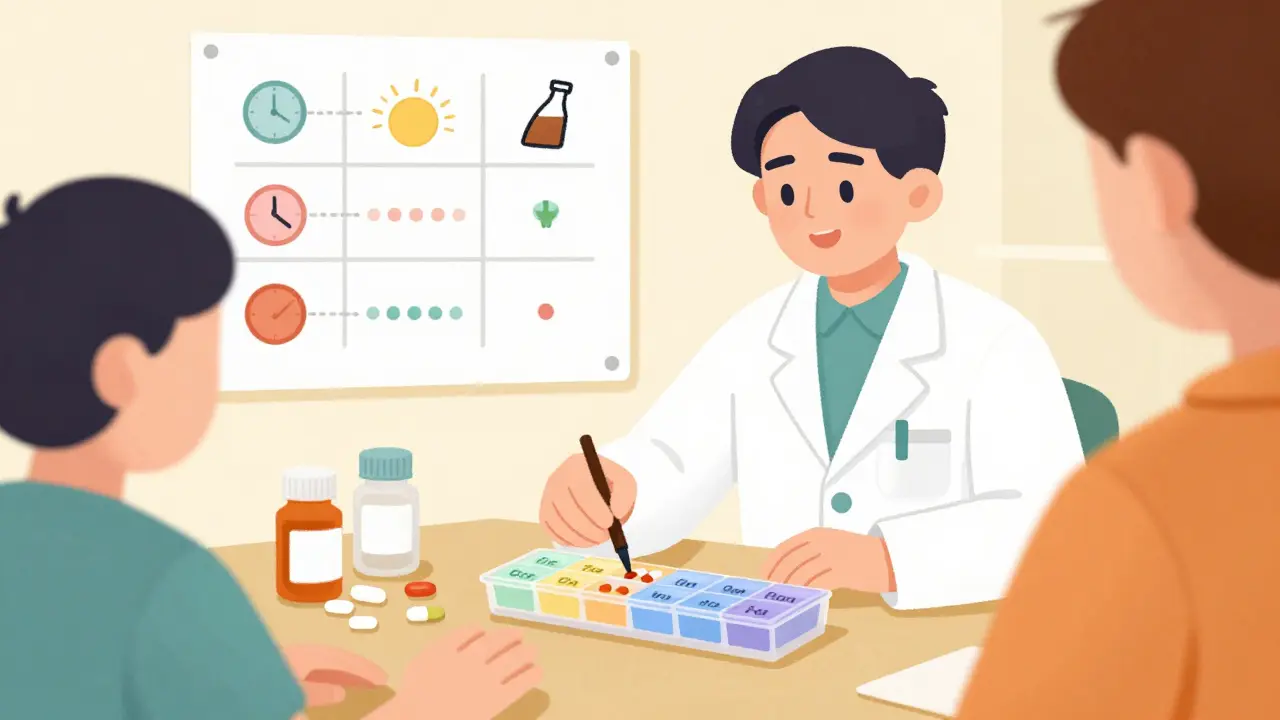
It’s Not Just About the Patient
The system is broken. Pharmacies don’t synchronize refills. Doctors don’t have time to talk. Insurance companies don’t cover reminder tools. Community pharmacies, especially small ones, lack resources for adherence programs. Only 32% of independent pharmacies have formal adherence support. Big pharmacy chains? 87% offer medication synchronization. But that’s useless if you live in a rural area or don’t have transportation. Patients in low-access communities face 37% higher nonadherence rates. Why? No nearby pharmacy. No bus route. No help carrying heavy bags of meds. One woman in Alberta told me: "I have to take two buses to get to the pharmacy. I miss refills because I can’t make it in the snow."What Actually Works
There’s no single fix. But there are proven solutions-and they combine practical and emotional support.- Simplify the regimen. Switch to once-daily pills. Use combination drugs. Reduce the number of daily doses.
- Automate refills. 90-day mail-order prescriptions increase adherence by 15-20%.
- Sync all prescriptions. Getting all meds on the same refill date cuts missed doses by 18%.
- Use pill organizers. But only if someone shows the patient how to use them.
- Train pharmacists to counsel. Structured 10-minute conversations improve adherence by 25%.
- Address cost. Generic alternatives, manufacturer coupons, or patient assistance programs can make a difference.
The Bigger Picture
Nonadherence kills 125,000 Americans every year. It costs the system $100-$300 billion annually. But it’s not a patient problem. It’s a design problem. We’ve built a system that expects people to be perfect: remember everything, understand everything, afford everything, manage everything-while juggling jobs, families, and health crises. The answer isn’t more guilt. It’s more empathy. More simplicity. More support. Medication adherence isn’t about willpower. It’s about accessibility. And if we want people to stay healthy, we need to make taking medicine the easy choice-not the impossible one.Why do people skip their medications even when they know it’s important?
People skip meds not because they’re careless, but because the system doesn’t match their reality. Complex schedules, high costs, confusing instructions, fear of side effects, and lack of clear explanations all add up. Even if someone knows a pill is important, if it’s too hard to take consistently, they’ll find a way to stop-often without realizing how dangerous it is.
Is forgetting pills the biggest reason for nonadherence?
Forgetfulness is the most commonly reported reason, especially among older adults, but it’s often a symptom of deeper problems. A 44% forgetfulness rate in diabetic patients doesn’t mean they’re absent-minded-it means their regimen is too complex, their reminders aren’t working, or they’re overwhelmed. Fixing forgetfulness alone won’t fix adherence. You have to fix the system that makes forgetting likely.
Can cost be the main reason someone stops taking their medicine?
Yes. Half of all patients say cost is a barrier. One in five prescriptions are never filled because of price. For medications like insulin, blood pressure pills, or cholesterol drugs, even a $30 copay can be too much for someone choosing between medicine and food. This isn’t about being irresponsible-it’s about survival.
Do pill organizers help people take their meds?
They can, but only if used correctly. A simple pill box won’t help someone who doesn’t understand why they’re taking each pill or who can’t read the labels. The best results come when a pharmacist or nurse walks the patient through how to fill and use it-especially for those with low health literacy or cognitive issues.
What’s the most effective way to improve medication adherence?
The most effective approach combines three things: simplifying the regimen (fewer pills, once-daily), reducing cost (generics, assistance programs), and improving communication (pharmacist counseling, clear instructions). No single solution works alone. The best outcomes come when multiple barriers are addressed together.
Are digital reminders like apps effective?
For some, yes. But for many older adults or those with limited tech skills, apps can feel overwhelming. Studies show 42% of people over 65 are uncomfortable with digital tools. The key isn’t the tech-it’s whether the tool fits the person. A simple alarm on a phone might work better than a fancy app. Sometimes, a printed calendar and a call from a family member are more effective than any app.
Why don’t doctors talk more about adherence?
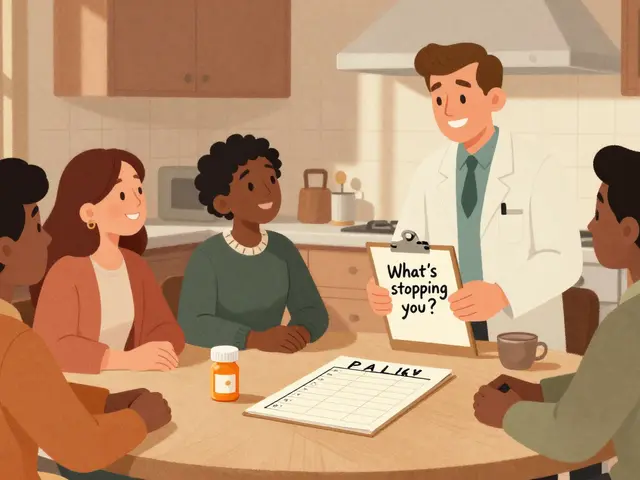
Time. The average doctor visit lasts 15-20 minutes. With multiple issues to cover-blood pressure, labs, symptoms, referrals-medication adherence often gets pushed aside. But it’s not just time. Many providers assume patients know why they’re taking their meds. They don’t realize how much confusion exists. A 10-minute conversation about necessity and concerns can change everything.
Can medication adherence be improved without spending more money?
Yes. Many low-cost strategies work: synchronizing prescriptions so all meds refill on the same day, switching to once-daily pills, using generic drugs, and training pharmacists to have short, focused counseling conversations. These don’t require new technology or big budgets-they require better coordination and a shift in how care is delivered.


Solomon Ahonsi
3 February 2026 - 01:40 AM
Let’s be real - most of these patients are just lazy. I’ve seen people with 30 pills a day and they still find time to scroll TikTok for 4 hours. If you can’t remember to take your meds, maybe you shouldn’t be in charge of your own life. Stop making excuses and grow up.
George Firican
3 February 2026 - 19:13 PM
The tragedy isn’t that people forget their pills - it’s that we’ve built a healthcare system that treats human beings like malfunctioning machines. We demand perfect compliance from people drowning in chaos: two jobs, no transportation, bills piling up, and a doctor who speaks in Latin and leaves after three minutes. We don’t need more reminders. We need to dismantle the illusion that health is an individual responsibility. It’s a social contract - and we’ve broken it.
Matt W
5 February 2026 - 14:05 PM
I’ve worked in a pharmacy for 12 years. I’ve seen people cry because they had to choose between insulin and their kid’s school lunch. I’ve watched grandmas squint at pill bottles with magnifying glasses because the font was smaller than a mosquito’s eyelash. This isn’t about willpower. It’s about dignity. If we can’t make taking medicine simple, we’re not just failing patients - we’re failing humanity.
Anthony Massirman
6 February 2026 - 08:47 AM
Cost is the real villain here. No one’s arguing with that.
Brett MacDonald
6 February 2026 - 09:28 AM
so like… people r just too dumb to take pills? or is it the system? idk man. maybe both? i mean like… i forget my keys every day but i dont die. so…
Sandeep Kumar
6 February 2026 - 10:52 AM
Western countries waste so much money on this problem because they treat people like children. In India we have 10 people living in one house and no refrigeration but still 90% adherence because we respect doctors and know medicine is sacred. No excuses. Just discipline.
Brittany Marioni
7 February 2026 - 06:50 AM
Can we just pause for a second and recognize that this isn’t just about pills? It’s about trust? It’s about dignity? It’s about whether our healthcare system sees people as human beings - or just as data points? I’ve seen patients who’ve been told to take five different pills at five different times, and then been blamed for not following instructions… when no one ever showed them how to open the bottle, or explained what the medicine actually does…
It’s not that they’re failing - it’s that the system has failed them… over and over and over again.
phara don
7 February 2026 - 17:31 PM
My uncle takes 8 pills a day. He uses a pill organizer. He has alarms. He still misses doses. Why? Because he doesn’t know why he’s taking half of them. His doctor never explained. He just got a script and a shrug. Then he googled side effects and panicked. Now he only takes the ones that "feel" like they’re working. We need conversations, not just prescriptions.
Bob Hynes
7 February 2026 - 18:42 PM
Man… I grew up in a small town in Saskatchewan. My grandma had to take a bus two hours each way just to get her blood pressure meds… in the snow… with a cane… and no one ever asked her if it was possible. We talk about "access" like it’s a buzzword. But for her? It was survival. And now she’s gone… because we didn’t make it easy. That’s not healthcare. That’s negligence dressed up as policy.
Eli Kiseop
8 February 2026 - 16:49 PM
Simple fix: one pill a day. One refill date. No fancy apps. Just make it easy. Why is that so hard?