When you’ve lived with chronic pain for months or years, you’ll try almost anything to find relief. That’s why so many people turn to cannabinoids-CBD oils, THC tinctures, cannabis gummies-hoping for the same kind of relief they heard about online. But here’s the truth: not all cannabinoids work the same way, and not all products are what they claim to be. The science is mixed, the market is wild, and the stakes are high. If you’re considering cannabinoids for pain, you need to know what actually works, what doesn’t, and how to avoid getting hurt in the process.
What Are Cannabinoids, and How Do They Relate to Pain?
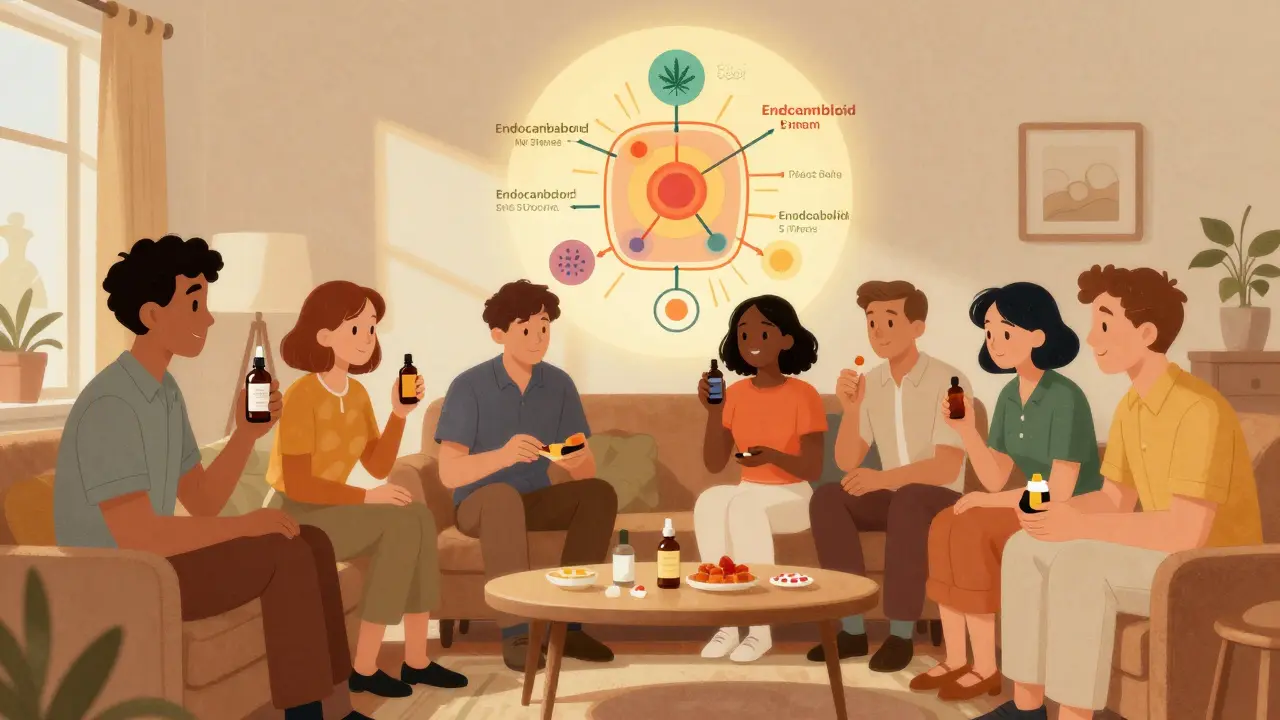
Cannabinoids are natural compounds found in the cannabis plant. The two most well-known are THC (tetrahydrocannabinol) and CBD (cannabidiol). But there are others-CBG, CBN, CBC-that are starting to show promise in lab studies. These compounds interact with your body’s endocannabinoid system, a network of receptors that helps regulate pain, mood, sleep, and inflammation.
Unlike opioids, which shut down pain signals in the brain, cannabinoids work more like a dimmer switch. They don’t block pain entirely-they help reduce its intensity and how much it interferes with your daily life. This makes them especially interesting for conditions like neuropathic pain, fibromyalgia, or arthritis, where traditional painkillers often fall short.
But here’s the catch: not all cannabinoids are equal. THC has psychoactive effects-it gets you high. CBD does not. And while THC has stronger evidence for pain relief, CBD alone? The data is shaky at best.
The Evidence: What Studies Really Show
Let’s cut through the noise. You’ve seen headlines like “CBD Cures Chronic Pain!” But the science tells a different story.
A major 2015 review in JAMA found moderate-quality evidence that cannabinoids help with chronic pain and muscle spasticity-especially in multiple sclerosis. That’s still one of the strongest endorsements from a high-impact journal. But since then, things have gotten more complicated.
A 2023 study from the University of Bath looked at 16 clinical trials using pharmaceutical-grade CBD. Fifteen of them found no better results than placebo. That’s not a fluke. It’s a pattern. CBD alone, in controlled settings, doesn’t consistently reduce pain.
Meanwhile, a January 2025 study from Yale found that CBG (cannabigerol) significantly reduced activity in a key pain-signaling protein in nerve cells. CBG didn’t cause intoxication, and it worked better than CBD in the lab. This is exciting-but it’s still early. These were test tube results, not human trials.
The CDC’s 2023 position is blunt: “There is limited evidence that cannabis works to treat most types of acute or chronic pain.” But they do acknowledge one exception-neuropathic pain. That’s pain caused by nerve damage, like from diabetes or shingles. For that, a few studies show real benefit.
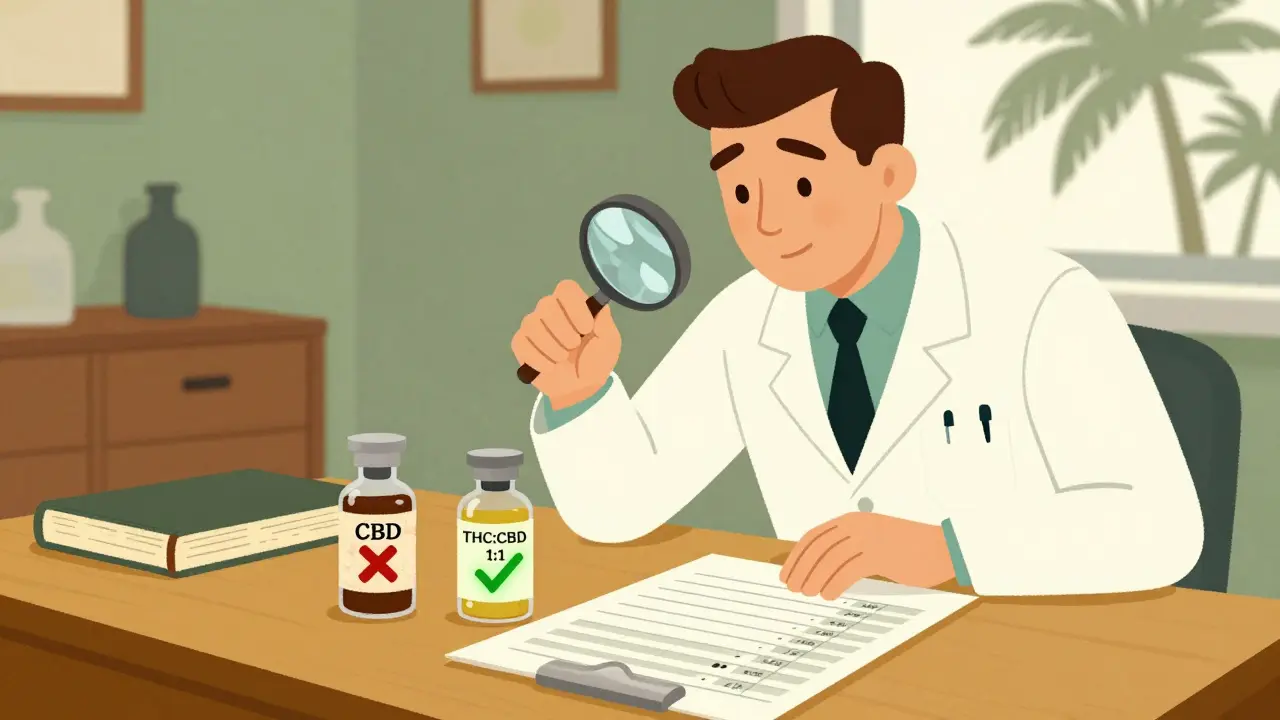
And then there’s the 1:1 THC:CBD combo. Sativex, a spray approved in Canada and Europe, is specifically for MS-related pain and cancer pain that opioids can’t control. In real-world use, patients report cutting their opioid doses by 70% or more while maintaining pain control. That’s not a cure. But for some, it’s life-changing.
THC vs. CBD: Which One Actually Helps With Pain?
If you’re choosing between THC and CBD, the answer isn’t “which is better?” It’s “which is right for you?”
- THC: Proven to reduce pain in multiple studies. Works best for neuropathic pain, muscle spasms, and cancer-related pain. But it can cause dizziness, dry mouth, anxiety, or paranoia-especially at higher doses. It also shows up on drug tests.
- CBD: Non-intoxicating. Safe for most people. But for pain? The evidence is weak. Many people report benefits, but controlled trials rarely back it up. It may help with sleep or anxiety, which can indirectly reduce pain perception.
- CBG and CBN: Emerging candidates. Early lab work suggests CBG might be even more potent than THC for pain relief-without the high. But no large human trials exist yet.
Most people who get real relief from cannabis-based products are using combinations-not pure CBD. A 2023 review in Sage Publications found that medicinal cannabis (which includes THC) improved both pain severity and quality of life. Pure CBD products? Not so much.
Dosing: How Much Should You Take?
There’s no official dosing guide. No FDA-approved protocol. That’s because cannabinoids aren’t regulated like prescription drugs.
What experts do recommend:
- Start low. For THC: 2.5-5 mg. For CBD: 10-20 mg.
- Wait at least 2 hours before taking more. Edibles take longer to kick in than tinctures or vaporizers.
- Keep a journal. Note the dose, timing, type of product, and how your pain changes.
- Go slow. It can take 2-4 weeks to see if something works.
And here’s the scary part: many products don’t even contain what’s on the label. The University of Bath tested 120 CBD products sold online. One-third had less than 50% of the labeled CBD. Some had none at all. Others had illegal levels of THC. You could be paying $50 a bottle for water with flavoring.
Safety: What Are the Real Risks?
Cannabinoids are generally safer than opioids. No one has ever died from a cannabis overdose. But that doesn’t mean they’re risk-free.
Common side effects:
- Dizziness (9.2% of users in clinical trials)
- Dry mouth (6.6%)
- Nausea (5.4%)
- Fatigue or sedation
More serious risks:
- Liver toxicity: High-dose CBD (over 1,000 mg/day) can raise liver enzymes. This is rare but serious. If you’re on statins, antidepressants, or blood thinners, talk to your doctor first.
- Drug interactions: Cannabinoids affect liver enzymes (CYP450) that break down many medications. This can make your pills too strong-or too weak.
- THC contamination: Many “CBD-only” products contain hidden THC. You could fail a drug test-or have an unexpected high.
- Psychological effects: THC can worsen anxiety or trigger psychosis in vulnerable people.
And then there’s the placebo effect. A 2023 analysis of Amazon and Trustpilot reviews found that 41% of people who bought CBD for pain said it didn’t work. But 28% said it helped their anxiety. That’s important-because less anxiety often means less perceived pain.
Where Does This Leave You?
If you’re considering cannabinoids for pain, here’s what to do:
- Don’t rely on CBD alone. The evidence doesn’t support it for pain. Save your money.
- Consider THC-containing products if legal and appropriate. Especially if you have neuropathic pain or haven’t responded to other treatments.
- Use regulated products. In Canada, you can get government-approved medical cannabis. In U.S. states with medical programs, buy from licensed dispensaries. Avoid Amazon, eBay, or random websites.
- Start with low doses. And increase slowly. Track your results.
- Talk to your doctor. Especially if you’re on other meds. Don’t replace opioids without medical supervision.
- Be skeptical of marketing claims. “Miracle cure” = red flag.
The future might hold better options. CBG-based pain meds are in early development. Clinical trials for THC:CBD combinations for cancer pain and low back pain are ongoing. The FDA may reschedule cannabis by 2026, which could unlock serious research funding.
For now, the truth is simple: cannabinoids aren’t magic. But for some people-with the right product, the right dose, and the right expectations-they can be a useful tool in a broader pain management plan.
What About Opioids?
Let’s be clear: opioids still work better for acute, severe pain. But they’re dangerous long-term. Over 80,000 people died from opioid overdoses in the U.S. in 2023. Cannabinoids don’t cause fatal overdoses. That’s why many patients turn to them-not as a replacement, but as a way to reduce opioid use.
Studies show that patients using medical cannabis can cut their opioid doses by 40-70%. That’s not a cure. But it’s a win. Less risk. Less dependence. Better quality of life.
The goal isn’t to swap one drug for another. It’s to find a balance-where pain is manageable, side effects are tolerable, and you’re not risking your life to feel better.
Can CBD oil really help with chronic pain?
The evidence for CBD alone is weak. Most high-quality clinical trials show it performs no better than a placebo for pain relief. Some people report benefits, but these are often linked to reduced anxiety or improved sleep-not direct pain reduction. If you’re buying CBD for pain, you’re likely paying for hope, not science.
Is THC safer than opioids for pain?
Yes, in terms of overdose risk. You cannot die from a cannabis overdose. Opioids, however, cause over 80,000 deaths annually in the U.S. THC can cause dizziness, anxiety, or impaired judgment, but it doesn’t suppress breathing like opioids do. For chronic pain, THC can be a safer long-term option-if used responsibly and under medical guidance.
What’s the best way to take cannabinoids for pain?
Tinctures (oils under the tongue) offer the most control over dosing and faster onset than edibles. Vaporizing works quickly but isn’t ideal for people with lung issues. Topicals (creams, patches) help localized pain but don’t affect systemic pain. Edibles are unpredictable-dosing varies, and effects last longer. Start with tinctures if you’re new.
Are over-the-counter CBD products safe?
Many aren’t. Independent testing found that 40% of CBD products contain less CBD than labeled, and some contain illegal levels of THC or contaminants like heavy metals or pesticides. Only buy from licensed dispensaries or brands that provide third-party lab reports (COAs). If it doesn’t come with a test result, don’t risk it.
Can I use cannabinoids with my other pain meds?
Maybe-but only with your doctor’s approval. Cannabinoids affect liver enzymes that metabolize many common drugs, including blood thinners, antidepressants, and seizure medications. Mixing them without supervision could lead to dangerous side effects or reduced effectiveness of your current treatment.
Will I fail a drug test if I use medical cannabis?
Yes, if the product contains THC. Most workplace drug tests screen for THC metabolites, not CBD. Even products labeled “THC-free” can contain trace amounts. If you’re subject to drug testing, avoid THC entirely. Look for broad-spectrum CBD with zero THC, and verify with a lab report.
What’s Next?
If you’re thinking about trying cannabinoids for pain, don’t rush. Talk to a pain specialist or a doctor familiar with medical cannabis. Ask for a trial plan: low dose, slow increase, clear goals. Keep a symptom diary. And remember-what works for one person might not work for you.
The science is still evolving. CBG might be the next big thing. Or maybe a new synthetic cannabinoid will come along. But right now, the safest and most effective approach is to use regulated products, avoid hype, and treat cannabinoids as one tool-not a cure-all-in your pain management toolkit.



Lynsey Tyson
18 December 2025 - 20:19 PM
I’ve been using a 1:1 THC:CBD tincture for my fibromyalgia for over a year now. Didn’t cure it, but I cut my oxycodone in half and actually slept through the night for the first time in years. No drama, no hype-just real relief.
Started at 2.5mg THC, went slow. Now I’m at 7.5mg. Keeps the edge off without making me feel like a zombie.
Also, bought my first bottle off Amazon. Total scam. Zero CBD. Learned the hard way-now I only buy from licensed dispensaries in Oregon. Worth every penny.
Edington Renwick
20 December 2025 - 15:51 PM
Let’s be real-CBD is just snake oil with a fancy label.
People are spending hundreds on bottled hope while Big Pharma laughs all the way to the bank. The science? It’s not shaky-it’s dead. And yet, influencers still sell it like it’s liquid enlightenment.
I don’t hate people who try it. I pity them.
Allison Pannabekcer
21 December 2025 - 19:02 PM
For anyone new to this-don’t panic, don’t rush, and don’t believe everything you read on Reddit or TikTok.
I’m a nurse who’s seen patients use everything from kratom to ketamine for pain. Cannabinoids? They’re not magic, but they’re not nonsense either.
THC helps neuropathic pain. CBD helps anxiety, which helps pain perception. CBG? Promising, but still in the lab. Don’t chase the next big thing.
Start low. Track everything. Talk to your doctor. And if you’re buying online? Demand a COA. No COA? No sale.
This isn’t about ideology. It’s about smart, safe choices. You deserve relief without risking your liver or your job.
Sarah McQuillan
23 December 2025 - 13:45 PM
Canada’s got it right. We don’t let corporations sell fake CBD gummies like candy. Here in the US, it’s the Wild West.
And don’t get me started on how the FDA lets this slide. Big Pharma doesn’t want you to have a safe, affordable alternative to opioids. They want you hooked on pills that cost $500 a month.
It’s not about science-it’s about control. And they’re using ‘lack of evidence’ as an excuse to keep people suffering.
My uncle used medical cannabis after chemo. He went from crying in pain to playing with his grandkids. That’s not placebo. That’s dignity.
Kitt Eliz
24 December 2025 - 20:22 PM
Y’all are underestimating CBG. Like, HARD. 🧬
Recent preclinical data shows CBG modulates TRPV1 and GABA-A receptors-same pathways as gabapentin but without the brain fog. Zero psychoactivity. No liver toxicity at therapeutic doses. This is the future.
And don’t sleep on CBN either-sleep + pain modulation = perfect combo for fibro patients. I’m already pre-ordering a 5% CBG tincture from a licensed Canadian lab. If you’re still using pure CBD? You’re 5 years behind.
Stay ahead. Stay informed. And for god’s sake, get a COA. 📊
Aboobakar Muhammedali
24 December 2025 - 21:46 PM
i read this whole thing and i just felt so seen
my back pain has been here since i was 24 and no doctor ever listened
cbd made me sleepy but didn't help the pain
then i tried a little THC oil and for the first time i didn't cry when i got out of bed
but i'm scared to tell anyone because i work in a hospital and they'll fire me if they find out
thank you for saying it's okay to try this slowly
you're not alone
anthony funes gomez
25 December 2025 - 22:07 PM
The endocannabinoid system is a modulatory, not a direct analgesic, pathway-this is critical. Unlike opioid mu-receptor agonism, cannabinoids exert top-down, neuromodulatory effects on descending inhibitory pathways, primarily via CB1 and CB2 receptor activation in the PAG and RVM.
That’s why they’re better for chronic, centralized pain than acute nociceptive pain.
And yes-CBD monotherapy fails because it lacks sufficient CB1 affinity. The entourage effect isn’t marketing-it’s pharmacokinetics.
Also, CYP3A4 inhibition by CBD is dose-dependent. Above 20mg/kg/day, you risk statin toxicity. Documented case reports exist.
So yes, science is complex. But it’s not mysterious. Just poorly communicated.
Laura Hamill
26 December 2025 - 14:51 PM
They’re hiding the truth. CBD is a government-approved placebo to keep people from using real weed.
Why do you think the FDA allows CBD but cracks down on THC? Because the military-industrial complex needs people docile. You think they want chronic pain patients feeling calm and in control?
They want you on opioids. Or antidepressants. Or both.
And don’t get me started on how the DEA still classifies cannabis as Schedule I while they approve fentanyl patches.
Wake up. This isn’t about science. It’s about power.
Alana Koerts
26 December 2025 - 19:12 PM
So you’re telling me after all this, the only thing that works is THC-and even then, only if you buy from a dispensary?
Wow. So all those CBD brands spending millions on ads? Total waste.
And now we’re supposed to trust ‘licensed dispensaries’? Like, what’s the difference between that and a pharmacy? Nothing. Just more gatekeeping.
Also, why does everyone keep saying ‘talk to your doctor’ like they’re not just gonna say ‘no’ and prescribe another pill?
Just give us the facts. Stop the fluff.