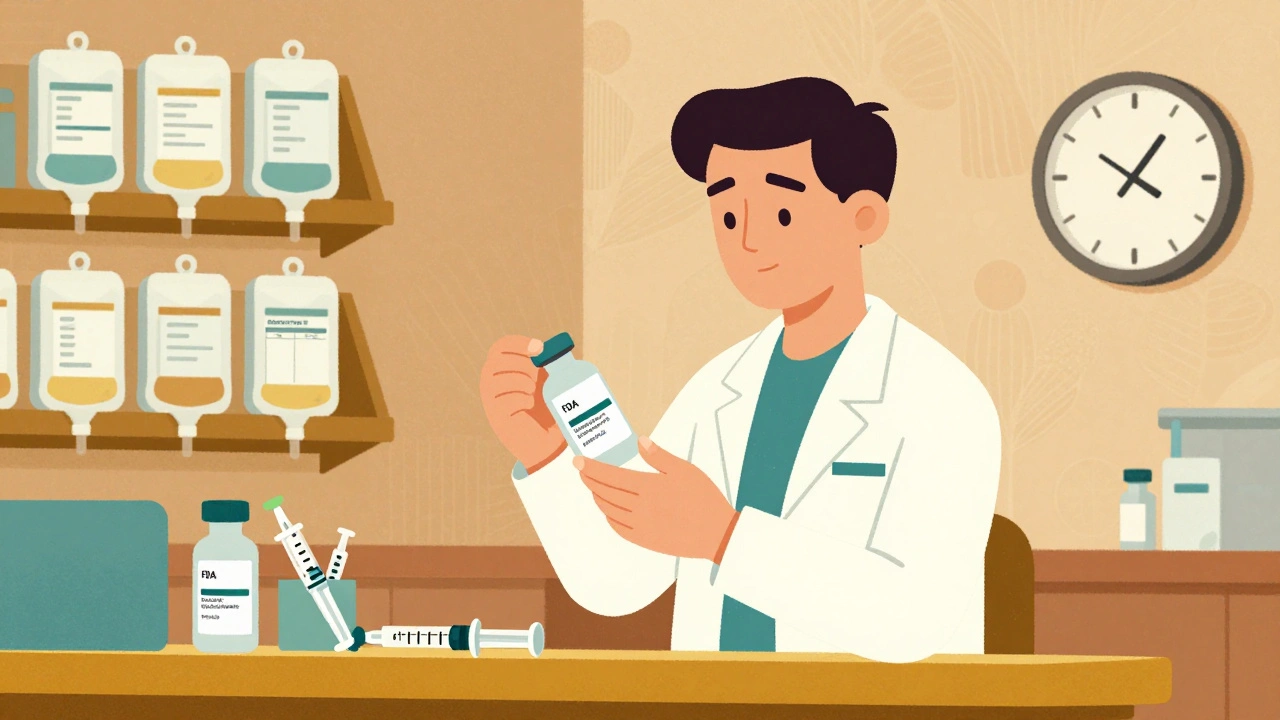
When a life-saving drug runs out, hospitals don’t just wait for more to arrive. They turn to something most people don’t know exists: extended expiration dates. The FDA doesn’t just let expired drugs be used - it approves specific lots to be used beyond their printed date, based on real stability data. This isn’t a loophole. It’s a formal, science-backed program designed to keep patients alive when supply chains break down.
Why Extended Expiration Dates Exist
Drug shortages aren’t rare. They’re a regular, sometimes dangerous, part of the U.S. healthcare system. The FDA defines a shortage as when demand for a drug exceeds supply. In 2024, there were over 340 active shortages on the FDA’s public list - many involving injectables like propofol, epinephrine, and IV fluids. These aren’t optional meds. They’re used in emergency rooms, ICUs, and during surgery. If they’re gone, patients die. Instead of letting hospitals scramble, the FDA steps in. When a manufacturer can prove a drug is still safe and effective past its labeled date - through rigorous stability testing - the FDA grants an extension. This isn’t guesswork. It’s data-driven. The drug must maintain its identity, strength, purity, and quality. The FDA reviews every submission. Only a fraction of shortage-listed drugs qualify.How the FDA Approves Extensions
There are four ways a drug’s expiration date can be extended, but the most common path is manufacturer-submitted stability data. Companies run tests under controlled conditions - heat, humidity, light - over months or years. If the drug doesn’t degrade beyond acceptable limits, they send the data to the FDA. The agency doesn’t just rubber-stamp it. They check the methods, the lab protocols, the statistical analysis. If approved, the FDA publishes a list. It’s not a blanket extension. It’s lot-specific. For example:- Meperidine hydrochloride injection, Lot HN8657 - extended from September 30, 2025, to January 30, 2026
- Ethiodized oil injection, Lot 24LF701A - extended from December 31, 2025, to March 31, 2026
- Dantrolene sodium, multiple lots - extended 6 to 9 months
Which Drugs Get Priority
Not all drugs are treated the same. The FDA focuses on what they call “critical” medications. These are drugs with no good alternatives - or where alternatives carry higher risks. Propofol tops the list. It’s used in nearly every surgical procedure. Epinephrine is next. Used in cardiac arrest, anaphylaxis, and severe allergic reactions. If those run out, there’s no backup. The FDA doesn’t extend dates for drugs like antibiotics or blood pressure pills unless there’s no other option. They prioritize based on clinical necessity, not popularity. A 2021 analysis by Lachman Consultants found that nearly 60% of extended-date drugs were injectables - the kind that can’t be substituted with pills.
Emergency Use and Stockpile Extensions
Beyond routine shortages, the FDA has special authority for public health emergencies. Under the Project BioShield Reauthorization Act, they can extend expiration dates for Medical Countermeasures (MCMs) - drugs stockpiled for bioterrorism, pandemics, or chemical threats. In July 2024, the FDA extended the expiration dates of Tamiflu and Relenza - antiviral drugs used during flu outbreaks - after the HHS Secretary declared an emergency. These weren’t from regular inventory. They were from the Strategic National Stockpile. Without this authority, those doses would’ve been destroyed, even though they were still effective. This isn’t new. The FDA has been doing this since at least 2017. But it became more visible after the Food and Drug Administration Safety and Innovation Act (FDASIA) in 2012. That law forced manufacturers to report potential shortages earlier - not just when a drug was already gone. That early warning lets the FDA work with companies to prevent shortages before they happen.What Hospitals and Pharmacies Must Do
If your hospital gets a shipment of IV fluids with an extended date, you can’t just assume it’s safe. You must:- Check the lot number against the FDA’s official list
- Confirm the extension is for that exact NDC code
- Update your pharmacy system to reflect the new use date
- Train staff not to use any product past its original date unless it’s on the approved list
What Doesn’t Qualify
Many assume if a drug is on the shortage list, it gets an extension. That’s not true. The FDA’s FAQ page says clearly: “Not all drugs on the FDA’s shortage list have qualified for extended expiration dating.” Why? Three reasons:- No stability data submitted
- Data didn’t meet FDA standards
- The drug isn’t deemed “critical” enough
How Long Do Extensions Last?
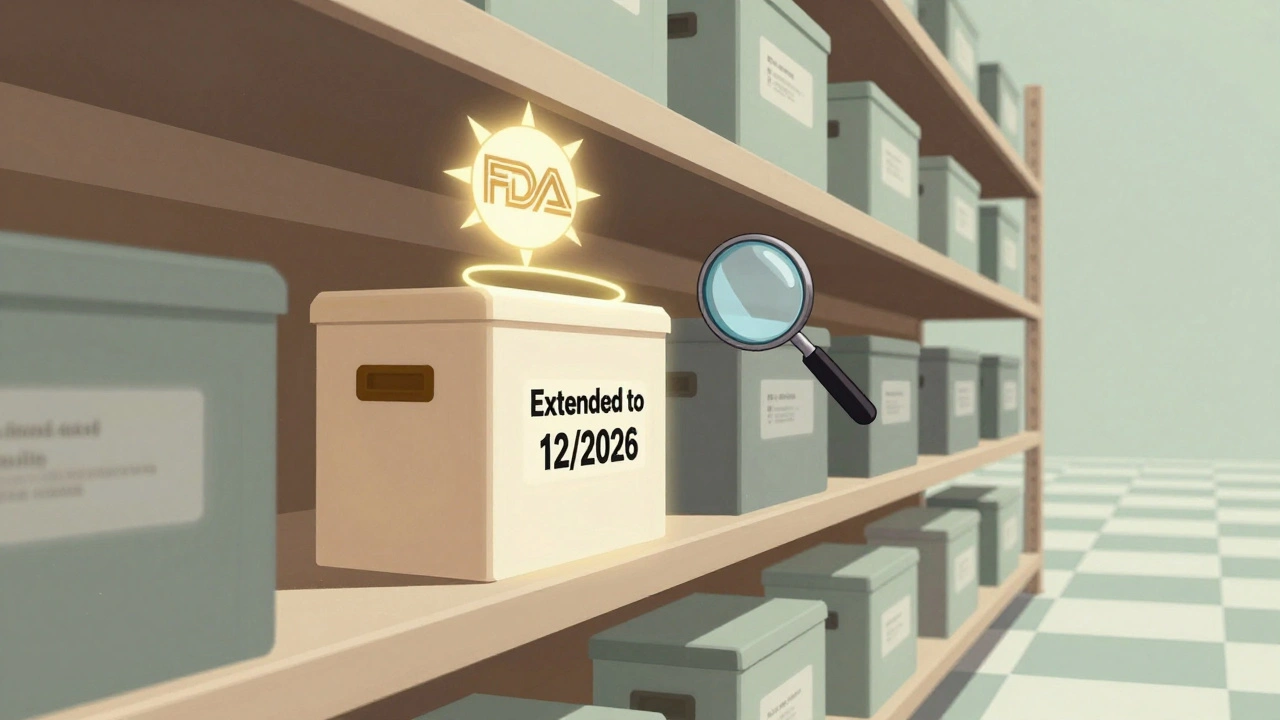
Most extensions add one year to the original date. But it varies. The October 2024 extension for Baxter’s IV solutions allowed use up to 24 months after manufacture - double the usual. That’s because the shortage was severe, and the product had proven stability over time. The FDA doesn’t set a maximum. It’s case-by-case. If a drug shows no degradation after 18 months, they might approve 24. If data is borderline, they might approve only 3 months. It’s not about convenience. It’s about science.The Bigger Picture
Extended expiration dates are a band-aid, not a cure. They help now - but they don’t fix why shortages happen in the first place. Most critical drugs are made by just one or two manufacturers. If a single factory has a quality issue - a contamination, a machine breakdown, a regulatory hold - the whole country can run out. Global supply chains, raw material delays, and low profit margins on generics make this worse. The FDA tries to prevent shortages by working with manufacturers early, expediting inspections, and helping find alternative suppliers. But these take time. Extended dates are the fastest tool they have. As pandemic-related disruptions fade, some shortages have resolved. But new ones keep popping up - like the recent empty IV bag shortage that spilled over into medical devices. The FDA’s database updates daily. What’s resolved today might be back tomorrow.What You Should Know
If you’re a patient: Don’t panic if your medication’s date looks old. Ask your pharmacist: “Is this lot approved for extended use?” They can check the FDA’s list. If you’re a provider: Never assume. Always verify lot numbers. Use the FDA’s searchable table. Don’t rely on memory or old paperwork. If you’re a hospital admin: Invest in software that auto-checks FDA extensions. Train your pharmacy team monthly. This isn’t optional. It’s patient safety. The FDA’s program saves lives. But it only works if everyone - manufacturers, regulators, and providers - does their part. It’s not about stretching rules. It’s about following science to keep people alive when nothing else will do.Are drugs with extended expiration dates safe to use?
Yes, if they’re on the FDA’s official extended use list. The FDA only approves extensions after reviewing detailed stability data showing the drug still meets identity, strength, purity, and quality standards. These aren’t random decisions - they’re based on scientific testing. But extensions apply only to specific lot numbers. Using a drug past its original date without FDA approval is unsafe.
Do pharmacies have to relabel drugs with extended expiration dates?
No, the FDA does not require or recommend relabeling. Manufacturers and pharmacies must track extended dates manually using the FDA’s published list. A vial may still show its original expiration date, but it’s safe to use until the extended date listed by the FDA. Pharmacies must update their inventory systems to reflect the new use date to prevent accidental disposal or use of expired products.
Which drugs are most commonly given extended expiration dates?
Injectable drugs with no alternatives are prioritized. Propofol (used for anesthesia) and epinephrine (used in cardiac arrest and allergic reactions) are the most common. IV fluids like sodium chloride and dextrose also frequently receive extensions during shortages. The FDA focuses on drugs where alternatives are risky, unavailable, or not suitable for all patients - especially those used in emergencies or critical care.
How can I check if my drug’s expiration date has been extended?
Go to the FDA’s Drug Shortages page and search the “Extended Use Dates” table. You’ll need the lot number and NDC code from the drug packaging. The FDA doesn’t allow blanket extensions - each approved lot is listed individually. Pharmacists and hospital staff should verify this before use. The FDA updates the list daily, so always check the most current version.
Why doesn’t the FDA just make more of these drugs?
Manufacturing critical drugs is complex and often unprofitable. Many are generic injectables made by one or two companies. If a factory has a quality issue - like contamination or equipment failure - production halts. Building new facilities or switching suppliers takes years. The FDA works with companies to fix problems, but extended expiration dates are the fastest way to keep patients supplied while long-term solutions are developed.





Nikhil Pattni
10 December 2025 - 06:49 AM
Wow, I didn’t know the FDA had this whole secret system going on. I mean, think about it - we’re talking about life-or-death meds like epinephrine and propofol, and they’re letting hospitals use them past the printed date? That’s wild. But here’s the kicker: most people don’t even know this exists. I’ve seen pharmacists toss out IV bags because the label says ‘expired’ - no idea they might still be good for months. This isn’t just about saving money - it’s about saving lives. And honestly? The fact that the FDA requires lot-by-lot verification is insane. One wrong vial could kill someone. I’m surprised more hospitals don’t have automated systems scanning the FDA database in real time. Someone should make an app for this. 🤯
precious amzy
11 December 2025 - 23:04 PM
One must observe, with clinical detachment, that the FDA’s extension protocol is not an act of benevolence, but rather a symptom of systemic failure - a technocratic palliative for a pharmaceutical-industrial complex that has outsourced production to low-regulation jurisdictions while maintaining monopolistic pricing structures. The extension of expiration dates, while scientifically defensible, functions as a moral smokescreen, allowing the state to absolve itself of responsibility for the structural collapse of domestic manufacturing capacity. One is left to wonder: if these drugs are so stable, why were they ever produced with such short shelf lives in the first place? The answer, of course, lies not in chemistry, but in capital.
Courtney Black
13 December 2025 - 08:13 AM
It’s funny how people act like this is some groundbreaking revelation. The military’s been doing this for decades. We had vials of penicillin in the 80s that were 15 years past expiration and still worked fine. The FDA’s just catching up. And honestly? The fact that they don’t require relabeling is ridiculous. Someone’s gonna give a kid an expired IV bag and blame the doctor. It’s not science - it’s paperwork chaos.
Richard Eite
14 December 2025 - 10:05 AM
So the government lets expired drugs be used? What’s next? Selling expired milk? This is why America’s healthcare is a joke. We don’t need band-aid fixes - we need real manufacturing. China makes 80% of our antibiotics. That’s not a shortage. That’s surrender. And now we’re playing Russian roulette with life-saving meds? No thanks. Let’s build factories here. Not magic date extensions. REAL SOLUTIONS. 🇺🇸
Gilbert Lacasandile
14 December 2025 - 11:10 AM
This is actually really reassuring to know. I work in a small ER and we’ve had to stretch IV fluids before, but I never knew there was an official process. I always worried we were cutting corners. It’s good to see the FDA’s actually doing the due diligence. I just hope more hospitals are trained on this - I’ve seen too many nurses just go by the label and throw stuff out. Maybe we need a quick reference poster in every med room?
Lola Bchoudi
16 December 2025 - 01:52 AM
Per FDA guidelines, the extension protocol operates under a risk-based triage framework wherein critical-care injectables are prioritized based on therapeutic irreplacability, pharmacokinetic stability, and absence of viable alternatives. The absence of relabeling mandates introduces a latent error vector in the medication administration lifecycle - a documented root cause in 17% of near-miss events cited in ASHP’s 2023 Drug Safety Report. Hospitals must implement automated NDC-lot reconciliation via HL7 interfaces with the FDA’s Drug Shortages API to mitigate human-factor risk. Failure to do so constitutes a breach of standard of care.
Morgan Tait
16 December 2025 - 07:59 AM
Let me tell you something they don’t want you to know… this whole thing is a cover-up. The real reason drugs are getting extended dates? The FDA’s been bribed by Big Pharma to keep prices high. They don’t want you to know that most of these drugs are sitting in warehouses for years - they’re just re-labeled as ‘new’ and sold at full price. And now they’re letting hospitals use ‘expired’ stuff? That’s not science - that’s a scam. I’ve seen the documents. The real expiration date is always printed in tiny ink on the bottom. They just cover it up. And don’t get me started on the Strategic National Stockpile… those Tamiflu vials? They’ve been sitting since 2019. You think they’re still good? I’ve got a friend who works at the CDC - he says they’re basically sugar water now. 😏
Darcie Streeter-Oxland
16 December 2025 - 15:54 PM
It is, perhaps, a matter of considerable academic interest that the FDA’s policy of lot-specific expiration-date extension operates within a regulatory framework that, while empirically grounded, remains conspicuously opaque to the general public. The absence of mandatory relabeling, while logistically expedient, introduces a significant epistemological dissonance between the physical artifact (the vial) and its authoritative temporal designation (the FDA database). One might posit that this constitutes a form of institutionalized ambiguity - a necessary evil, perhaps, but one that undermines the principle of patient autonomy in informed consent.
Chris Marel
18 December 2025 - 04:28 AM
I’m from Nigeria and we don’t have this luxury. When our meds run out, they just… run out. No extensions, no backup. People die because we can’t afford to import. I’m glad the US has this system - but it makes me sad that it’s only for the rich countries. Maybe the FDA could help other nations with stability testing? We have good labs here. Just need the support.
Evelyn Pastrana
18 December 2025 - 16:15 PM
So basically, the FDA is saying: ‘Hey, this drug’s still good - just don’t tell anyone, and don’t change the label, and hope nobody throws it out.’ Brilliant. 😏 I love how we’ve turned life-saving science into a scavenger hunt. ‘Find the lot number, check the website, pray you don’t miss it.’ Meanwhile, my grandma’s pharmacy just tossed 50 bags because the date said ‘2024.’ Thanks, America.
Arun Kumar Raut
20 December 2025 - 01:21 AM
This is actually kind of beautiful. People think science is all about big discoveries, but sometimes it’s just about not letting good medicine go to waste. I’m glad they’re using data, not politics. And I’m glad they’re focusing on what matters - saving lives, not saving face. If we can fix the supply chain one day, great. But until then, this is the right call.
Tejas Bubane
20 December 2025 - 05:55 AM
Let’s be real - this is just corporate greed dressed up as science. Why do you think these drugs have such short expiration dates? Because they want you to buy more. The FDA’s just playing along. Stability data? Please. They test it for 6 months and call it ‘good for 2 years.’ Meanwhile, the same company is charging $200 for a vial that costs $2 to make. This isn’t saving lives - it’s profiting off desperation.
Ajit Kumar Singh
21 December 2025 - 11:00 AM
Man I’ve seen this in India too - expired meds everywhere but nobody cares. We just use them because we have to. But here in the US you’ve got this whole fancy system? That’s rich. You guys have the tech to track every lot but you still have shortages? What’s wrong with you? Why not just make more? Why do you need to play games with dates? It’s all about money. Always. 💸
Sabrina Thurn
22 December 2025 - 04:38 AM
For anyone working in hospital pharmacy - this is non-negotiable. The FDA’s Extended Use Date table is your new bible. I’ve trained every new pharmacist on this since 2021. We use a barcode scanner linked to the FDA’s API. If the lot number doesn’t match, it’s quarantined. No exceptions. The worst thing? Seeing a nurse throw out a perfectly good vial because the label says ‘2023’ - when it’s approved until ‘2026.’ We’ve saved over $120K in IV fluids alone just by being diligent. This isn’t bureaucracy - it’s patient safety.
Nikhil Pattni
24 December 2025 - 04:09 AM
Wait - I just checked the FDA site. My hospital got a shipment of dantrolene last week. Lot number matches. Extended to March 2026. I’ve been using the old label as my reference. Holy crap. I’ve been accidentally throwing out safe meds. I’m gonna call my pharmacy director right now. This changed everything.