Colesevelam Drug Interaction Checker
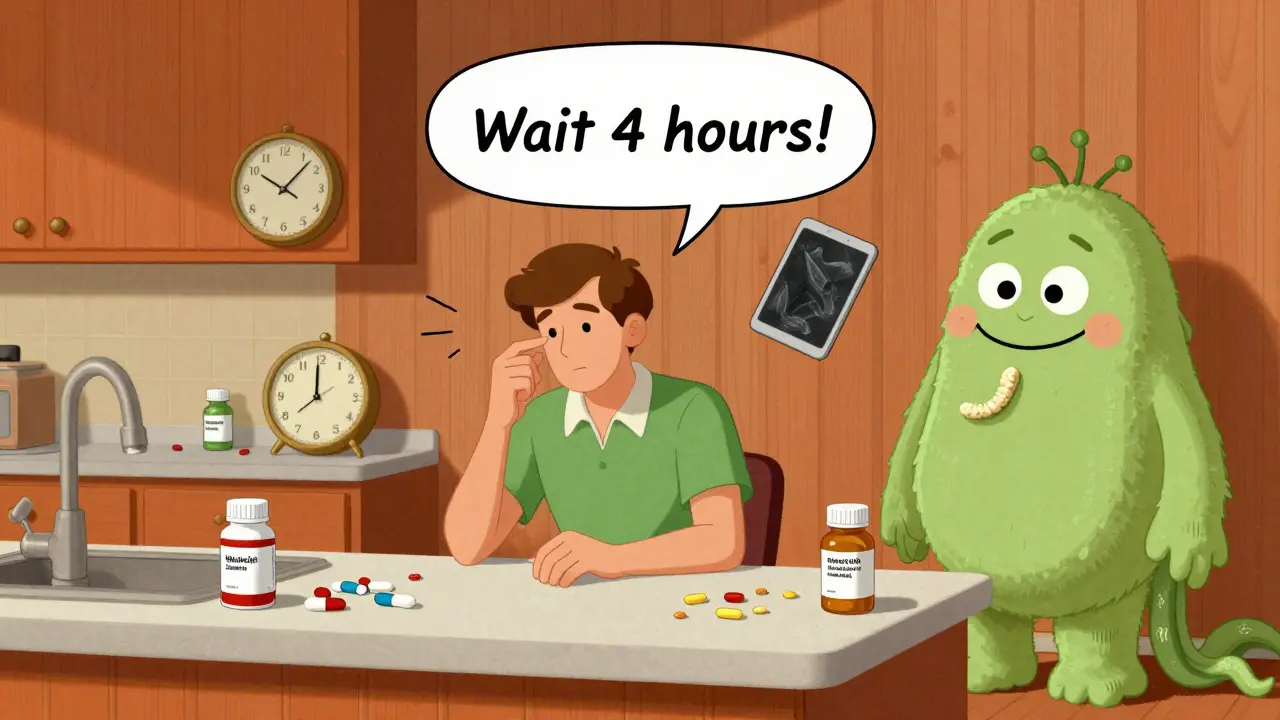
Colesevelam requires specific timing with other medications. Take it at least 4 hours before or 1 hour after other drugs to avoid reduced effectiveness or dangerous interactions.
When you're managing type 2 diabetes, every medication choice comes with trade-offs. Some drugs help you lose weight. Others lower your blood sugar fast. But there’s one class of meds that doesn’t do any of that - yet still gets prescribed. Bile acid sequestrants aren’t flashy. They don’t come with celebrity endorsements or weight-loss promises. But for a small group of people with diabetes and high cholesterol, they’re still in use. And if you’re one of them, you need to know what you’re really signing up for.
What Are Bile Acid Sequestrants, Really?
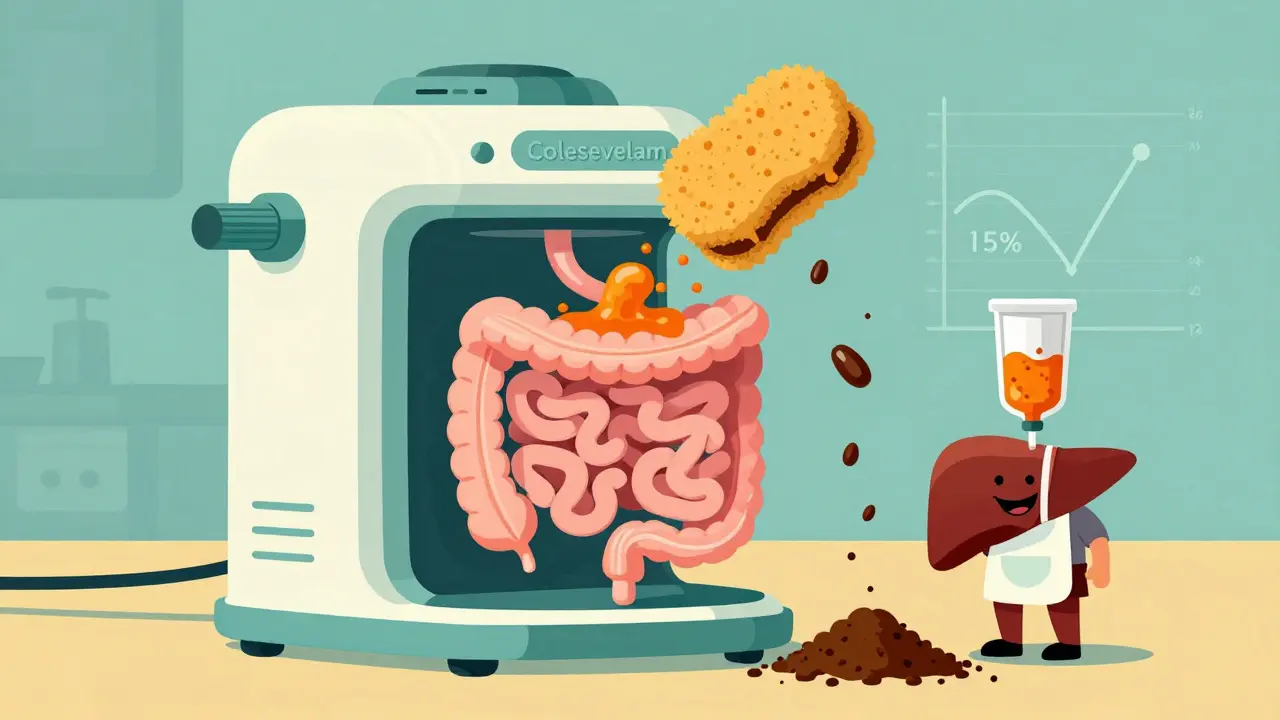
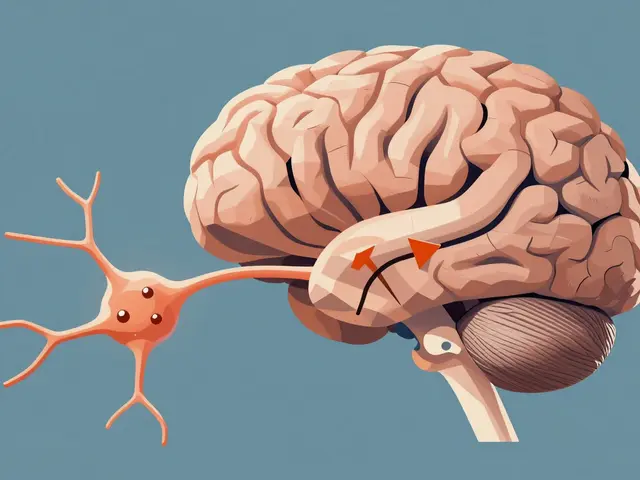
Bile acid sequestrants (BASs) aren’t designed to treat diabetes. They were made to lower cholesterol. Think of them as sponges for bile acids - sticky, resin-based polymers that grab bile acids in your gut and flush them out before your body can reuse them. Your liver then pulls cholesterol from your bloodstream to make more bile, which drops your LDL (bad) cholesterol by 15-18%. That’s why they were first approved in the 1970s for heart health.
Fast forward to 2008, and the FDA gave one of them - colesevelam (WelChol) - a second job: helping with blood sugar. Studies showed it could lower HbA1c by about 0.5%. Not huge. Not like metformin or GLP-1 drugs. But for some people, that small drop matters - especially when it comes with cholesterol benefits.
It’s not magic. It’s physics. By trapping bile acids, colesevelam triggers changes in liver enzymes and gut hormones that, over time, improve insulin sensitivity. It doesn’t make your pancreas pump out more insulin. It doesn’t block sugar absorption. It just quietly shifts how your body handles glucose. That’s why it won’t cause low blood sugar - a rare perk in the diabetes drug world.
Who Gets Prescribed These?
You won’t see colesevelam on a new patient’s prescription list. It’s not a first-line drug. In fact, the American Diabetes Association says it’s only for people who:
- Have type 2 diabetes and high LDL cholesterol
- Can’t take statins due to muscle pain or liver issues
- Have mild to moderate blood sugar elevation (HbA1c under 10%)
- Need a second or third medication after metformin and lifestyle changes
That’s a narrow group. Most people with diabetes don’t fit this profile. But if you do - and you’re also struggling with cholesterol - it’s one of the few drugs that tackles both at once. No other diabetes pill lowers LDL this much without causing weight gain or hypoglycemia.
The Side Effects: It’s Not Just ‘Upset Stomach’
If you think the side effects are just mild bloating, you’re in for a surprise. The most common complaints? Constipation, nausea, and gas. But the numbers tell a starker story:
- 34% of users report severe constipation
- 28% deal with ongoing nausea
- 22% say bloating makes them avoid meals
One Reddit user wrote: “I had to start taking Miralax every day just to go. And the pills? They taste like chalk mixed with sand. I’d rather take insulin.” Another said, “After three months, I ended up in the ER with a bowel obstruction. Never again.”
These aren’t rare cases. Clinical trials show 19% of people quit colesevelam because of GI problems - five times the rate of placebo. And unlike statins, where side effects often fade after a few weeks, these can stick around. Many users say the gritty texture and constant digestive discomfort make adherence nearly impossible.
Doctors usually start patients on 1,875 mg a day (three 625 mg tablets) and slowly ramp up to 3,750 mg. Even then, up to 35% of people can’t tolerate the full dose. Fiber and water help - a lot. But if you’re already constipated from metformin, adding this might push you over the edge.
Drug Interactions: The Hidden Danger
Here’s where things get risky. Colesevelam doesn’t just bind bile acids. It binds everything in your gut - including other meds. The FDA says you must separate it from other drugs by at least 4 hours before or 1 hour after. That’s not a suggestion. It’s a requirement.
Common medications that can be affected:
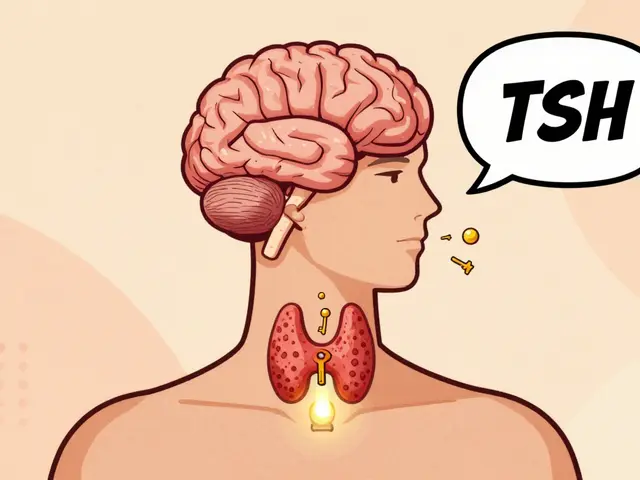
- Thyroid hormones (levothyroxine): If taken too close, your TSH can spike, making hypothyroidism worse.
- Warfarin: Reduced absorption means your INR drops. This increases clotting risk. One case study showed an INR drop from 3.2 to 1.8 in 48 hours after starting colesevelam.
- Sulfonylureas (like glipizide): Lowered absorption can lead to poor blood sugar control - and unexpected highs.
- Metformin: Even this common combo can be impacted. Some patients see reduced effectiveness, forcing dose adjustments.
- Statins: Colesevelam cuts simvastatin levels by 40% and atorvastatin by 20%. If you’re on both, your cholesterol might not improve.
Many doctors don’t realize how broad these interactions are. A 2015 review found that over 60% of patients on colesevelam were taking at least one interacting drug. Without proper timing, you’re not just risking side effects - you’re risking serious health events like stroke or uncontrolled diabetes.
Cost and Availability: A Shrinking Option
Colesevelam costs about $547 for a 30-day supply. No generic. Ever. Sevelamer - another BAS used for kidney patients - costs even more: $722 a month. And it’s not even FDA-approved for diabetes.
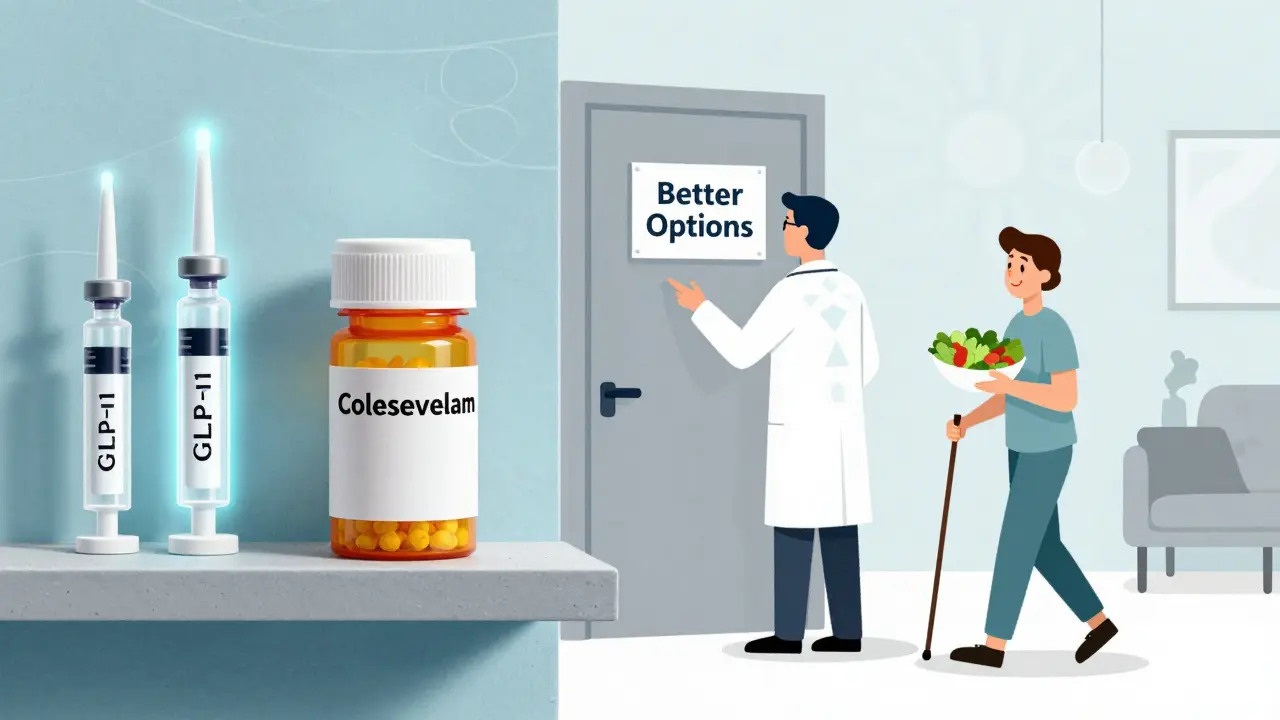
Prescriptions have dropped by half since 2012. In 2023, only 890,000 prescriptions were filled in the U.S. - less than 0.5% of all diabetes meds. Why? Because better options exist. GLP-1 agonists like semaglutide lower HbA1c by 1-1.5% and help you lose weight. SGLT2 inhibitors protect your heart and kidneys. Both are now available as generics or in cheaper forms.
Even insurance companies are pushing back. Many require prior authorization, and some won’t cover it unless you’ve tried and failed at least two other drugs. The market is shrinking. Drugmakers are abandoning research. Genzyme shut down its diabetes trials in 2021. No new BAS is coming to market soon.
Real Stories: The Good, The Bad, The Ugly
On Drugs.com, colesevelam has a 5.2 out of 10 rating from 237 reviews. The split is clear:
- Good (31%): “My LDL dropped from 142 to 98. A1c went from 7.1 to 6.8. No weight gain. Worth the constipation.” - MJS77, June 2023
- Poor (49%): “I couldn’t eat without feeling sick. Constipation was so bad I needed enemas. Quit after 6 weeks.” - Anonymous, January 2024
One 68-year-old man from Calgary told his endocrinologist: “I’ve been on statins for 12 years. My muscles ached so bad I could barely climb stairs. My doctor said colesevelam might help my cholesterol and sugar. It did - but now I’m on laxatives daily. I’d rather take a shot than this chalky mess.”
For some, it’s the last option. For most, it’s a stopgap - a bridge until something better comes along.
Is It Still Worth It?
If you have diabetes and high cholesterol and can’t take statins - and you’re okay with daily constipation and strict pill timing - then yes, it might be worth trying. But if you’re looking for a magic bullet? You won’t find it here.
The science is real. The benefits are modest. The side effects are real. And the future? It’s fading fast.
Experts like Dr. John Buse from UNC say BASs are “largely relegated to niche use.” That’s not a dismissal - it’s a reality check. For the right person, it still has a role. But that role is shrinking. And unless you’re in that small group, you’re better off with something else.
Can bile acid sequestrants cause low blood sugar?
No. Unlike sulfonylureas or insulin, bile acid sequestrants don’t stimulate insulin release or block sugar reabsorption. They work by altering bile acid recycling, which indirectly improves insulin sensitivity. This means they don’t cause hypoglycemia - even when taken with other diabetes drugs. That’s one of the few advantages they have.
How long does it take for colesevelam to lower blood sugar?
It takes about 6 to 12 weeks to see a noticeable drop in HbA1c. Unlike fast-acting drugs, this one works slowly. Most clinical trials measured results after 12 to 18 weeks. Don’t expect changes in a week. If your blood sugar hasn’t improved by 3 months, it’s unlikely to. Talk to your doctor about alternatives.
Can I take colesevelam with my other diabetes meds?
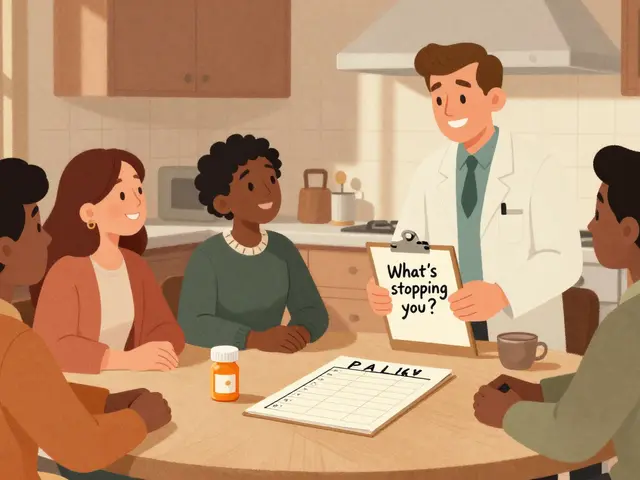
Yes - but timing matters. Take colesevelam at least 4 hours before or 1 hour after other oral medications. This includes metformin, sulfonylureas, and even vitamins. If you take thyroid meds, separate them by 4 to 6 hours. Missing this window can make your other drugs less effective - or even dangerous. Always check with your pharmacist.
Are there any natural alternatives to bile acid sequestrants?
No natural supplement works the same way. Some fiber supplements (like psyllium) can mildly lower cholesterol and improve glucose control, but they don’t bind bile acids as effectively. Psyllium may reduce HbA1c by 0.3% - similar to colesevelam - but without the drug interaction risks. Still, it’s not a replacement. If you need the dual benefit of cholesterol and glucose control, you’ll likely need the medication.
Why isn’t sevelamer used for diabetes like colesevelam?
Sevelamer was designed for kidney patients to bind phosphorus - not glucose. While some small studies showed a slight HbA1c drop, it hasn’t been approved for diabetes by the FDA. The European Medicines Agency also rejected it for this use. Colesevelam is the only BAS with formal diabetes approval in the U.S., and even that’s based on limited data. Sevelamer’s side effect profile is similar, but without the regulatory backing, it’s not prescribed for blood sugar.
What happens if I stop taking colesevelam?
Your cholesterol and blood sugar will likely return to pre-treatment levels within 4 to 6 weeks. There’s no rebound effect - just a return to baseline. If you stopped because of side effects, talk to your doctor about switching to another medication. Don’t just quit. Your lipid and glucose levels need monitoring.
Final Thoughts: A Drug on Its Way Out
Bile acid sequestrants were once seen as a clever two-for-one solution. But medicine has moved on. We now have drugs that do more - with fewer side effects. If you’re on colesevelam and it’s working - and you can handle the side effects - keep taking it. But if you’re just starting out? Ask your doctor: Is this really the best option for me? There’s probably a better one.


Sabrina Sanches
15 March 2026 - 08:31 AM
Honestly this post saved me from a bad med decision. I was on colesevelam for 6 months and thought I was just getting old and slow. Turns out it was the chalky hell in my gut. Now I'm on metformin + a GLP-1 and my numbers are better AND I can eat pizza without planning a bathroom trip. You're not weak for quitting this stuff. You're smart.
Stephanie Paluch
15 March 2026 - 11:57 AM
I’m so glad someone finally wrote this. My mom was on this and it was brutal. Constipation so bad she had to use enemas. She cried one night because she couldn’t even sit comfortably. And the drug interactions? Her endo didn’t even tell her about the thyroid thing. We almost lost her to a stroke because her INR dropped. Please, if you’re on this, get a pharmacist to review ALL your meds. 💔
tynece roberts
16 March 2026 - 05:41 AM
so like... i was prescribed this after statin side effects and honestly? i thought it was gonna be easy. nope. it was like swallowing sand. and the timing? 4 hours before or after? i take 8 pills a day. i just forgot. and then my sugar went up. and my bowels? dead. nope. nope. nope. switched to semaglutide. lost 18 lbs. and no constipation. why does this even still exist??
Hugh Breen
16 March 2026 - 23:09 PM
This is why I hate how pharma pushes outdated drugs. BASs are like a 1998 flip phone in a world of iPhones. We have drugs that help you lose weight, protect your heart, and don’t turn your gut into a cement mixer. And yet? Some docs still push this because it’s 'safe' for hypoglycemia. But safety without efficacy is just a slow death sentence. We need to stop glorifying 'not causing low sugar' as a win. It’s not a feature - it’s a backup plan. 🚫💊
Byron Boror
17 March 2026 - 05:18 AM
This is why America’s healthcare is broken. We’re still using 50-year-old science while other countries have moved on. This drug is a relic. The FDA approved it because of lobbying, not science. And now people are suffering because their doctors are too lazy to learn new protocols. Shame on the entire system. We need to ban this junk.
Lorna Brown
19 March 2026 - 04:10 AM
I wonder if the reason this drug persists is because it's one of the few that doesn't require lifestyle change. You can take it and keep eating fries. It's a band-aid on a broken leg. We're treating symptoms, not root causes. The real solution? Food as medicine. But that doesn't make money for anyone. So we keep pushing pills that bind bile and hope for the best.
Rex Regum
20 March 2026 - 14:57 PM
Oh wow. So you’re saying this drug is basically a fancy fiber pill with 10x the side effects? And people still take it? I mean, if you’re gonna swallow chalk, why not just eat psyllium husk? It’s cheaper, legal, and doesn’t require a 4-hour pill schedule. This isn’t medicine. It’s a cult. And the doctors are the priests.
Kelsey Vonk
20 March 2026 - 17:47 PM
I’ve been on this for 18 months. It’s not great. But my LDL dropped 40 points and my HbA1c went from 7.4 to 6.6. I do take Miralax daily. I do space out my meds. And I still take it. Because for me? It works. Not perfectly. Not comfortably. But better than the alternatives I tried. I’m not a fan. But I’m not quitting either. Sometimes the best option is the least glamorous one.
Emma Nicolls
21 March 2026 - 14:54 PM
i read this whole thing and honestly i just want to say thank you. i was about to ask my doc to switch me to this because i heard it was 'gentle' on blood sugar. now im not. i had no idea about the interactions. my thyroid med and my blood pressure pill? yeah. we're gonna have to talk. this is wild. i feel like i just got a survival guide
Richard Harris
23 March 2026 - 08:14 AM
Interesting read. I’m in the UK and we rarely see this prescribed here. We’ve got access to generics of newer drugs now. But I’ve had a few patients on it - all were elderly, on multiple meds, and had severe statin intolerance. For them? It’s a last resort. Not ideal. But better than nothing. Still, I wish we had more options.
Kandace Bennett
24 March 2026 - 22:15 PM
OMG. I knew this drug was trash but I didn’t know it was this bad. I mean, come on. A drug that makes you constipated AND messes with your thyroid AND your warfarin? And costs $500? And no generic? 🤦♀️ This is why people don’t trust doctors. They’re giving out 1970s tech like it’s the future. We need a national audit of outdated prescriptions. This is medical malpractice by omission.
Tim Schulz
26 March 2026 - 06:44 AM
Ah yes. The 'safe' diabetes drug that turns your colon into a desert. Congrats, FDA. You’ve created a medication that requires a PhD in pharmacology just to take properly. Meanwhile, people are dying from strokes because their INR dropped. And the drug company? They’re still charging $700 a month. This isn’t science. It’s a scam dressed in white coats. 😎
Jinesh Jain
26 March 2026 - 14:28 PM
I am from India. We don’t have this drug here. Our doctors use metformin, insulin, or newer generics. I read this because I have a cousin in the US on it. She said she feels like she’s on a prison diet. Pills, laxatives, no meals. I told her to ask for GLP-1. She said her insurance won’t cover it. Welcome to US healthcare.
douglas martinez
28 March 2026 - 03:50 AM
As a healthcare provider, I want to emphasize that while this medication has significant limitations, it still has a role in specific clinical scenarios. The key is proper patient selection, thorough counseling on timing and side effects, and regular monitoring of drug levels and labs. Discontinuing it without alternatives is dangerous. We must balance innovation with responsible stewardship of existing tools.
Katherine Rodriguez
29 March 2026 - 23:58 PM
why is this even a thing. its just constipation with extra steps. i hate that doctors still push this. its like prescribing a horse and buggy because electric cars are too expensive. we have better. use them. stop making people suffer for no reason. i quit this after 2 weeks. my sugar was the same. my butt was dead. i dont care how 'safe' it is. its not worth it