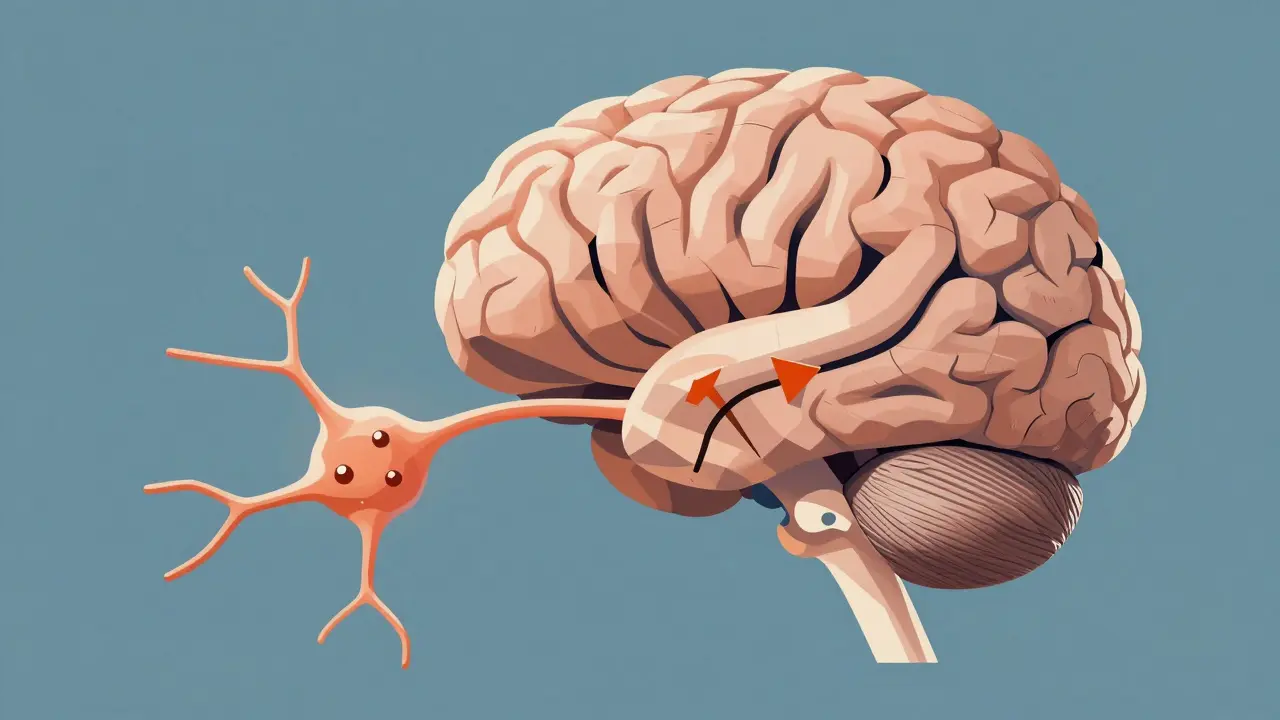
Central Sensitization is a neurophysiological process where the nervous system becomes hypersensitive. First described by Clifford J. Woolf in 1983, it explains why some chronic pain persists without ongoing tissue damage.
Central Sensitization occurs when the spinal cord and brain amplify pain signals. This happens due to changes in neurons that make them overly responsive to normal or even subthreshold input. Unlike regular pain from a cut or sprain, central sensitization creates pain that doesn't match the actual injury. For example, someone with this condition might feel burning pain from a light touch or experience widespread aches without visible damage.
How Central Sensitization Changes Your Nervous System
When you get injured, nerves send pain signals to your brain. Normally, these signals fade once healing happens. But with central sensitization, the central nervous system gets stuck in "high alert" mode. Here's what changes:
- Neurons in the spinal cord become more excitable, firing more easily even with minor stimulation
- Brain imaging shows 20-35% increased activity in pain-processing regions during everyday activities
- Natural pain inhibitors like endorphins become less effective, with mu-opioid receptor binding reduced by 15-25%
- Pro-inflammatory cytokines increase by 30-50% in neural tissues, worsening sensitivity
This isn't just "pain in your head"-it's measurable physiological changes. Research from the National Center for Biotechnology Information confirms these neurobiological shifts happen in real time. The result? Pain signals get amplified like a broken volume knob stuck on max.
Common Symptoms You Might Experience
Central sensitization creates distinct patterns of discomfort that often confuse patients and doctors. Here's what to watch for:
- Widespread pain affecting multiple body regions (present in 95% of diagnosed cases)
- Allodynia-pain from normally non-painful stimuli, like clothing or light touch (affects 85-90% of patients)
- Hyperalgesia-exaggerated pain response to minor injuries (75-80% of cases)
- Brain fog and cognitive difficulties (87% of individuals report this)
- Sleep disturbances beyond typical pain-related issues (76% experience this)
Many people describe feeling like "everything hurts"-even when there's no obvious injury. This explains why fibromyalgia patients often report pain from a hug or walking on carpet.

How Doctors Diagnose Central Sensitization
Diagnosing central sensitization isn't straightforward. Doctors use a mix of clinical assessment and specialized tests:
- Quantitative sensory testing (QST) measures pain thresholds; affected individuals typically show 20-30% lower pain thresholds than healthy people
- Conditioned pain modulation testing reveals 40-50% reduced inhibitory function in the nervous system
- Pain drawings that show non-anatomical patterns (80% of cases)
- Assessment of allodynia and hyperalgesia through clinical exams
These tests help differentiate central sensitization from other pain conditions. For example, while a sprained ankle shows localized pain that fades with healing, central sensitization causes pain that spreads unpredictably and persists long after the injury heals.
Treatment Options That Address Amplified Pain
Unlike traditional painkillers that target peripheral nerves, treatments for central sensitization focus on calming the central nervous system. Here's what works:
- Gabapentinoids like pregabalin (300-1200mg daily) reduce pain by 30-50% in 55% of patients
- Duloxetine (60mg daily) provides 30% pain reduction in 45% of cases by boosting natural pain inhibitors
- Low-dose naltrexone (4.5mg nightly) improves symptoms by 25-35% for fibromyalgia patients
- Pain neuroscience education helps patients understand their pain, reducing catastrophizing scores by 20-30%
- Graded exercise therapy with 10% weekly intensity increases improves function by 25-40%
These approaches work because they target the underlying nervous system changes rather than just masking symptoms. For instance, pain neuroscience education teaches patients why their body hurts without injury, which can reduce fear and improve coping.

Challenges and Misconceptions
Many people with central sensitization face frustrating barriers:
- 63% of patients see 4-6 doctors over 2-5 years before getting a correct diagnosis
- "It's all in your head" comments are common despite clear physiological evidence
- Medication side effects like dizziness cause 35-45% of patients to stop treatment
- Only 65% of clinicians agree on diagnosis, leading to inconsistent care
The American Academy of Family Physicians explicitly states central sensitization isn't psychological-it's "real physiological changes in pain processing." This distinction matters because treatment requires different approaches than mental health therapy. Patients often feel dismissed when doctors don't recognize the biological basis of their pain.
What's Next for Central Sensitization Research
Recent developments show promising progress:
- The NIH allocated $15 million specifically for central sensitization studies in 2024
- Five new compounds targeting specific pain pathways are in Phase II clinical trials
- Standardized QST protocols now detect central sensitization with 85% reliability
- Research shows brain imaging can identify distinct patterns in affected individuals
Dr. Clifford Woolf predicts central sensitization will explain 30-40% of chronic pain cases within the next decade-up from current estimates of 20-25%. This shift will transform how doctors approach conditions like chronic low back pain and post-surgical pain syndromes.
Is central sensitization the same as neuropathic pain?
No. Neuropathic pain results from damaged nerves (like diabetic neuropathy), while central sensitization involves the central nervous system amplifying signals without nerve damage. Central sensitization typically causes widespread pain across multiple regions, whereas neuropathic pain often follows a specific nerve pathway. For example, sciatica follows a clear nerve route, while central sensitization might cause pain in unrelated areas like the neck and feet simultaneously.
Can central sensitization be reversed?
Yes, but it requires consistent treatment. Research shows that when peripheral pain sources are removed (like healing a broken bone), central sensitization can gradually improve. Treatments like pain neuroscience education, graded exercise, and certain medications help retrain the nervous system. A University of Florida study found 60% of patients showed measurable improvement after 12 weeks of multimodal therapy. However, the longer it goes untreated, the harder it is to reverse.
Why do some people develop central sensitization and others don't?
It's a mix of biology and environment. Factors include genetic predisposition (some people have more sensitive pain pathways), repeated injuries or stress, and immune system activity. For instance, 65% of post-viral syndrome patients develop chronic pain through central sensitization. Women are also more likely to experience it, possibly due to hormonal influences on pain processing. Early treatment of injuries may prevent this process from becoming permanent.
How does fibromyalgia relate to central sensitization?
Fibromyalgia is the most common condition driven by central sensitization. In fact, 90% of fibromyalgia patients show clear signs of this mechanism. While fibromyalgia has multiple symptoms (fatigue, sleep issues), the core pain pattern-widespread aches, allodynia, hyperalgesia-matches central sensitization exactly. This explains why fibromyalgia treatments focus on calming the nervous system rather than targeting joints or muscles.
What should I do if I suspect central sensitization?
Start with a pain specialist who understands central sensitization. Bring detailed symptom notes: where pain occurs, what triggers it (like light touch), and how long it's lasted. Ask about quantitative sensory testing and pain neuroscience education. Avoid treatments that only address "peripheral" pain (like joint injections for widespread pain). Remember, your pain is real and treatable-many people see significant improvement with the right approach.






Laissa Peixoto
5 February 2026 - 20:26 PM
Central sensitization is a complex neurophysiological process.
It's not just psychological-it's measurable changes in the nervous system.
The spinal cord and brain amplify pain signals.
This means even normal stimuli can cause pain.
Research shows increased activity in pain-processing regions.
Endorphins become less effective.
Cytokines increase, worsening sensitivity.
Doctors use QST tests to diagnose it.
Pain drawings often show non-anatomical patterns.
Treatments like gabapentinoids and duloxetine target the central nervous system.
Pain neuroscience education helps patients understand their pain.
Graded exercise therapy slowly builds tolerance.
This isn't a quick fix-it takes time and consistency.
Many patients are dismissed because doctors don't understand it.
But awareness is growing.
With the right approach, improvement is possible.
Arjun Paul
6 February 2026 - 17:53 PM
The science here is oversimplified. Real pain management requires holistic approaches. Western medicine ignores cultural factors. This is why patients in India have better outcomes with traditional methods.
Phoebe Norman
7 February 2026 - 01:57 AM
Central sensitization involves amplified nociceptive signaling. Neurophysiological changes in spinal cord and brain. Reduced endorphin efficacy. Increased cytokines. QST shows lower pain thresholds. Pain drawings non-anatomical. Treatments target CNS. Gabapentinoids duloxetine low dose naltrexone. Education reduces catastrophizing. This is real physiology.
Nancy Maneely
9 February 2026 - 00:38 AM
OMG this is sooo wronng! Like, I feel evrything hurts all the time and its not my fault! The doctors dont get it! Why dont they listen? This is insane! I need help but no one cares. #FibromyalgiaLife
Dina Santorelli
10 February 2026 - 23:41 PM
This is just a scam to sell drugs.
Thorben Westerhuys
11 February 2026 - 16:16 PM
This is so important! I've been suffering for years! And the treatments? They're not working! What's going on?! The system is broken! Why won't anyone listen?! I need help! Please! Someone help me!
Cole Streeper
11 February 2026 - 17:06 PM
The government knows about this but won't admit it. They're hiding the truth to keep people dependent on drugs. Look at the stats-pharma companies are pushing treatments that don't work. They're making billions while we suffer. It's all a scam.
Sam Salameh
13 February 2026 - 04:44 AM
As a proud American, I've seen how this is handled here. The treatments mentioned are solid, but insurance doesn't cover them. We need policy changes to help people get the care they deserve. This isn't just a medical issue-it's a national problem. We need to invest in research and education. Other countries have better systems, but we can do better here. Let's push for change!
Cullen Bausman
13 February 2026 - 18:23 PM
Central sensitization is a neurophysiological process. It's well-documented. Treatments like gabapentinoids are effective. But access is limited. More research needed. This is a public health issue.
divya shetty
14 February 2026 - 15:38 PM
This is not how it works in India. We handle pain differently. Your approach is flawed. We use Ayurveda and yoga which are proven. This article is biased towards Western medicine.