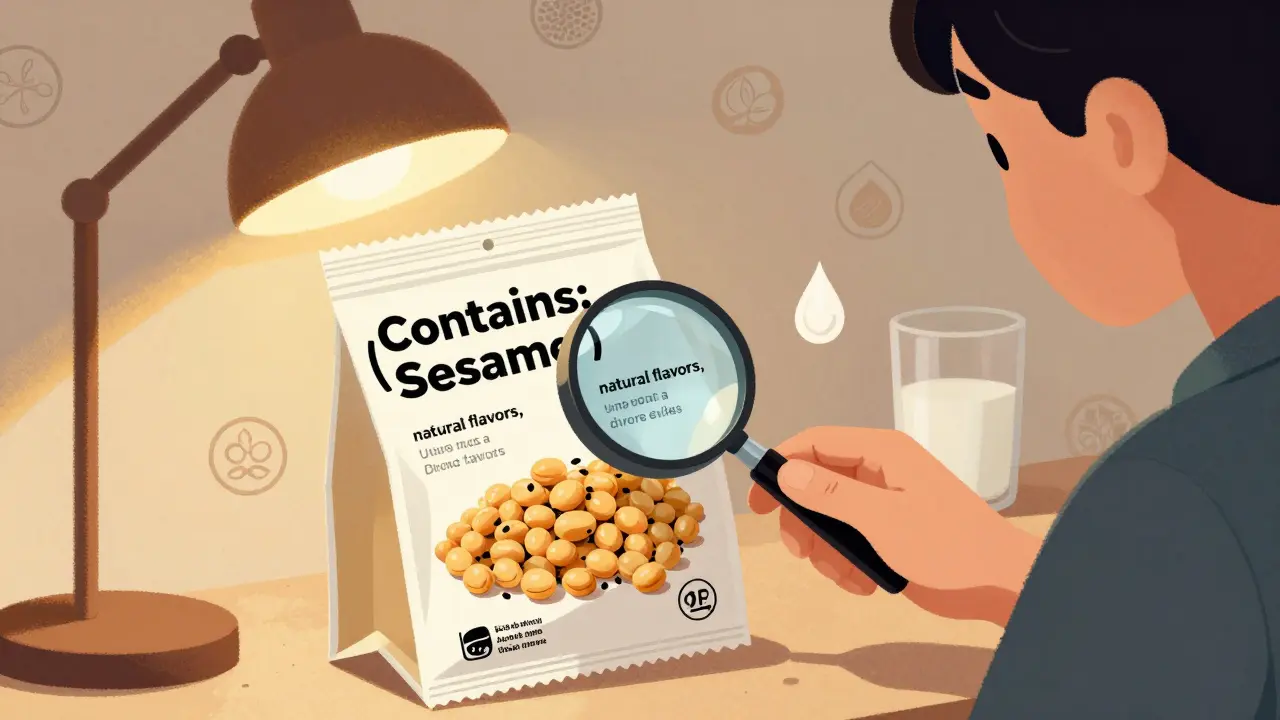
Every time you pick up a new prescription or grab a snack off the shelf, you’re making a choice that could affect your health in ways you don’t always see. The ingredients listed on the label might look harmless, but hidden allergens or unexpected inactive ingredients can trigger reactions - sometimes severe ones. If you or someone you care about has allergies, reading labels isn’t optional. It’s a daily safety habit. And yet, most people don’t know how to do it right.
What You’re Really Looking For on Food Labels
In the U.S., food manufacturers have to follow strict rules for listing allergens. Since January 2023, nine major allergens must be clearly declared: milk, eggs, fish, crustacean shellfish, tree nuts, peanuts, wheat, soy, and sesame. That last one - sesame - was added after the FASTER Act passed in 2021, because over a million Americans have serious reactions to it. And it’s not always obvious. Sesame can hide in everything from tahini to bread crusts, spice blends, and even salad dressings.The law requires allergens to appear in one of two ways: either in parentheses right after the ingredient (like “lecithin (soy)”) or in a separate “Contains” line right after the ingredient list. Look for that “Contains” statement first. It’s your fastest way to spot trouble. If it says “Contains: Milk, Tree Nuts,” you know to walk away - even if you don’t recognize every ingredient in the list.
But here’s the catch: “natural flavors,” “spices,” and “starches” can still hide allergens. A product might say “natural flavor” without telling you it’s made from milk protein. That’s why you can’t just skim. You have to read every word. And don’t assume that just because you’ve bought the same brand before, it’s safe. Formulations change. In 2022, FARE reported that 28% of allergic reactions happened because the product’s recipe was updated - and the label didn’t make it obvious.
What’s Missing on Medicine Labels
This is where things get dangerous. Unlike food, prescription and over-the-counter medications are not required to list allergens clearly. The FDA doesn’t have a standard rule for declaring inactive ingredients that come from allergenic sources. That means lactose (a milk derivative), peanut oil, soy lecithin, or egg proteins can be in your pill - and you won’t see it spelled out.For example, many generic antibiotics, pain relievers, and even birth control pills contain lactose as a filler. If you’re allergic to milk, that’s a problem. One study found that 4% of American adults have allergies to at least one medication ingredient. And most of them didn’t know until they reacted.
Unlike food, where allergens are front and center, medicine labels bury this info in the fine print - inside the package insert or prescribing information. That’s why you can’t rely on the bottle alone. You need to ask your pharmacist. Always. Even if you’ve taken the same drug for years. Generic versions switch manufacturers all the time. One batch might use soy-based lubricants; the next might use corn starch. The pill looks the same. The name is the same. But the allergens? They’re different.
How to Read a Prescription Label Like a Pro
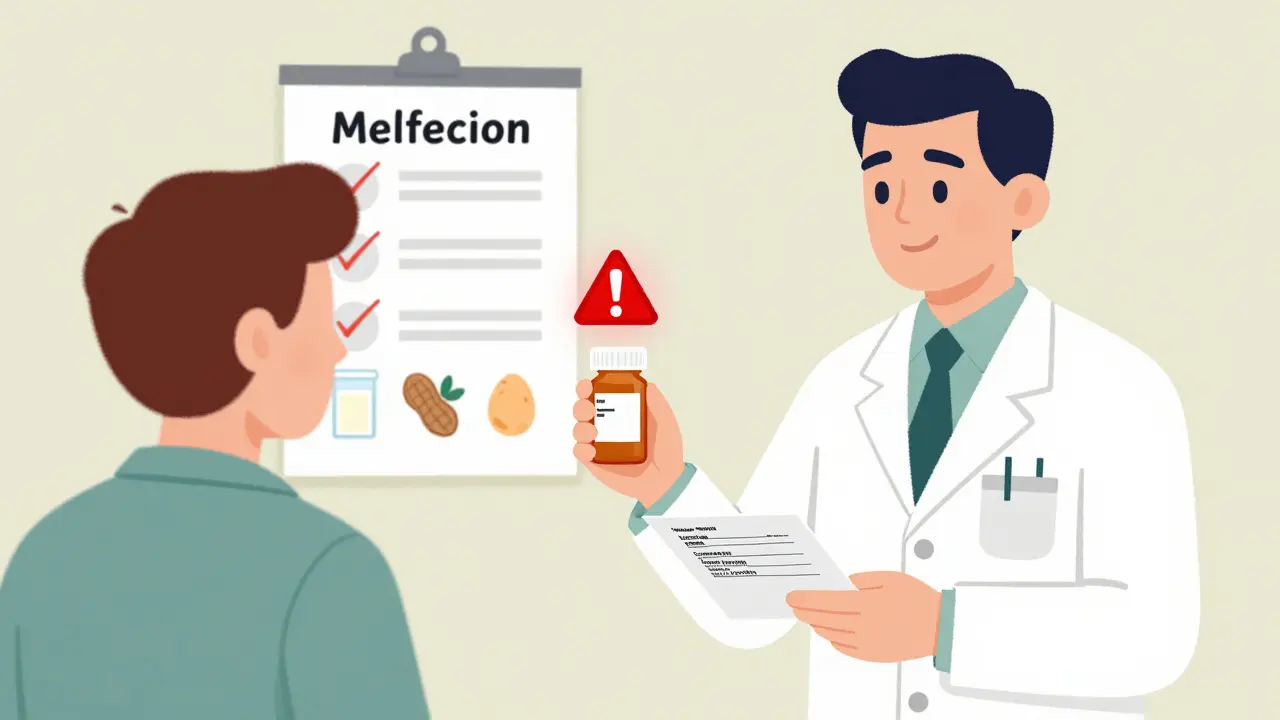
When you get a new prescription, don’t just take it and go. Stop. Ask your pharmacist for the complete list of inactive ingredients. Most pharmacies have this info on file - either in their system or printed in the insert. Don’t settle for “it’s safe.” Ask specifically: “Does this contain lactose, soy, peanuts, or egg derivatives?”Write it down. Or take a photo. Keep a list of your personal allergens and cross-reference it every time you get a new med. If your pharmacist doesn’t know, ask them to call the manufacturer. That’s their job. And if you’re switching from a brand-name drug to a generic, assume nothing. Even if they’re chemically identical, the fillers can be totally different.
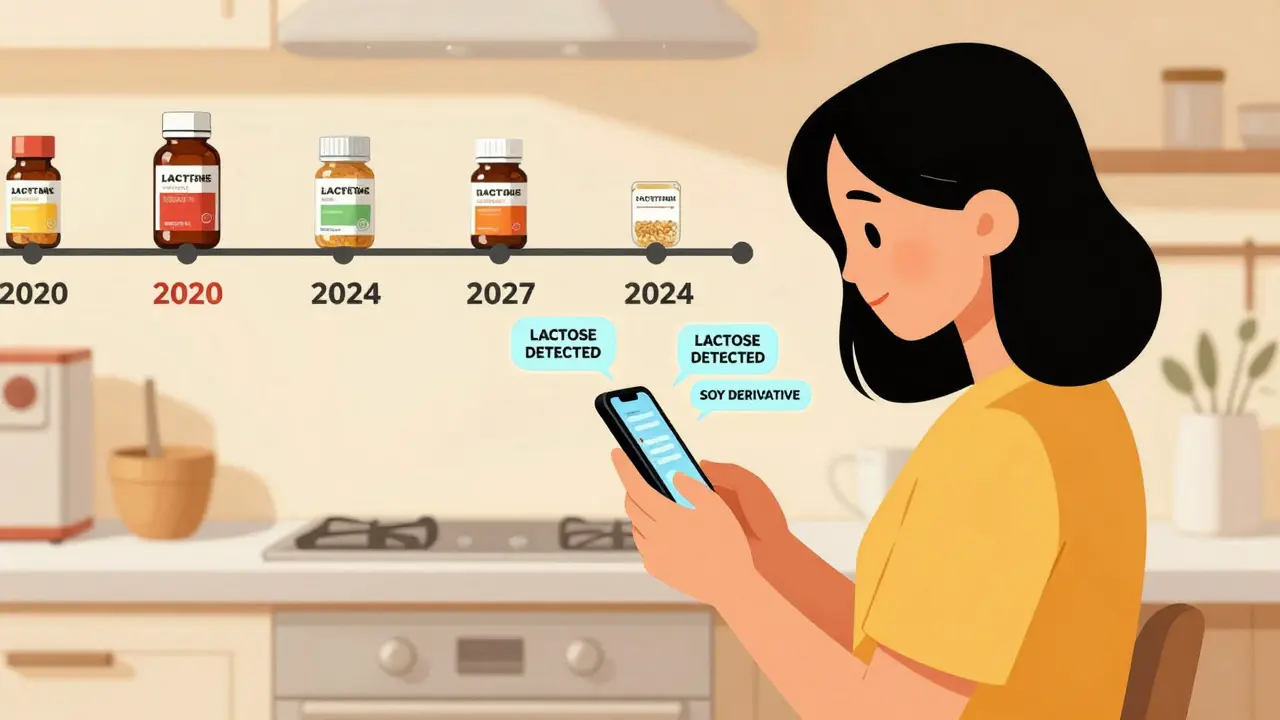
Some pharmacies now offer digital tools - apps or online portals - where you can upload your allergies and get alerts when a new prescription might contain a trigger. Ask if your pharmacy offers this. If they don’t, it’s worth switching to one that does.
Red Flags to Watch For
Here are the sneaky terms that often hide allergens:- Casein, whey, lactose - all come from milk
- Arachis oil - that’s peanut oil
- Soy lecithin, soy protein - common in pills and capsules
- Starch - could be corn, wheat, or potato. If it doesn’t say which, ask.
- Gluten - not a federally regulated allergen in food (except for wheat), but many people react to it. Check if a product says “gluten-free” - if not, assume it’s not safe.
- Natural flavors, artificial flavors, spices - these are black boxes. If you’re allergic to any of the top nine, assume they might contain your trigger unless proven otherwise.
Also, watch for “may contain” statements on food. These are voluntary. They mean the product was made on shared equipment - so trace amounts could be present. About 63% of people think “may contain nuts” means the product intentionally has nuts. It doesn’t. It means there’s a risk of cross-contact. That’s still enough to trigger a reaction in some people.
What to Do When You’re Unsure
If you’re ever in doubt - about food or medicine - don’t guess. Here’s what to do:- Check the label twice. Once quickly, once slowly. Look for the “Contains” statement and parentheses.
- Call the manufacturer. Most have a customer service line. Ask: “Does this product contain [allergen]?” They’re required to answer.
- Ask your pharmacist. For prescriptions, they’re your best defense. Don’t be shy. This is their job.
- Use a trusted app. Apps like AllergyEats Scan (launched in early 2024) use your phone’s camera to read ingredient lists and flag allergens. Beta users reported 92% accuracy.
- Keep a written list. Write down your allergens and share it with your doctor and pharmacist. Update it every time you have a reaction.
There’s no shortcut. But over time, it gets easier. You start recognizing patterns. You learn which brands are consistent. You find stores that prioritize allergen transparency. And you stop assuming.
Why This Matters More Than You Think
Food allergen mislabeling is the #1 reason for food recalls in the U.S. - accounting for 40% of all recalls between 2020 and 2023. That’s not a small number. That’s millions of products pulled from shelves because someone didn’t label sesame correctly.And for people with allergies, the cost isn’t just physical. A 2023 FARE survey found that 68% of allergy sufferers feel anxious every time they shop. That’s not just stress - it’s trauma. Every label check is a gamble. And if you’re not reading carefully, you’re gambling with your life.
But here’s the good news: You’re not alone. And you don’t have to do it perfectly. You just have to be consistent. One minute per product. Two minutes for a new prescription. That’s all it takes to avoid a trip to the ER.
Brands that get this right - like those with both “Contains” statements and clear parentheses - get 4.7-star ratings on Amazon. The ones that don’t? They get 3.2. People notice. And they vote with their wallets. The market is shifting. More companies are labeling clearly. More pharmacies are offering allergy alerts. The tools are there. You just have to use them.
Are inactive ingredients in medicine always listed on the label?
No. Unlike food, medications are not required to list allergens in the inactive ingredients on the bottle. The full list is usually only in the package insert or available through the manufacturer. Always ask your pharmacist for the complete list of inactive ingredients - especially if you have allergies to milk, soy, peanuts, or eggs.
Can I trust ‘may contain’ labels on food?
Not completely. ‘May contain’ statements are voluntary and not standardized. They mean the product was made on equipment that also processes allergens, so trace amounts could be present. For some people, even tiny amounts can cause reactions. If you’re highly sensitive, treat ‘may contain’ as a warning - not a suggestion.
Why do I have a reaction to a food I’ve eaten before?
Formulations change. A brand might switch suppliers, change their manufacturing process, or update ingredients without changing the packaging. In 2022, FARE reported that 28% of allergic reactions happened because the product had been reformulated. Always check the label every time - even if you’ve bought it before.
Is sesame really a major allergen now?
Yes. Since January 1, 2023, sesame is the ninth major food allergen under U.S. law. It must be clearly labeled, just like peanuts or milk. It can hide in bread, hummus, sauces, and spice blends. If you see “spices” or “natural flavors,” and you’re allergic to sesame, ask for details.
What should I do if my pharmacist doesn’t know about inactive ingredients?
Ask them to contact the manufacturer directly. Every pharmacy has access to manufacturer databases. If they refuse or say it’s not their job, find a new pharmacy. Your safety matters more than convenience. Some pharmacies now offer allergy alert services - ask if yours does.



Oladeji Omobolaji
23 January 2026 - 09:22 AM
Man, I never thought about meds having allergens like food does. I just swallow whatever the doctor gives me. Guess I’m lucky I haven’t reacted yet, but I’m gonna start asking my pharmacist now.
Susannah Green
24 January 2026 - 19:10 PM
Yes!! This is so important. I’m allergic to soy lecithin-and it’s in EVERYTHING. I keep a printed list of safe brands. Always check the insert. Always. No exceptions. Your life depends on it.
Sue Stone
24 January 2026 - 21:07 PM
Same. I used to ignore 'may contain' until my kid had a reaction. Now I treat it like a red light. Stop. Don't proceed. No exceptions.
dana torgersen
25 January 2026 - 03:19 AM
...I read labels like they’re sacred texts... but sometimes... I just... I don’t know... I just feel so tired of it all...? Like, why is it on ME to do all this work? Why isn’t it just... safer?!!??
Sallie Jane Barnes
27 January 2026 - 02:16 AM
You’re not alone. This is exhausting. But you’re also not wrong. The system should be better. That’s why I started sharing my allergy list with my pharmacy. They now auto-flag anything risky. It’s a small win, but it helps.
Vanessa Barber
27 January 2026 - 06:46 AM
Actually, I think the whole allergen labeling thing is overblown. Most people just panic over tiny traces. I’ve eaten things with 'may contain nuts' for years. Never had a problem.
charley lopez
29 January 2026 - 04:56 AM
The absence of standardized allergen disclosure in pharmaceuticals represents a significant gap in pharmacovigilance infrastructure. The FDA’s regulatory framework for inactive ingredients remains non-uniform, creating variable risk exposure across patient populations.
Kerry Evans
29 January 2026 - 14:00 PM
People like you who say 'it's overblown' are the reason others die. You don't know what you're talking about. If you had a child with anaphylaxis, you'd shut up and learn.
Janet King
31 January 2026 - 01:30 AM
Always ask your pharmacist. Always. Write down your allergens. Keep a copy with you. This is not optional. It is basic safety. You are responsible for your health.
Laura Rice
1 February 2026 - 01:03 AM
When I found out my birth control had lactose... I cried. Like, full ugly tears. I’d been taking it for 5 years. No one told me. I thought I was fine. Turns out, I wasn’t. Now I check every pill like it’s a bomb. And I tell everyone. You have to.
Kerry Moore
1 February 2026 - 11:30 AM
Thank you for this comprehensive guide. I’ve been managing food allergies for over a decade, but the medication aspect was completely unknown to me. I will be scheduling a consultation with my pharmacist this week to document all my current prescriptions. Your point about digital alerts is particularly valuable. I will investigate whether my pharmacy offers this service.