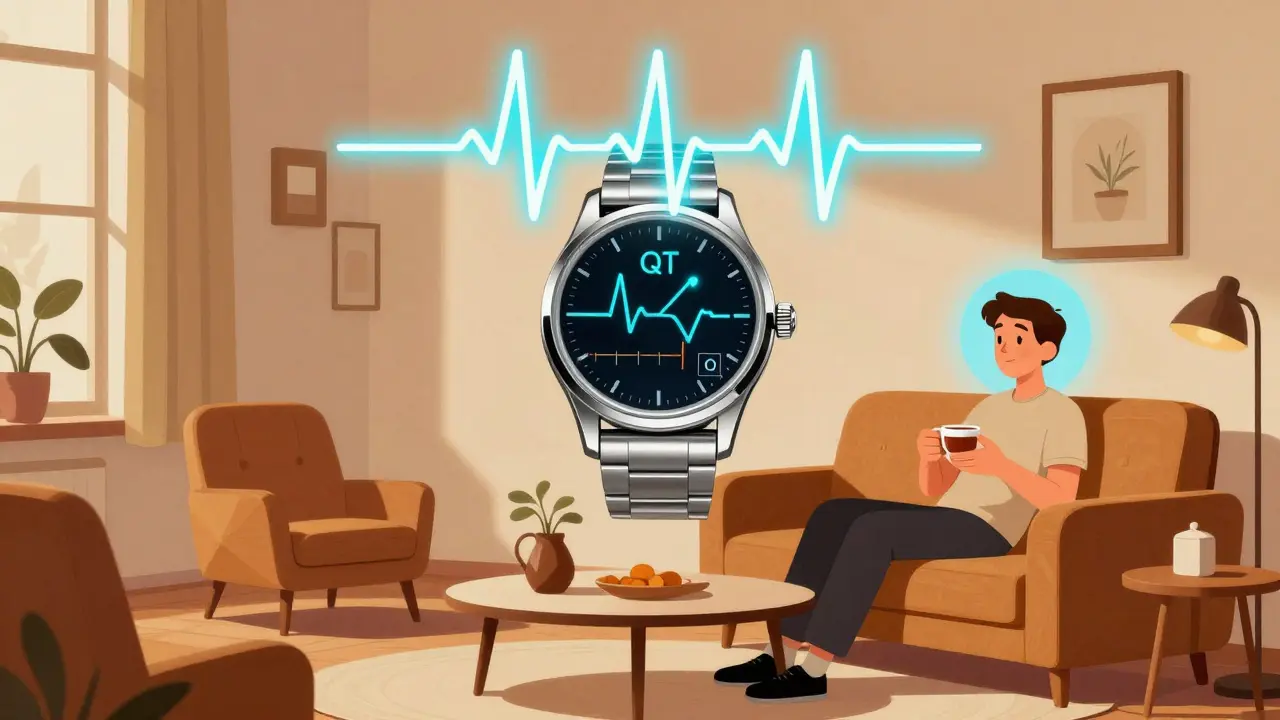
QT Interval Risk Calculator
Understand Your QT Interval Risk
This tool helps you interpret your QT interval measurement in the context of the article's medical guidelines. Input your measurement below to determine risk level.
Risk Assessment
Your QT interval is within safe limits. No immediate risk of torsades de pointes.
Normal threshold: 450ms (male) / 460ms (female)
Risk Assessment
Your QT interval is in the borderline range. Consult your healthcare provider for further evaluation.
Borderline threshold: 470-500ms
Risk Assessment
Your QT interval exceeds safe limits. This indicates increased risk of torsades de pointes. Contact your healthcare provider immediately.
Danger threshold: >500ms
Note: This tool is for educational purposes only. Always consult your healthcare provider for medical interpretation of ECG results.
Refer to article guidelines for more information on wearable ECGs.
Imagine taking a medication that could save your life-but also carries a quiet, invisible risk. That’s the reality for thousands of people prescribed drugs like certain antibiotics, antipsychotics, or antiarrhythmics. These medications can unintentionally stretch the heart’s electrical cycle, lengthening the QT interval. When this happens, the risk of a deadly heart rhythm called torsades de pointes spikes. Until recently, detecting this danger meant frequent clinic visits, bulky Holter monitors, or waiting for symptoms to appear. Now, a new generation of wearable ECG devices is changing that. They’re not just fitness trackers. They’re real-time cardiac safety tools you can wear on your wrist or hold in your hand.
What Is the QT Interval, and Why Does It Matter?
The QT interval is a tiny slice of your heart’s electrical activity. It’s the time between the start of the Q wave and the end of the T wave on an ECG-essentially, how long it takes your heart’s ventricles to recharge after each beat. Normal is under 450 milliseconds in men and 460 in women. But when drugs, electrolyte imbalances, or genetic conditions stretch that window beyond 500 ms, your heart can misfire. That’s when torsades de pointes, a chaotic, life-threatening rhythm, can kick in. Sudden cardiac death isn’t always loud. Sometimes, it’s silent. And until now, catching it early meant being in a hospital.
How Wearable ECGs Detect QT Prolongation
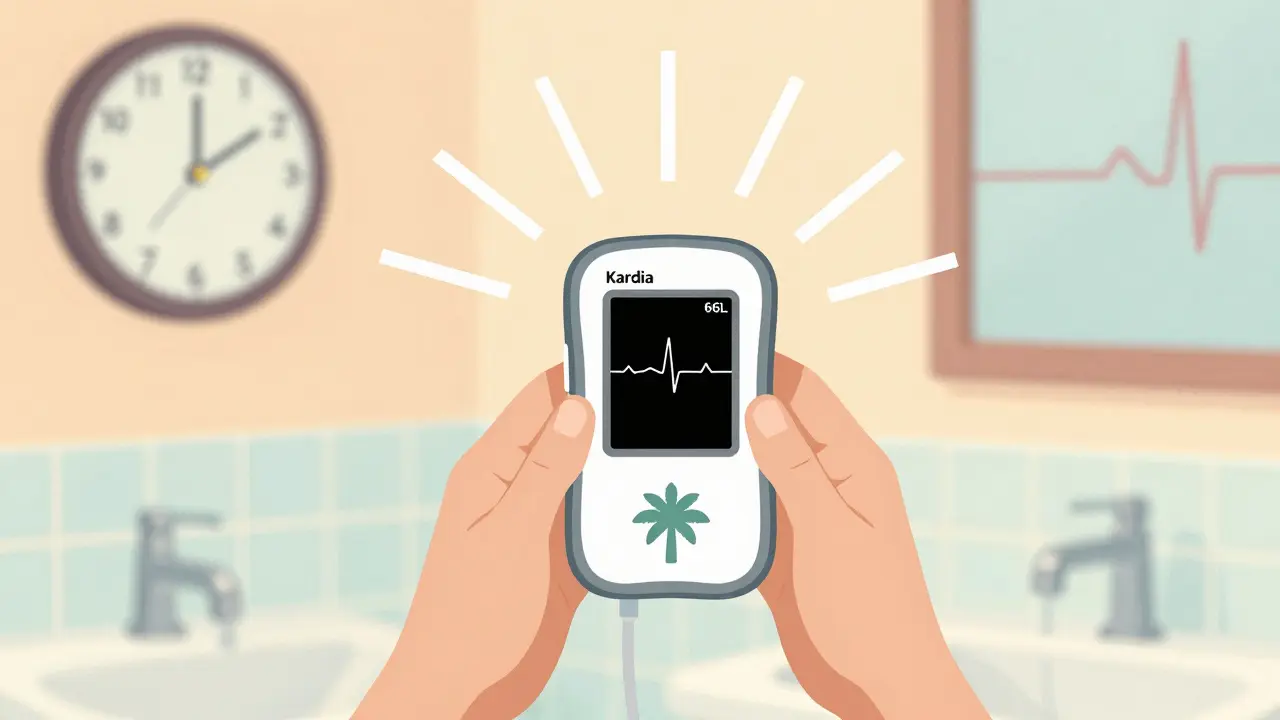
Devices like the Apple Watch Series 4 and later, and the KardiaMobile 6L, don’t just count steps. They record actual electrocardiograms. The Apple Watch uses a single-lead system: you touch the digital crown with your finger to complete the circuit. In 30 seconds, it captures a clean ECG trace from your heart. The KardiaMobile 6L is a little different. It’s a palm-sized device with electrodes on both top and bottom. You place your thumbs on the top, and your left foot or ankle on the bottom. That setup creates a six-lead recording-similar to what you’d get in a doctor’s office, just without the wires.
These aren’t guesses. Studies show they’re accurate. In a 2021 validation study, researchers compared Apple Watch ECGs to standard 12-lead ECGs. The correlation for QT interval measurements was over 0.88 in key leads. That’s stronger than many clinical tools used in routine care. The KardiaMobile 6L matched standard ECG readings within ±20 milliseconds in a 2024 Cleveland Clinic review. That’s well within the margin of safety for clinical decisions.
The Pandemic That Accelerated a Medical Revolution
The push for wearable QT monitoring didn’t start in a lab. It started in emergency rooms overwhelmed by COVID-19 patients. In 2020, doctors began using hydroxychloroquine and azithromycin to treat the virus-both known to prolong the QT interval. Hospitals couldn’t handle the volume of ECGs needed to monitor every patient. That’s when the FDA stepped in. In April 2020, they issued emergency guidance allowing the use of the KardiaMobile 6L for QT interval measurement in COVID-19 patients. It was the first time a consumer-grade device was officially cleared for this specific clinical use.
Dr. Jason Chinitz, who published one of the first case reports using an Apple Watch to monitor a patient on these drugs, saw firsthand how critical this was. The device caught QT prolongation before the patient had symptoms. Without it, the risk of sudden cardiac arrest would’ve been much higher. That moment shifted the needle. Wearables weren’t just for fitness anymore. They became part of clinical safety protocols.
Who Benefits Most From This Technology?
Three groups are seeing the biggest impact:
- Patients on high-risk medications: Those taking drugs like clarithromycin, fluoxetine, or sotalol can now monitor their QT interval at home. No more weekly clinic trips. Just a 30-second check before bed.
- Clinical trial participants: Pharmaceutical companies are using these devices in Phase I-III trials to monitor cardiac safety in real time. This reduces dropout rates, improves data quality, and speeds up drug approval. One study found wearable ECGs cut monitoring costs by nearly 40% compared to traditional Holter monitors.
- People with inherited long QT syndrome: Genetic heart conditions mean lifelong risk. Wearables give families peace of mind. A 2024 study using AI to analyze single-lead ECGs from wearable devices correctly flagged QT prolongation in 92% of patients with known long QT syndrome.
Limitations: What These Devices Can’t Do
They’re powerful, but not perfect. These devices aren’t designed to diagnose every heart problem. The Apple Watch’s sensitivity for detecting Q waves-signs of prior heart attacks-is only around 20%. It won’t catch every arrhythmia. It also doesn’t work well if your skin is dry, cold, or sweaty. High skin-to-electrode impedance can muddy the signal. That’s why proper use matters: clean skin, steady hands, and following instructions exactly.
Another gap: no consumer device has an FDA-cleared algorithm that automatically flags QT prolongation. Right now, the ECG is recorded and sent to a clinician for interpretation. That means you still need a doctor to review the results. But that’s changing fast.
The Rise of AI: From Detection to Prediction
The next leap isn’t just better hardware. It’s smarter software. In 2024, researchers at Stanford and MIT trained a deep learning model using over 680 patient ECGs. The model, built on a Residual Neural Network, analyzed just two beats from a single-lead ECG to predict if the QT interval was dangerously prolonged. It didn’t need a full 12-lead ECG. It didn’t need a cardiologist. It just needed data.
This isn’t science fiction. It’s the future. Within the next two years, we’ll see wearables that don’t just record QT intervals-they’ll alert you if your risk is rising. Imagine your smartwatch saying, “Your QT interval has increased 15% over the last week. Please contact your doctor.” That’s not a dream. It’s what researchers are building now.
Real-World Use: How to Get Started
If you’re on a QT-prolonging drug and your doctor thinks you’d benefit from monitoring:
- Ask your cardiologist or pharmacist if a wearable ECG is appropriate for you.
- Get a device cleared for QT monitoring: Apple Watch Series 4 or later, or KardiaMobile 6L.
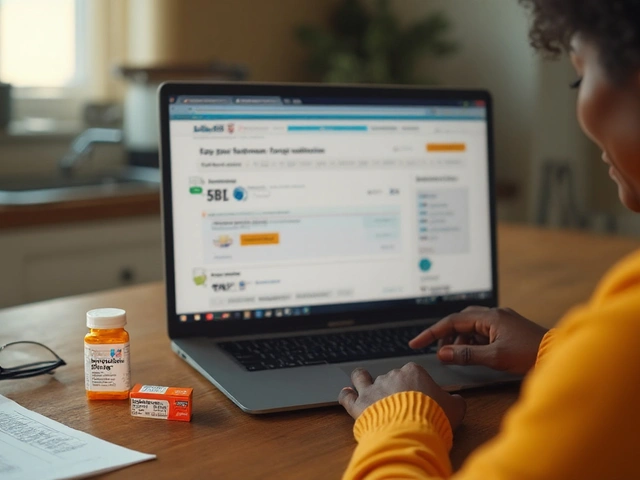
- Learn how to use it correctly. For the Apple Watch: sit still, place your finger on the crown, and hold for 30 seconds. For KardiaMobile 6L: place thumbs on top, left foot on bottom.
- Record at the same time each day-ideally after waking or before bed.
- Share results with your doctor weekly or as instructed.
Don’t skip the follow-up. The device gives you data. Your doctor gives you context.
What’s Next?
The market is exploding. AliveCor now has FDA clearance for 16 different ECG-based indications, including QT monitoring. Smart rings and clothing with embedded sensors are coming. The goal isn’t just to detect QT prolongation-it’s to predict it. To see the early warning signs before the interval even stretches. To turn sudden cardiac death from a surprise into a preventable event.
This isn’t about replacing doctors. It’s about giving them better tools-and giving patients more control. The heart doesn’t wait for clinic hours. Neither should monitoring.
Can I rely on my Apple Watch to detect dangerous QT prolongation?
The Apple Watch can accurately measure the QT interval when used correctly, with studies showing strong correlation to standard 12-lead ECGs. However, it does not have an automated algorithm that flags dangerous prolongation. You must share the ECG tracing with a healthcare provider for interpretation. It’s a monitoring tool, not a diagnostic one.
Is the KardiaMobile 6L better than the Apple Watch for QT monitoring?
The KardiaMobile 6L records a six-lead ECG, which provides more detailed information than the Apple Watch’s single lead. Studies show its measurements are comparable to standard 12-lead ECGs, making it more reliable for clinical use. The Apple Watch is more convenient for daily use, but KardiaMobile 6L gives more data. Choose based on your doctor’s recommendation and your specific needs.
Do I need a prescription to use a wearable ECG for QT monitoring?
You don’t need a prescription to buy the Apple Watch or KardiaMobile 6L. But to use them for medical monitoring-especially if you’re on a high-risk medication-you should have a doctor’s guidance. Some insurance plans cover these devices if prescribed for cardiac safety monitoring.
Can these devices replace a 12-lead ECG in the hospital?
No. While wearable ECGs are accurate enough for outpatient monitoring and early detection, a 12-lead ECG in a clinical setting remains the gold standard for full cardiac assessment. Wearables are best used as a supplement-helping catch problems before they become emergencies.
Are there any risks to using a wearable ECG device?
The main risk is false reassurance. If the device shows a normal QT interval, it doesn’t mean your heart is completely safe. Other issues like ischemia, heart failure, or electrolyte imbalances won’t be detected. Always follow up with your doctor if you have symptoms like dizziness, fainting, or palpitations-even if your device looks normal.


Andrew Freeman
15 January 2026 - 22:19 PM
cant believe we're paying for this like its magic. my apple watch gives me heart rate and step count, now its a cardiologist? lol
says haze
17 January 2026 - 11:19 AM
The commodification of cardiac surveillance under the guise of consumer empowerment is a neoliberal fantasy wrapped in aluminum casing. We are not patients-we are data points in a corporate feedback loop masquerading as healthcare innovation.
TooAfraid ToSay
19 January 2026 - 06:42 AM
this is why america is falling apart. you let a watch tell you if your heart is gonna kill you but you can't afford insulin? someone call the news
Robert Way
20 January 2026 - 00:42 AM
i tried using my apple watch for this but my hand kept sweating and it kept saying error. so now im just scared all the time
Sarah Triphahn
20 January 2026 - 13:20 PM
if you need a device to tell you your heart is in danger then maybe you shouldn't be on the drug in the first place. stop outsourcing your responsibility to tech
Allison Deming
22 January 2026 - 00:28 AM
It is profoundly concerning that society has come to accept consumer-grade electronics as viable substitutes for clinical-grade diagnostics. The erosion of medical authority in favor of algorithmic convenience is not progress-it is perilous.
Dylan Livingston
22 January 2026 - 15:37 PM
Oh wow, so now my smartwatch is going to save me from the pharmaceutical industry's negligence? How noble. Meanwhile, my co-pay for the actual drug that caused this problem is $400. Thanks, capitalism.
Anna Hunger
23 January 2026 - 06:33 AM
If you're on a medication with known QT risks, this technology can be a powerful tool to empower you with awareness. Always consult your provider, but having real-time data can prevent crises. You're not alone in this journey.
Jason Yan
24 January 2026 - 00:03 AM
I think this is kind of beautiful honestly. We're moving from reactive medicine to proactive care. The heart doesn't keep office hours, so why should monitoring? It's not about replacing doctors-it's about giving people back some control. Small steps, big impact.
shiv singh
25 January 2026 - 23:58 PM
this is why your kids are dying. you let a $300 watch decide if your heart is safe instead of fixing the system that makes people take dangerous drugs in the first place. america is a sick joke
Vicky Zhang
26 January 2026 - 17:05 PM
I had a cousin who went into torsades from a simple antibiotic. She was 28. If this tech had been around then... I don't even want to think about it. This isn't just tech-it's a lifeline for people who live in fear every time they take a pill.
Susie Deer
28 January 2026 - 05:47 AM
china and india are laughing at us for turning watches into heart monitors. we pay for this and then complain about healthcare costs. ridiculous
Alvin Bregman
28 January 2026 - 15:45 PM
i dont trust these devices because they dont work right when its cold outside and my skin is dry. also i think the fda is in bed with apple. why else would they approve this? i'm not buying it
Sarah -Jane Vincent
30 January 2026 - 09:32 AM
this is all a lie. the real reason they pushed this is so they can collect your heart data and sell it to insurers. next thing you know your premium goes up because your watch says you had a 'borderline' QT. they're watching you. always.
Henry Sy
30 January 2026 - 16:40 PM
man i just want to live without some gadget whispering in my ear that my heart might explode. i'm not a lab rat. i'm just a guy trying to take his meds and not get turned into a statistic. why does everything have to be monitored now?