Serotonin Syndrome Risk Calculator
Calculate Your Risk
Enter your medication details to assess serotonin syndrome risk.
Risk Assessment
Every year, millions of people get prescribed antiemetics like ondansetron (Zofran) to fight nausea from chemotherapy, surgery, or stomach bugs. At the same time, over 15 million Americans take SSRIs for depression or anxiety. What happens when these two types of drugs cross paths? The answer isn’t simple - and it can be dangerous.
What Is Serotonin Syndrome?
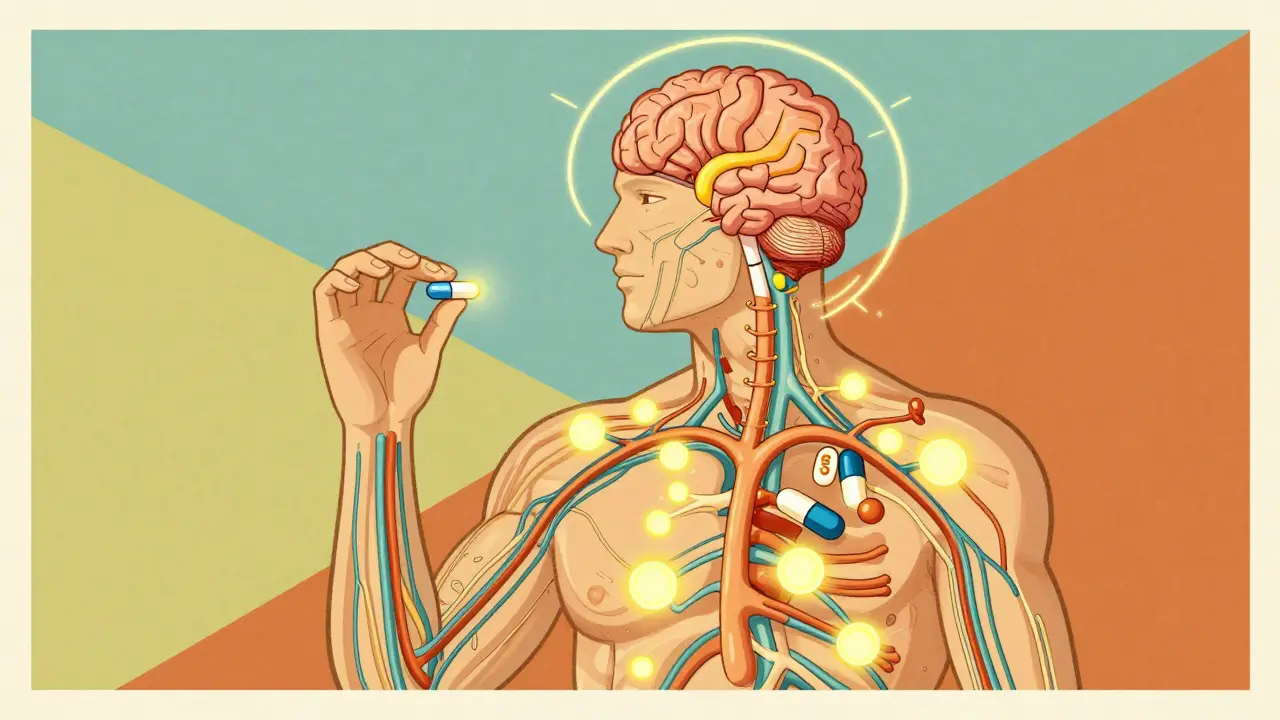
Serotonin syndrome isn’t a rare side effect you hear about in medical textbooks. It’s a real, sometimes deadly condition that happens when too much serotonin builds up in your nervous system. This isn’t about eating too many bananas or taking too much vitamin B6. It’s about drugs that push serotonin levels past a critical threshold.
Think of serotonin like a neurotransmitter that helps regulate mood, digestion, and muscle control. Normally, your body keeps it in balance. But when certain medications interfere with how serotonin is made, released, or cleared out, it floods the system. The result? Your muscles twitch uncontrollably, your heart races, your temperature spikes, and your mind gets foggy - sometimes fast.
It’s not just antidepressants that cause this. A 2023 review from the National Center for Biotechnology Information found that 85% of serotonin syndrome cases involve combinations of drugs. And among those, antiemetics are showing up more often than people realize.
How Antiemetics Fit Into the Picture
Not all antiemetics are created equal. There are three main types, and only one of them - the 5-HT3 receptor blockers - is commonly used and widely misunderstood.
- 5-HT3 antagonists like ondansetron, granisetron, and palonosetron block nausea signals in the gut and brain. They’re the most popular antiemetics today.
- Dopamine antagonists like metoclopramide and prochlorperazine work differently and carry a moderate risk.
- NK1 antagonists like aprepitant are used for severe nausea and can indirectly raise serotonin levels by slowing how fast other drugs are broken down.
The big surprise? Ondansetron doesn’t directly boost serotonin. It blocks 5-HT3 receptors - so how can it cause serotonin syndrome? The answer lies in what it doesn’t block. Studies show ondansetron may have weak effects on other serotonin pathways, especially when combined with SSRIs. A 2017 case report described a 62-year-old man who developed full-blown serotonin syndrome after taking ondansetron with citalopram. He had no other risk factors. That case wasn’t an outlier.
The Real Culprits: Drug Interactions
The biggest danger isn’t taking one antiemetic alone. It’s taking it with another serotonergic drug. Here’s what the data says:
- 96.4% of reported serotonin syndrome cases involving ondansetron also included an SSRI, SNRI, or MAOI.
- Between 2018 and 2022, emergency visits for serotonin syndrome involving antiemetics rose 29% in the U.S.
- Patients over 65 made up 41.3% of those cases - even though they’re only 18.7% of the population.
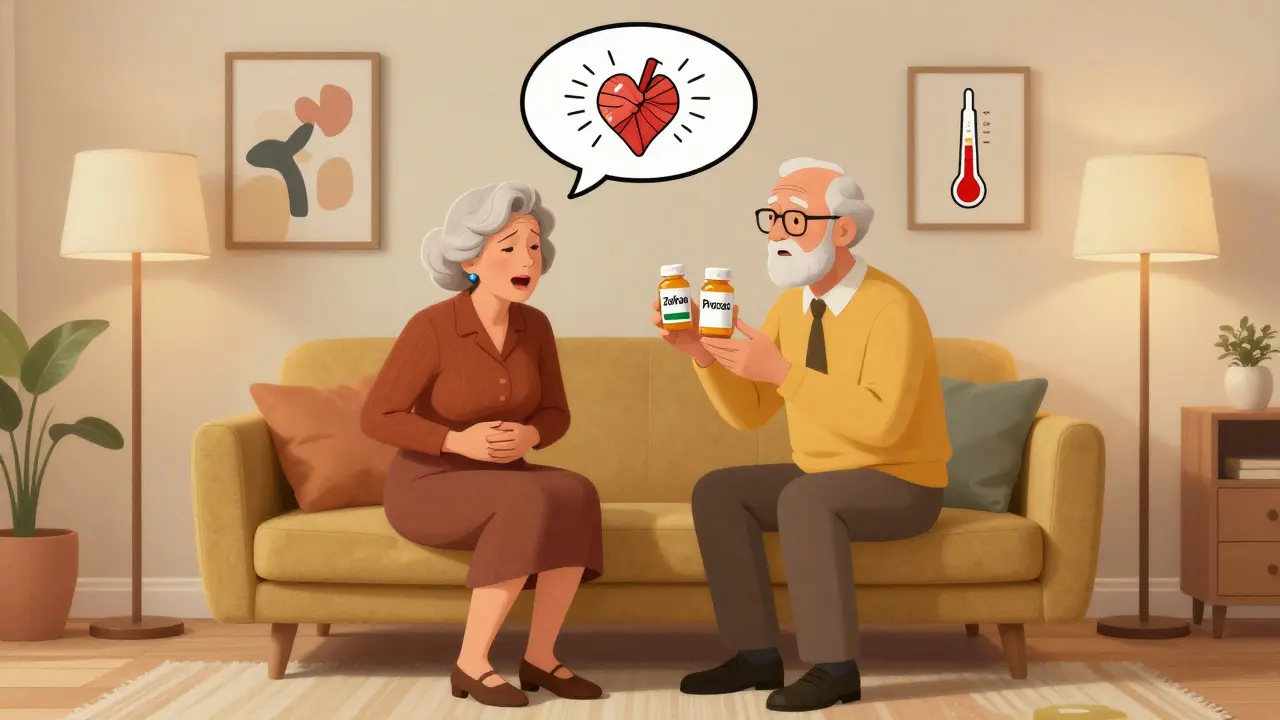
Why older adults? Their livers and kidneys don’t clear drugs as well. Plus, many take multiple medications. A common scenario: an elderly person on fluoxetine for depression gets sick with the flu, takes ondansetron for nausea, and doesn’t tell their doctor about the SSRI. Within hours, symptoms start.
Another hidden risk? Genetics. About 7-10% of people of European descent are poor metabolizers of CYP2D6, the enzyme that breaks down ondansetron. In these people, the drug stays in the body longer - and builds up. A 2020 Mayo Clinic study found that poor metabolizers had 2.3 times higher ondansetron levels than normal. That’s not a small difference. That’s a dangerous one.
What Symptoms Should You Watch For?
Recognizing serotonin syndrome early can save your life. The Hunter Criteria - the gold standard for diagnosis - says you need at least one of these combinations:
- Spontaneous clonus plus agitation or diaphoresis
- Inducible clonus plus agitation or diaphoresis
- Eye clonus plus tremor
- Hyperreflexia plus fever
Most common signs you’ll notice:
- Tremors or shaking (78.2% of cases)
- Overactive reflexes (63.4%)
- Confusion, agitation, or hallucinations (54.1%)
- Fast heart rate, high blood pressure, sweating
- Fever above 100.4°F (38°C)
It usually shows up within hours of taking a new drug or increasing a dose. If you’re on an SSRI and get ondansetron for nausea - and then feel restless, shaky, or sweaty - don’t wait. Go to the ER.
Which Antiemetics Are Riskiest?
Here’s how different antiemetics stack up in terms of serotonin syndrome risk:
| Antiemetic | Class | Risk Level | Key Mechanism | Notes |
|---|---|---|---|---|
| Ondansetron | 5-HT3 antagonist | Moderate | Weak off-target SERT inhibition | Most commonly reported in case studies. Risk increases with CYP2D6 inhibitors (e.g., fluoxetine). |
| Metoclopramide | Dopamine antagonist | Moderate | Mild SERT inhibition | 17 confirmed cases between 2004-2018. Avoid with SSRIs in elderly. |
| Aprepitant | NK1 antagonist | Low to Moderate | CYP3A4 inhibition | Can raise SSRI levels. Use caution with sertraline or escitalopram. |
| Dexamethasone | Corticosteroid | Low | No serotonergic activity | Safer alternative for cancer patients on SSRIs. |
| Prochlorperazine | Dopamine antagonist | Low | Minimal serotonin interaction | Often used for migraines. Lower risk than metoclopramide. |
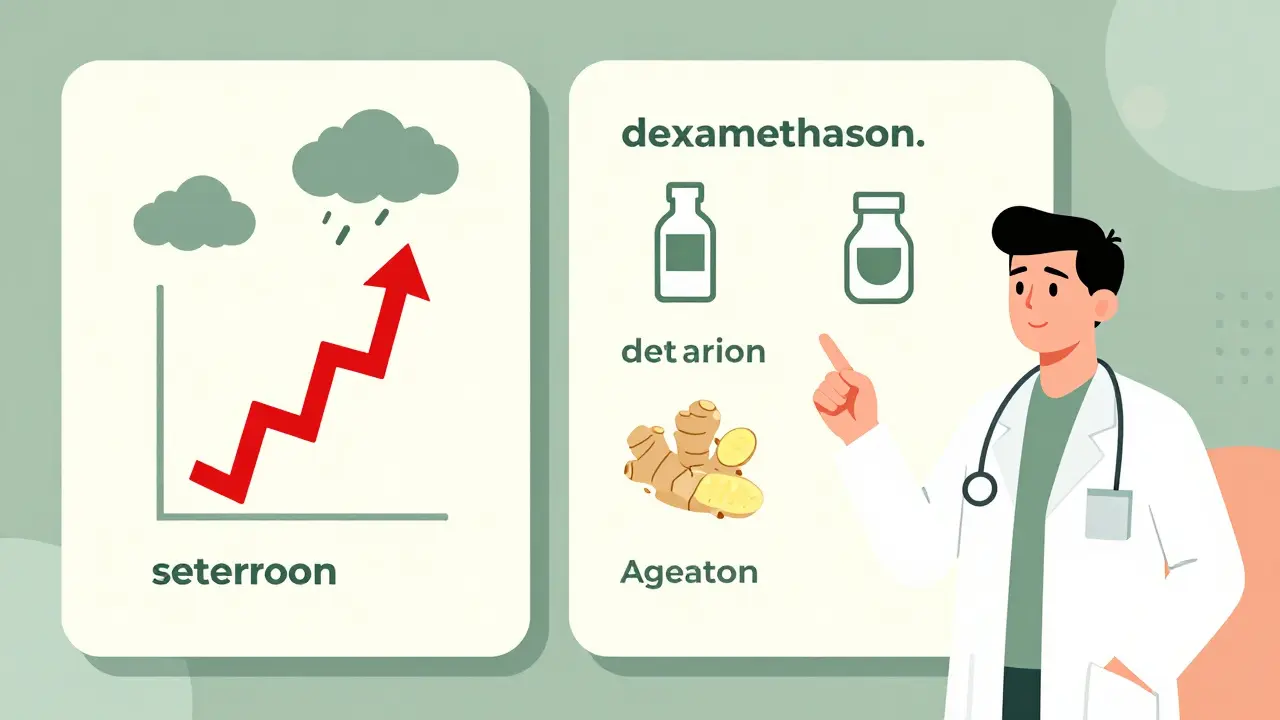
Palonosetron - a newer 5-HT3 blocker - shows promise. A March 2023 study found switching from ondansetron to palonosetron cut serotonin syndrome risk by 63% in patients on SSRIs. That’s not a coincidence. Its different binding pattern may reduce off-target effects.
What Should You Do?
If you’re on an SSRI, SNRI, or MAOI - and you need help with nausea - here’s what to do:
- Tell your doctor about every medication you take. This includes over-the-counter drugs, herbal supplements, and even CBD. Many don’t realize these can interact.
- Ask about alternatives. Dexamethasone, metoclopramide (in low doses), or even ginger may be safer depending on your situation.
- Check your genetics. If you’re on long-term SSRIs and need frequent antiemetics, ask about CYP2D6 testing. It’s not routine - but it should be for high-risk patients.
- Watch for symptoms. If you feel tremors, confusion, or a sudden spike in temperature after taking an antiemetic, stop the drug and get help immediately.
- Don’t assume it’s "just a side effect." Serotonin syndrome can look like the flu, anxiety, or a panic attack - until it doesn’t.
What Happens If It Happens?
If serotonin syndrome is suspected, the first step is simple: stop all serotonergic drugs. No exceptions. No waiting. No hoping it gets better.
Supportive care - cooling the body, IV fluids, and monitoring vital signs - is critical. But the only specific antidote is cyproheptadine. It’s an old antihistamine that blocks serotonin receptors. The standard dose: 4-8 mg orally, repeated every 2 hours until symptoms improve. In severe cases, doctors may use dexmedetomidine, which calms serotonin release without sedating the patient like benzodiazepines do.
Recovery usually takes 24-72 hours if caught early. But if it’s missed? Organ failure, seizures, and death can follow within hours.
The Bottom Line
Ondansetron and other 5-HT3 antiemetics are effective. They work. They’re safe - most of the time. But they’re not risk-free, especially when mixed with antidepressants. The risk is low overall, but it’s real. And for older adults, those with genetic differences, or people on multiple drugs - it’s high enough to matter.
The solution isn’t to avoid antiemetics. It’s to use them smarter. Know your meds. Know your body. Ask questions. And if you’re unsure - don’t guess. Talk to your pharmacist or doctor. Because when serotonin gets out of balance, there’s no second chance.
Can I take ondansetron if I’m on an SSRI?
It’s possible, but not without caution. Ondansetron can increase serotonin syndrome risk when combined with SSRIs, especially in older adults or those with CYP2D6 genetic variations. If you need it, your doctor may lower the dose, choose a different antiemetic like dexamethasone, or monitor you closely. Never take it without telling your prescriber about your SSRI.
Is serotonin syndrome common?
No - it’s rare. About 4.2 cases occur per 100,000 antiemetic prescriptions. But it’s serious. Over 85% of cases involve drug combinations, and symptoms can escalate quickly. Because it’s rare, many doctors don’t recognize it right away - which is why patient awareness matters.
Do all antiemetics cause serotonin syndrome?
No. Only certain types carry risk. 5-HT3 antagonists like ondansetron have the most documented cases, but dopamine blockers like metoclopramide and NK1 antagonists like aprepitant can also contribute - usually through indirect drug interactions. Non-serotonergic options like dexamethasone or ginger have no known risk.
What should I do if I feel shaky after taking ondansetron?
Stop taking the drug immediately. Call your doctor or go to the nearest emergency room. Symptoms like tremors, confusion, high fever, or fast heartbeat are warning signs of serotonin syndrome. Don’t wait. Don’t assume it’s anxiety or the flu. Time matters.
Are there safer antiemetics for people on antidepressants?
Yes. Dexamethasone (a steroid) is often preferred for cancer patients on SSRIs because it has no serotonergic activity. Ginger supplements, acupuncture, and low-dose metoclopramide (with caution) are also alternatives. Palonosetron may be safer than ondansetron. Always discuss options with your prescriber - don’t switch on your own.




Zola Parker
24 March 2026 - 23:57 PM
So let me get this straight - we’re scared of a drug that helps people stop puking because it might, maybe, kinda, under very specific conditions, interact with antidepressants? 🤔 I mean, sure, the data’s there, but is this really the hill to die on? We’re medicalizing normal human biology now? Like, if your serotonin’s too high, maybe you just need to go for a walk and stop doomscrolling. 🌞🍃
Elaine Parra
25 March 2026 - 12:51 PM
This is what happens when you let pharmaceutical companies write your guidelines. Ondansetron is a $12 pill. SSRIs are $400/month. Who profits when you panic people into avoiding a safe antiemetic? The answer isn’t in the literature - it’s in the boardroom. They want you scared of the drug that works so you’ll buy the one that’s ‘safer’ - which is just a rebranded version of the same thing with a higher price tag. Wake up.
Natasha Rodríguez Lara
26 March 2026 - 16:31 PM
I’m a nurse in a geriatric ward, and this post saved my life last month. An 81-year-old patient on sertraline got sick after chemo and took Ondansetron. Within 3 hours, she was trembling, sweating, and confused. We thought it was a UTI until we remembered the interaction. We stopped the drug, gave her fluids, and she bounced back by morning. I wish more people knew this. It’s not fear-mongering - it’s prevention. And yes, genetic testing matters. My grandma’s CYP2D6 status changed her entire med list. Knowledge is power.
peter vencken
27 March 2026 - 17:36 PM
honestly i had no idea ondansetron could do this. i’ve been takin it for years with my citalopram. my doc never said nothin. i’m gonna call em tomorrow. also, cyp2d6? never heard of it. maybe i should get tested. thanks for the heads up, this is real info. 🙏
James Moreau
28 March 2026 - 21:53 PM
I appreciate the depth here. Most people think 'antidepressant + nausea med = bad' and stop there. But this breaks down the actual mechanisms - the off-target effects, the metabolism pathways, the age and genetics factors. It’s not just 'don’t mix them.' It’s 'here’s how to navigate it safely.' That’s the kind of nuance we need more of in public health messaging.
J. Murphy
30 March 2026 - 07:48 AM
So what? We’ve got stats. Big deal. Who died? Name one person. I’ve seen 100s of people on Zofran and SSRIs. None of em died. This is fear porn. Stop scaring people for clicks.
Jesse Hall
31 March 2026 - 00:55 AM
I’m so glad someone wrote this. My mom had a scary episode last year - tremors, fever, she thought she was having a stroke. Turns out it was serotonin syndrome from Zofran + Lexapro. She’s fine now, but we didn’t know what was happening. This info could save someone’s life. Please share it with your family. Especially if they’re older or on meds. You never know. ❤️
Donna Fogelsong
31 March 2026 - 06:48 AM
This is all a psyop. The FDA, AMA, and Big Pharma are deliberately downplaying this because they’re profiting off the ‘antidepressant industrial complex.’ They want you dependent. They want you scared to stop. They want you taking 3 meds at once so you’ll never break free. CYP2D6? That’s a lie. The real issue is the gut-brain axis being poisoned by processed food and corporate meds. Ginger works. Why? Because it’s natural. They hate that. Don’t trust the system.