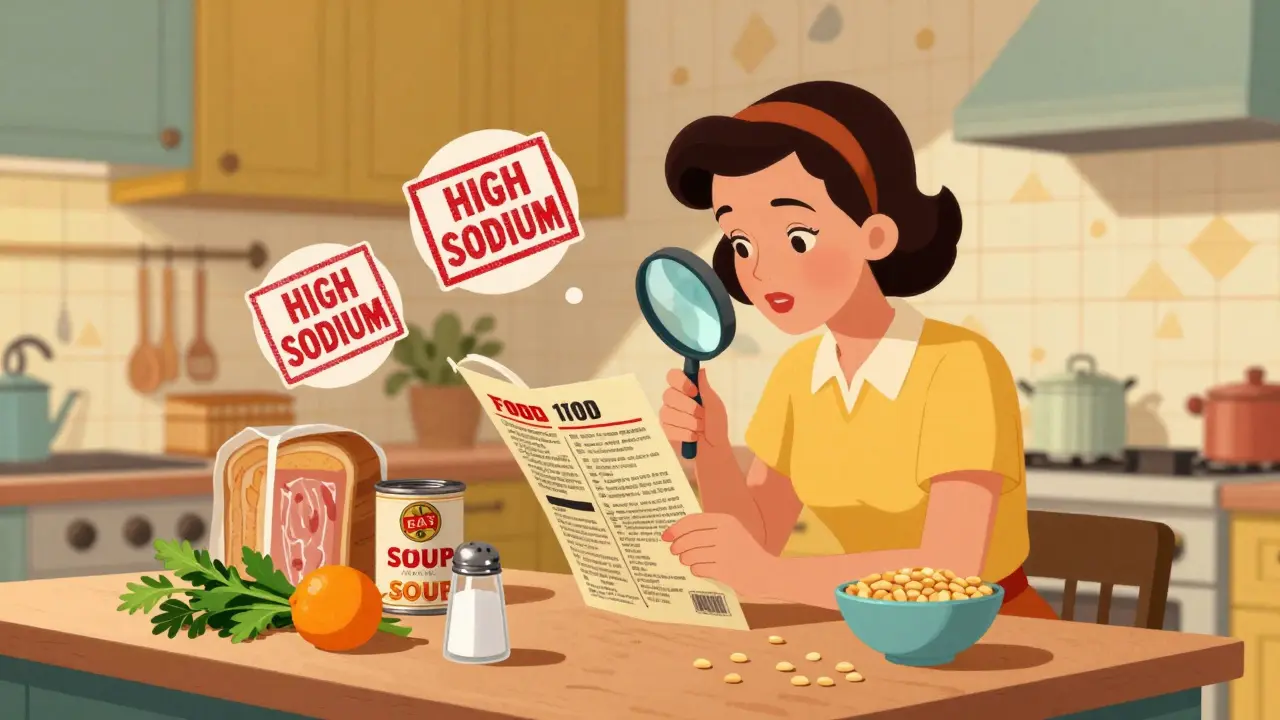
Most people don’t realize how much sodium is hiding in their food. You might think cutting back on the salt shaker is enough, but sodium doesn’t just come from the salt you add at the table. About 70% of the sodium in the average American diet comes from packaged foods, restaurant meals, and processed snacks. And for people with high blood pressure, that hidden sodium can be a silent threat.
If you’ve been told to lower your sodium intake to manage hypertension, you’re not alone. The American Heart Association recommends no more than 1,500 mg of sodium per day for optimal heart health. The World Health Organization says 2,000 mg is the max. But here’s the thing: most people eat over 3,400 mg daily. That’s nearly double the ideal limit. The good news? You don’t need to go cold turkey. Small, smart changes can bring down your blood pressure-fast.
Why Sodium Raises Blood Pressure
Your body needs a little sodium to work properly-it helps nerves fire, muscles contract, and fluids balance. But too much? That’s where problems start. When you eat excess sodium, your kidneys struggle to flush it out. So your body holds onto extra water to dilute it. More water in your bloodstream means more pressure on your artery walls. Your heart has to pump harder. Over time, that extra strain stiffens your arteries, damages your kidneys, and increases your risk of stroke and heart failure.
Research from the CARDIA-SSBP study (2023) showed that just one week of a low-sodium diet dropped systolic blood pressure by an average of 8 mm Hg in middle-aged and older adults. Even more telling: 73% of participants saw a drop in their mean arterial pressure. And 46% were classified as "salt sensitive," meaning their blood pressure reacted strongly to sodium changes. That’s not rare. About half of people with hypertension and one in four people without it are salt sensitive.
It’s not just about volume. High sodium also messes with your blood vessels. It reduces nitric oxide, a molecule that helps arteries relax. It increases stiffness in large arteries. And it can overstimulate your nervous system, keeping your heart rate and blood pressure elevated. The effects are real, measurable, and reversible.
How Much Sodium Is Too Much?
Let’s cut through the noise. You don’t need to become a nutrition scientist to get this right.
- WHO recommendation: Less than 2,000 mg per day
- AHA ideal target: 1,500 mg per day
- AHA maximum: 2,300 mg per day
- Average U.S. intake: 3,400 mg per day
That 1,500 mg target isn’t arbitrary. A 2023 Frontiers in Nutrition study using genetic data confirmed that higher sodium intake directly causes higher blood pressure and increases heart failure risk. The relationship isn’t linear, though. Going from 3,000 mg to 1,500 mg helps. Going from 1,500 mg to 800 mg? Not necessarily. Some studies suggest very low sodium might trigger stress responses in certain people, especially those with advanced heart or kidney disease.
The sweet spot? Aim for 1,500-2,000 mg daily. That’s where most people see the biggest benefits without risking unintended side effects.
Where the Sodium Really Hides
You won’t find the problem in your salt shaker. You’ll find it in:
- Store-bought bread (one slice can have 150-230 mg)
- Canned soups (one bowl: 800-1,200 mg)
- Processed meats (bacon, deli ham, sausage: 300-1,000 mg per serving)
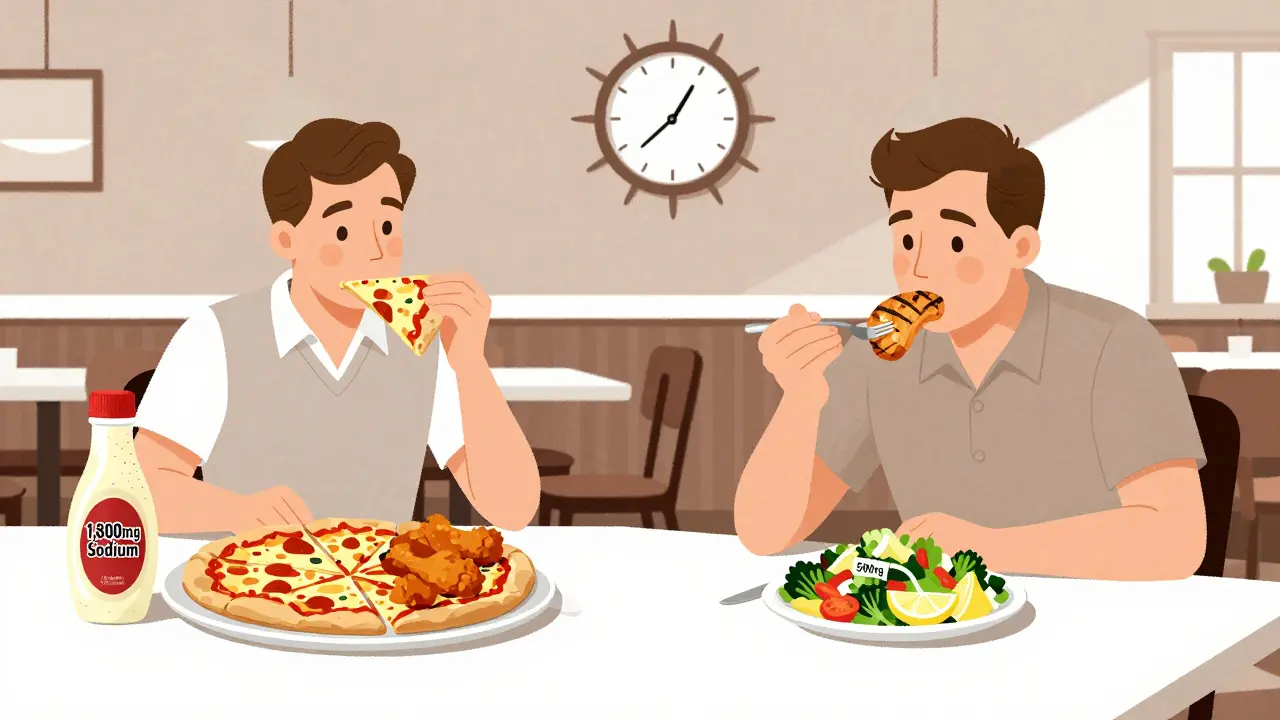
- Pizza (one slice: 600-1,000 mg)
- Restaurant meals (a single entree often hits 1,500-2,500 mg)
- Condiments (soy sauce, ketchup, salad dressings)
Even "healthy" options like granola bars, low-fat yogurt, and whole-grain cereals can be sodium bombs. One study found that a "low-fat" yogurt could have more sodium than a bag of potato chips.
The CDC says 70-75% of sodium comes from these sources. That means if you’re only avoiding table salt, you’re missing the real enemy.
Practical Ways to Cut Sodium
Here’s what actually works-not theory, not a diet guru’s five-step plan. Real, doable steps.
- Read labels like a detective. Look for "sodium" on the Nutrition Facts panel. The FDA now requires the % Daily Value to be based on 2,300 mg. If a food has more than 20% DV per serving, it’s high. Aim for under 5% per serving.
- Switch to no-salt-added or low-sodium versions. Canned beans, tomatoes, broths-they’re all available. It’s not a big cost jump. A 15-ounce can of low-sodium beans costs about the same as regular.
- Use herbs, citrus, and vinegar instead of salt. Try lemon juice, garlic powder, smoked paprika, cumin, or balsamic vinegar. These add flavor without sodium. One user on Reddit said it took three weeks for their taste buds to adjust. Then, "foods I used to eat tasted overwhelmingly salty."
- Choose fresh over packaged. A home-cooked chicken breast has about 60 mg sodium. A breaded, frozen one has 400-600 mg. Same food, different sodium.
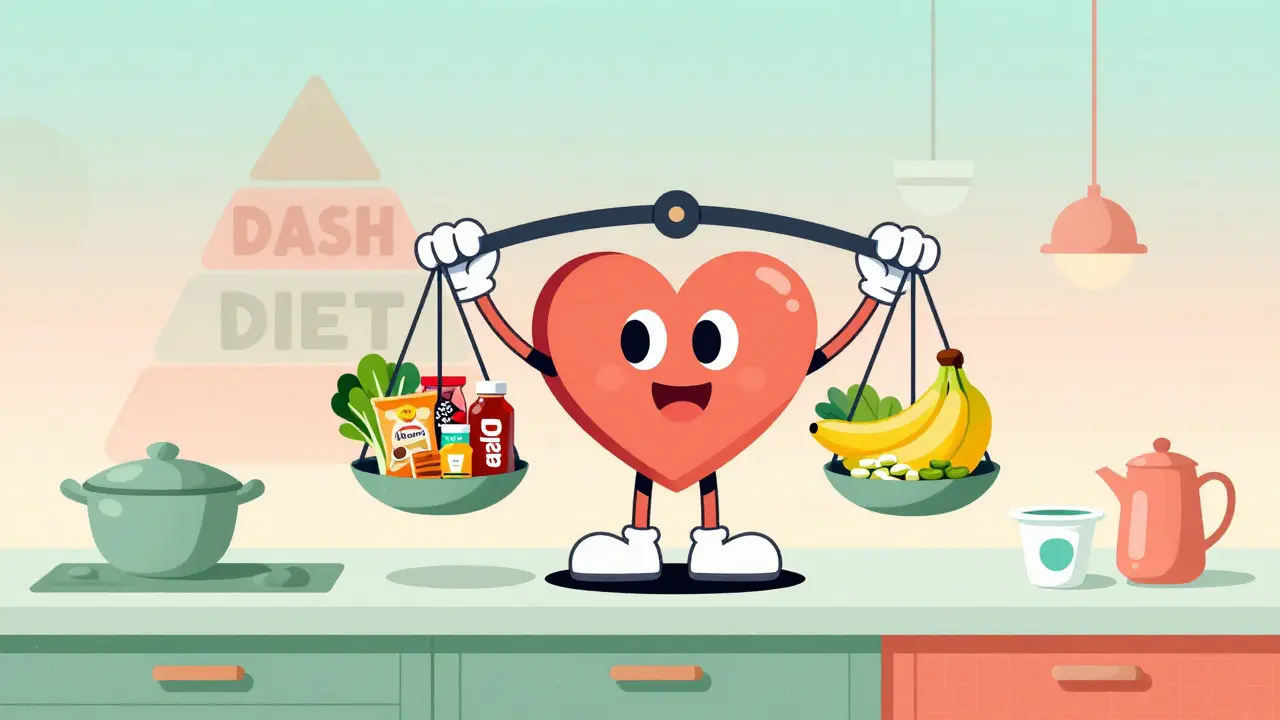
- Try the DASH diet. It’s not a fad. It’s a clinically proven eating plan. The DASH diet focuses on fruits, vegetables, whole grains, lean protein, and low-fat dairy. Combined with sodium reduction, it lowers systolic blood pressure by 8-14 mm Hg. That’s as effective as some medications.
- Watch restaurant meals. Ask for sauces on the side. Skip fried options. Avoid "healthy" salads with croutons, bacon bits, and bottled dressing-they can pack 1,200 mg sodium. Grilled chicken over steamed veggies? That’s your best bet.
- Batch cook on weekends. Prepare low-sodium meals ahead. You’ll save time, money, and temptation. One person in the CARDIA-SSBP study saved 3-4 hours of weekday cooking by prepping meals on Sunday.
Don’t Forget Potassium
Sodium isn’t the whole story. Potassium helps your body flush out sodium. It also relaxes blood vessel walls. The AHA recommends 3,500-5,000 mg of potassium daily. Most people get less than half that.
Good sources:
- Spinach, kale, and other leafy greens
- Bananas, oranges, and cantaloupe
- White beans, lentils, and chickpeas
- Baked potatoes (with skin)
- Yogurt and milk
- Salmon and tuna
The PREMIER trial found that combining low sodium with high potassium lowered systolic blood pressure 7.2 mm Hg more than sodium reduction alone. That’s a game-changer.
What About Salt Substitutes?
Products like Mrs. Dash or NoSalt are popular. They’re usually potassium chloride instead of sodium chloride. They work well for many people. But if you have kidney disease or take certain blood pressure meds (like ACE inhibitors or potassium-sparing diuretics), potassium chloride can be dangerous. Talk to your doctor before switching.
Also, don’t rely on salt-free seasoning blends that contain hidden sodium. Always check the label.
How Fast Can You See Results?
You don’t need to wait months. The CARDIA-SSBP study showed measurable drops in blood pressure after just seven days. Some people saw changes in 48 hours. That’s because your body responds quickly to sodium changes. Your kidneys start excreting excess fluid within hours. Your blood vessels begin to relax.
One user tracked their sodium intake for 30 days using the AHA’s app. Their average systolic pressure dropped by 6.3 mm Hg. That’s enough to reduce stroke risk by about 10% over time.
Who Should Be Extra Careful?
Not everyone responds the same way. About 5% of people experience "inverse salt sensitivity"-their blood pressure goes up when they cut sodium. This is rare, but it happens. If you’re trying to lower sodium and your pressure spikes, don’t assume you’re doing something wrong. Talk to your doctor. You might need a different approach.
Also, people with advanced kidney disease, heart failure, or certain hormonal disorders need individualized advice. For them, extreme sodium restriction can backfire. That’s why blanket recommendations don’t always fit.
Real Progress, Not Perfection
You don’t have to eliminate sodium completely. You don’t have to eat only raw vegetables. You just need to reduce it. Even cutting 1,000 mg per day lowers blood pressure. That’s about half a can of soup, or one fast-food burger.
And here’s the best part: lowering sodium doesn’t just help your blood pressure. It reduces your risk of stroke, heart attack, and kidney damage. It makes your current medications work better. It gives your heart a break.
Start with one change this week. Swap your bread. Choose a low-sodium soup. Skip the bottled dressing. Track your progress. In a month, you’ll wonder why you didn’t do it sooner.
Is sea salt or kosher salt better than table salt?
No. All salt is mostly sodium chloride. Sea salt, Himalayan salt, and kosher salt may have slightly different textures or trace minerals, but they contain the same amount of sodium by weight. One teaspoon of any of them has about 2,300 mg of sodium. Switching salt types won’t help your blood pressure. What matters is how much you use.
Can I still eat out at restaurants?
Yes, but you need to be strategic. Ask for sauces and dressings on the side. Choose grilled, steamed, or baked options instead of fried. Avoid soups, stews, and anything labeled "crispy," "breaded," or "smothered." Skip the bread basket. Order vegetables without butter or salt. Many restaurants now list sodium content on menus-use it.
How do I know if I’m salt sensitive?
You might be if your blood pressure drops noticeably when you cut sodium. The CARDIA-SSBP study defined salt sensitivity as a 5 mm Hg or greater drop in mean arterial pressure during a low-sodium diet. If you’re hypertensive, you’re more likely to be salt sensitive. There’s no simple test, but if reducing sodium lowers your pressure-even a little-you’re probably one of them.
Will cutting sodium help if I’m on blood pressure medication?
Yes, and it can make your meds work better. High sodium can interfere with diuretics and other blood pressure drugs. Reducing sodium may allow you to take lower doses or reduce side effects. Always talk to your doctor before making changes to your diet or medication.
Is a low-sodium diet expensive?
It doesn’t have to be. Processed foods often cost more than whole foods. Buying frozen vegetables, canned beans (low-sodium), eggs, and bulk grains is usually cheaper than buying pre-packaged meals. Meal prepping once a week can also save money and time. The USDA found the average premium for fresh over processed food is about $1.25 per meal-but that’s offset by fewer doctor visits and less medication over time.
What Comes Next?
If you’ve made a few changes and your blood pressure hasn’t budged, don’t give up. It takes time. Track your sodium intake for a week using a free app like MyFitnessPal. You’ll be shocked at how fast it adds up. Then, pick one more habit to change. Maybe it’s swapping your morning cereal. Or cooking one more meal at home.
And remember: sodium reduction isn’t about restriction. It’s about rediscovering flavor. Once your taste buds adjust, you’ll notice how bland processed food really is. Fresh food tastes better. And your heart will thank you.


Tom Forwood
8 February 2026 - 19:10 PM
bro i thought i was doing good by only using a pinch of salt... until i checked the label on my "healthy" granola bar. 400mg of sodium in one bar. no wonder my blood pressure was climbing. switched to homemade trail mix and my readings dropped like a rock. 1 week in and i feel like a new person. 🙌
Jacob den Hollander
9 February 2026 - 05:41 AM
I just want to say... thank you. Seriously. I’ve been trying to cut back for months, but I didn’t realize how much sodium was in bread. One slice?! I’ve been switching to low-sodium sourdough and honestly? It tastes better. My wife said I’ve stopped sighing every time I eat now. 😅
Elan Ricarte
10 February 2026 - 05:48 AM
let me get this straight - you’re telling me the entire american food industry is built on a sodium cartel? salt is the new sugar, and we’re all addicted. restaurants? they want you bloated and sluggish so you order more. processed snacks? designed to hijack your dopamine. and we’re supposed to be grateful for "low sodium" options that still have 180mg per serving? bullshit. cut the crap. if you want to live, stop eating anything with a barcode.
Angie Datuin
11 February 2026 - 21:28 PM
I used to hate cooking because I thought it was boring... then I started using lime juice and smoked paprika. Now my kitchen smells like a taco truck on vacation. My mom said I finally made food that tastes like "home." I didn’t even know I was that sad.
Ritteka Goyal
13 February 2026 - 08:43 AM
in india we have always known this! our grandmothers used to cook with ajwain, black salt, and asafoetida - no need for table salt. we never had hypertension problems until we started eating western processed food. why are americans only waking up now? we’ve been eating whole foods for centuries. your food culture is broken. but i’m glad you’re trying to fix it. 🙏
Jonah Mann
14 February 2026 - 20:06 PM
i read the labels now like i’m hunting for hidden bombs. one time i bought "low-fat" yogurt and it had 150mg sodium. same as a bag of chips. i threw it out. now i make my own with plain greek yogurt, honey, and cinnamon. tastes like dessert but feels like a victory. also - potassium is a game changer. i eat a banana every morning. my BP has dropped 10 points. i’m not a doctor but i feel like one now.
THANGAVEL PARASAKTHI
15 February 2026 - 17:03 PM
hello friend, i am from india and i have been following this advice for 6 months. i started with just swapping bread and then slowly replaced canned soups with homemade dal. now i cook in bulk on weekends - it saves time, money, and stress. your body will thank you. do not wait for a doctor to tell you to change. your health is yours. start small. one meal. one day. one change. you are not alone. we are all learning together.
Tricia O'Sullivan
15 February 2026 - 23:07 PM
I find it fascinating how the physiological response to sodium reduction occurs within days. The renal mechanisms are remarkably efficient, and the vascular relaxation is almost immediate. I’ve observed similar outcomes in my clinical practice with patients who adhere to the DASH protocol. The data is unequivocal.
Scott Conner
17 February 2026 - 11:47 AM
i tried the potassium chloride salt substitute... and my tongue felt like it was being licked by a battery. i’m not doing that again. now i just use lemon, garlic, and a splash of apple cider vinegar. tastes like a party in my mouth. also - i never knew how much sodium was in salad dressing. now i make my own. it’s cheaper and doesn’t taste like chemical soup.
Brandon Osborne
17 February 2026 - 14:50 PM
THIS IS A SCAM. THEY WANT YOU TO THINK YOU’RE HEALTHY BY EATING "LOW SODIUM" CRAP. THE REAL ENEMY IS CORN SYRUP AND TRANS FATS. SODIUM IS A DISTRACTION. YOU THINK YOU’RE DOING GOOD? YOU’RE STILL EATING FROZEN CHICKEN NUGGETS THAT SAY "LOW SODIUM" ON THE BOX. THAT’S NOT HEALTH. THAT’S CORPORATE PSYCHOPATHY. STOP BEING A SHEEP. EAT REAL FOOD OR DON’T EAT AT ALL.
Marie Fontaine
19 February 2026 - 14:41 PM
OMG I just tried the lemon + black pepper on grilled chicken and I cried 😭 I didn’t even know food could taste this good. I’ve been eating the same boring chicken for years. Now I’m addicted to making meals. My kid says I’m "the best chef ever." I didn’t even know I had it in me! 🥳
Lyle Whyatt
20 February 2026 - 23:15 PM
I used to think sodium was just about hypertension - turns out it’s also about brain fog, bloating, and feeling like a wet sack of potatoes after lunch. After cutting back, I went from needing a nap at 2pm to running 5k on a Tuesday. My wife said I stopped grumbling at the TV. I think I’m in love with my own body again.
Tatiana Barbosa
21 February 2026 - 16:02 PM
The DASH protocol + potassium synergy is clinically significant. I’ve seen patients reduce antihypertensive meds by 30-40% within 6 weeks. It’s not magic - it’s physiology. Your kidneys are designed to regulate fluid balance. When you remove the sodium overload, they do their job. The real win? You stop feeling like a medical project. You start feeling human again.