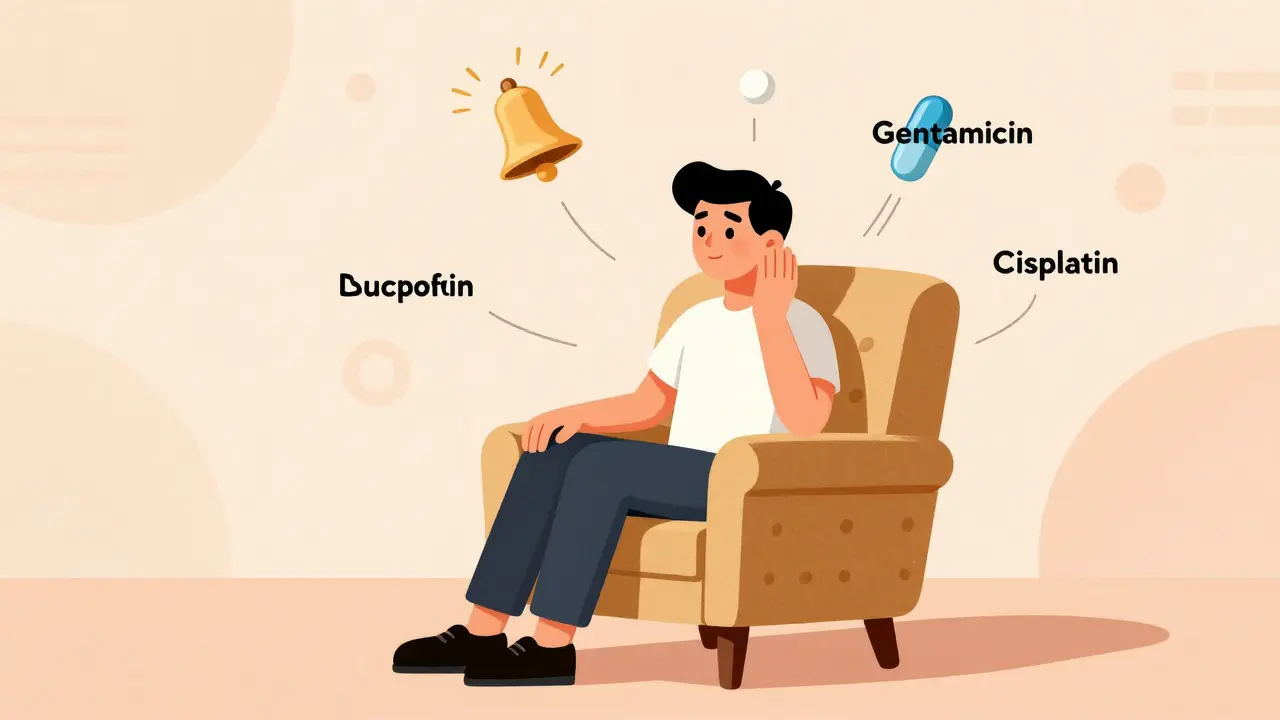
Have you started a new medication and suddenly noticed a ringing, buzzing, or hissing in your ears? You’re not alone. For many people, tinnitus - that persistent noise in the head with no external source - shows up after beginning a new prescription or even an over-the-counter painkiller. While it’s often temporary, it can also be a warning sign of something more serious. The good news? Most cases are reversible. The key is knowing which drugs to watch for and what to do next.
What Exactly Is Medication-Induced Tinnitus?
Tinnitus isn’t a disease. It’s a symptom. And when it’s caused by medication, it’s called ototoxicity. That means the drug is damaging parts of your inner ear or the nerve that sends sound signals to your brain. This damage can lead to ringing, roaring, clicking, or even a high-pitched whistle that won’t go away.
It’s not rare. More than 600 prescription and over-the-counter drugs are linked to tinnitus, according to clinical data from 2025. Some cause it in a small number of people. Others affect nearly half of those who take them. The severity varies too - for some, the noise fades within days of stopping the drug. For others, especially with certain antibiotics or chemotherapy, the damage can be permanent.
Which Medications Are Most Likely to Cause Tinnitus?
Not all drugs carry the same risk. Some are high-risk, others are rare culprits. Here’s what the evidence shows:
- Aminoglycoside antibiotics - Drugs like gentamicin and tobramycin, often used for serious infections, are among the worst offenders. They can cause permanent hearing loss and tinnitus, especially when given through IV over long periods. Topical forms (like ear or skin creams) are much safer.
- Chemotherapy drugs - Cisplatin, used for lung, ovarian, and testicular cancers, causes tinnitus in 30% to 70% of patients. Hearing loss usually starts with high-pitched sounds you can’t hear anymore - like birds chirping - before affecting speech.
- Loop diuretics - Furosemide (Lasix) and bumetanide, used for heart failure or kidney issues, can trigger tinnitus, especially at high doses or in people with poor kidney function.
- High-dose aspirin and NSAIDs - Taking more than 4,000 mg of aspirin daily (far above normal pain relief doses) can cause ringing in the ears. At standard doses - 325 to 650 mg - it’s very unlikely. Same goes for ibuprofen and naproxen: high doses (like 800 mg three times a day) may cause temporary tinnitus, but it usually goes away when you stop.
- Antimalarials - Quinine, once used for leg cramps and now mainly for malaria, can cause tinnitus within 1-3 days of starting. The noise typically fades within a couple of weeks after stopping.
- Isotretinoin (Accutane) - Used for severe acne, this drug has a moderate risk. About 5% of users report tinnitus, though the manufacturer claims less than 1% in trials. It’s unclear why the numbers differ.
- Some antidepressants and benzodiazepines - SSRIs like sertraline (Zoloft) and fluoxetine (Prozac) can rarely cause tinnitus. It’s even rarer with other antidepressants. Benzodiazepines like alprazolam (Xanax) are more likely to cause it after long-term use - usually six months or more.
Here’s the thing: not all drugs in a class are equal. For example, carvedilol (Coreg) has been linked to tinnitus, but atenolol hasn’t. One beta blocker might be fine, another might not. Same with antidepressants - some people react, most don’t.
How Quickly Does Tinnitus Show Up After Taking a Drug?
Timing matters. In most cases, the ringing starts within the first two weeks of beginning the medication. With high-dose aspirin or NSAIDs, it can happen within 24-48 hours. Quinine and aminoglycosides often show up in 1-3 days. But some drugs, especially certain antibiotics and chemotherapy agents, can cause delayed reactions - even up to 90 days after starting.
There’s also a weird twist: sometimes tinnitus doesn’t show up while you’re taking the drug - it starts when you stop. That’s been reported with SSRIs like sertraline. When people taper off or quit cold turkey, the ringing appears. It’s not common, but it’s documented in medical case studies.

Is It Permanent? What Are the Odds of Recovery?
Good news: about 60% of medication-induced tinnitus cases go away once you stop the drug. The rest? They stick around. It depends on the drug and how long you took it.
Aminoglycosides and cisplatin are the big red flags. Up to 25% of people on long-term IV gentamicin end up with permanent hearing loss. Cisplatin can cause irreversible damage even after treatment ends. These drugs are powerful - they fight life-threatening infections and cancers - so doctors weigh the risk carefully.
On the other hand, aspirin or ibuprofen-induced tinnitus? Almost always temporary. Stop the drug, wait a week or two, and the noise fades. Same with quinine and most diuretics.
But here’s the catch: if you keep taking the drug while the ringing gets louder, you increase the chance of permanent damage. That’s why early detection is so important.
What Should You Do If You Notice Ringing After Starting a New Drug?
Don’t panic. Don’t quit cold turkey. Do this instead:
- Check the medication’s side effects - Look up the drug name and “tinnitus” or “ototoxicity.” Most prescription labels mention it. Over-the-counter meds? Check the package insert or use a trusted site like GoodRx or Healthline.
- Call your doctor - Don’t assume it’s harmless. Tell them exactly when the ringing started, how loud it is, and whether it’s in one or both ears. If you’re on a high-risk drug like cisplatin or gentamicin, your doctor should already be monitoring your hearing.
- Don’t stop the medication without talking to your provider - Stopping antibiotics or cancer drugs suddenly can be dangerous. Your doctor might lower the dose, switch you to a different drug, or add a protective agent.
- Ask about hearing tests - If you’re starting a high-risk drug, ask if baseline audiometry is recommended. For cisplatin or aminoglycosides, follow-up tests every 1-2 weeks are standard in many hospitals.
One Reddit user reported tinnitus after taking 800 mg of ibuprofen three times a day for a toothache. Within a week of stopping, the ringing vanished. That’s the pattern for most NSAID cases. But if you’re on a cancer drug or long-term antibiotic, don’t wait. Get checked.
Can You Prevent Medication-Induced Tinnitus?
Prevention is better than treatment - and it’s possible in many cases.
Doctors should consider these steps:
- Check kidney function before giving drugs like gentamicin or furosemide - poor kidney clearance increases ototoxic risk.
- Use the lowest effective dose for the shortest time possible.
- Monitor serum drug levels, especially for antibiotics and diuretics.
- Test hearing before and during treatment for high-risk drugs.
- Consider genetic testing - new research shows some people have genes that make them more sensitive to ototoxic drugs.
Patients can help by:
- Telling your doctor about any history of hearing problems or tinnitus.
- Reporting changes in hearing or ringing immediately - don’t wait to see if it gets better.
- Keeping a list of all medications, including supplements and OTC drugs.
Right now, only 35% of primary care doctors routinely screen for ototoxicity risk before prescribing high-risk meds. That’s changing slowly, but you need to be your own advocate.
What If the Tinnitus Doesn’t Go Away?
If the ringing sticks around after stopping the drug, you’re not stuck. There are effective ways to manage it.
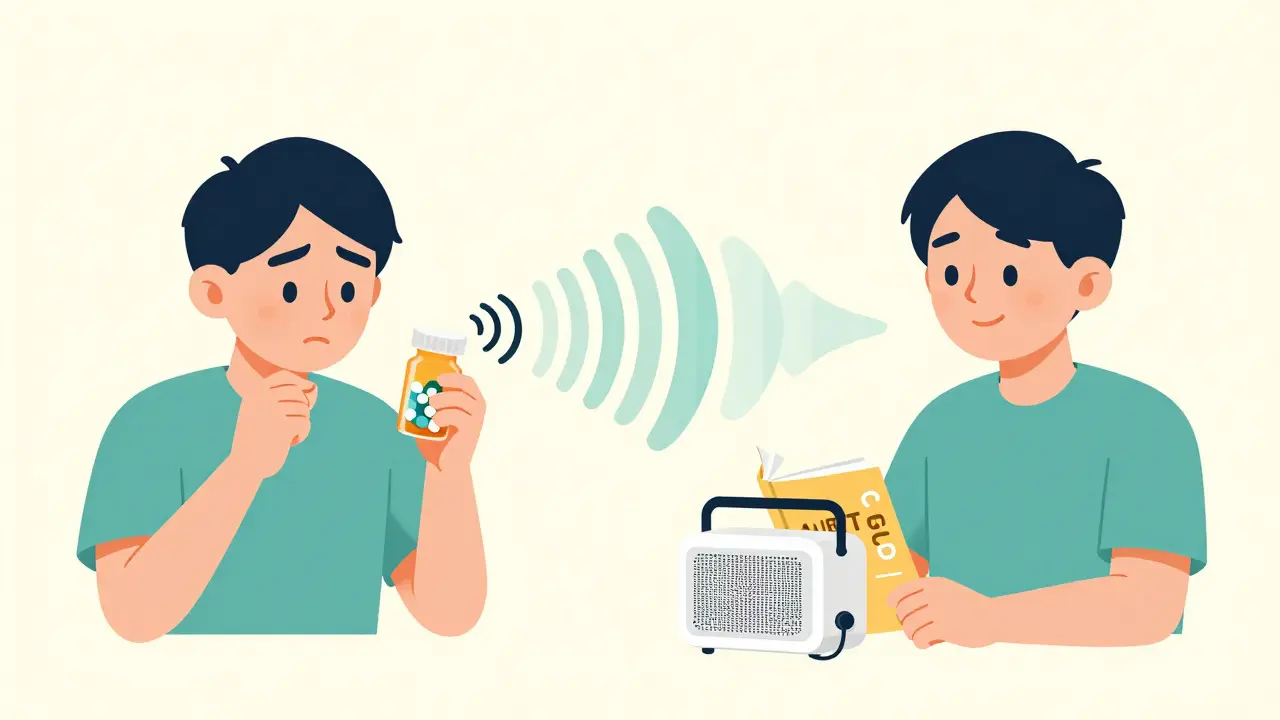
Sound therapy - using white noise machines, fans, or apps - helps your brain tune out the noise. Cognitive behavioral therapy (CBT) teaches you to change how you react to the sound. Studies show these approaches work for 60-70% of people, even if the tinnitus itself doesn’t vanish.
There’s also new research on otoprotective agents - drugs that shield the ear from damage without affecting the main drug’s power. The NIH is funding $12.5 million in research for this, with several compounds in mid-stage trials as of late 2024.
Bottom Line: Know the Risks, Act Fast
Tinnitus from medication is more common than most people realize. But it’s also one of the most manageable side effects - if you catch it early. You don’t need to memorize a list of 600 ototoxic drugs. Just know the big ones: high-dose aspirin, certain antibiotics, chemotherapy, and diuretics.
If you notice ringing, buzzing, or hearing changes after starting a new pill - talk to your doctor. Don’t wait. Don’t assume it’s just stress. And never stop a medication without medical advice.
For most people, the ringing fades. For others, it’s a signal that something needs to change - and that’s exactly what you want: a chance to adjust before the damage becomes permanent.
Can over-the-counter painkillers like ibuprofen cause tinnitus?
Yes, but only at high doses - typically 800 mg or more, taken multiple times a day. At standard doses (200-400 mg), the risk is very low. Most people who develop tinnitus from NSAIDs see it go away within days to a week after stopping the drug.
Is tinnitus from aspirin permanent?
Almost never. Tinnitus from aspirin only happens at very high doses - over 4,000 mg daily - which are rarely used today. Once you stop taking that much aspirin, the ringing usually fades within a few days. Standard headache doses (325-650 mg) don’t cause it for most people.
Do antidepressants cause ringing in the ears?
It’s rare. Less than 1% of people taking SSRIs like sertraline or fluoxetine report tinnitus. It’s more likely to appear when stopping the drug than while taking it. If it happens, your doctor may adjust the dose or switch medications - but don’t stop on your own.
Can hearing tests detect medication-induced tinnitus early?
Yes. Audiograms can detect early hearing loss - often before you notice ringing. For high-risk drugs like cisplatin or gentamicin, doctors recommend baseline hearing tests before starting, then follow-ups every 1-2 weeks. Catching changes early can prevent permanent damage.
Should I stop my medication if I get tinnitus?
No - not without talking to your doctor. Stopping antibiotics, chemotherapy, or heart medications suddenly can be dangerous. Instead, report the symptom immediately. Your doctor might lower the dose, switch drugs, or add protective measures. Never make changes on your own.
Is tinnitus from medication more common in older adults?
Yes. Older adults are more vulnerable because kidney function declines with age, making it harder for the body to clear ototoxic drugs. They’re also more likely to take multiple medications, increasing the risk of interactions. Regular hearing checks are especially important for seniors on long-term meds.




Allen Davidson
15 January 2026 - 13:50 PM
I started taking ibuprofen for a bad back and got this high-pitched ringing after about 3 days. Thought it was stress or my headphones too loud. Called my doc, they said it was likely the NSAID. Cut the dose in half, then stopped. Gone in 5 days. Never thought meds could do that. Good to know.
Don’t panic, but don’t ignore it either. Your ears are telling you something.
Samyak Shertok
16 January 2026 - 00:08 AM
Oh wow. So we’re now treating tinnitus like it’s a glitch in the Matrix caused by Big Pharma’s secret code? 600 drugs? That’s not science, that’s a horror movie script. Next they’ll say your coffee causes existential dread.
Meanwhile, I’ve had tinnitus since I was 17. Took 3 different antidepressants, 2 antibiotics, a dozen NSAIDs, and still here. Ringing’s my roommate now. Maybe the real drug is *life*.
Also, who wrote this? A pharma rep with a thesaurus and a guilt complex?
Melodie Lesesne
16 January 2026 - 06:31 AM
This was so helpful. My mom’s on Lasix and started complaining about buzzing last week. I showed her this and she finally told her doctor. They’re cutting her dose and scheduling a hearing test.
It’s scary how often this just gets brushed off as ‘aging’ or ‘stress.’ But you’re right - catching it early makes all the difference. Thanks for laying it out so clearly.
Also, I’m now double-checking every new med I take. Even the OTC stuff. Never again assuming it’s ‘safe’ because it’s on a shelf.
Corey Sawchuk
17 January 2026 - 02:57 AM
Had tinnitus after Accutane. Took 6 months to fade. Didn’t stop the med. Just lived with it. Doc said it was rare but possible. Didn’t make a big deal.
Now I know it’s not just me. Good to see it documented. Still don’t know why some people get it and others don’t. Genetics maybe?
Also, never took more than 400mg ibuprofen. Never had an issue. So dose matters.
Good post. Thanks.
Rob Deneke
17 January 2026 - 08:47 AM
My cousin got tinnitus from gentamicin after a hospital stay. Permanent. He’s 32. It ruined his life. He can’t sleep. Can’t focus. Can’t enjoy music.
Doctors didn’t warn him. He didn’t know it was even a risk. This needs to be standard info. Not buried in a 50-page insert.
Thank you for making this clear. People need to know.
evelyn wellding
19 January 2026 - 01:05 AM
OMG I JUST REALIZED 😱 I was on 800mg ibuprofen for 5 days for my wisdom tooth and got the loudest ringing ever!! I thought I was going crazy!! I stopped it and it’s fading!! THANK YOU FOR THIS POST!! 🙏❤️
Sharing this with my whole family. Everyone’s on painkillers like candy these days. We need to wake up!
Chelsea Harton
20 January 2026 - 13:49 PM
antidepressants cause tinnitus? i thought they helped with it? maybe i misremembered. or maybe it’s the withdrawal. either way i’ve had it since 2021. who knows. life is noise anyway.
ps. i think the word is ‘ototoxicity’ but i’m probably spelling it wrong.
Corey Chrisinger
20 January 2026 - 18:36 PM
It’s wild how we treat our bodies like machines you can just plug in drugs and expect perfect output. But ears? They’re delicate. Biological. Not replaceable.
Maybe tinnitus isn’t a side effect. Maybe it’s a whisper from your nervous system saying: ‘Hey, you’re pushing too hard.’
And we ignore it until it’s screaming.
What if the real problem isn’t the drug? What if it’s the assumption that we can medicate our way through everything without consequences?
Just a thought. 🤔
Also, I got it from Zoloft after stopping cold turkey. Took 3 months to fade. Never again. Taper slow. Always.