
Quercetin Medication Interaction Checker
Check Your Medications
Enter your prescription medications to see if they interact dangerously with quercetin supplements
• Quercetin supplements (500mg+ daily) pose much higher risks than dietary sources
• Risk increases with age, liver disease, and multiple medications
• Never take quercetin with blood thinners, immunosuppressants, or cancer drugs
• Always consult your pharmacist before combining supplements with medications
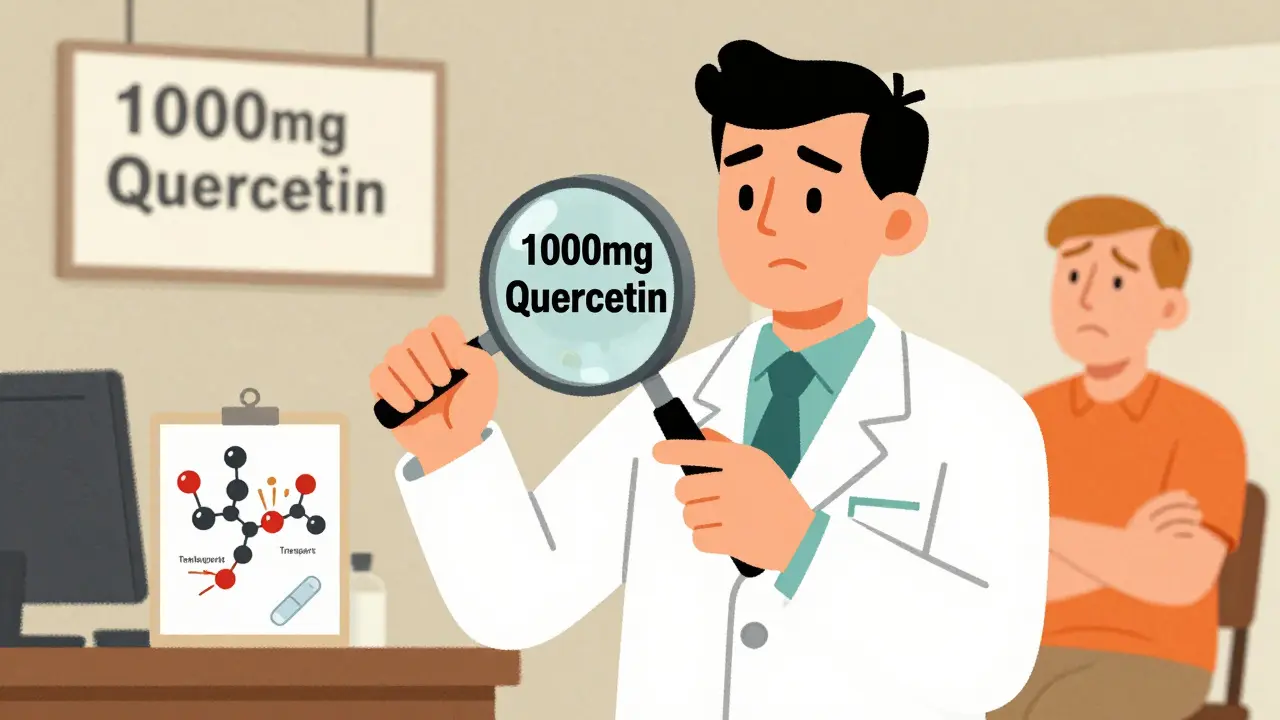
Many people take quercetin supplements thinking they’re just getting a natural antioxidant boost from apples, onions, or berries. But if you’re also on prescription meds, that daily capsule could be quietly changing how your body handles your drugs-sometimes dangerously. Quercetin doesn’t just sit there. It actively interferes with the enzymes and transporters your liver and gut use to break down and clear medications. The result? Drug levels in your blood can spike, increasing side effects or even causing toxicity.
What Quercetin Actually Does to Your Body’s Drug Processing
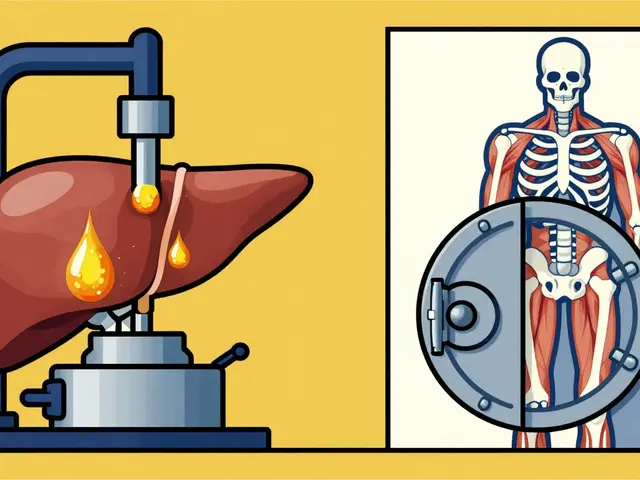
Quercetin is a flavonoid, a plant compound found in foods like capers, kale, red grapes, and green tea. But when it’s taken as a supplement-often at doses of 500 mg to 1,500 mg per day-it acts like a molecular wrench thrown into your body’s drug metabolism system. Specifically, it blocks key enzymes called cytochrome P450 (CYP), especially CYP3A4, CYP2D6, and CYP2C19. These enzymes are responsible for breaking down more than half of all prescription drugs.
Think of them as toll booths on a highway. When quercetin clogs those booths, drugs can’t pass through efficiently. Instead, they pile up in your bloodstream. Studies show quercetin can reduce CYP3A4 activity by 40-60% and CYP2D6 by 70-85% at typical supplement concentrations. That’s not a small effect. It’s comparable to what you’d see with grapefruit juice, which is famously warned against with statins and blood pressure meds.
But quercetin doesn’t stop at enzymes. It also blocks transporters like OATP1B1 and BCRP, which move drugs into and out of cells. This means even drugs that aren’t metabolized by CYP enzymes can still be affected. For example, some cancer drugs and anticoagulants rely on these transporters to reach their target or leave your body. When quercetin blocks them, drug levels rise unpredictably.
Which Medications Are Most at Risk?
Not all drugs are equally affected. But if your medication has a narrow therapeutic index-meaning the difference between a helpful dose and a toxic one is small-you’re in higher risk territory. Here are the most concerning combinations:
- Anticoagulants: Warfarin users may see INR levels jump by 0.8-1.5 points, increasing bleeding risk. Even newer blood thinners like apixaban and rivaroxaban show 20-35% higher exposure with quercetin, according to the American Society of Health-System Pharmacists.
- Immunosuppressants: Cyclosporine and tacrolimus levels can rise 30-50% when taken with quercetin. For transplant patients, this can mean kidney damage or rejection.
- Cancer drugs: Abemaciclib and abrocitinib levels increase by 25-50%. That might sound good, but it raises the risk of severe diarrhea, low blood counts, or liver injury.
- Antidepressants and antipsychotics: Drugs metabolized by CYP2D6-like fluoxetine, paroxetine, and risperidone-can accumulate, leading to dizziness, heart rhythm issues, or serotonin syndrome.
- Pain relievers: Acetaminophen (Tylenol) metabolism slows, potentially increasing liver strain, especially in people who drink alcohol or have existing liver conditions.
The FDA lists quercetin as a "dietary supplement of concern" for these interactions. And it’s not just theory. Between 2015 and 2022, over 147 adverse event reports linked quercetin to drug interactions in the FDA’s database. Experts believe the real number is 10 to 20 times higher because most people don’t report supplement use to their doctors.
Why Supplements Are Riskier Than Food
Here’s a common misconception: "I eat onions every day, so why is quercetin in pills dangerous?" The answer is dose and form.
One medium onion has about 40 mg of quercetin. A typical supplement contains 500-1,000 mg. That’s 12 to 25 times more. And it’s not just quantity-it’s bioavailability. In food, quercetin is bound to sugar molecules (glycosides like rutin), which your body absorbs slowly. In supplements, it’s usually the aglycone form-pure, unbound quercetin-designed for rapid absorption. That means a much higher concentration hits your liver and gut at once, overwhelming your metabolic enzymes.
Studies show quercetin glycosides (like those in food) inhibit enzymes at only 30-40% the rate of pure quercetin. So yes, eating apples is fine. Taking a 1,000 mg capsule isn’t.

Who’s Most at Risk?
Not everyone who takes quercetin will have a problem. But some groups are far more vulnerable:
- People over 65: As we age, liver and kidney function decline. Quercetin metabolites clear 25-40% slower in older adults, meaning they build up faster and stay longer.
- People on multiple medications: If you’re taking three or more drugs metabolized by CYP enzymes, quercetin can push your system over the edge. Polypharmacy isn’t just a buzzword-it’s a real risk multiplier.
- People with liver disease: If your liver is already struggling, adding a potent enzyme inhibitor like quercetin can tip you into toxicity.
- Patients on critical drugs: Anyone on warfarin, cyclosporine, or certain cancer drugs should avoid quercetin supplements entirely.
According to the 2021 National Health Interview Survey, nearly 18 million Americans take quercetin supplements. Over 40% of them take more than 500 mg daily. That’s millions of people potentially mixing a powerful enzyme blocker with prescription meds without knowing it.
What Should You Do?
If you’re taking quercetin supplements and any prescription medication, don’t panic-but don’t ignore it either. Here’s what to do:
- Check your meds: Look up your medications and see if they’re metabolized by CYP3A4, CYP2D6, or CYP2C19. You can find this info on Drugs.com or by asking your pharmacist.
- Don’t guess your dose: Avoid quercetin supplements over 500 mg/day. Even that’s risky if you’re on sensitive meds. Many experts recommend avoiding it altogether if you’re on blood thinners, immunosuppressants, or chemotherapy drugs.
- Time it right: If you must take it, separate your quercetin from your meds by at least 4-6 hours. Pharmacokinetic modeling shows this can reduce interaction risk by 30-50%.
- Talk to your pharmacist: Pharmacists are trained to spot these interactions. Bring your supplement bottle to your next visit. They can flag risks your doctor might miss.
- Monitor for symptoms: Unusual bruising, dizziness, nausea, fatigue, or irregular heartbeat could signal a drug buildup. If you notice these after starting quercetin, stop it and call your provider.
The Bigger Picture: Supplements Aren’t Regulated Like Drugs
Here’s the uncomfortable truth: quercetin supplements don’t need FDA approval before hitting shelves. Under the Dietary Supplement Health and Education Act (DSHEA) of 1994, manufacturers can sell them without proving safety or efficacy. The FDA only steps in after harm is reported.
Since 2018, the FDA has issued 17 warning letters to quercetin supplement makers for making false claims like "cures COVID" or "replaces chemotherapy." But those warnings don’t touch the hidden danger: drug interactions. The FDA’s 2024 proposed rule aims to fix this by requiring interaction warnings on labels-but it’s not law yet.
Until then, you’re on your own. Just because something is "natural" doesn’t mean it’s safe with your meds. Quercetin is a potent biochemical actor. Treat it like a drug-because in your body, it acts like one.
What’s Next?
Researchers are running clinical trials (NCT04873325, NCT04659262) to pin down exact interaction thresholds. We may soon have clear guidelines: "Don’t take quercetin with drug X if your dose is over Y mg." But until then, err on the side of caution.
If you’re considering quercetin for inflammation, allergies, or immune support, ask yourself: Is this worth the risk? There are safer alternatives-like vitamin C, zinc, or omega-3s-that don’t interfere with your meds. Sometimes, the best supplement is the one you don’t take.
Can I take quercetin if I’m on blood pressure medication?
It depends on the drug. Quercetin can interfere with calcium channel blockers like amlodipine and verapamil (CYP3A4 substrates), potentially causing low blood pressure, dizziness, or swelling. If you’re on these, avoid quercetin supplements. For other blood pressure meds like ACE inhibitors or diuretics, risk is lower-but still not zero. Always check with your pharmacist before combining them.
Is quercetin safe with statins?
No, not at typical supplement doses. Statins like simvastatin, atorvastatin, and lovastatin are broken down by CYP3A4. Quercetin can increase their blood levels by 20-40%, raising the risk of muscle damage (rhabdomyolysis). Even if you’re on pravastatin or rosuvastatin (which use different pathways), it’s still not worth the risk. Stick to dietary sources like onions and apples.
How long does quercetin stay in my system?
Quercetin and its metabolites can linger for 24-48 hours after ingestion, especially at high doses. Its inhibition of enzymes doesn’t disappear immediately after you stop taking it. That’s why spacing doses by 4-6 hours helps-but doesn’t eliminate risk. If you’re planning surgery or starting a new med, stop quercetin at least 3 days ahead.
Can I take quercetin with over-the-counter painkillers?
It’s risky with acetaminophen (Tylenol), which can build up in the liver when quercetin slows its metabolism. This raises the chance of liver injury, especially if you drink alcohol or have fatty liver disease. NSAIDs like ibuprofen are less affected, but combining them with quercetin still increases stomach irritation risk. Better to avoid the combo entirely.
Are there any supplements that are safer than quercetin?
Yes. For inflammation or immune support, consider vitamin D (2,000 IU/day), zinc (15-30 mg/day), or omega-3s (1,000-2,000 mg EPA/DHA). These have strong evidence for benefits and minimal interaction risk. Curcumin is another option, but it also inhibits CYP3A4-so avoid it if you’re on sensitive meds. Always check interactions before starting any new supplement.
If you’re taking any prescription medication, your best move is to skip high-dose quercetin supplements. The benefits you think you’re getting-anti-inflammatory, antihistamine, antioxidant effects-can be achieved through diet without the risk. And when it comes to your meds, safety isn’t optional. It’s essential.

Sangeeta Isaac
20 January 2026 - 20:48 PM
so i took quercetin for my allergies last winter and didn’t tell my doc because ‘it’s just a supplement’… turns out my blood pressure meds were floating around like a ghost in my bloodstream. woke up dizzy one morning and almost called 911. never again. also, why do supplement labels look like they were designed by a 12-year-old with a can of glitter?
Yuri Hyuga
21 January 2026 - 07:11 AM
This is one of those posts that should be printed and taped to every pharmacy counter. 🙏 The idea that ‘natural’ = ‘safe’ is one of the most dangerous myths in modern health. Quercetin isn’t harmless-it’s a biochemical scalpel. If you’re on meds, treat it like a prescription. Not a snack. And yes, your pharmacist is your real superhero here. Go see them. Bring the bottle. They won’t judge. They’ve seen it all.
Malvina Tomja
23 January 2026 - 01:00 AM
I’ve been saying this for years. Supplements are the Wild West of medicine. No FDA review, no accountability, just ‘take 2 capsules daily for radiant health™’. Meanwhile, people are ending up in the ER because they thought ‘antioxidant’ meant ‘harmless’. The fact that the FDA only acts AFTER harm is criminal. And yet, we keep buying this crap like it’s a life hack.
Uju Megafu
23 January 2026 - 11:16 AM
OMG I KNEW IT. THIS IS WHY I GOT SO SICK AFTER STARTING MY ‘IMMUNE BOOST’ BOTTLE. MY DOCTOR SAID IT WAS ‘STRESS’ BUT I KNEW. THEY’RE ALL IN ON IT. PHARMA WANTS YOU DEPENDENT. QUERCETIN IS NATURAL BUT THEY DON’T WANT YOU TO KNOW BECAUSE THEN YOU WON’T BUY THEIR DRUGS. I’M GOING TO POST THIS ON EVERY SOCIAL MEDIA PLATFORM. #QUERCETINCONSPIRACY #PHARMAISLIES
shubham rathee
24 January 2026 - 12:33 PM
i read this and thought about my grandpa who takes 7 pills a day and a quercetin capsule because his friend said it cures arthritis. he’s 82 and just had a fall last week. maybe it was the meds piling up. maybe it was the stairs. either way i told him to stop. he said ‘but it’s from onions’ i said ‘yeah but you’re eating 25 onions a day now’
Ashok Sakra
25 January 2026 - 03:02 AM
why do people take supplements at all? i mean really. you eat food right? food has everything you need. if you’re tired maybe you need sleep not some powder in a bottle. i dont understand. you want to be healthy? eat rice. drink water. sleep. stop buying lies.
Philip Williams
26 January 2026 - 02:36 AM
The pharmacokinetic data presented here is robust and clinically significant. CYP3A4 inhibition at 40–60% is not trivial-it represents a Class I interaction risk per the Lexicomp scale. The comparison to grapefruit juice is apt and well-documented. Clinicians must proactively screen for supplement use during medication reconciliation. The absence of mandatory labeling under DSHEA is a regulatory failure of epic proportions. Patients are not equipped to self-assess biochemical risk. This demands systemic intervention-not just individual caution.
Roisin Kelly
27 January 2026 - 10:34 AM
i swear if this is a government plot to make us buy more pills i’m gonna scream. why does everything have to be dangerous? i just wanted to feel less tired. now i’m supposed to be a biochemist? i didn’t sign up for this. my doctor doesn’t even ask about my supplements. why should i? they don’t care. they just want to write more scripts.
Steve Hesketh
28 January 2026 - 17:42 PM
Hey, I get it. You’re trying to feel better. I’ve been there. But listen-your body isn’t a machine you can tweak with powders. It’s a living, breathing system that’s been fine-tuned for millennia. Quercetin? It’s like throwing a wrench into a Swiss watch. The good news? You don’t need it. Eat your veggies. Walk outside. Sleep. Those are the real supplements. And they don’t come with warning labels because they’re not trying to sell you a dream-they’re just helping you live.
MARILYN ONEILL
30 January 2026 - 08:50 AM
I’m so tired of people acting like they’re health gurus because they read one article. You think you know about CYP enzymes? Do you even know what a pharmacokinetic model is? I’ve got a PhD in pharmacology and I still don’t mess with quercetin. If you’re not trained, stop pretending you can outsmart biochemistry. Your ‘natural’ supplement is just a liability with a pretty label.
Alex Carletti Gouvea
31 January 2026 - 17:53 PM
This is why America is falling apart. People take pills they don’t understand because they’re too lazy to eat real food. We used to trust doctors. Now we trust YouTube influencers selling ‘detox powders’. The government lets this happen because they’re too busy pandering to corporate lobbyists. If you want to be healthy, stop buying junk and start working. Quit the supplements. Quit the excuses. Quit the weakness.