Living with pets is one thing. Living with pet allergies is another. If you sneeze every time your cat jumps on the couch or your nose gets stuffy after hugging your dog, you’re not alone. About 10% of people in the U.S. have pet allergies, and most of them still want to keep their animals. The good news? You don’t have to give up your pet to feel better. It’s not about removing the pet-it’s about managing the pet dander.
What Exactly Is Pet Dander?
Pet dander isn’t fur. It’s not even hair. It’s microscopic flakes of skin that all furry and feathered animals shed every day. These tiny particles are so light they float in the air for hours. They stick to clothes, furniture, and even walls. The real problem? They carry proteins that trigger allergies.Cats produce a protein called Fel d 1, mostly in their saliva and skin glands. Dogs produce Can f 1. These proteins don’t just go away when the pet leaves the room. They can linger in carpets, bedding, and dust for months-even after the pet is gone. That’s why someone can walk into a home where a cat lived six months ago and still have an allergic reaction.
There’s no such thing as a truly hypoallergenic pet. Breeds marketed as "hypoallergenic" still produce allergens. Some may shed less hair, but that doesn’t mean less dander. A short-haired cat can be worse than a long-haired one if it grooms more often. The real variation comes from individual animals, not breed.
Why Your Vacuum Isn’t Cutting It
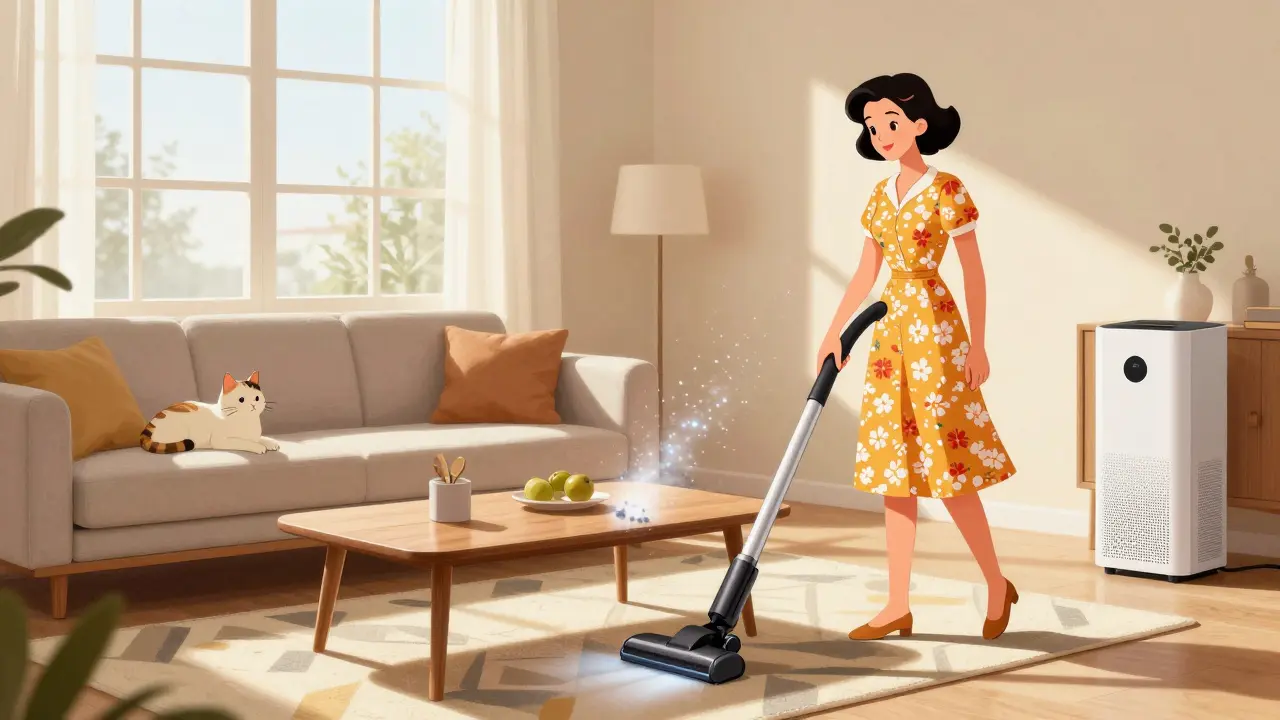
Most standard vacuums just kick allergens back into the air. They’re not designed to catch particles smaller than 10 microns. Pet dander? It’s often under 2 microns. That’s why HEPA filters matter.HEPA stands for High-Efficiency Particulate Air. A true HEPA filter traps 99.97% of particles 0.3 microns and larger. That includes dander, saliva particles, and even some pollen. Research from Filtrete shows HEPA vacuums capture 30-50% more pet allergens than regular ones. If you’re vacuuming twice a week with a non-HEPA model, you’re probably just spreading the problem around.
Look for vacuums labeled "True HEPA"-not just "HEPA-style" or "HEPA-like." Brands like Miele, Dyson, and Shark have reliable models. Don’t forget to replace the filter every 6-12 months. A clogged filter doesn’t work.
Make the Bedroom a Pet-Free Zone
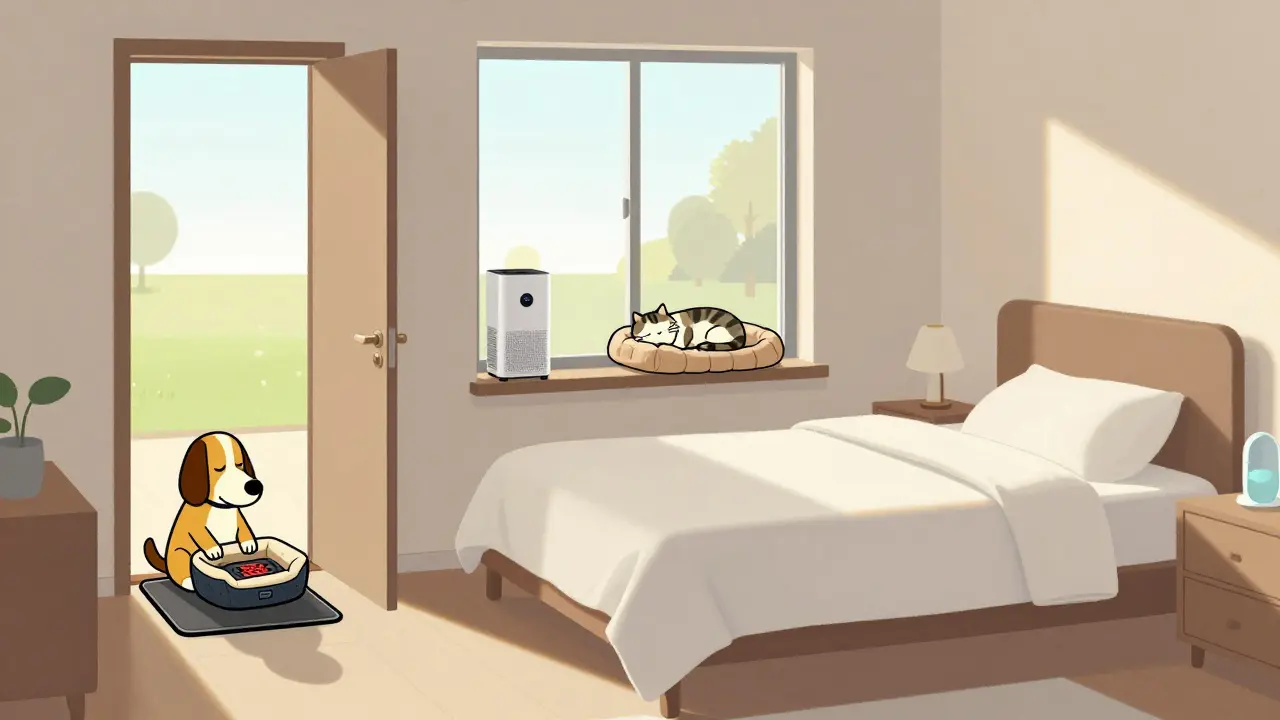
This is the single most effective step you can take. Dr. Sandra Hong at Cleveland Clinic found that keeping pets out of the bedroom reduces nighttime allergy symptoms by up to 40%. Why? Because you spend a third of your life there. Your bed collects dander from your clothes, your hair, and your pet if they sleep with you.Start by removing pet bedding from the bedroom. Use a doorstop or baby gate to keep pets out. If your cat insists on sleeping on your pillow, try a pet bed with a heated pad nearby. Many pets will switch if the alternative is warm and cozy.
Wash your sheets weekly at 130°F (54°C). That temperature kills dust mites and denatures allergens. Use pillowcases and duvet covers with a tight weave-they block more dander than regular cotton.
Air Purifiers: Not Just a Gimmick
A good air purifier with a true HEPA filter can cut airborne pet allergens by 40-60% in a standard room. Size matters. A purifier rated for 200 square feet won’t help in a 400-square-foot living room. Look for the CADR (Clean Air Delivery Rate) number. For pets, aim for a CADR of at least 250.Place the unit where you spend the most time-usually the living room or bedroom. Keep it running on low or medium 24/7. You don’t need to turn it on only when you’re home. Allergens don’t take breaks.
Don’t waste money on ionizers, ozone generators, or UV lights. They don’t remove dander. They might even irritate your lungs. Stick to HEPA + activated carbon filters. The carbon helps with odors, which is a nice bonus.
Hard Floors Over Carpet
Carpet traps dander like a sponge. Studies show carpeted rooms hold 50-75% more pet allergens than hardwood, tile, or linoleum. If you can’t replace all your carpet, start with bedrooms and main living areas. If you must keep carpet, vacuum it at least twice a week with a HEPA vacuum.Wipe hard floors weekly with a damp microfiber mop. Dry sweeping just kicks dust into the air. A damp cloth captures the allergens. Use a mop with a washable head so you can clean it after each use.
Bathing Your Pet: The Forgotten Key
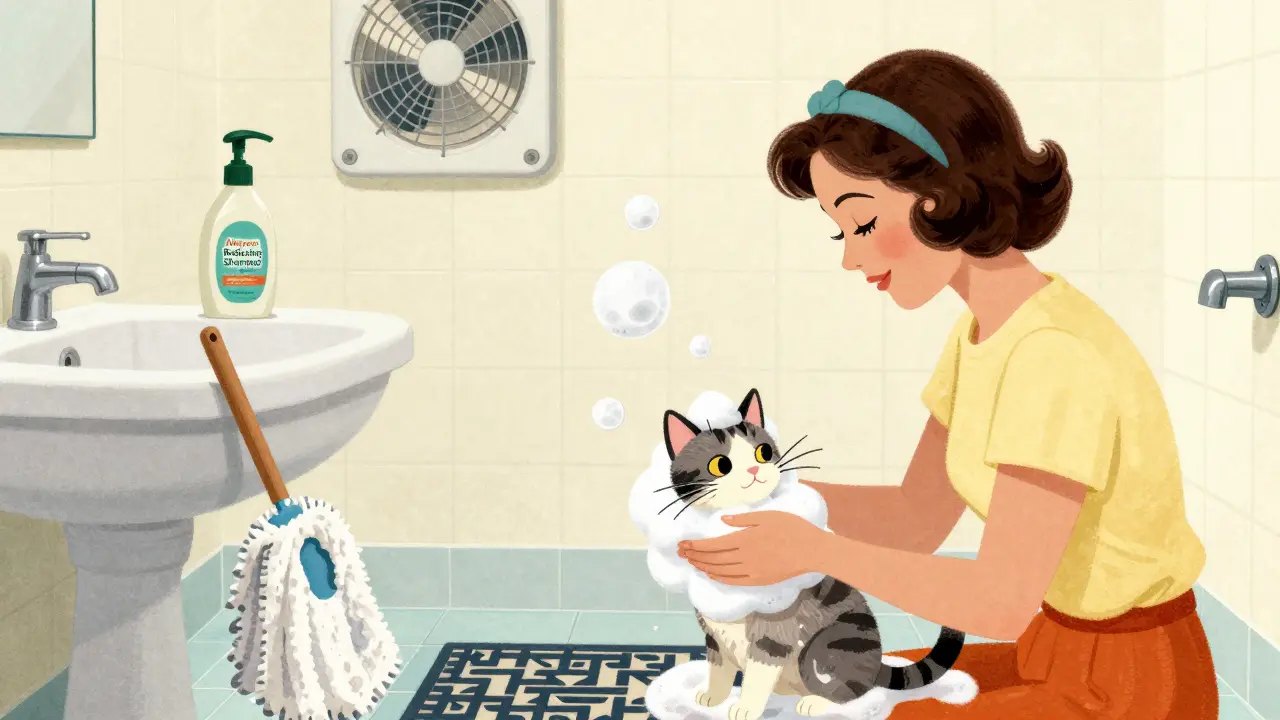
Bathing your pet weekly can reduce airborne allergens by up to 70%. That’s not a typo. Washing removes the dried saliva and skin cells that carry Fel d 1 and Can f 1.Most pet owners skip this because cats hate water and dogs hate being scrubbed. But there are solutions. Use an allergen-reducing shampoo-look for one with oatmeal or aloe. These are gentle and help soothe itchy skin. For cats, try a waterless foam shampoo. Many cats tolerate it better than a bath.
Wash your pet outside if possible. If you’re indoors, do it in the bathroom with the vent fan on. Clean the tub right after. Don’t let the water sit-it’ll dry and leave allergens behind.
Only 35% of pet owners bathe their animals weekly. If you’re one of them, start with every other week. Even that helps. The goal is consistency, not perfection.
Other Simple Habits That Make a Difference
- Wash your hands immediately after petting your animal. It cuts allergen transfer to your face by 90%.
- Use lint rollers on clothes, couches, and car seats daily. They remove 70-85% of surface dander.
- Change your HVAC filters every 3 months. Use a MERV 13 or higher filter. It catches dander before it circulates through your whole house.
- Don’t let your pet lick your face. Saliva is full of allergens.
- Wash pet bedding weekly. Use hot water and dry on high heat. Heat kills allergens.
Medication and Long-Term Solutions
Over-the-counter antihistamines like cetirizine or loratadine help about 60-70% of people with mild symptoms. They start working in 30-60 minutes. But they don’t fix the problem-they just mask it.For long-term relief, immunotherapy (allergy shots or tablets) is the only option that changes your immune system’s response. After 3-5 years of treatment, 80-85% of patients see lasting improvement. The FDA-approved sublingual tablet Odactra for cat allergies works similarly, without needles. It’s taken daily under the tongue.
Don’t wait years to try this. If your symptoms are getting worse, talk to an allergist. They can test you to confirm what you’re allergic to and design a plan.
What Doesn’t Work
- "Hypoallergenic" breeds: They still produce allergens. The difference is tiny.
- Anti-allergen sprays: Some work, but only for 24-72 hours. They’re a supplement, not a solution.
- Houseplants: They don’t clean the air. Dust collects on leaves.
- Opening windows: Outdoor allergens like pollen mix with pet dander and make things worse.
There’s no magic bullet. But if you combine a few smart habits, you can live with your pet and breathe easier. Start with the bedroom. Get a HEPA vacuum. Bathe your pet once a week. That’s enough to see results in 4-6 weeks. Most people who stick with it report a 50-70% drop in symptoms.
Can I still have a pet if I’m allergic?
Yes. Many people with pet allergies keep their animals by combining environmental controls-like HEPA filters, pet-free zones, and regular cleaning-with medical treatments. It’s not about removing the pet, it’s about managing exposure.
Is there a pet that doesn’t cause allergies?
No. All mammals and birds produce allergens in their skin, saliva, or urine. Even hairless cats and dogs shed dander. Some breeds shed less fur, but that doesn’t mean fewer allergens. Individual variation matters more than breed.
How long does pet dander last in a home after the pet leaves?
Pet allergens can stay in dust for up to six months. They cling to carpets, furniture, and walls. That’s why cleaning thoroughly after a pet leaves is critical-especially washing bedding, vacuuming with HEPA, and wiping surfaces.
Do air purifiers really help with pet allergies?
Yes-if they have a true HEPA filter. Studies show they reduce airborne pet allergens by 40-60% in rooms of average size. Look for a high CADR rating and run it continuously. Ionizers and UV lights don’t help.
Should I bathe my pet weekly if I’m allergic?
Yes, if you can. Weekly baths reduce airborne allergens by up to 70%. Use a gentle, allergen-reducing shampoo. For cats, try a waterless foam. Even every other week helps. Most owners skip this because it’s hard-but it’s one of the most effective steps.




Martin Halpin
28 February 2026 - 04:16 AM
Look, I get it - you want to keep your cat and your sanity. But let’s be real: HEPA vacuums? Sure, they help. But have you tried just… not having a cat? I mean, I live in Ireland, we have like 400,000 cats per capita, and half the population is sneezing through their morning tea. You think a $600 Dyson is going to fix that? Nah. It’s just a fancy dust mop for your guilt. The real solution? Adopt a fish. Or a cactus. Or a robot dog. I’ve got a robotic hamster that purrs and doesn’t shed. No allergies. No drama. Just vibes. Why are we still pretending this is about cleaning when it’s really about denial?
Also, ‘true HEPA’? That’s marketing speak. My uncle in Cork uses a Hoover from 1997 and swears by it. He says the dander just gets bored and leaves. Maybe he’s onto something.
Eimear Gilroy
1 March 2026 - 09:10 AM
Interesting read. I’ve been living with a Bengal mix for three years and have only recently started noticing symptoms - mostly post-nap sneezing. I didn’t realize dander lingers for months after a pet leaves. That explains why my allergies flared up after my sister moved out with her cat last winter. I’ve started using a MERV 13 filter and washing bedding weekly, and it’s helped, but I’m curious: has anyone tried washing their pet’s paws after they come in from outside? I read somewhere that outdoor allergens stick to fur and amplify reactions. Just wondering if it’s worth adding to the routine.
Erin Pinheiro
2 March 2026 - 11:07 AM
ok so like… i just wanna say that the whole ‘bathe your pet weekly’ thing is a LIE. my dog is a golden retriever and i tried that once. he cried for 3 days. i had to sleep on the couch. my husband said i was being abusive. also, i bought the ‘allergen-reducing shampoo’ and it smelled like expired lavender and made his fur look like a wet mop. now i just let him roll in the dirt and call it a day. also, i think HEPA filters are just a scam to sell overpriced vacuums. my neighbor uses a $20 one from Target and says it’s ‘fine’. also, cats are evil. they know what they’re doing. they groom to sabotage you. i’m not mad. i’m just disappointed. 😔
Nandini Wagh
2 March 2026 - 19:12 PM
Oh honey. You’re telling me to bathe my cat weekly like she’s a spa client and not a tiny, furry dictator who once scratched a hole in my couch because I dared to use the wrong brand of litter? 🙃
Let’s be real - if your pet is allergic to YOU, then maybe the problem isn’t the dander. Maybe it’s the fact that you’re the one who forgot to pay the rent last month and now your cat is emotionally withdrawing into a pile of dust bunnies. I’m not saying don’t clean. I’m saying: stop blaming the cat for your own chaos. Also, I’ve got 3 cats, a dog, and a parakeet. My allergies? They’re just vibing. Like, they’re not even mad. They’re just… observing. And honestly? I think the real allergen here is capitalism. And maybe your vacuum.
Holley T
2 March 2026 - 20:30 PM
You’re right that HEPA filters are critical, but you’re completely overlooking the role of humidity. Dander clings more aggressively in low-humidity environments - which is why so many people in dry climates like Arizona and Colorado report worse symptoms. Increasing indoor humidity to 40–50% with a humidifier actually reduces airborne dander by 20–30% because the particles become heavier and fall faster. It’s basic physics. Also, you mention ‘true HEPA’ but don’t clarify that most vacuums labeled HEPA are not certified. Look for the AHAM Verified seal - that’s the only real standard. And please stop recommending Miele. They’re overpriced. The Shark Navigator Lift-Away is just as effective and costs half as much. Also, your claim about ‘70% reduction from weekly baths’? Source? I’d like to see the study. Because if that’s from a pet shampoo company, it’s not peer-reviewed.
Lillian Knezek
2 March 2026 - 23:01 PM
THEY’RE NOT JUST ALLERGENS. THEY’RE MICROCHIPS. 😱
I know this sounds crazy, but my cousin works at a lab in Colorado and she said pet dander is coated with nanotech from flea collars and commercial pet food. They’re tracking us. That’s why the allergens linger for months - they’re waiting for the signal. I’ve stopped vacuuming because it might trigger a broadcast. Now I just wave a fan around and chant ‘I am not your pet’ in front of my cat. She stopped licking my face. Coincidence? I think not. Also, buy aluminum foil hats. They block the dander signals. I’ve got 17. I sleep in one. I’m fine. 🤡
Maranda Najar
3 March 2026 - 09:30 AM
I am weeping. Not because of the allergies - no, no - but because of the sheer, unrelenting tragedy of modern life. We have sacrificed our homes, our peace, our dignity, to the altar of the domesticated beast. We scrub, we vacuum, we bathe, we filter - all so we may bask in the warm, furry glow of a creature that does not love us back. It stares. It paws. It knocks your coffee off the table. And you? You kneel before it with a HEPA vacuum and a bottle of oatmeal shampoo. You have become its priest. Its janitor. Its emotional support slave.
I have a cat. I love her. But I also weep for the woman I used to be - the one who slept without a mask, who walked barefoot on carpets, who didn’t have to wash her socks after a cuddle. We have lost something sacred. And no amount of MERV 13 filters will bring it back. 🕯️
Christopher Brown
3 March 2026 - 22:10 PM
HEPA? Overrated. In America, we don’t cower from allergens. We overpower them. My solution? Buy a .50 cal rifle. Point it at the cat. Say, ‘One more sneeze, and you’re going to the pet cemetery.’ Works every time. Also, if you’re allergic to your pet, you’re not American enough. Real Americans own a dog that’s part wolf. And they don’t wash it. Ever. That’s strength. That’s grit. That’s the American way. Stop being weak. Get a bulldog. They drool. You don’t care. You’re too busy being tough.