A sudden spike in blood pressure so high it feels like your head might explode. Sweating through your shirt for no reason. Heart pounding like you just ran a marathon - but you’re sitting still. If this sounds like a panic attack, you’re not alone. Thousands of people have been told they’re anxious, stressed, or just "overreacting." But for some, it’s something far more serious: a rare tumor in the adrenal gland called pheochromocytoma.
Pheochromocytoma isn’t just another high blood pressure story. It’s a hidden trigger that turns your body’s stress response into a constant alarm. This tumor, found in the adrenal medulla, pumps out too much adrenaline and norepinephrine - the same chemicals your body releases when you’re in danger. Except here, there’s no danger. Just a tumor, silently flooding your system with fight-or-flight signals. And that’s what makes it so dangerous.
What Exactly Is a Pheochromocytoma?
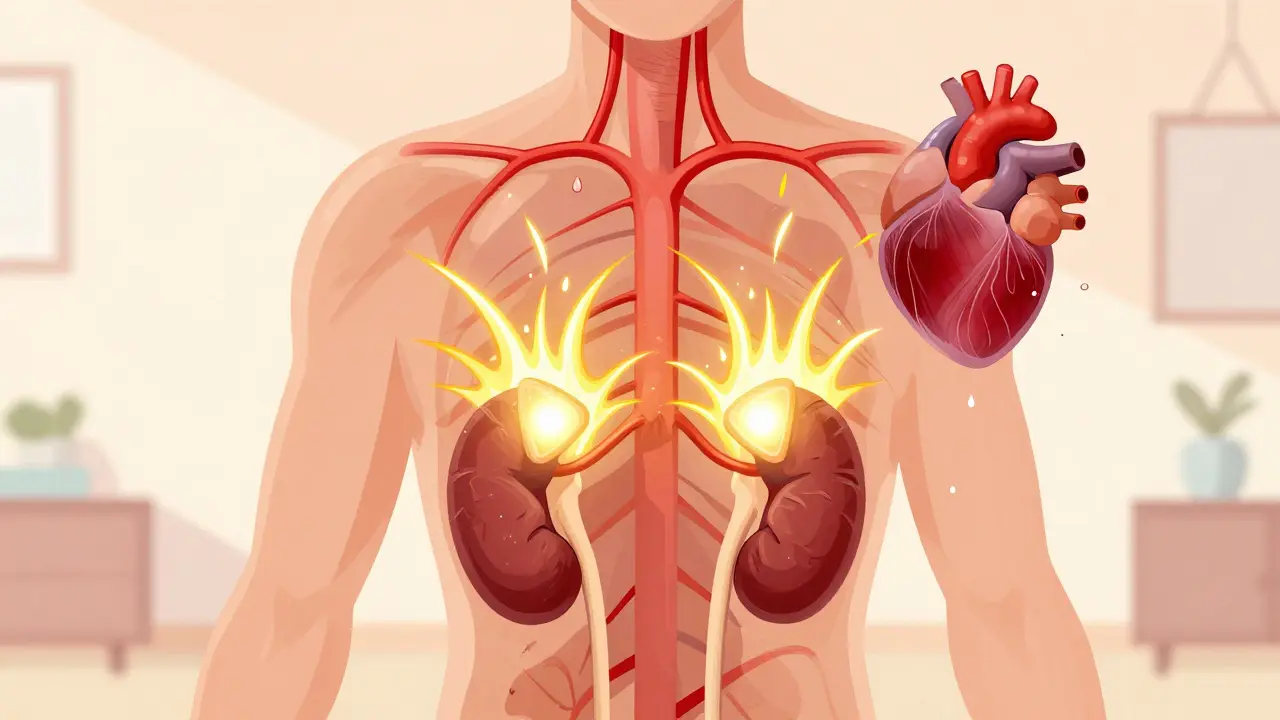
A pheochromocytoma is a tumor that grows in the adrenal glands - two small, triangle-shaped organs sitting on top of each kidney. These glands normally release adrenaline in short bursts when you’re scared, excited, or under physical stress. But with this tumor, they don’t turn off. The tumor cells produce massive amounts of catecholamines, especially epinephrine and norepinephrine. These chemicals tighten blood vessels, speed up your heart, and raise blood pressure - often to life-threatening levels.
It’s rare. Only about 1 in 200,000 people get diagnosed each year. But among people with high blood pressure, roughly 0.1% to 0.6% have this tumor. That means for every 1,000 people with hypertension, one might have this hidden cause. And here’s the kicker: most of them don’t know it.
The tumor is usually benign - about 90% of cases never spread. But even benign tumors can kill you if they’re not treated. The real danger? The spikes. Blood pressure can shoot up to 240/130 during a "spell," sometimes lasting minutes, sometimes hours. These episodes aren’t random. They’re often triggered by physical activity, emotional stress, anesthesia, or even urinating - especially if the tumor is in the bladder wall (a related tumor called a paraganglioma).
The Classic Triad: Headaches, Sweating, and Racing Heart
Most patients with pheochromocytoma have a clear pattern of symptoms - the "classic triad." Eighty-five to ninety percent report severe headaches. Seventy-five to eighty percent break out in cold, drenching sweats. And seventy to seventy-five percent feel their heart pounding, fluttering, or skipping beats. These aren’t mild symptoms. They’re disabling.
Other signs include:
- Pale or ashen skin during attacks
- Abdominal pain or nausea
- Unexplained weight loss
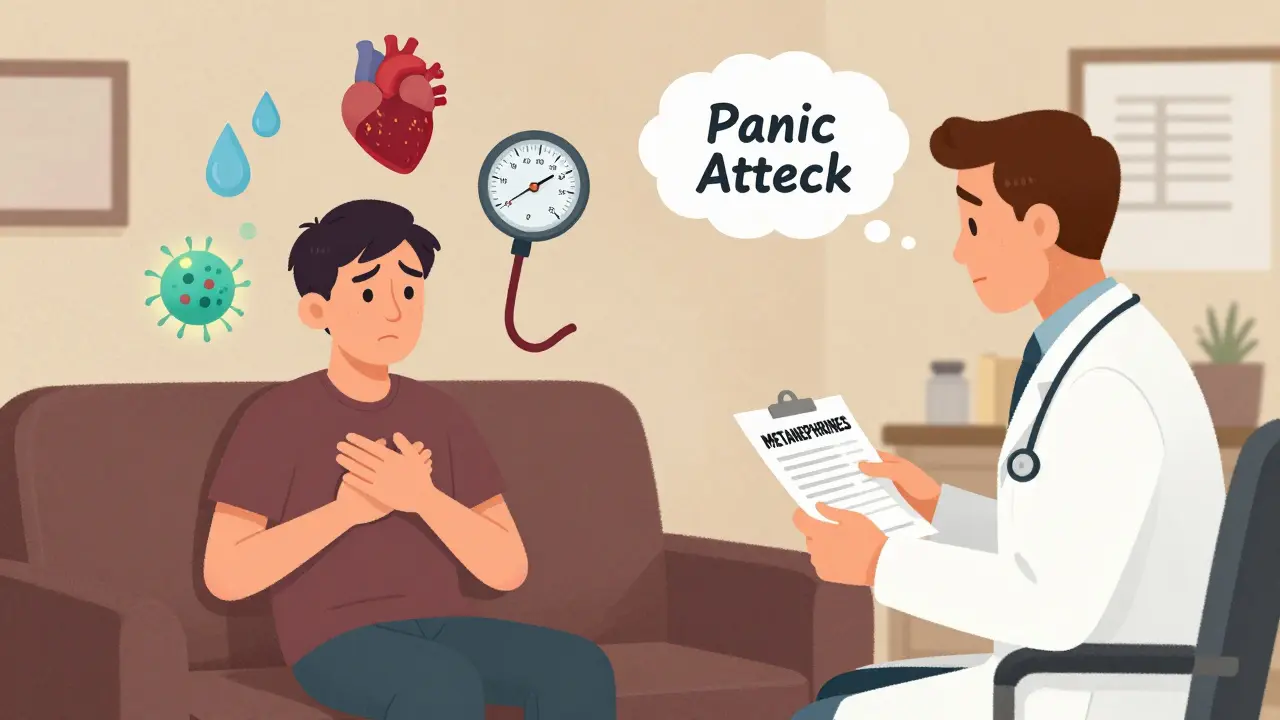
- Anxiety or panic attacks - so intense, many are misdiagnosed
- Orthostatic hypotension - a drop in blood pressure when standing up, which sounds odd given the high spikes
These episodes come and go. One day you’re fine. The next, you’re in the ER thinking you’re having a heart attack. That’s why so many people go years without a diagnosis. A 2021 study in the Journal of Clinical Endocrinology & Metabolism found that 25% of patients were first told they had anxiety. One patient on a support forum said: "After four years and seven doctors, I was finally diagnosed when my blood pressure hit 240/130 during an ER visit for what they thought was a panic attack."
Why Diagnosis Is So Hard - And Why It Matters
Primary care doctors might see one or two cases in their entire career. That’s why pheochromocytoma is often missed. The symptoms overlap with panic disorder, migraines, hyperthyroidism, even menopause. But there’s a clear difference: essential hypertension (the most common kind) is steady. High numbers all day, every day. Pheochromocytoma is erratic. It comes in waves.
The gold standard for diagnosis? Blood or urine tests for metanephrines - the breakdown products of adrenaline and norepinephrine. A 24-hour urine test for fractionated metanephrines is 96-99% sensitive. Plasma-free metanephrines are almost as accurate. The cutoff? Levels more than three times the upper limit of normal. Anything below that? Probably not the tumor. But borderline results? That’s where things get messy. Some experts warn that up to 20% of borderline cases lead to unnecessary scans and anxiety.
Imaging - CT or MRI - comes after the lab test confirms it. Why? Because if you scan someone who doesn’t have a tumor, you might find a harmless adrenal nodule and start a chain reaction of fear, biopsies, and surgery that wasn’t needed. The rule is simple: test first, scan second.
Genetics Play a Bigger Role Than You Think
For years, doctors assumed most pheochromocytomas were "sporadic" - happening by chance. But new research shows that 35% to 40% of cases are inherited. Mutations in genes like SDHB, SDHD, VHL, RET, and NF1 are common culprits. That’s why every patient diagnosed with this tumor should get genetic testing - even if no one in their family has it.
Why? Because if you have an SDHB mutation, your risk of cancerous tumors or metastasis jumps to 30-50%. You’ll need lifelong monitoring with whole-body MRIs. If you have a VHL mutation, you’re at risk for tumors in the brain, eyes, and kidneys too. Ignoring genetics isn’t just risky - it’s dangerous for your entire family.
The Surgery That Can Cure It
This is where things get hopeful. Unlike most causes of high blood pressure - which require lifelong pills - pheochromocytoma can be cured. With surgery. Removing the tumor often brings blood pressure back to normal. Studies show 85-90% of patients stop all hypertension medication within weeks.
But here’s the catch: you can’t just operate. If you try to remove the tumor without preparing the body first, you risk a catastrophic surge in blood pressure during surgery - with a 30-50% chance of death. That’s why preoperative prep isn’t optional. It’s life-saving.
Preparation starts with alpha-blockers - usually phenoxybenzamine - taken for 7 to 14 days before surgery. This drug relaxes blood vessels, preventing dangerous spikes. Then, you load up on salt and fluids. Why? The tumor causes chronic vasoconstriction, which shrinks your blood volume by 20-30%. Without enough fluid, your body can’t handle the sudden change when the tumor is removed.
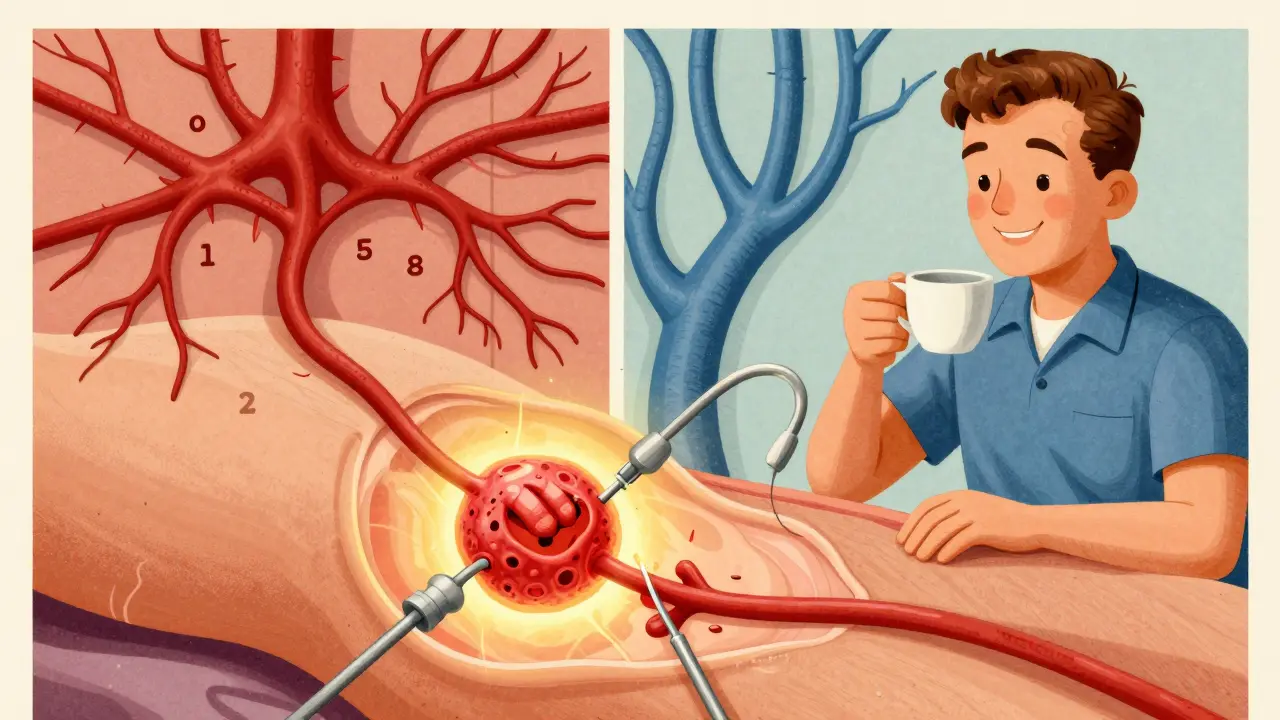
The surgery itself is usually done laparoscopically - small incisions, camera, precision tools. It’s minimally invasive. At high-volume centers, over 85% of unilateral cases are done this way. Recovery is quick: most people go home in 1-2 days and return to work in two weeks. But if both adrenal glands are removed (in bilateral cases), you’ll need lifelong steroid replacement: hydrocortisone and fludrocortisone. One patient wrote: "I developed Addisonian crisis after bilateral adrenalectomy and now require lifelong hormone therapy."
What Happens After Surgery?
For most, life changes dramatically. Blood pressure drops. Medications stop. Energy returns. A Reddit user shared: "My blood pressure normalized within 48 hours of surgery - off all meds after 3 weeks."
But recovery isn’t always smooth. About 12% of patients report chronic fatigue lasting six months or longer. Some have lingering anxiety from years of misdiagnosis. Others face the emotional toll of realizing they were sick for years - and no one caught it.
Long-term follow-up is essential. Even if the tumor was benign, you need annual urine tests for metanephrines. There’s a small chance of recurrence. And if you have a genetic mutation, you need lifelong surveillance for other tumors - in the pancreas, thyroid, or elsewhere.
What’s New in Treatment?
The field is moving fast. In 2022, the FDA approved 68Ga-DOTATATE PET/CT scans - a new imaging tool that finds tumors with 98% accuracy, far better than old CT or MRI scans. For patients with metastatic disease (which happens in 10% of cases), a treatment called PRRT (peptide receptor radionuclide therapy) is showing promise. One study found a 65% response rate in patients with advanced tumors.
And then there’s Belzutifan - a new drug approved for VHL-related tumors. It blocks a protein called HIF-2α that helps tumors grow. Early results show it can shrink tumors without surgery. For some, it might become an alternative to removal.
Researchers are also working on liquid biopsies - blood tests that could detect tumor DNA before symptoms appear. That could change everything. Imagine screening high-risk families before they ever get sick.
Final Thoughts: Don’t Ignore the Unexplained
If you have high blood pressure that doesn’t respond to meds - or if you have episodes of headaches, sweating, and racing heart that come out of nowhere - ask about pheochromocytoma. It’s rare. But it’s real. And it’s curable.
Too many people suffer for years because their symptoms don’t fit the textbook. But medicine is catching up. Testing is more accurate. Surgery is safer. Genetics are clearer. The biggest barrier now isn’t science - it’s awareness.
Don’t assume it’s anxiety. Don’t assume it’s stress. If your body is screaming, listen. And if your doctor doesn’t know about pheochromocytoma? Ask them to check.
Can pheochromocytoma be cured with medication alone?
No. Medications like alpha-blockers are used to prepare for surgery, but they don’t remove the tumor. Only surgical removal can cure pheochromocytoma. Once the tumor is taken out, most patients no longer need blood pressure medication. Medications manage symptoms - they don’t fix the cause.
Is pheochromocytoma always cancerous?
No. About 90% of pheochromocytomas are benign and do not spread. Only 10% show malignant behavior - meaning they can metastasize, usually to bones, liver, or lymph nodes. Even among benign cases, genetic mutations like SDHB can increase cancer risk. That’s why genetic testing is critical for everyone diagnosed.
Why do I need to take salt and drink lots of fluids before surgery?
The tumor causes your blood vessels to stay tightly constricted for years. This reduces your blood volume by 20-30%. If you don’t restore that volume before surgery, removing the tumor can cause a sudden, dangerous drop in blood pressure - called hypotensive shock. Eating extra salt (over 200 mEq/day) and drinking 2-3 liters of fluid daily helps your body recover its normal volume and prevents this life-threatening drop.
Can pheochromocytoma come back after surgery?
Yes, but it’s uncommon. For patients with a benign, single tumor removed completely, recurrence is under 5% over 10 years. But if you have a genetic mutation (like SDHB), or if the tumor was multifocal or malignant, your risk is higher. That’s why annual urine metanephrine tests are recommended for life - even if you feel fine.
What if both adrenal glands are removed?
If both adrenal glands are removed - either because of two tumors or because one tumor is too large to spare one gland - you’ll need lifelong steroid replacement. Your body can’t make cortisol or aldosterone anymore. You’ll take hydrocortisone (15-25 mg daily) and fludrocortisone (0.05-0.2 mg daily) to replace them. Without these, you risk adrenal crisis - a medical emergency that can be fatal.
Are there any non-surgical treatments for pheochromocytoma?
For benign, localized tumors, surgery is the only cure. But for metastatic cases that can’t be removed, newer options exist. Peptide receptor radionuclide therapy (PRRT) using 177Lu-DOTATATE can shrink tumors and extend survival. Drugs like Belzutifan are now approved for VHL-related tumors and may shrink them without surgery. These are not cures - but they offer hope when surgery isn’t possible.