Pediatric Medication Risk Checker
Disclaimer: This tool is for educational purposes only. It is not a substitute for professional medical advice. Always consult your pediatrician before administering medication.
Check Medication Risks
Potential Risk: -
Why: -
Emergency Signal Checklist
Check if your child is experiencing any of these critical red flags:
Quick Tip for Caregivers:
Keep a medication diary. Note the time, dose, and any reactions. This is critical for doctors to determine if a dose needs to be adjusted by 25-50%.
Key Takeaways
- Children have different body compositions and liver enzyme levels that change the way drugs are metabolized.
- The second year of life is a particularly high-risk period for certain medication side effects.
- A huge portion of pediatric medications are used "off-label," meaning they lack official pediatric labeling.
- Certain common drugs, like aspirin or specific teething gels, can be dangerous for children.
- Monitoring for severe reactions like facial swelling or breathing trouble is critical.
The Biology of Why Kids React Differently
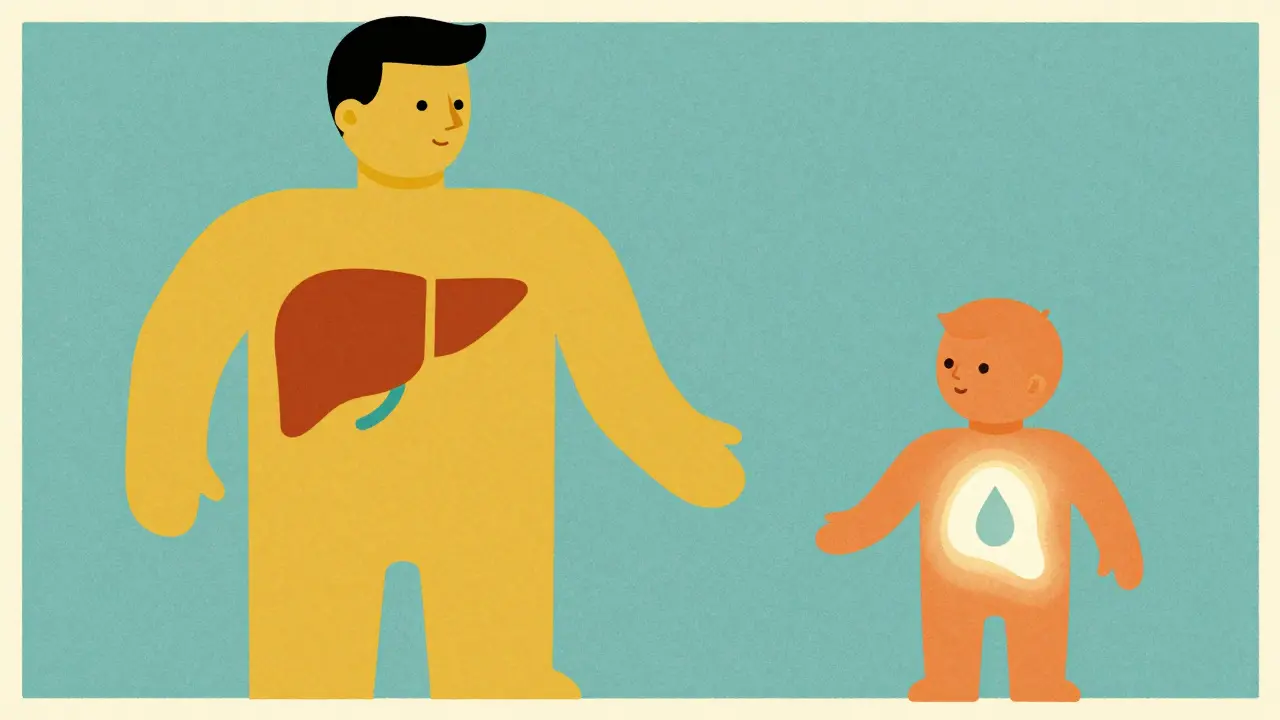
To understand pediatric medication side effects, we have to look at pharmacology-how the body interacts with a drug. A child's body is a moving target; it changes rapidly every few months. For starters, infants have a much higher percentage of body water (about 75-80%) compared to adults (around 60%). This affects how water-soluble drugs distribute through their system. Then there is the liver. The liver enzymes responsible for breaking down medication don't just switch on at birth. Neonates (babies under 28 days) only have about 30-40% of adult cytochrome P450 enzyme activity. Interestingly, some infants actually reach 100-200% of adult activity for certain enzymes, meaning they might clear a drug out of their system *faster* than an adult would. This is why weight-based dosing (mg/kg) is the gold standard, but even then, the age of the child matters as much as their weight.High-Risk Medications and the 'KIDs List'
Not all medications carry the same risk. Mayo Clinic researchers developed the KIDs List (Key Potentially Inappropriate Drugs in Pediatrics) to highlight medications that are particularly risky for children. Some of these are household names that we often assume are safe for everyone.| Medication | Specific Pediatric Risk | Why It Happens |
|---|---|---|
| Aspirin | Reye's Syndrome | Can cause severe brain and liver swelling during viral infections. |
| Loperamide | Fatal Cardiac Events | High risk of heart rhythm issues in children under 6. |
| Codeine | Respiratory Depression | Some kids are "ultra-rapid metabolizers" (CYP2D6 polymorphism). |
| Benzocaine Gels | Methemoglobinemia | Reduces the blood's ability to carry oxygen. |
The Danger of 'Off-Label' Use
One of the biggest gaps in healthcare is the reliance on off-label prescribing. This happens when a drug is approved for one condition (or for adults), but a doctor prescribes it for a child because there is no approved pediatric version. The American Academy of Pediatrics estimates that 50-75% of drugs used in pediatric settings lack specific labeling for children. This lack of data is especially glaring in Neonatal Intensive Care Units (NICUs), where roughly 79% of drugs are used off-label. For children with rare diseases, the situation is even worse; about 95% of these conditions have no FDA-approved treatment specifically for kids. When we use adult data to treat children, we risk missing critical safety signals. For example, the asthma medication montelukast has been linked to psychiatric side effects. Research shows a 3.2-fold increased risk of these reactions specifically during the second year of life-a detail that wouldn't be obvious from adult studies.Spotting the Warning Signs
As a parent or caregiver, it's helpful to know the difference between a "normal" side effect and a medical emergency. Many children experience mild reactions-like a slightly upset stomach, a faint rash, or some drowsiness-when starting a new medication. These typically affect 15-20% of pediatric courses and often fade after a few days. However, some signs mean you need to head to the emergency room immediately:- Difficulty breathing: This is a hallmark of an allergic reaction and occurs in about 0.1-0.5% of cases.
- Facial swelling: Swelling of the lips, tongue, or throat is a critical red flag.
- Unexpected Heart Rate: While some meds (like albuterol) naturally increase heart rate, a racing heart after an antibiotic is not normal.
The Path Toward Precision Pediatrics
We are finally moving away from the "one size fits all" approach. The launch of the PDSportal and the KidSIDES database in 2023 provides doctors with validated drug-side effect pairs tailored to specific developmental stages. This is a huge leap forward in safety. The future lies in pharmacogenomics-testing a child's DNA to see how they will react to a drug before they ever take the first dose. For instance, knowing if a child is a "rapid metabolizer" of codeine could prevent a fatal overdose. The NIH is currently investing millions into creating age-specific genomic guidelines to make medicine safer for the youngest patients.Why can't I just give my child a half-dose of adult medicine?
Because children's bodies aren't just smaller versions of adults. Their liver enzymes and kidney functions work differently, and their body water percentage is higher. A "half-dose" might be too much for a baby's liver to process or too little to actually work, leading to either toxicity or treatment failure.
What is the 'KIDs List'?
The KIDs List is a resource developed by Mayo Clinic researchers that identifies medications with higher risk profiles for children. It helps clinicians avoid drugs that have a high probability of causing serious adverse events in pediatric populations.
Is 'off-label' use of medication dangerous?
Not necessarily, as many doctors have years of experience using these drugs safely. However, it is inherently riskier because the drug hasn't undergone the same rigorous, child-specific clinical trials that 'labeled' drugs have. This is why monitoring for side effects is so important.
What should I do if my child has a mild rash after starting a new med?
If the rash is mild and the child is otherwise acting normally, contact your pediatrician. They will help you decide if the medicine should be continued with monitoring or if the dose needs adjustment. Never stop a critical medication (like an antibiotic) without talking to a doctor first.
Why is the second year of life considered high-risk?
Research, including studies from Columbia University, shows that enzyme expression and brain development change rapidly during this window. Certain drugs, like montelukast, show a significantly higher risk of psychiatric side effects during this specific developmental stage compared to older children.