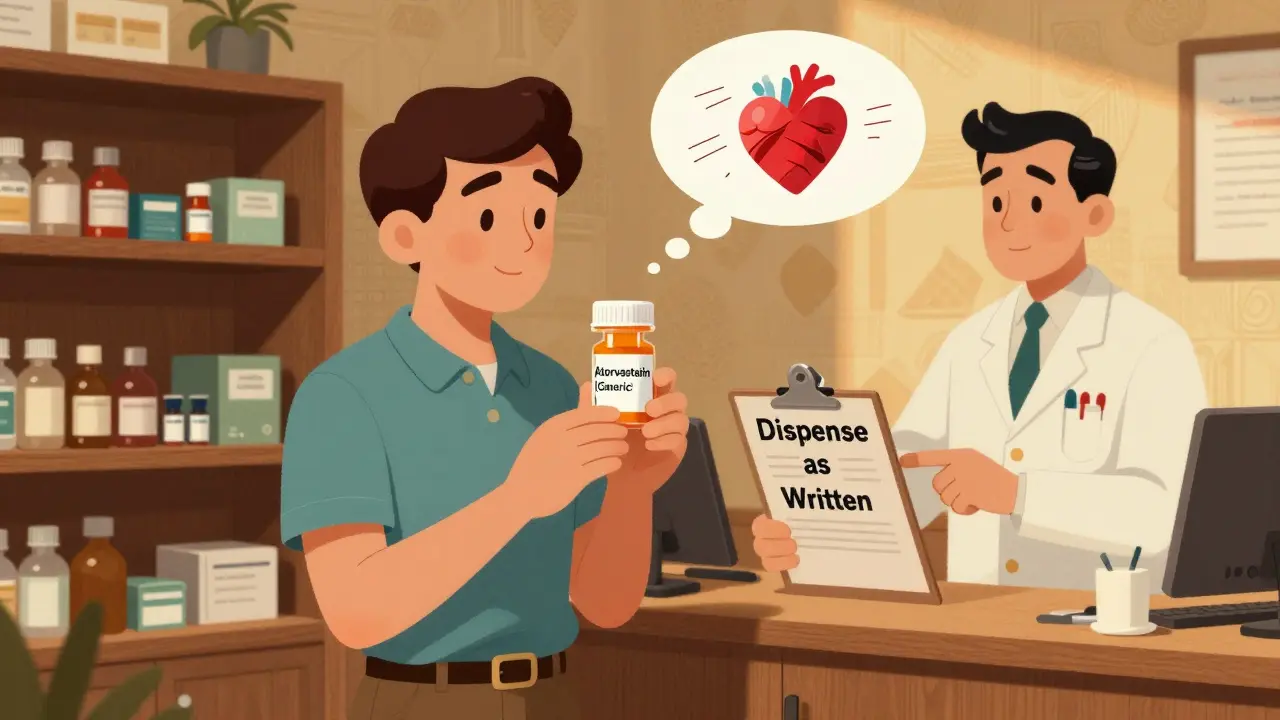
When your prescription comes back from the pharmacy and you see a different name on the bottle than what your doctor wrote, it’s not a mistake. It’s generic substitution-and it’s happening more than ever. In the U.S., 9 out of 10 prescriptions filled are for generic drugs. That’s not just a trend; it’s policy. Insurance companies, pharmacy benefit managers, and even state laws are pushing for generics because they save money-big time. But what happens when you need the brand? Or when switching causes problems? Here’s how to actually handle insurance requirements for generic substitution without getting stuck with the wrong drug or a surprise bill.
Why Insurance Pushes for Generics
Insurance companies don’t care about brand names. They care about cost. A brand-name drug like Lipitor might cost $120 a month. The generic version, atorvastatin, costs $15. That’s an 87% drop. For insurers like Sun Life or Great West Life in Canada, that difference adds up fast. In 2012, Sun Life reported that brand-name claims averaged $72 per prescription while generics were just $27. That’s not a small gap-it’s a financial lifeline for their plans. The FDA requires generics to prove they’re bioequivalent. That means the amount of active ingredient absorbed into your bloodstream has to be within 80-125% of the brand’s levels. For most drugs, that’s fine. Your body doesn’t notice the difference. But here’s the catch: bioequivalence doesn’t mean identical. The inactive ingredients-fillers, dyes, coatings-can vary. And for some people, those differences matter.When You Can’t Switch: The ‘Dispense as Written’ Rule
If your doctor believes the brand is necessary, they can write “Dispense as Written” or “Brand Medically Necessary” right on the prescription. That’s your legal shield. In 19 states and D.C., pharmacists are required by law to substitute generics unless that note is there. In Texas, the rules are even clearer: substitution can’t happen if the patient refuses, if the doctor says no, or if the generic doesn’t cost less than the brand. But here’s where things get messy. Some pharmacists still substitute anyway. A 2023 review of 1,247 patient complaints on Drugs.com found that 37% of negative experiences came from substitutions despite clear “do not substitute” instructions. Why? Because insurers sometimes override the prescription. Some pharmacy benefit managers (PBMs) like Express Scripts or OptumRx have automated systems that flag “dispense as written” as a cost driver-and they push back. If this happens, you need to act fast. Call your pharmacy. Ask them to verify the prescription with your doctor. If they won’t, escalate to your insurer. Most have a customer service line for medication disputes. Keep a copy of the prescription and any communication. This isn’t just about pride-it’s about safety.Medical Necessity: How to Get Approval for Brand-Name Drugs
If your insurer denies your request for a brand-name drug, the next step is a prior authorization. This isn’t optional. It’s the only path forward. Your doctor has to submit documentation showing why the generic didn’t work. That could mean:- Therapeutic failure: your cholesterol didn’t drop on atorvastatin, but did on Lipitor
- Adverse reaction: you broke out in hives after switching to a generic levothyroxine
- Stability issues: your thyroid levels fluctuated after three switches

What About Biologics and Complex Drugs?
Generics work great for pills. But what about inhalers, injectables, or biologics? These aren’t simple copies. A biosimilar isn’t a generic. It’s “highly similar,” not identical. The FDA requires extra clinical studies to prove safety. As of November 2023, only 38 biosimilars had been approved in the U.S.-compared to over 10,000 small-molecule generics. And substitution rules are stricter. In 45 states, you need explicit consent before switching a biosimilar. In 32 states, the prescriber must be notified within 5-7 days. That’s because even tiny differences in manufacturing can affect how your body responds. A 2023 study in the Journal of Managed Care & Specialty Pharmacy found that patients on biosimilar infliximab for Crohn’s disease had higher relapse rates when switched without monitoring. If you’re on one of these drugs, don’t assume substitution is automatic. Ask your pharmacist: “Is this a biosimilar? Is it interchangeable?” If it is, ask if your insurer requires consent forms. Keep records. If you’re switched without notice, file a complaint with your state pharmacy board.The Hidden Risk: Different Generic Manufacturers
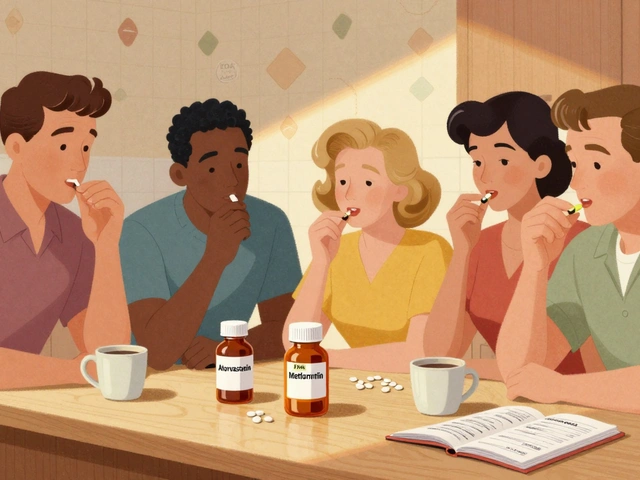
Not all generics are made the same. The same drug-say, metformin-can be made by Teva, Mylan, or Apotex. Each uses different fillers. One might have a dye that causes stomach upset. Another might have a coating that dissolves too slowly. On Reddit, user u/PharmaTech99 posted in August 2023 about switching from one generic metformin to another and developing severe nausea. Their doctor couldn’t explain it-until they checked the manufacturer. If you’ve had a reaction after switching generics, even if the name is the same, document it. Tell your pharmacist: “I had a bad reaction to the Teva version. Can I get the Mylan one instead?” Most pharmacies can order specific manufacturers. Your insurance might not cover it-but if you have a documented history, they often will.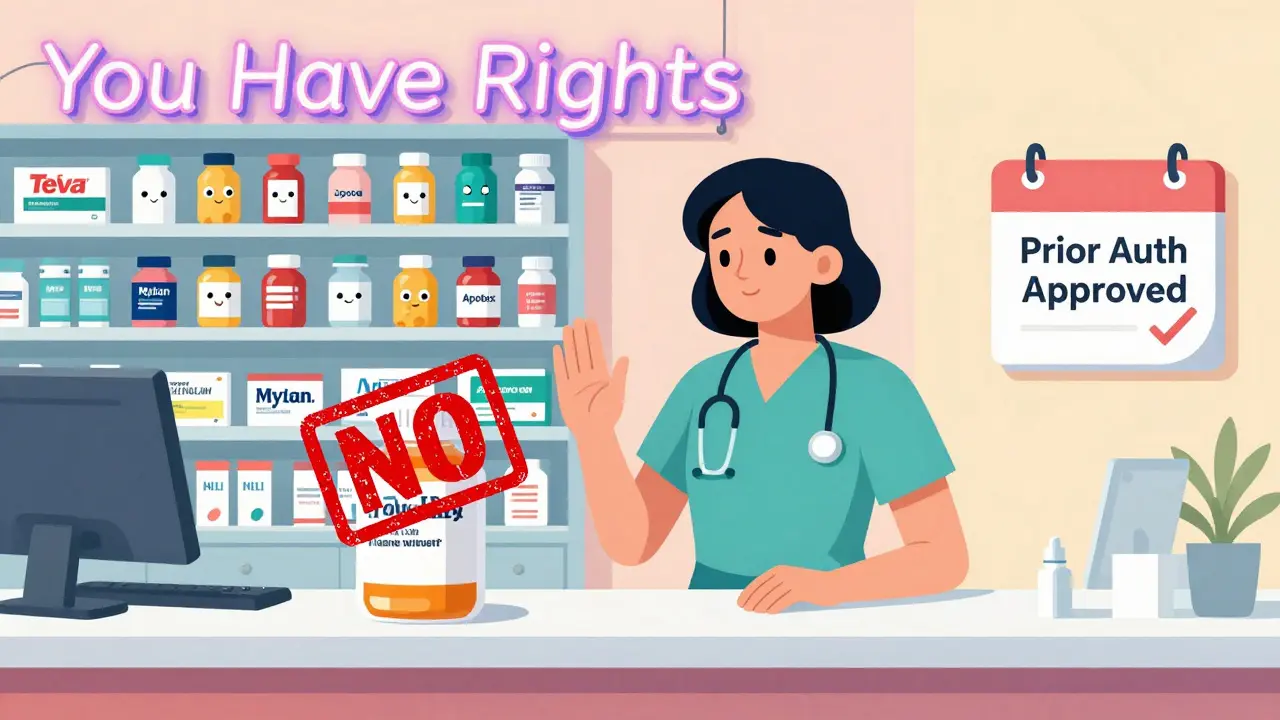
What You Can Do Right Now
You don’t have to wait for a crisis. Here’s what to do today:- Check your prescription label. Does it say “generic” or list a manufacturer name? If yes, ask if it’s the same one you’ve used before.
- Call your pharmacy and ask: “Is this substitution allowed under my insurance?”
- If your doctor hasn’t written “Dispense as Written,” ask them to add it-especially if you’ve had issues before.
- Keep a log: note the drug name, manufacturer, dose, and how you felt after switching.
- Know your rights: in most states, you can refuse a substitution and pay the difference.
Cost vs. Control: The Real Trade-Off
Yes, generics save money. The U.S. healthcare system saved $373 billion in 2023 thanks to them. But cost savings shouldn’t come at the cost of your health. If you’re stable on a brand, switching for a few bucks isn’t worth the risk. If you’ve had side effects, your body is telling you something. Don’t ignore it. Insurance companies aren’t evil. They’re following rules designed to control spending. But those rules don’t always account for individual biology. Your job isn’t to fight the system-it’s to navigate it. Use the tools: the “Dispense as Written” note, prior authorization, manufacturer preferences, and your right to refuse. You’re not asking for special treatment. You’re asking for the same care your doctor prescribed.Can my pharmacist substitute my brand-name drug without telling me?
In 31 states and D.C., pharmacists are required to notify you if they’re substituting a generic. But in 24 states, there’s no legal requirement to tell you at all. Always check the label and ask. If you’re switched without notice, you have the right to ask for the original drug or file a complaint with your state pharmacy board.
What if my doctor wrote ‘Dispense as Written’ but the pharmacy still substituted?
That’s a violation of pharmacy law in 19 states and D.C. Contact your pharmacy immediately and request the correct medication. If they refuse, call your insurance company and ask for a formal dispute. Keep a copy of the prescription and any communication. You may also report the pharmacy to your state’s board of pharmacy.
Are generic drugs really as effective as brand-name drugs?
For most medications, yes. The FDA requires generics to meet strict bioequivalence standards. But for drugs with a narrow therapeutic index-like warfarin, lithium, or certain seizure medications-even small differences in absorption can matter. If you’re on one of these, stick with the same manufacturer unless your doctor says otherwise.
Why do some people have side effects after switching to a generic?
The active ingredient is the same, but the inactive ingredients-like fillers, dyes, or coatings-can differ. Some people are sensitive to these. For example, one generic version of metformin might contain a dye that causes stomach upset, while another doesn’t. If you notice new symptoms after switching, note the manufacturer and report it to your pharmacist and doctor.
Can I ask for a specific generic manufacturer?
Yes. Many pharmacies can order specific manufacturers, especially if you’ve had a bad reaction to another one. Your insurance might not cover it automatically, but if you have documented medical reasons, they often will approve it as part of a prior authorization request.
Do Medicare plans allow generic substitution?
Yes, and they do it aggressively. Medicare Part D has a 94% generic substitution rate. But like other plans, they must honor “Dispense as Written” or “Brand Medically Necessary” on prescriptions. If you’re on a complex medication, always check your plan’s formulary and ask your pharmacist if the generic is interchangeable.


Oladeji Omobolaji
24 January 2026 - 04:22 AM
Man, I just got my generic metformin from a Nigerian pharmacy and it tasted like chalk and regret. No idea who made it, but my stomach hasn't forgiven me yet. Glad y'all have some rules over there.
Stacy Thomes
25 January 2026 - 03:50 AM
STOP LETTING INSURANCE PLAY DOCTOR! If your body screams NO, listen. I switched generics and ended up in the ER. Don't be a statistic. Fight back.
Anna Pryde-Smith
25 January 2026 - 05:45 AM
Oh, so now we're supposed to be medical detectives just to get our damn pills? My last pharmacy substituted my Synthroid for some mystery Teva version and I turned into a zombie for three weeks. My endocrinologist had to call them THREE TIMES. And the worst part? They acted like it was MY fault for not knowing the difference between a manufacturer code and a barcode. This isn't grocery shopping. This is my HORMONES we're talking about. I have a binder. A BINDER. With dates, manufacturers, symptoms, and doctor notes. If you don't track this stuff, you're playing Russian roulette with your thyroid. And don't even get me started on how PBMs override 'Dispense as Written' like it's a suggestion. It's a LEGAL INSTRUCTION. Not a request. Not a 'maybe.' A. LEGAL. INSTRUCTION. And yet they still do it. Because they can. Because they know most people won't fight. But I will. Every. Single. Time. I've filed complaints with three state boards. I've called my senator's office. I've emailed the FDA. And guess what? They don't care. But I'm not done. If you're on a narrow therapeutic index drug and you get switched without consent? You have every right to scream. And I'm here to tell you: scream louder. Because if you don't, someone else's kid will end up in the hospital because someone thought 'close enough' was good enough for a human life.
Janet King
27 January 2026 - 01:31 AM
Patients should always verify the manufacturer on their prescription label. If a change occurs without notification, contact the pharmacy and request the original formulation. Document all changes and communicate with your prescriber. Insurance plans are required to honor 'Dispense as Written' when clearly indicated on the prescription.
dana torgersen
28 January 2026 - 22:47 PM
...so... like... generics are supposed to be the same... but they're not... right? I mean... the FDA says 80-125%... which is... a huge range... like... what if you're on the edge? and then the fillers? and the dyes? and the coatings? and then you switch manufacturers and suddenly... you're... crying... for no reason? and your joints... ache? and you can't sleep? and you're like... is this... me? or is this... the pill? and then you find out... it's the Mylan version... and not the Teva... and you're like... why does this even exist? who decided that 80% is acceptable? and why don't we have... like... a registry? or... a database? of which manufacturer does what to whom? because... if you're me... you're just... trying to survive... and now you have to be a pharmacist... a lawyer... and a detective... just to get your damn thyroid meds... and it's not fair... it's not right... and no one listens... and I'm tired... so tired...
Dawson Taylor
29 January 2026 - 20:17 PM
The system prioritizes cost efficiency. Individual biological variance is not accounted for in policy design. The burden of adaptation falls on the patient. This is a structural flaw, not a personal failure.
Vanessa Barber
30 January 2026 - 19:58 PM
Yeah sure, generics save money... until your body starts rejecting them like they're a bad date. Then you're stuck paying extra for the brand and everyone acts like you're being dramatic. Newsflash: I'm not dramatic. I'm just not dead.
Sallie Jane Barnes
1 February 2026 - 13:21 PM
Thank you for outlining these rights so clearly. I’ve been helping elderly neighbors navigate this exact issue. Many don’t realize they can refuse a substitution or request a specific manufacturer. A simple conversation with the pharmacist-‘Can I get the one from Mylan?’-can prevent hospital visits. Empowerment starts with asking.
Andrew Smirnykh
1 February 2026 - 22:28 PM
In my home country, pharmacists are required to log every substitution and notify the prescriber within 48 hours. It’s not perfect, but it creates accountability. Maybe the U.S. needs a similar national registry-anonymous, but traceable-for generic switches tied to adverse events. Data could force change faster than individual complaints.