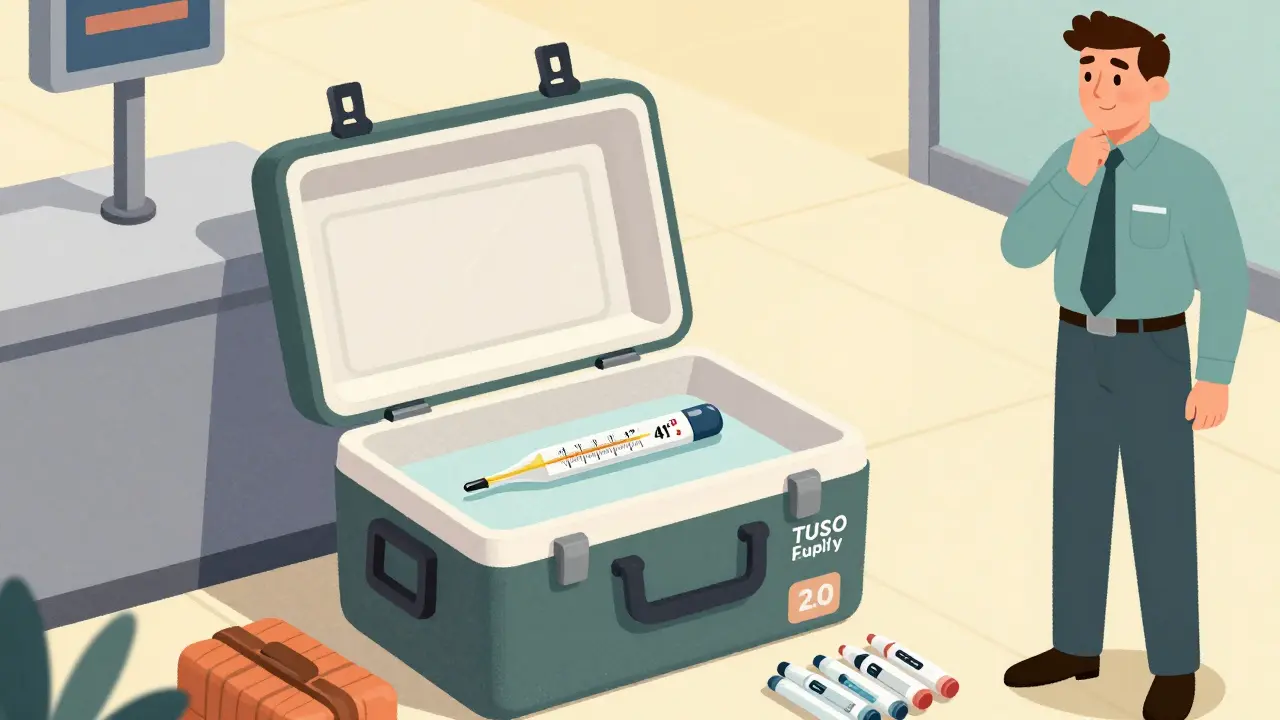
Traveling with refrigerated medications isn’t just about packing a cooler. It’s about keeping your medicine alive. If you’re carrying insulin, Mounjaro, vaccines, or any biologic drug, even a few hours outside the 36°F to 46°F (2°C to 8°C) range can cut its effectiveness by 10% or more. That’s not a guess-it’s what the FDA and manufacturers like Eli Lilly and Novo Nordisk confirm. And if your meds degrade, your health pays the price.
Why Temperature Matters More Than You Think
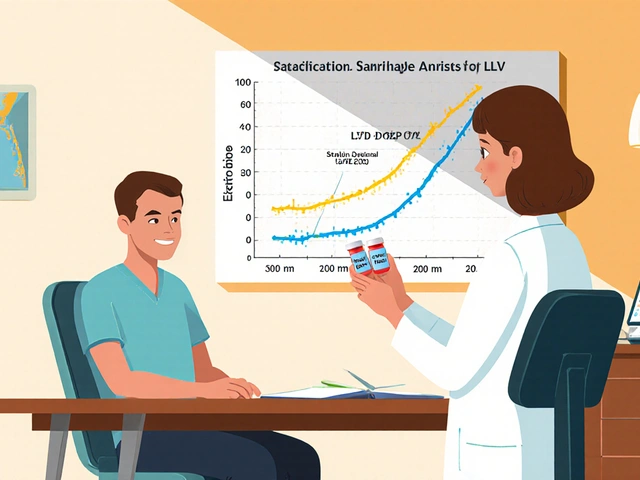
Most people assume if a medication isn’t hot to the touch, it’s fine. That’s dangerous thinking. Insulin starts losing potency after just one hour above 46°F. Biologics like tirzepatide (Mounjaro) can handle room temperature for up to 21 days, but that’s only if they’ve been stored properly before you leave. Once they’re out of the fridge, every hour counts.
Here’s the hard truth: repeated warming and cooling cycles-even within the safe range-can reduce effectiveness by up to 40%. That’s not theory. It’s what Dr. Robert Tomaka, a clinical pharmacist at Memorial Sloan Kettering, told patients in a 2023 interview. Think of your medication like a battery: every time it heats up, it loses charge. And you can’t recharge it.
What Medications Need Cooling?
You might think only insulin needs refrigeration. Wrong. About 25% of all prescription drugs do. Here’s the real list:
- Insulin (all types: Humalog, Lantus, Ozempic, etc.)
- Biologics: Mounjaro (tirzepatide), Ozempic, Wegovy, Humira, Enbrel
- Vaccines: Shingrix, Pfizer/Moderna boosters, flu shots (if not pre-chilled)
- Hormone therapies: Growth hormone, testosterone injections
- Some antibiotics: Reconstituted vancomycin, certain IV medications
- Enzyme replacements: For rare conditions like Gaucher’s disease
If your prescription came with a note saying “store in refrigerator,” assume it’s sensitive. Don’t wait until you’re at the airport to find out.
Four Cooling Options Compared (2026 Edition)
Not all coolers are made equal. Some are glorified lunchboxes. Others are medical-grade devices built for reliability. Here’s what actually works.
| Product | Cooling Duration | Weight | Power Needed | Temp Accuracy | Best For |
|---|---|---|---|---|---|
| 4AllFamily Explorer 2.0 | 72+ hours (USB rechargeable) | 1.2 lbs | USB-C (5V) | ±0.5°F (with Bluetooth alerts) | Long trips, flights, hot climates |
| Armoa Portable Medical Fridge | 48 hours (continuous cooling) | 6.2 lbs | 65W AC/DC | ±0.2°F | Extended stays, RVs, road trips |
| SUNMON Insulin Cooler Bag | 8-12 hours (ice packs) | 0.5 lbs | None | Not monitored | Day trips, short flights |
| MedAngel ONE + Standard Cooler | Depends on cooler used | 0.1 lbs (sensor only) | Bluetooth (no power needed) | ±0.2°F (real-time tracking) | Monitoring, not cooling |
| DIY Styrofoam + Medical Ice Packs | 24-48 hours (with rotation) | Varies | None | Not monitored | Budget travelers, short trips |
The 4AllFamily Explorer 2.0 is the current gold standard. It’s TSA-approved, fits in overhead bins, and maintains 36-45°F even when the outside hits 104°F. Its new Bluetooth feature alerts your phone if temps creep too high. No other cooler under $200 does this.
Armoa is powerful but heavy. It’s like a mini-fridge you can carry-but it needs constant power. Great for road trips, terrible for flights.
For short trips, SUNMON works-but only if you’re not flying through Phoenix in July. Most users report temps hitting 55°F after 10 hours in warm weather.
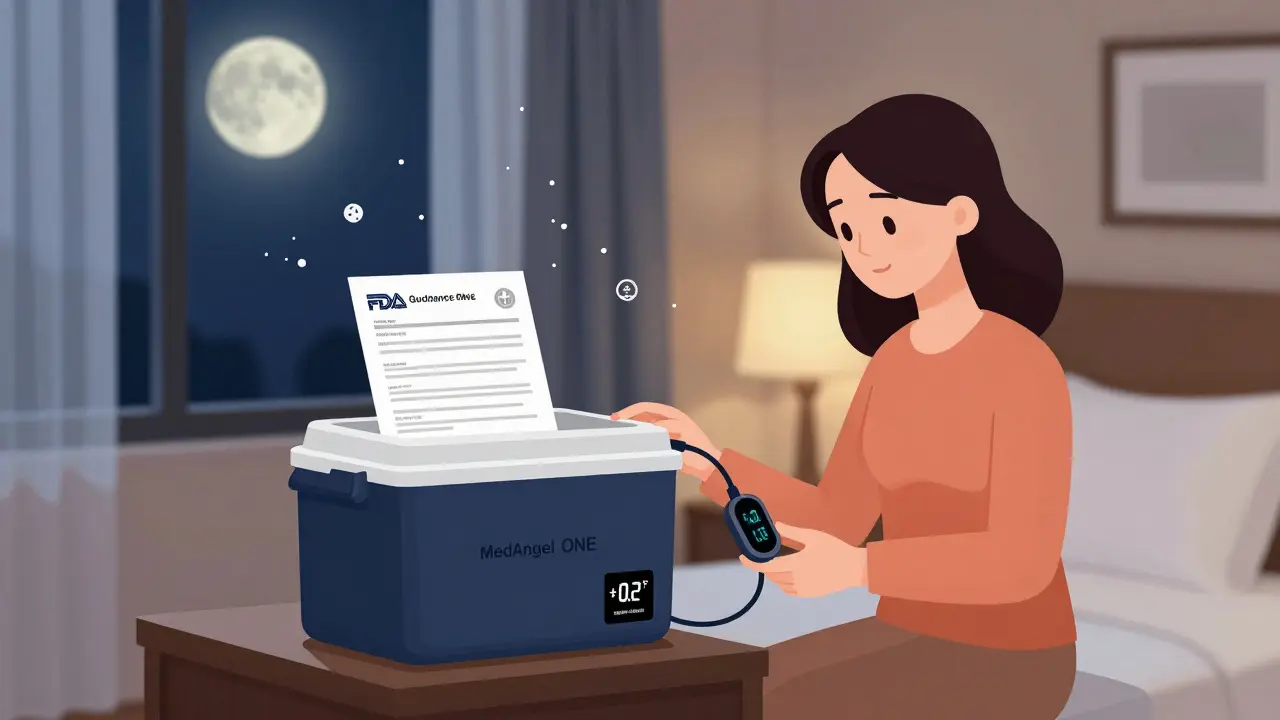
MedAngel ONE is a sensor, not a cooler. Pair it with any cooler, and you’ll know exactly what’s happening inside. If your meds are critical, this is non-negotiable.

What Not to Do (And Why)
People try all kinds of shortcuts. Here’s what fails-and why.
- Dry ice: It’s -109°F. It will freeze your insulin solid. That’s not cooling. That’s destroying it. TSA also bans dry ice in carry-ons unless you’re a hospital worker.
- Hotel mini-fridges: Most run at 50°F or higher. That’s too warm. Always test yours with a thermometer when you arrive.
- Regular coolers: A Coleman cooler isn’t designed for medicine. Ice melts unevenly. Medications freeze on the bottom. Condensation ruins labels. Medical-grade coolers have separate compartments to prevent this.
- Leaving meds in the car: Even in winter, a car can hit 120°F in 20 minutes. Never do it.
And don’t rely on “it feels cold.” Visual checks are useless. The difference between 45°F and 48°F? You can’t feel it. But your insulin can.
How to Prepare for Your Trip
Preparation isn’t optional. Here’s your checklist:
- Freeze your cooling packs 24-48 hours ahead. Gel packs need to be solid, not slushy. Use a freezer set to 0°F (-18°C).
- Buy a digital thermometer. A $12 probe thermometer with memory (like the ThermoWorks Thermapen ONE) logs temps. Take a screenshot before you leave.
- Use waterproof bags. Put each medication in a sealed zip-top bag. This stops condensation from soaking labels or damaging pens.
- Carry documentation. Ask your pharmacist for a letter explaining your meds and temperature needs. TSA reduces screening time by 75% when you have this.
- Call your hotel. Request a mini-fridge. Most chains (Marriott, Hilton, Hyatt) will provide one free of charge. Confirm the temp is below 46°F.
- Pack extras. Bring one extra ice pack or a backup cooler. If your flight is delayed, you’ll need it.
Traveling by Air? Here’s What TSA Really Wants
TSA doesn’t ban refrigerated meds. They just want to see them. Follow this:
- Place all meds and coolers in a separate bin at security.
- Keep prescriptions on the original bottles.
- Declare them verbally: “I have refrigerated medication here.”
- Don’t pack ice packs in checked luggage-they can melt and ruin your clothes.
- You’re allowed to carry unlimited amounts of medically necessary items under the ADA.
Pro tip: Print a copy of the FDA’s guidance on traveling with medications. Show it if you get pushback. Most agents have never seen it, but they’ll comply.
Real Stories from the Road
A mom from Texas flew with her 8-year-old’s insulin for a 12-hour trip. She used a 4AllFamily cooler with two Biogel packs. The flight was delayed by 6 hours. The cooler stayed at 41°F the whole time.
A man in Florida used a styrofoam cooler with four medical ice packs for a 10-day trip to Europe. He rotated the packs every 12 hours at hotel ice machines. No issues.
A couple in California tried a $25 Amazon cooler on a trip to Arizona. After 18 hours, their insulin was at 58°F. They had to buy new pens at a pharmacy for $300.
These aren’t outliers. They’re the norm.
What’s Coming in 2026
The market is evolving fast. MedAngel’s new CORE system, launching early 2024, promises 120 hours of cooling with phase-change materials. But early tests show it struggles in tropical heat.
Pharmaceutical companies are starting to ship meds with built-in trackers. Eli Lilly now includes a temperature sensor with some Mounjaro shipments. You’ll get alerts if your meds overheated during shipping.
But here’s the bottom line: no tech replaces preparation. No app fixes a forgotten cooler. The best tool you have is a plan-and the discipline to follow it.
Final Advice: Don’t Risk It
Medications aren’t like snacks. You can’t just eat them if they’re warm. You can’t just take an extra dose if they’ve degraded. The damage is silent. By the time you feel it-your blood sugar spikes, your immune system flares, your treatment fails-it’s too late.
Traveling with refrigerated meds is doable. But it demands respect. Use the right gear. Monitor the temp. Carry backups. And never assume you’ll be fine.
Your health isn’t a gamble. Your meds aren’t optional. Plan like your life depends on it-because it does.


Kathy Scaman
27 January 2026 - 21:25 PM
Just got back from a 10-hour flight with my insulin and used the 4AllFamily cooler-no issues. I packed two gel packs, threw in the MedAngel sensor, and checked my phone every few hours. It stayed at 40°F the whole time. Seriously, this isn’t optional if you’re on biologics. I used to wing it and paid for it with high A1Cs. Not anymore.
Anna Lou Chen
29 January 2026 - 07:24 AM
Let’s deconstruct the epistemology of pharmaceutical thermoregulation, shall we? The very notion of ‘temperature stability’ is a capitalist construct designed to commodify physiological vulnerability. We’re told to trust ‘FDA guidelines’-but who funds the FDA? Who profits when your insulin degrades? The biologics industrial complex thrives on your fear of entropy. The real solution isn’t a $180 cooler-it’s a systemic dismantling of pharmaceutical monopolies and universal access to stable, affordable meds. Also, dry ice is a metaphor for state violence.
Mindee Coulter
30 January 2026 - 10:29 AM
I use the SUNMON bag for day trips and it works fine if you don’t leave it in the sun. Just throw in an ice pack and you’re good. I don’t need Bluetooth alerts or a mini-fridge. Keep it simple. Also, TSA doesn’t care if you say ‘refrigerated medication’-just show them the bottle and they’ll wave you through. No letter needed.
Lexi Karuzis
31 January 2026 - 12:52 PM
WAIT. WAIT. WAIT. Did you know that the MedAngel sensor is a surveillance tool? It’s not just tracking temperature-it’s transmitting your location, your medication usage, and your biometric data to Big Pharma and the government. I read a whistleblower report. They’re building a national insulin registry. That’s why they push these ‘smart’ coolers-they want to know who’s taking what, when, and where. Don’t be a data point. Use styrofoam. And don’t tell anyone you’re using a Bluetooth device. They’re watching.
Phil Davis
1 February 2026 - 20:29 PM
So the ‘gold standard’ cooler is the one that costs $180 and weighs 1.2 lbs… and the one that costs $600 and weighs 6 lbs is ‘terrible for flights.’ Interesting. So the solution to a medical crisis is… buying more stuff? I’m just waiting for the $500 insulin cooler with a built-in therapist and Spotify playlist.
Irebami Soyinka
3 February 2026 - 15:28 PM
USA people always think money fixes everything 😂 I’m from Nigeria and we use ice packs in a plastic bag, wrap it in a towel, and carry it in a cloth bag. No Bluetooth, no app, no $200 cooler. We don’t have mini-fridges in hotels, we don’t have TSA, we just survive. Your meds don’t need a Tesla. They need a little respect and common sense. And yes, I’ve carried insulin on 3 flights in 40°C heat. Still alive. 🇳🇬🔥
Mel MJPS
4 February 2026 - 08:35 AM
This was so helpful. I just started Mounjaro and was terrified to travel. I didn’t even know vaccines needed cooling. I’m getting the MedAngel sensor + 4AllFamily combo. I’ll bring an extra ice pack. Thank you for writing this like a human who actually cares.
Jess Bevis
5 February 2026 - 16:24 PM
Hotel fridges are usually 48-52°F. Always test with a thermometer. I learned this the hard way.
Sue Latham
7 February 2026 - 02:10 AM
Ugh. The 4AllFamily is literally the only thing I trust. I’ve seen people use those cheap Amazon coolers and it’s heartbreaking. I’m not even mad-I’m just disappointed. Like, you’re risking your life because you don’t want to spend $180? Honey, your insulin costs more than your phone. Priorities. 😌
Mark Alan
7 February 2026 - 02:40 AM
MY INSULIN GOT HOT ON A FLIGHT AND I HAD TO PAY $350 FOR A NEW PEN 😭 I WAS CRYING IN THE AIRPORT. NOW I CARRY TWO COOLERS. AND A BACKUP INSULIN. AND A THERMOMETER. AND A LETTER FROM MY DOCTOR. AND A PHOTO OF MY PRESCRIPTION. AND A POWER BANK. AND A FRIEND WHO KNOWS HOW TO USE A BLUETOOTH APP. I’M NOT TAKING CHANCES. 🚨💉
Linda O'neil
7 February 2026 - 12:24 PM
Just want to add: if you’re using ice packs, freeze them solid and wrap them in a towel before putting them in the cooler. Direct contact with the pen can freeze the insulin and ruin it. I learned this the hard way too. Also, always carry your meds in your carry-on. Checked luggage can sit in a 120°F cargo hold for hours. Don’t be that person.
Robert Cardoso
8 February 2026 - 01:33 AM
Let’s be honest: 80% of these ‘medical-grade’ coolers are overengineered marketing fluff. The FDA doesn’t certify coolers. Manufacturers don’t test them under real-world conditions. The 4AllFamily’s ±0.5°F accuracy? Meaningless if ambient temps hit 110°F and the battery dies after 60 hours. Real-world data shows most users exceed safe temps by hour 12. The only reliable method is rotating ice packs every 8 hours. Everything else is a placebo.
James Dwyer
8 February 2026 - 17:53 PM
This post saved me. I was about to skip my vacation because I was scared. Now I feel prepared. Thank you for the checklist. I’m buying the sensor and the 4AllFamily tomorrow. You’re right-this isn’t a gamble. It’s a responsibility. And you just made it feel doable.