Antihistamine Side Effect Risk Calculator
This tool calculates your risk of anticholinergic side effects based on your antihistamine choice and personal factors. First-generation antihistamines (like Benadryl) carry significantly higher risks for dry mouth, constipation, and urinary issues compared to second-generation options.
Your Antihistamine
Side Effect Risks
| Side Effect | Risk Level | Notes |
|---|---|---|
| Dry Mouth | Increases cavity risk by 60-70% with first-gen | |
| Constipation | Slows gut motility by 1.5-2x | |
| Urinary Issues | 31% risk for men with enlarged prostate |
Key Insight: Second-generation antihistamines cause significantly fewer side effects (2-4% dry mouth vs. 28% with first-gen). They're the safer choice for most people.
Recommendations
Safer Choice
Second-generation antihistamines like cetirizine (Zyrtec) or fexofenadine (Allegra) are recommended for you. They provide allergy relief with minimal anticholinergic side effects.
Avoid This Choice
First-generation antihistamines should be avoided due to high risk of dry mouth (28%), constipation (15-20%), and urinary issues (up to 31% for men with prostate issues).
Use with Caution
If you must use a first-generation antihistamine, limit to 1-2 doses for maximum 3 days. Always consult your doctor first, especially if you're over 65 or have prostate issues.
When you reach for a bottle of Benadryl for your allergies, you might not think twice about what else it’s doing in your body. But those little pills aren’t just blocking histamine-they’re also quietly shutting down a key system in your nervous system called the cholinergic pathway. This is called an anticholinergic effect, and it’s behind the dry mouth, constipation, and trouble peeing that so many people experience after taking first-generation antihistamines. These aren’t rare side effects. They’re predictable, well-documented, and often ignored.
Why Your Mouth Feels Like a Desert
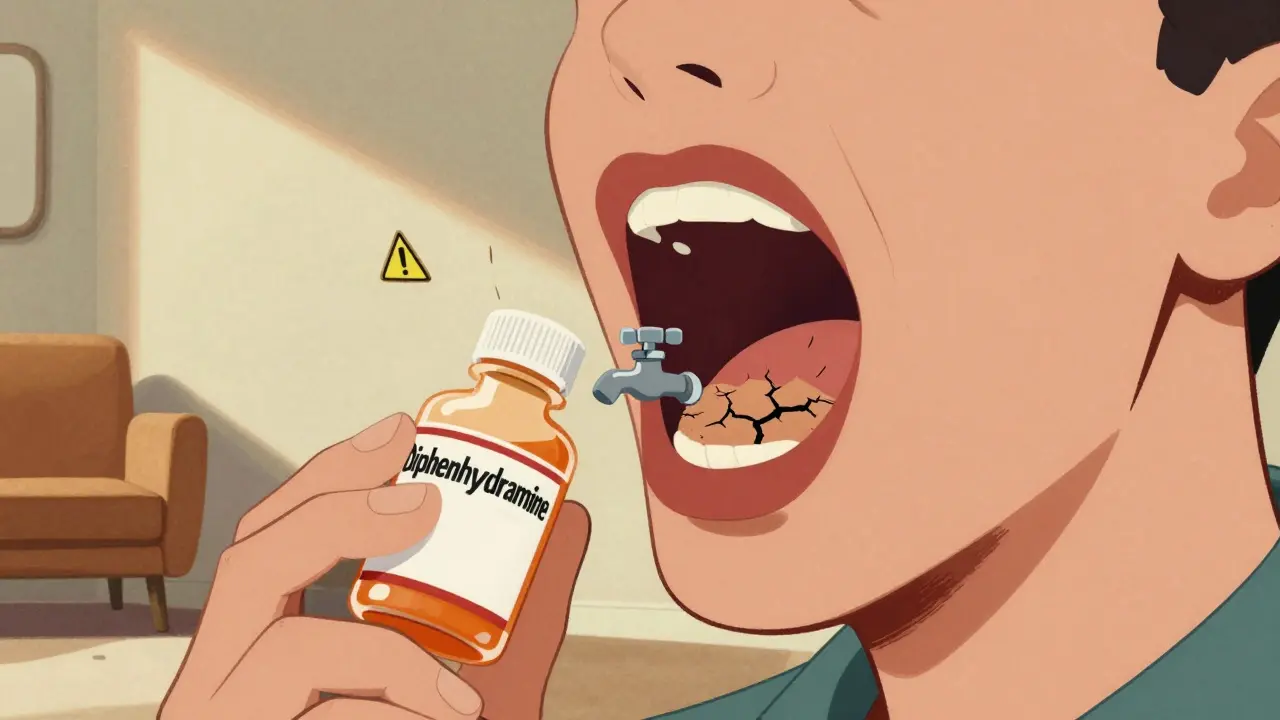
Dry mouth isn’t just annoying-it’s a sign your salivary glands have been turned off. First-generation antihistamines like diphenhydramine, chlorpheniramine, and promethazine bind tightly to M3 muscarinic receptors in your salivary glands. These receptors normally tell your body to produce saliva. When blocked, saliva production drops by 60 to 70%. That’s not just discomfort. It increases your risk of cavities, gum disease, and even oral infections. One study found that 28% of people taking standard doses of diphenhydramine reported severe dry mouth. Compare that to just 4% with cetirizine (Zyrtec) or 2% with fexofenadine (Allegra). The difference isn’t subtle. It’s life-changing for someone who already struggles with dry mouth from aging, diabetes, or other medications.Constipation Isn’t Just a Minor Inconvenience
Your gut relies on acetylcholine to keep things moving. When antihistamines block M2 and M3 receptors in your intestines, they slow down muscle contractions. This means food takes 1.5 to 2 times longer to pass through. For many, that means going from daily bowel movements to every three or four days. In clinical trials, 15 to 20% of people using first-gen antihistamines developed constipation. That number jumps even higher in older adults or those with existing bowel issues. The American Gastroenterological Association recommends taking a daily dose of polyethylene glycol (17g) if you must use these drugs-it cuts constipation risk from 18% down to 5%. But why risk it at all? Second-generation antihistamines don’t cause this problem. They’re designed not to touch those receptors.Urinary Problems Are More Common Than You Think
If you’re a man over 50 with prostate enlargement, taking diphenhydramine can be dangerous. These drugs block receptors in your bladder muscle and urethral sphincter. The result? Your bladder can’t contract properly, and the sphincter tightens. That’s a recipe for urinary retention-when you can’t empty your bladder at all. Studies show 5 to 8% of elderly patients on first-gen antihistamines develop acute urinary retention within 48 hours. For men with an International Prostate Symptom Score above 8, that risk hits 31%. The American Urological Association says avoid these drugs entirely in this group. Even women can struggle. The sensation of needing to pee but being unable to start is a classic sign. And it’s not just physical discomfort-it can lead to urinary tract infections or even kidney damage if left unchecked.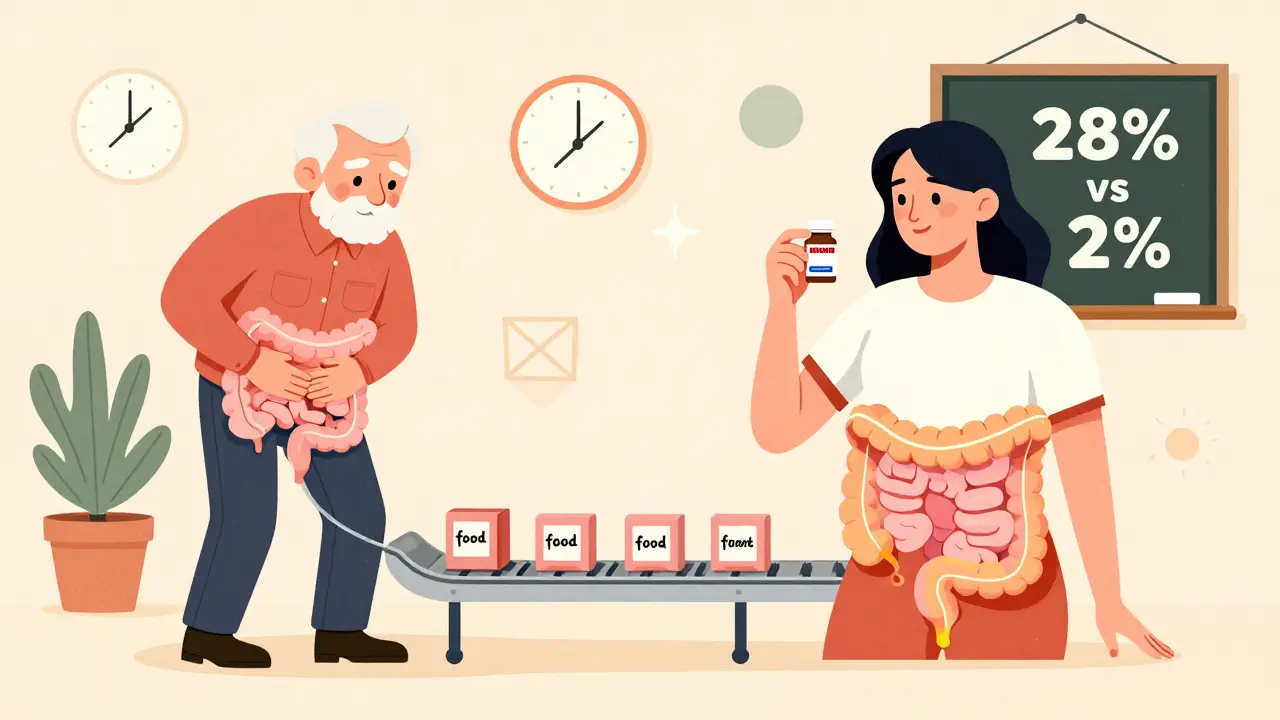
First-Gen vs. Second-Gen: The Real Difference
Not all antihistamines are the same. First-generation ones-like diphenhydramine, hydroxyzine, and doxylamine-were developed in the 1940s. They cross the blood-brain barrier easily and hit multiple receptors, including muscarinic ones. That’s why they make you sleepy. But it’s also why they cause dry mouth, constipation, and urinary issues. Second-generation antihistamines-cetirizine, loratadine, fexofenadine, and levocetirizine-were engineered in the 1980s and 90s to avoid this. They’re larger molecules that don’t easily enter the brain or bind to muscarinic receptors. Their Ki values for M1 receptors are over 1,000 nM, meaning they barely interact with them at all. At standard doses, their anticholinergic effects are clinically insignificant. You get the allergy relief without the side effects.Why People Still Use the Old Ones
You might wonder: if second-gen drugs are safer, why are first-gen still sold everywhere? Price and habit. A bottle of generic diphenhydramine costs $4 to $6 for 24 doses. Cetirizine or fexofenadine? $12 to $18. That’s a big difference for people paying out of pocket. Plus, many still use them as sleep aids because they cause drowsiness. But here’s the catch: that sedation isn’t harmless. The American Academy of Neurology found that even seven days of consecutive use increases fall risk by 34% in older adults. And it’s not just falls. Long-term use is tied to a 54% higher risk of dementia over seven years, according to research from the University of Washington. Each extra year of use above 90 daily doses adds another 20% risk. That’s not a side effect. That’s a long-term health threat.What Experts Are Saying
The American Geriatrics Society’s Beers Criteria lists first-generation antihistamines as “potentially inappropriate” for people over 65. The European Academy of Allergy and Clinical Immunology says to avoid them entirely in this group. The FDA added a dementia warning to diphenhydramine labels in 2021. Mayo Clinic removed diphenhydramine from its inpatient formulary in 2022 because of too many cases of anticholinergic delirium. Even in younger adults, these drugs aren’t risk-free. A Reddit thread with over 300 comments on Benadryl side effects showed 77% reported dry mouth, 45% had constipation, and 12% of men described urinary problems. Meanwhile, fexofenadine reviews show only 8% of negative comments mention dry mouth. The data doesn’t lie. The side effects are real, common, and avoidable.
What to Do Instead
If you’re using diphenhydramine for allergies, switch to loratadine, cetirizine, or fexofenadine. They work just as well. If you’re using it for sleep, try melatonin or improving sleep hygiene instead. For dry mouth, chew sugar-free gum with xylitol-it boosts saliva by 40-60% in minutes. For constipation, increase fiber, water, and movement. If you’re on a first-gen antihistamine and notice any of these symptoms, don’t just tough it out. Talk to your pharmacist or doctor. Ask: “Is this the safest option for me?” Most of the time, the answer will be no.When First-Gen Might Still Make Sense
There are rare cases where the sedation from first-gen antihistamines is actually helpful-like a single night of severe allergy symptoms or short-term insomnia. But even then, use the lowest dose possible (12.5 mg for older adults), and never take it for more than a few days. The American Geriatrics Society recommends starting at half the standard dose for anyone over 65. And never combine them with other anticholinergic drugs-like certain antidepressants, bladder medications, or Parkinson’s drugs. The effects add up fast.Bottom Line
Anticholinergic effects aren’t something you just have to live with. They’re a direct result of outdated medication choices. Dry mouth, constipation, and urinary issues aren’t normal aging-they’re signs your body is being affected by a drug that shouldn’t be your first choice anymore. Second-generation antihistamines are safer, longer-lasting, and don’t mess with your bladder, bowels, or brain. If you’re still using Benadryl or similar meds, it’s time to ask why-and whether there’s a better way.Can antihistamines cause urinary retention?
Yes, first-generation antihistamines like diphenhydramine can cause urinary retention by blocking muscarinic receptors in the bladder and urethra. This reduces bladder contraction and increases sphincter tone. Men with enlarged prostates are at highest risk-studies show 31% develop acute retention within 48 hours of use. The American Urological Association advises avoiding these drugs entirely in men with symptom scores above 8.
Do all antihistamines cause dry mouth?
No. Only first-generation antihistamines like diphenhydramine, chlorpheniramine, and promethazine cause significant dry mouth because they block acetylcholine receptors in salivary glands. Second-generation antihistamines like cetirizine, loratadine, and fexofenadine have minimal to no anticholinergic activity. Studies show dry mouth affects 28% of users of first-gen drugs but only 2-4% of those using second-gen options.
Is constipation from antihistamines dangerous?
It can be. Chronic constipation from anticholinergic drugs increases the risk of fecal impaction, bowel obstruction, and hemorrhoids. In older adults, it can lead to dehydration, electrolyte imbalances, and even hospitalization. The American Gastroenterological Association recommends prophylactic polyethylene glycol (17g daily) for patients who must use first-gen antihistamines, which reduces constipation rates from 18% to 5%.
Are second-generation antihistamines really safer?
Yes. Second-generation antihistamines like cetirizine, loratadine, and fexofenadine were designed to avoid crossing the blood-brain barrier and binding to muscarinic receptors. Clinical trials show they cause dry mouth in 2-4% of users, constipation in 3-5%, and urinary issues in under 1%. They’re just as effective for allergies but without the anticholinergic burden. They’re the recommended first-line treatment for adults and seniors.
Can antihistamines increase dementia risk?
Long-term use of first-generation antihistamines like diphenhydramine is linked to a 54% increased risk of dementia over seven years, according to a landmark study from the University of Washington. Each additional year of use beyond 90 cumulative daily doses raises risk by another 20%. The American Geriatrics Society and European guidelines now classify these drugs as potentially inappropriate for older adults due to this risk. Switching to second-gen options may reduce cognitive decline.
If you're taking any antihistamine regularly, ask yourself: Am I using the safest version for my needs? The answer might save you from more than just a stuffy nose.



Andrew Short
18 January 2026 - 02:19 AM
This is why people are dying slowly from over-the-counter junk. You think Benadryl is harmless? It’s a slow-acting neurotoxin disguised as a sleep aid. I’ve seen grandmas on this stuff for years - confused, constipated, falling in the bathroom. And they blame aging. No. It’s the damn pills. Stop normalizing this crap.
Dayanara Villafuerte
19 January 2026 - 00:10 AM
Also, if you’re using diphenhydramine as a sleep aid… 😒 I’m sorry, but you’re not ‘just tired’ - you’re chemically sedating yourself into a fog. Try melatonin. Or better yet - stop scrolling at 11pm. 🌙✨
Andrew Qu
20 January 2026 - 14:37 PM
For anyone reading this and thinking ‘but it’s cheap’ - I get it. But imagine paying $5 now and $50k later for a UTI, a fall, or dementia. Second-gen antihistamines are worth every penny. My grandma switched from Benadryl to Zyrtec and stopped falling. No joke. Talk to your pharmacist - they’ll help you find the cheapest generic version.
Tyler Myers
22 January 2026 - 10:07 AM
Did you know the FDA knew about this in the 90s? They buried it. Big Pharma doesn’t want you switching to safer drugs - they make billions off these toxic old pills. The ‘dementia link’? That’s just the tip of the iceberg. They’re also suppressing studies on how these drugs mess with your mitochondria. Wake up.
Wendy Claughton
23 January 2026 - 23:10 PM
I used to take Benadryl every night… until I started forgetting where I put my keys. Then I switched to loratadine. My brain felt clearer in 3 days. I didn’t realize how foggy I’d been. It’s not just about allergies - it’s about your mind. Be kind to your future self.
Stacey Marsengill
24 January 2026 - 13:27 PM
My mom took diphenhydramine for 12 years. She stopped last year. She cried when she realized she could remember her own phone number again. That’s not a side effect. That’s a soul theft. 🖤
Aysha Siera
26 January 2026 - 10:47 AM
They’re putting anticholinergics in everything. Even some ‘natural’ sleep supplements. Watch your labels. They don’t have to list it. It’s a silent war on your nervous system.
rachel bellet
28 January 2026 - 04:49 AM
Anticholinergic burden > 3 is associated with increased mortality in cohort studies (OR 1.47, 95% CI 1.12–1.93). First-gen antihistamines contribute 1 point. Combine with oxybutynin, amitriptyline, or promethazine? You’re at critical threshold. Document this in your med list. Your PCP won’t think to ask.
Pat Dean
28 January 2026 - 12:06 PM
Why are we letting Big Pharma sell poison to the elderly? We let them market this like candy. In Europe, they’re banned for seniors. Here? It’s on every drugstore shelf next to gum. This isn’t freedom - it’s negligence.
Jay Clarke
29 January 2026 - 00:55 AM
Look, I used to be the guy who kept Benadryl in my glovebox. ‘It’s just a pill.’ Until I watched my uncle spend 3 days in the ER because he couldn’t pee. He was 68. Took one dose. That’s it. Now I tell everyone - if it makes you sleepy, it’s probably poisoning you. Don’t be that guy.
Robert Davis
29 January 2026 - 15:17 PM
Actually, the data’s not that clear. Some meta-analyses show no significant dementia risk when adjusted for confounders. Also, many seniors take these because they can’t afford the newer stuff. It’s a class issue disguised as a medical one.
Robert Cassidy
31 January 2026 - 11:45 AM
And yet… here we are. People still buy it. Because they’re lazy. Because they don’t want to think. Because they’d rather numb themselves than fix their sleep hygiene. This isn’t a drug problem - it’s a cultural one.