MAOI Food Safety Checker
How to use: Select a food category to see the typical tyramine levels and the associated risk level for individuals taking traditional MAOIs.
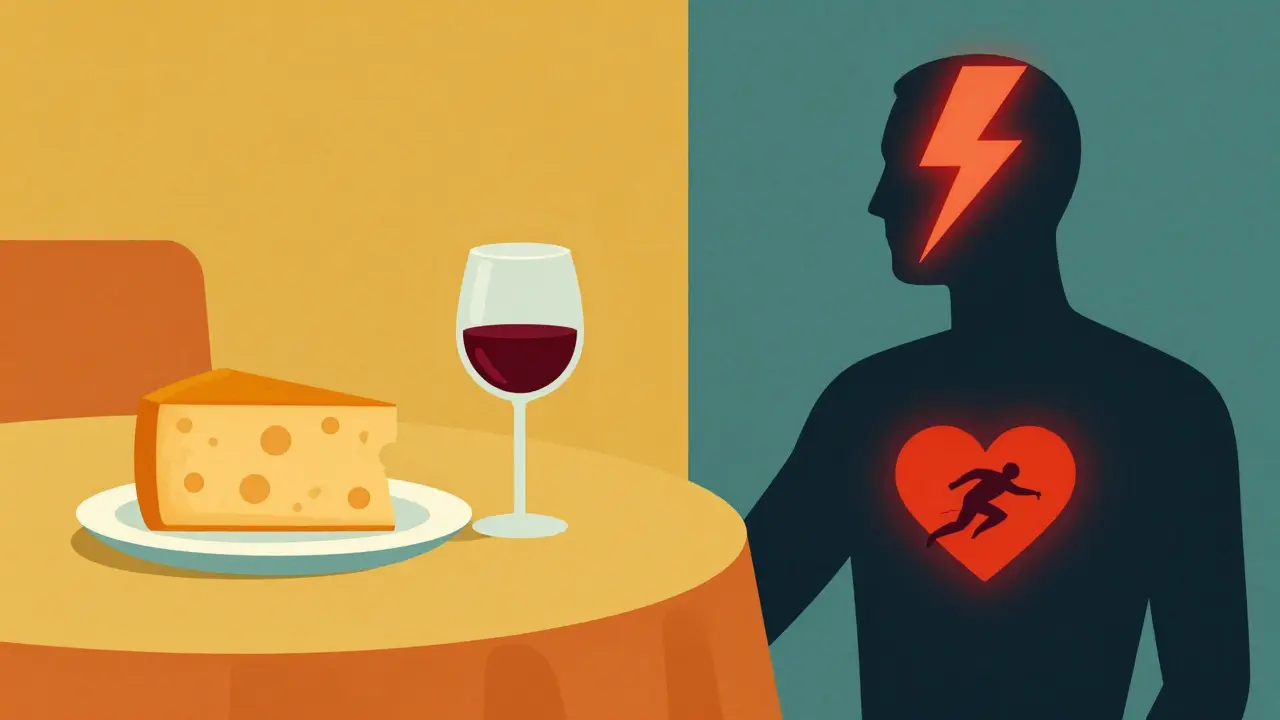
Imagine sitting down for a snack of aged cheddar and a glass of red wine, only to suddenly feel your heart racing and a blinding headache slamming into your skull. For most people, this is just a hearty meal. But for someone taking certain antidepressants, it can trigger a medical emergency. When you're on Monoamine Oxidase Inhibitors a class of antidepressant medications that increase neurotransmitters like serotonin and dopamine by blocking the enzymes that break them down (commonly known as MAOIs), your diet isn't just about nutrition-it's about safety.
Quick Safety Summary
- The Danger: High-tyramine foods can cause a "tyramine pressor response," leading to a dangerous spike in blood pressure.
- The Threshold: Generally, avoid any single serving containing more than 6 mg of tyramine.
- High-Risk Foods: Aged cheeses, cured meats, fermented soy, and overripe fruits.
- The Washout: If switching meds, you typically need a 14-day break for the body to regenerate enzymes.
- Safe Options: Fresh cheeses, fresh meats, and most distilled spirits.
Why Tyramine and MAOIs Don't Mix
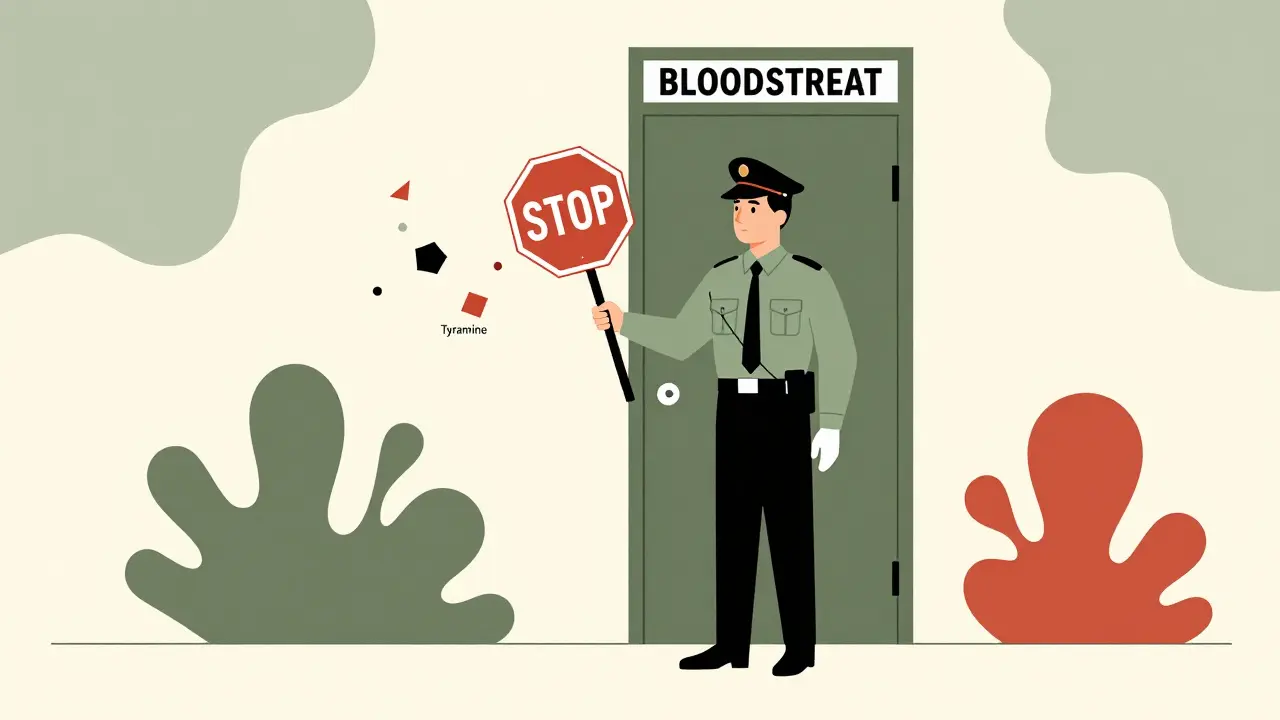
To understand the risk, you have to look at how your body handles Tyramine. Tyramine is a naturally occurring amino acid found in many foods, especially those that have aged or fermented. Normally, your gut and liver use an enzyme called MAO-A to break tyramine down before it ever hits your bloodstream. It's like a security guard at the door of your systemic circulation.
When you take a traditional MAOI, you essentially fire that security guard. Because the MAO-A enzyme is blocked, tyramine floods into your blood and forces your brain to release massive amounts of norepinephrine. This causes your blood vessels to constrict and your heart rate to climb. The result is a hypertensive crisis, where blood pressure can skyrocket to 180/120 mmHg or higher. If not treated immediately, this can lead to a stroke or a cerebral hemorrhage.
The Red List: Foods to Absolutely Avoid
Not all foods are created equal. Tyramine levels increase as food ages, spoils, or ferments. If you see "aged," "cured," or "fermented" on a label, it's usually a red flag. Here are the most dangerous categories based on actual tyramine concentrations.
| Food Group | Examples | Typical Tyramine Level | Risk Level |
|---|---|---|---|
| Aged Cheeses | Cheddar, Swiss, Blue, Parmesan | 50-400 mg / 100g | Extreme |
| Cured/Dried Meats | Salami, Pepperoni, Pastrami | 50-100 mg / 100g | High |
| Fermented Soy | Soy sauce, Miso, Tempeh | 30-50 mg / 100ml | High |
| Overripe Produce | Overripe avocados, bananas | Up to 10 mg / 100g | Moderate |
| Specific Beverages | Tap beers, some unpasteurized ales | 10-30 mg / 100ml | Moderate |
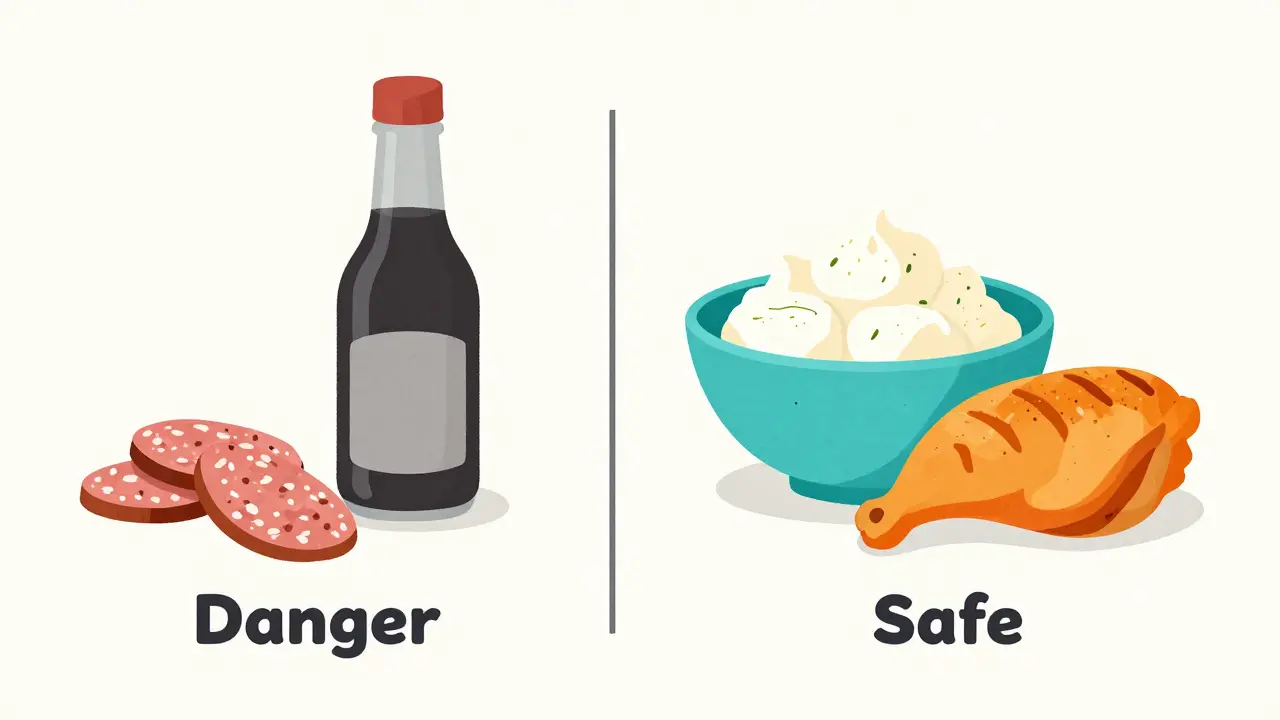
Be particularly careful with avocados. A ripe avocado is generally fine, but as it becomes overripe, the tyramine levels jump from about 0.5 mg to as high as 10 mg per 100g. The same goes for meats; a fresh steak is safe, but a piece of salami is a chemical trigger for someone on these meds.
Not All MAOIs Are the Same
The good news is that modern medicine has evolved. The strict "cheese effect" depends heavily on which specific medication you are taking. We can generally split these into three groups.
First, there are the irreversible non-selective MAOIs, such as Phenelzine and Tranylcypromine. These bind permanently to your enzymes. Once they attach, the enzyme is dead. Your body has to grow entirely new enzymes to replace them, which is why you must stick to the diet even for two to four weeks after you stop taking the pills.
Second, we have reversible inhibitors like Moclobemide. These are a bit more flexible because they can be displaced from the enzyme, meaning the risk of a hypertensive crisis is significantly lower.
Finally, there's the Selegiline patch (Emsam). Because this is absorbed through the skin, it avoids the "first-pass metabolism" in the gut. At lower doses (6 mg/24 hours), it doesn't block the gut enzymes nearly as much, meaning many people can maintain a much more relaxed diet without the same level of fear.
Practical Tips for Navigating Your Diet
Living with these restrictions doesn't have to mean eating bland food. It just requires a bit of strategy. Start by swapping aged products for fresh ones. Instead of cheddar or brie, go for cottage cheese, ricotta, or cream cheese. Instead of salami, stick to fresh chicken, beef, or pork.
When you're eating out, be wary of "artisan" or "fermented" trends. Kimchi, kombucha, and sauerkraut are all high in tyramine. If you're at a sushi restaurant, be cautious with soy sauce; while modern commercial versions are lower in tyramine than traditional ones, a tablespoon still contains about 15 mg, which exceeds the safe serving limit.
Don't forget about your medicine cabinet. It's not just food that causes problems. Over-the-counter decongestants containing Pseudoephedrine or phenylephrine can mimic the effects of tyramine and push your blood pressure into the danger zone. Always check with your pharmacist before buying a cold remedy.
What to Do if You Slip Up
If you accidentally eat something high-tyramine, don't panic, but stay alert. Most people don't have a crisis from one small bite, but you should watch for the following warning signs:
- A sudden, severe "thunderclap" headache (usually at the back of the head)
- Nausea and vomiting
- Rapid or irregular heartbeat (palpitations)
- Stiff neck or sudden sweating
If these symptoms appear, this is a medical emergency. You need to seek immediate help. This is why doctors recommend carrying an MAOI alert card in your wallet so emergency responders know exactly what's in your system.
Switching Medications: The 14-Day Rule
If you and your doctor decide to move from an MAOI to another antidepressant, like an SSRI (Selective Serotonin Reuptake Inhibitor), you cannot just switch overnight. There is a non-negotiable washout period, usually 14 days.
Why so long? Because the irreversible MAOIs have already disabled your enzymes. If you start an SSRI while your MAO levels are still low, you risk a condition called Serotonin Syndrome. This is a state of serotonin overload that can lead to confusion, high fever, and in severe cases, can be fatal. Your body needs those two weeks to synthesize new enzymes and clear the old medication from your system.
Can I drink wine while taking an MAOI?
Most distilled spirits and many wines are generally permitted in moderation. However, you should avoid specific types like Chianti, which can have higher tyramine levels. Always check with your provider, as some fortified wines may pose a higher risk than others.
Is soy sauce completely off-limits?
It's highly risky. One tablespoon of soy sauce contains about 15 mg of tyramine, which is more than double the recommended 6 mg limit per serving. While some commercially processed versions are safer than traditional fermented ones, it is best to avoid it or use very small amounts under medical guidance.
What is the safest cheese for me to eat?
Fresh cheeses are your best bet. These include cottage cheese, ricotta, cream cheese, and mozzarella. These typically contain less than 10 mg of tyramine per 100g, making them significantly safer than aged cheeses like cheddar or parmesan.
Do I still need the diet if I use the selegiline patch?
If you are using the transdermal selegiline patch at a dose of 6 mg/24 hours or less, dietary restrictions are significantly reduced. This is because the patch bypasses the gut, where most tyramine interactions occur. However, you should still avoid extremely high-tyramine foods and discuss your specific dose with your psychiatrist.
How long do I have to wait after stopping MAOIs before I can eat aged cheese?
For irreversible MAOIs, you generally need to wait 2 to 4 weeks after your last dose. This timeframe allows your body to regenerate the MAO-A enzymes necessary to break down tyramine safely.