Treatment-Resistant Depression: What Works When Antidepressants Fail
When someone has treatment-resistant depression, a form of major depression that doesn’t improve after trying at least two different antidepressants at adequate doses and durations. Also known as TRD, it’s not a matter of willpower or laziness—it’s a biological reality that affects up to 30% of people with depression. If you’ve been on fluoxetine, sertraline, or escitalopram for weeks or months and still feel stuck, numb, or hopeless, you’re not alone. And you’re not broken. You just need a different strategy.
This isn’t about switching one pill for another. Treatment-resistant depression often requires a shift in approach—something that targets the brain differently than SSRIs or SNRIs. esketamine, a nasal spray derived from ketamine, works rapidly on glutamate pathways rather than serotonin, offering relief in hours or days for some who’ve waited months for results. Then there’s electroconvulsive therapy, a well-studied, highly effective procedure that triggers controlled seizures to reset brain activity, still one of the most reliable tools for severe, unresponsive cases. These aren’t last resorts—they’re science-backed options that belong earlier in the conversation.
Many people don’t realize that what’s called "resistance" often isn’t about the drug failing, but about the diagnosis being incomplete. Underlying thyroid issues, vitamin deficiencies, sleep apnea, or even undiagnosed bipolar disorder can mimic or worsen depression. That’s why a full medical review—blood work, sleep history, medication interactions—is just as important as the mental health assessment. And it’s why some of the most helpful posts here cover things like supplement interactions with antidepressants, how to check if your meds are even being absorbed correctly, or why certain herbs like St. John’s wort can sabotage your treatment.
There’s also the hidden layer: polypharmacy. People with treatment-resistant depression often end up on five, six, or more medications—antidepressants, sleep aids, anti-anxiety drugs, mood stabilizers. That’s a recipe for side effects that look like more depression: fatigue, brain fog, weight gain, sexual dysfunction. An annual medication review with a pharmacist can uncover hidden clashes you didn’t even know existed. One person’s "treatment failure" is another’s drug interaction waiting to be fixed.
What you’ll find below isn’t a list of miracle cures. It’s a practical guide to what’s actually working for real people in real situations. From comparing bupropion to other antidepressants to understanding how lithium or thyroid augmentation can help when standard drugs fall short, these posts cut through the noise. You’ll see how certain medications can interfere with each other, how natural supplements might be making things worse, and what newer options like transcranial magnetic stimulation or vagus nerve stimulation actually involve. No fluff. No hype. Just what you need to ask your doctor next.
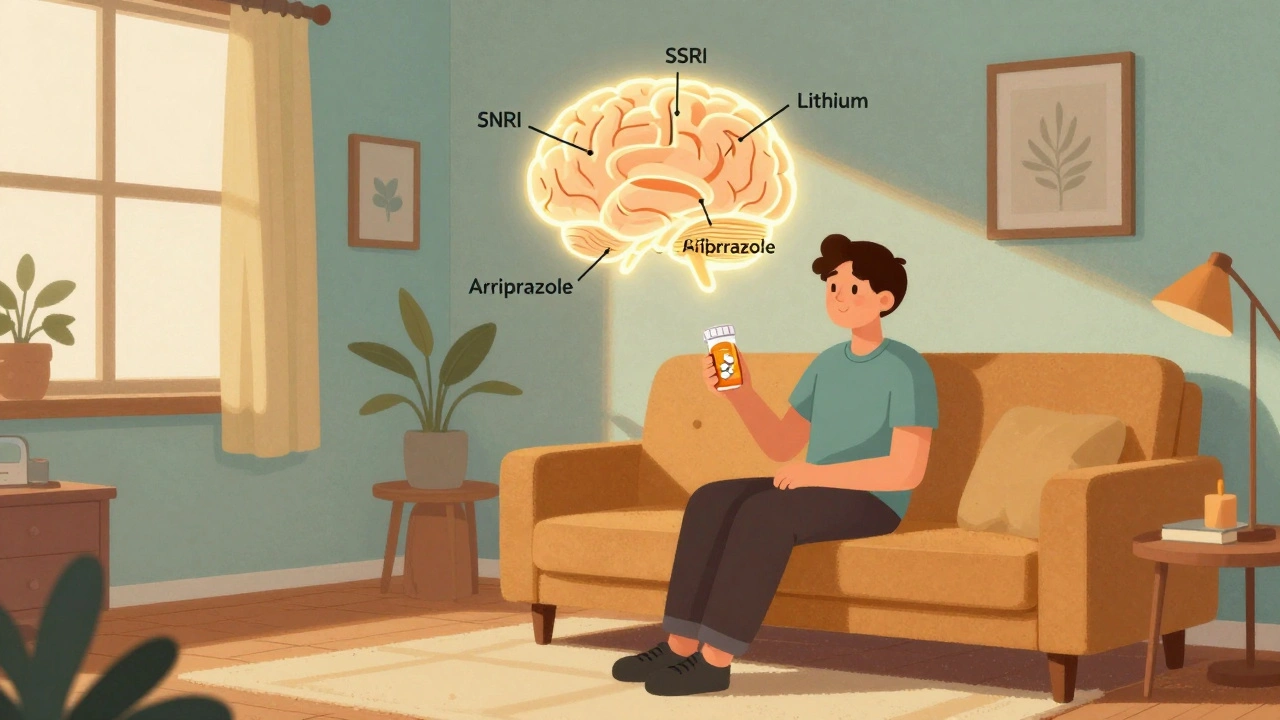
Treatment-Resistant Depression: Augmentation and Advanced Therapies That Actually Work
When antidepressants fail, treatment-resistant depression requires more than just switching pills. Learn about FDA-approved augmentations, rTMS, esketamine, and emerging therapies that actually work.
Read More