TRD: Understanding Treatment-Resistant Depression and What Works When Medications Fail
When someone has TRD, treatment-resistant depression is when standard antidepressants don’t bring relief, even after trying two or more at proper doses for long enough. Also known as refractory depression, it affects about one in three people who take antidepressants—and it’s not a sign of weakness, just biology that hasn’t clicked yet. This isn’t about not trying hard enough. It’s about brain chemistry, genetics, inflammation, and how your body processes drugs. Many people spend months or years cycling through meds, hoping one will stick, while their life keeps slipping away.
TRD doesn’t happen in a vacuum. It often connects to other things you might not realize are linked. Antidepressants, medications like SSRIs and SNRIs that target serotonin and norepinephrine work for some, but not everyone. For others, the problem isn’t the drug—it’s the brain’s receptors, gut health, thyroid function, or even chronic stress hormones. Then there’s medication failure, when a drug stops working after months of being effective. That’s not rare. It’s called tachyphylaxis, and it’s why doctors sometimes switch or add meds instead of just increasing the dose.
What comes next matters more than you think. TRD isn’t a dead end. It’s a signal to look deeper. Some people find relief with ketamine infusions or esketamine nasal spray. Others benefit from transcranial magnetic stimulation, or even talking therapies like CBT tailored for chronic depression. Lifestyle changes—sleep, movement, light exposure—aren’t just "nice to have." For many, they’re the missing piece. And sometimes, the answer isn’t another pill, but a combination: a low-dose antipsychotic added to an antidepressant, or a thyroid hormone boost if levels are borderline.
What you’ll find in the posts below isn’t theory. It’s real-world insight from people who’ve been there. You’ll see how TRD overlaps with thyroid issues, how certain supplements can interfere with meds, why some people respond to one drug and not another, and what steps to take when your doctor says "there’s nothing else." This isn’t about quick fixes. It’s about understanding the system, knowing your options, and finding the path that actually works—for you.
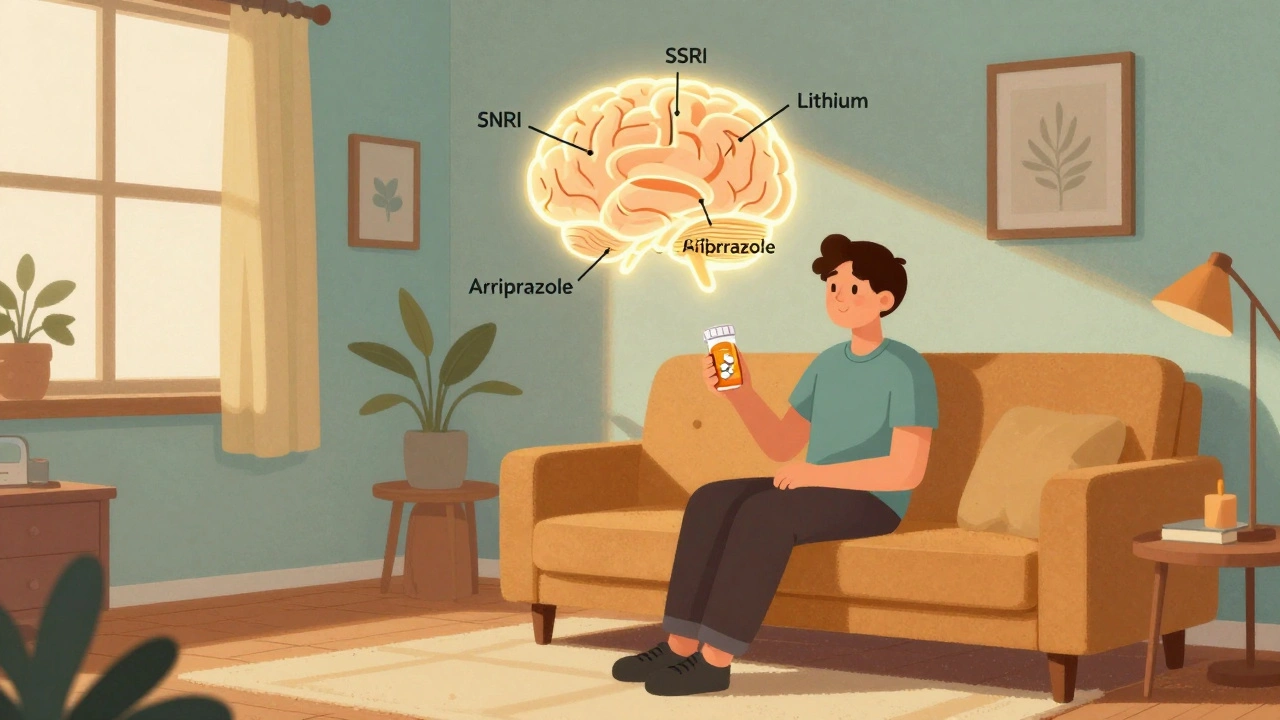
Treatment-Resistant Depression: Augmentation and Advanced Therapies That Actually Work
When antidepressants fail, treatment-resistant depression requires more than just switching pills. Learn about FDA-approved augmentations, rTMS, esketamine, and emerging therapies that actually work.
Read More