rTMS: What It Is, How It Works, and What You Need to Know
When you hear rTMS, repetitive transcranial magnetic stimulation is a non-invasive brain stimulation technique used primarily to treat depression when other methods haven’t worked. Also known as repetitive transcranial magnetic stimulation, it uses magnetic pulses to stimulate nerve cells in areas of the brain linked to mood control. Unlike antidepressants that affect your whole body, rTMS targets specific brain regions—no pills, no systemic side effects, no need for anesthesia.
It’s not magic, but it’s backed by real science. The FDA approved rTMS for major depressive disorder back in 2008, and since then, studies have shown it helps about 50–60% of people who haven’t responded to medication. It’s also being tested for OCD, PTSD, anxiety, and even chronic pain. The device looks like a chair with a magnetic coil placed against your scalp. Each session lasts about 20–40 minutes, and most people do five sessions a week for 4–6 weeks. You stay awake the whole time. No surgery. No memory loss. No weight gain. Just a gentle clicking sound and a tapping feeling on your head.
What makes rTMS different from electroconvulsive therapy (ECT)? ECT uses electricity to trigger a controlled seizure. rTMS uses magnets—no seizures, no confusion, no hospital stay. People usually drive themselves to and from treatment. Side effects? Mild headaches or scalp discomfort, mostly in the first few days. Serious risks are rare. It’s not a cure-all, but for people stuck in treatment-resistant depression, it’s often the first real option that doesn’t feel like a last resort.
It’s not for everyone. If you have metal implants in your head, a pacemaker, or a history of seizures, rTMS might not be safe. Your doctor will screen you carefully. Insurance often covers it for depression after failed medication trials, but coverage varies. Cost can be a hurdle without insurance, but many clinics offer payment plans.
What you’ll find in the posts below is a collection of real, practical insights—how rTMS fits into broader mental health care, how it compares to other brain stimulation methods, what patients actually experience, and why some people respond while others don’t. These aren’t ads or vague overviews. They’re grounded in clinical data, patient reports, and expert analysis. If you’re considering rTMS, or just trying to understand how it works, you’ll find the facts here—no fluff, no hype, just what matters.
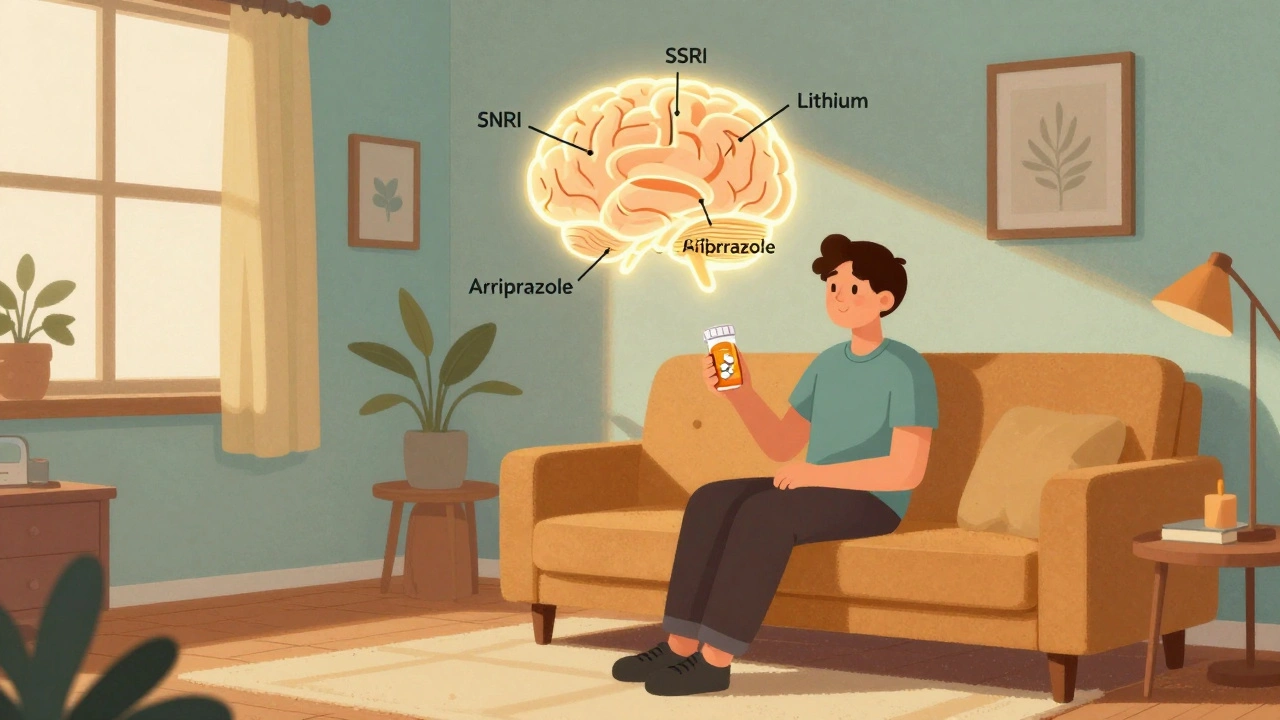
Treatment-Resistant Depression: Augmentation and Advanced Therapies That Actually Work
When antidepressants fail, treatment-resistant depression requires more than just switching pills. Learn about FDA-approved augmentations, rTMS, esketamine, and emerging therapies that actually work.
Read More