Red-Green Color Blindness: What It Is, How It Affects Daily Life, and What You Should Know
When someone has red-green color blindness, a common inherited condition where the eyes have trouble distinguishing between red and green hues. Also known as Daltonism, it’s not a disease—it’s a variation in how the retina’s cone cells respond to light. About 1 in 12 men and 1 in 200 women live with this type of color vision deficiency, often without ever realizing it until they’re tested or run into a problem—like mixing up pills, reading warning labels, or confusing traffic lights.
This isn’t just about art or design. Color perception plays a hidden role in medication safety. Many pill bottles, dosage charts, and even prescription labels use color-coding to show strength, type, or timing. Someone with red-green color blindness might mistake a red 10mg tablet for a green 5mg one, or misread a warning label printed in red text on a green background. It’s why pharmacists and manufacturers are starting to add shape, text, or Braille cues alongside color—but most consumers still don’t know to ask for them. And it’s not just pills: blood pressure monitors, glucose meters, and even patch delivery systems sometimes rely on color indicators that can be misleading.
People with this condition often adapt without even noticing. They learn to rely on brightness, position, or context—like knowing the top light in a traffic signal is always red, even if it looks gray. But that doesn’t mean the problem disappears. In workplaces, classrooms, or medical settings, unmarked color codes can create invisible barriers. A nurse might misread a chart. A student might fail a lab test because they couldn’t tell the difference between two dyes. And in emergencies, color-based alerts can delay action.
The good news? You don’t need special tools to manage it. Simple changes—like labeling medications with tape or using apps that identify colors through your phone’s camera—can make a big difference. Some newer apps even simulate how colorblind people see the world, helping designers and doctors create better visuals. And while there’s no cure, understanding your own vision helps you speak up, ask for alternatives, and avoid risks you didn’t even know existed.
Below, you’ll find real-world advice from people who live with this condition every day, plus practical tips on avoiding medication errors, improving safety at home, and navigating a world built for people who see colors differently. These aren’t theoretical guides—they’re the kind of tips that keep you safe, informed, and in control.
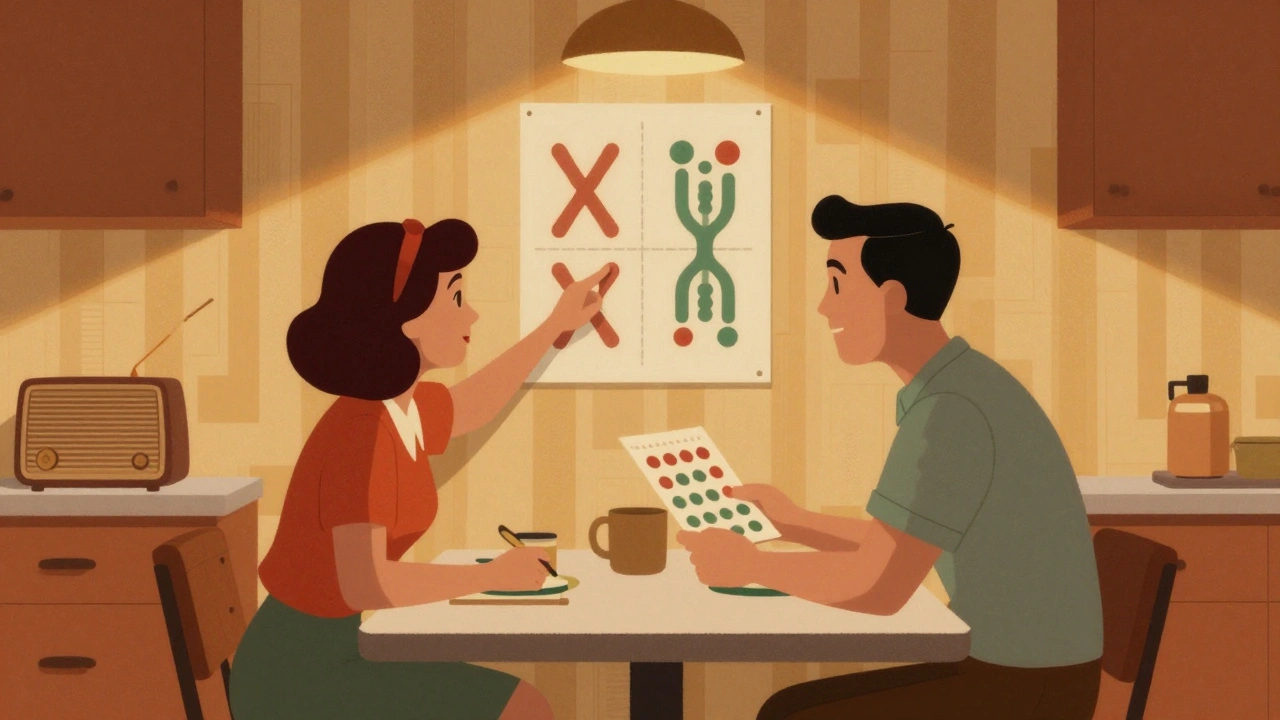
Color Blindness: Understanding Red-Green Defects and How They’re Passed Down
Red-green color blindness is a genetic condition affecting 8% of men and 0.5% of women, caused by X-linked gene variations. Learn how it's inherited, how it affects daily life, and what tools can help.
Read More