Potassium Binders: What They Are, How They Work, and When They're Needed
When your body can't get rid of excess potassium, a mineral essential for nerve and muscle function, including your heartbeat. Also known as serum potassium, it builds up when your kidneys aren't working right — and that’s where potassium binders, medications that trap potassium in your gut so it leaves your body through stool come in. Without them, high potassium can trigger dangerous heart rhythms, muscle weakness, or even cardiac arrest.
Potassium binders are most often used in people with chronic kidney disease, a condition where kidneys slowly lose their ability to filter waste and balance minerals. They’re also common for those taking medications like ACE inhibitors, ARBs, or spironolactone — drugs that help protect the heart and kidneys but can raise potassium levels as a side effect. If you’ve been told your potassium is high, your doctor may prescribe a binder instead of cutting back on these essential medicines. That’s because you don’t always have to choose between heart protection and safe potassium levels.
Not all binders work the same. Some, like sodium polystyrene sulfonate, have been around for decades but can cause gut irritation. Newer ones like patiromer and sodium zirconium cyclosilicate are gentler and more targeted. They don’t get absorbed — they just sit in your intestines, grab potassium like a magnet, and carry it out with your stool. That’s why they’re taken with meals: food helps slow digestion, giving the binder more time to work. You’ll need regular blood tests to check your levels, because too little potassium can be just as risky as too much.
People with diabetes and kidney disease are especially at risk. That’s why you’ll see posts here about albuminuria and metformin — both linked to kidney stress and potassium imbalances. You might also find advice on how supplements or diet changes affect potassium levels, or how to avoid dangerous drug combinations. This isn’t just about popping a pill. It’s about understanding how your kidneys, your meds, and your food all connect. The posts below give you real-world insights: what works, what doesn’t, and what to ask your pharmacist before you start or stop anything.
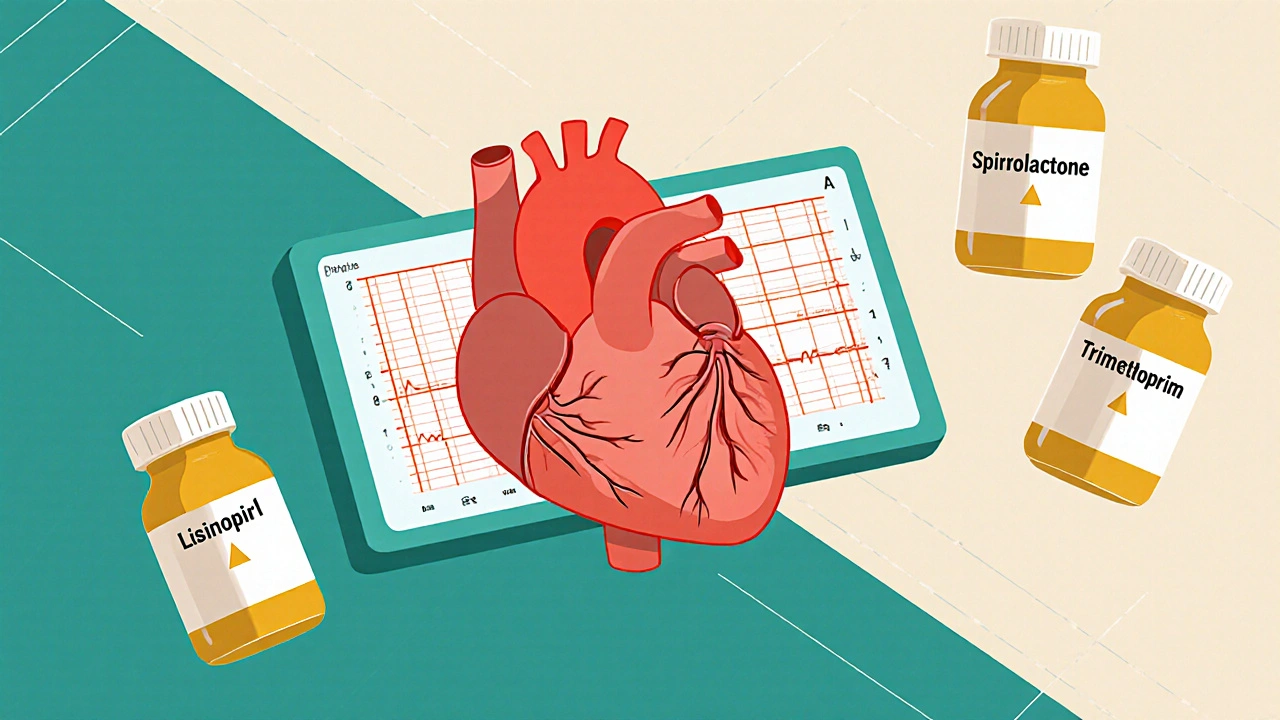
Dangerous Hyperkalemia from Medications: Cardiac Risks and How to Treat It
High potassium from common heart and kidney meds can trigger deadly heart rhythms. Learn which drugs cause it, how to spot the warning signs, and how new treatments let you stay on life-saving medications safely.
Read More