Pharmacokinetics: How Your Body Processes Medicines
When you take a pill, it doesn’t just start working the moment it hits your stomach. Pharmacokinetics, the study of how the body absorbs, distributes, metabolizes, and eliminates drugs. Also known as ADME, it’s the hidden science behind why a drug works for one person and not another. This isn’t theory—it’s what determines if your medicine will be safe, effective, or even dangerous. If your body breaks down a drug too fast, it won’t help. If it holds onto it too long, you could overdose. That’s why pharmacokinetics matters every time you swallow a pill, apply a patch, or get an injection.
Think about drug absorption, how a medicine enters your bloodstream. A pill taken on an empty stomach might hit your blood faster than one taken after a big meal. That’s why some drugs say "take on an empty stomach"—it’s not a suggestion, it’s a requirement for the drug to work right. Then there’s drug metabolism, how your liver breaks down the medicine. Some people have liver enzymes that process drugs quickly; others process them slowly. That’s why two people taking the same dose of the same drug can have totally different reactions. And don’t forget drug distribution, how the medicine travels through your body. Some drugs can’t cross the blood-brain barrier, so they won’t help with brain-related conditions. Others cling to fat tissue, making their effects last longer. Finally, drug elimination, how your body gets rid of the medicine—mostly through the kidneys or liver—determines how often you need to take it. If you have kidney problems, your body can’t clear the drug the same way, and your doctor has to adjust your dose.
These four steps—absorption, distribution, metabolism, elimination—explain why metformin can lower your B12, why mixing alcohol with risperidone is risky, and why some people need different doses of blood thinners. They’re why generic drugs have to prove they behave the same way in your body as the brand name. They’re why women often have more side effects: their bodies process drugs differently. And they’re why you can’t just swap supplements with your meds without knowing how they’ll interact. The posts below dig into real cases where pharmacokinetics makes the difference between healing and harm. You’ll see how it affects everything from cholesterol drugs to sleep aids, from pediatric dosing to anti-aging supplements. This isn’t just science—it’s the reason your medicine works, or doesn’t.
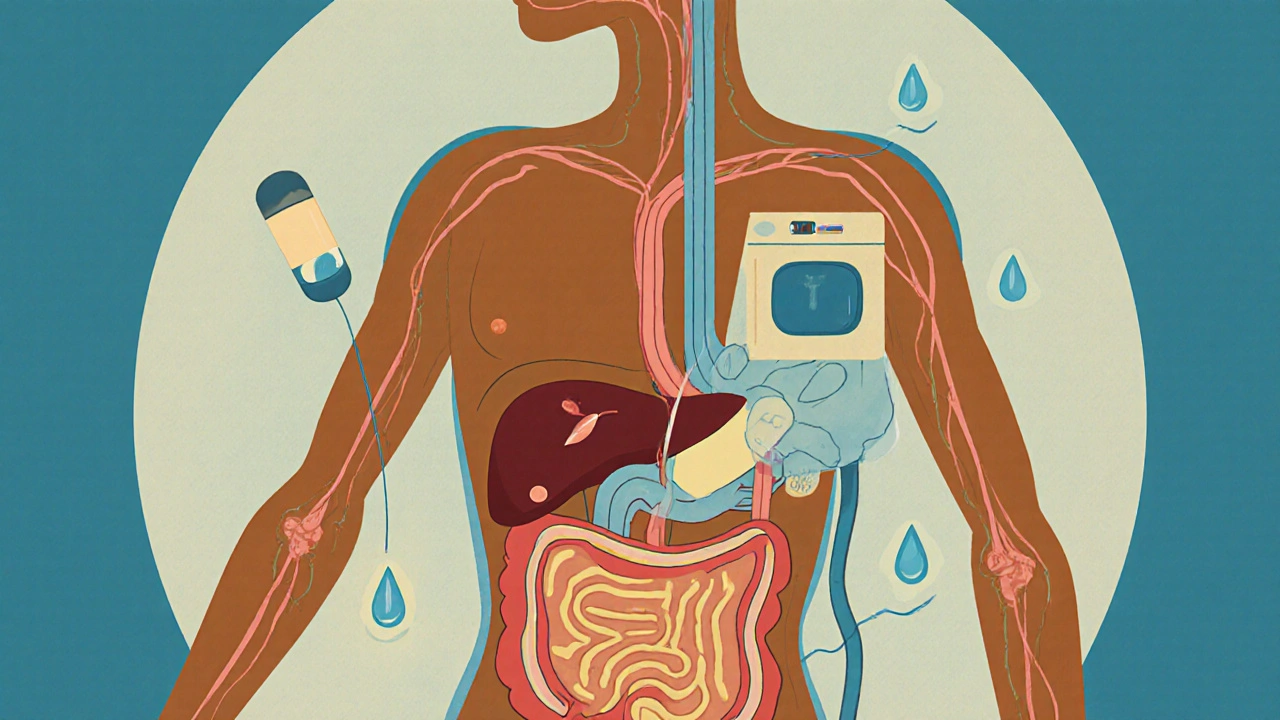
How Medications Work: Understanding Pharmacology Basics and Drug Mechanisms
Learn how medications work at the molecular level through pharmacology basics - from absorption to receptor binding. Understand why drugs affect people differently and how science is making treatments more precise.
Read More