Pharmacodynamics: How Drugs Work in Your Body
When you take a pill, it doesn’t just disappear and fix your problem. Pharmacodynamics, the study of how drugs affect your body at a molecular level. Also known as drug action, it explains why a low dose of one medication helps while a high dose of another makes you sick. This isn’t magic—it’s science you can understand. Every drug has a target: a receptor, enzyme, or ion channel. When the drug binds to it, something changes. Maybe your blood pressure drops. Maybe your pain fades. Maybe your mood shifts. That’s pharmacodynamics in action.
But here’s the catch: two people can take the same drug, at the same dose, and get totally different results. Why? Because bioavailability, how much of the drug actually gets into your bloodstream varies based on your age, weight, liver function, and even what you ate. And then there’s drug interactions, when one medication changes how another behaves in your system. St. John’s wort can make your birth control useless. Vitamin E can turn your blood thinner into a danger. These aren’t rare accidents—they’re predictable outcomes of pharmacodynamics you never learned in school.
What you’re looking at here isn’t just a list of articles. It’s a practical guide to how drugs really work—beyond the pamphlets and commercials. You’ll find deep dives into how metformin steals vitamin B12, why women get more side effects than men, and how combining a low-dose statin with ezetimibe beats high-dose statins alone. We cover how the FDA ensures generics are just as safe as brand names, how counterfeit drugs slip through the supply chain, and why mixing alcohol with risperidone can land you in the ER. These aren’t theoretical discussions. They’re real-world consequences shaped by pharmacodynamics.
By the end of these posts, you won’t just know what a drug is supposed to do—you’ll understand why it does it, when it might fail, and how to spot the hidden risks before you take the next pill. This is the knowledge that turns you from a passive patient into an informed user of medicine.
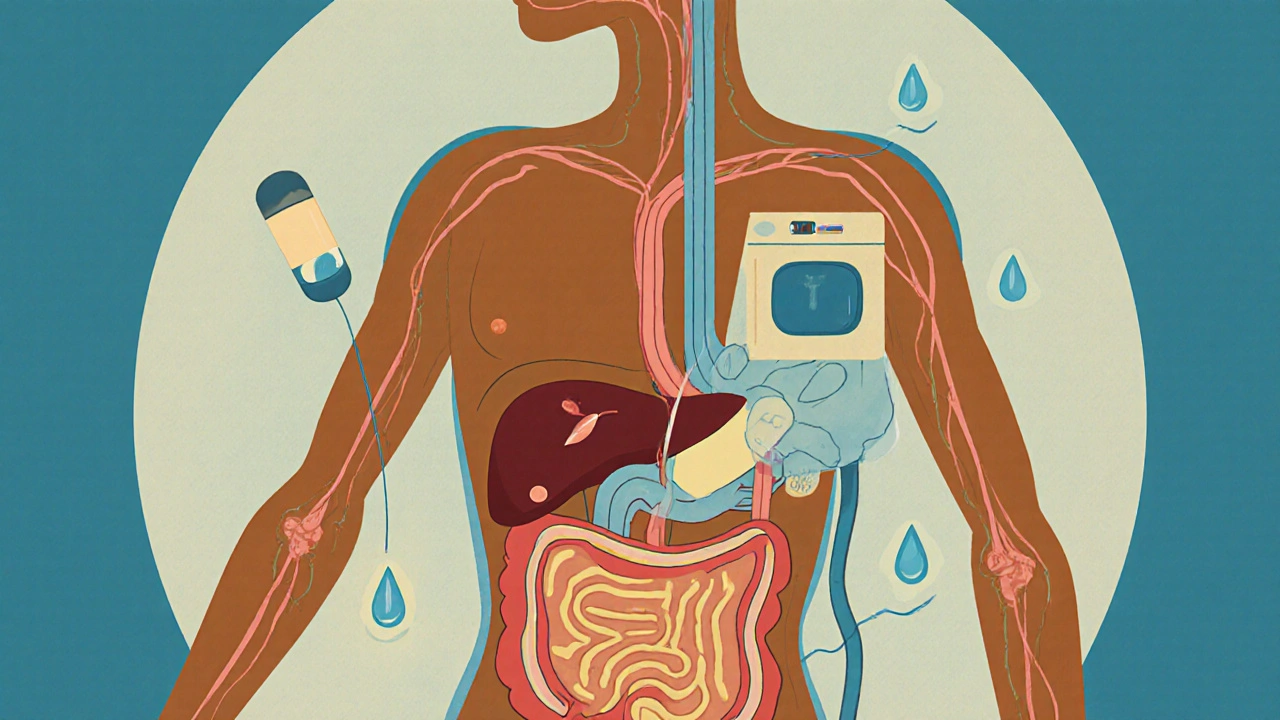
How Medications Work: Understanding Pharmacology Basics and Drug Mechanisms
Learn how medications work at the molecular level through pharmacology basics - from absorption to receptor binding. Understand why drugs affect people differently and how science is making treatments more precise.
Read More