Medications: What You Need to Know About Safety, Interactions, and Generic Options
When you take a medication, a substance used to treat, cure, or prevent disease. Also known as drug, it’s not just about popping a pill — it’s about understanding how it behaves in your body, who made it, and what else it might be interacting with. Most people assume all medications are the same, but that’s not true. A generic version of your prescription, for example, isn’t a cheaper copy — it’s the exact same active ingredient, tested to perform the same way as the brand-name drug. The FDA, the U.S. agency responsible for regulating drugs and ensuring they’re safe and effective. Also known as Food and Drug Administration, it doesn’t approve generics lightly. They must pass strict bioequivalence tests to prove they deliver the same amount of medicine into your bloodstream at the same rate. That’s why generics can cost up to 85% less without sacrificing results.
But here’s where things get tricky: drug interactions, when two or more substances affect each other’s effects in the body. Also known as medication interactions, they aren’t always obvious. Taking a common supplement like St. John’s wort with an antidepressant can lower the drug’s effectiveness. Mixing warfarin with vitamin E might increase your risk of bleeding. Even something as simple as grapefruit juice can interfere with how your body breaks down certain medications. These aren’t rare edge cases — they happen every day. And while doctors know about major interactions, many patients don’t realize their vitamins, herbal teas, or over-the-counter pain relievers could be silently messing with their prescriptions. That’s why understanding your medication’s profile matters more than ever.
Then there’s medication safety, the practice of using drugs correctly to avoid harm. Also known as drug safety, it goes beyond just reading the label. It’s about knowing who’s at higher risk — like women, who experience nearly twice as many side effects as men due to biological differences and outdated clinical trials. It’s about recognizing long-term risks, like how metformin can slowly drain your vitamin B12 levels, leading to nerve damage that looks like diabetes complications. It’s about knowing when a drug shouldn’t be mixed with alcohol, or how certain antibiotics can trigger dangerous brain pressure when combined with acne meds. And it’s about trusting the system — from the pharmaceutical supply chain, the network that moves drugs from manufacturers to patients. Also known as drug distribution system, it being secured by serialization and tracking to block counterfeit pills, to pediatric dosing being calculated by weight to avoid deadly errors.
What you’ll find below isn’t just a list of articles. It’s a practical guide to the real-world risks, hidden connections, and smart choices around the pills you take every day. Whether you’re on blood thinners, cholesterol meds, antidepressants, or just wondering if that turmeric supplement is safe with your prescriptions — you’ll find answers grounded in science, not speculation. No fluff. No marketing. Just what you need to know to stay safe.
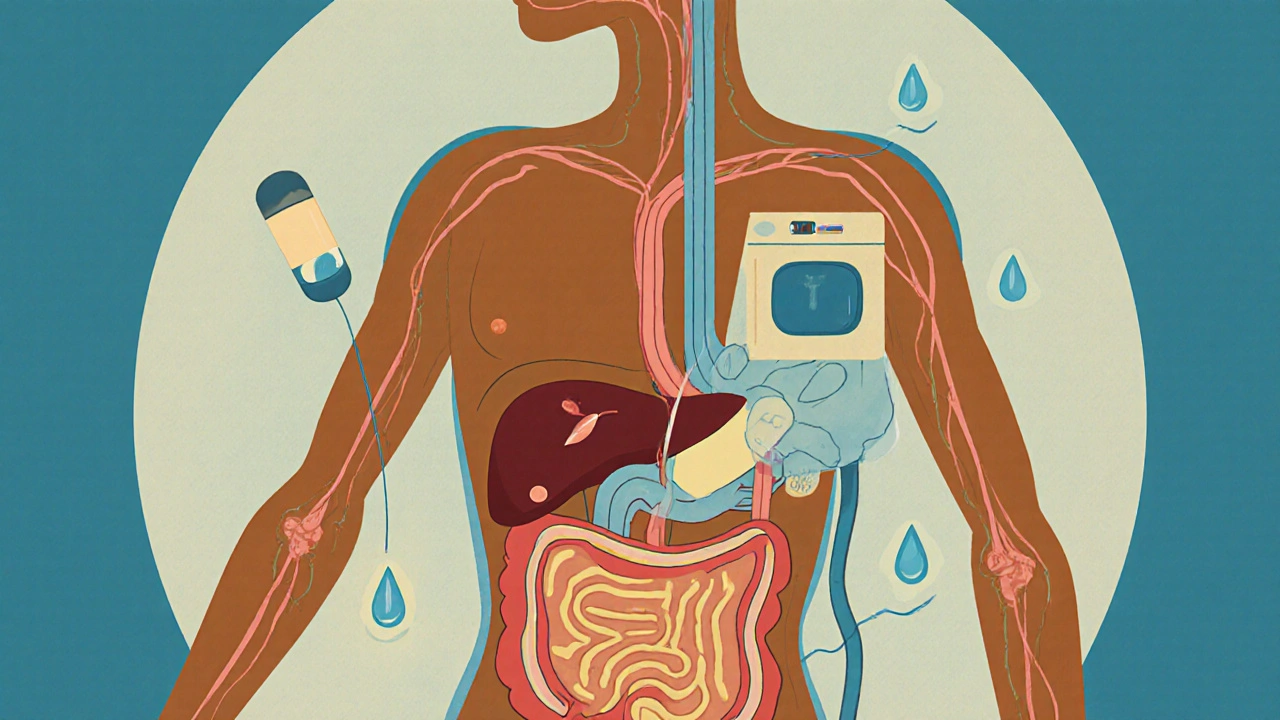
How Medications Work: Understanding Pharmacology Basics and Drug Mechanisms
Learn how medications work at the molecular level through pharmacology basics - from absorption to receptor binding. Understand why drugs affect people differently and how science is making treatments more precise.
Read More