Deuteranomaly: What It Is and How It Affects Medication Safety
When someone has deuteranomaly, a type of red-green color vision deficiency where green pigments in the eye don’t respond properly. Also known as green weakness, it’s the most common form of color blindness—affecting about 5% of men and 0.5% of women worldwide. People with deuteranomaly don’t see the world in black and white. They see colors, but reds, greens, browns, and oranges can look muddy or too similar. That’s not just a minor inconvenience—it can be risky when you’re picking up pills, reading labels, or checking expiration dates on medicine bottles.
Think about how many medications rely on color to tell you what’s inside. A blue pill might be a blood pressure drug, while a green one could be an antidepressant. If you mix them up because they look too similar, you could take the wrong dose—or the wrong drug entirely. Even something as simple as a red cap versus a green cap on a bottle can become confusing. This isn’t theoretical. Studies show that color-dependent labeling leads to medication errors in people with color vision deficiencies, especially among older adults who already juggle multiple prescriptions. And while pharmacies sometimes use shape or size to differentiate pills, those aren’t always reliable either.
It’s not just about the pills themselves. Blood pressure monitors, glucose meters, and even IV bags use color coding to signal dosage levels or drug types. If you’re managing a chronic condition and rely on visual cues to stay on track, deuteranomaly can quietly undermine your safety. The good news? You don’t have to guess. Simple tools like color-identifying apps, pill organizers with clear labels, and talking prescription labels from your pharmacist can make a huge difference. Some manufacturers are starting to use texture, Braille, or unique shapes on packaging—but it’s still rare.
What you’ll find in the posts below isn’t just about vision. It’s about how everyday systems—drug labeling, storage practices, dosage forms—fail people who see the world differently. From how to read OTC labels safely to why generic drug packaging needs better design, these articles connect the dots between biology and real-world medication risks. Whether you have deuteranomaly, know someone who does, or just want to avoid a dangerous mix-up, this collection gives you practical ways to protect yourself and others.
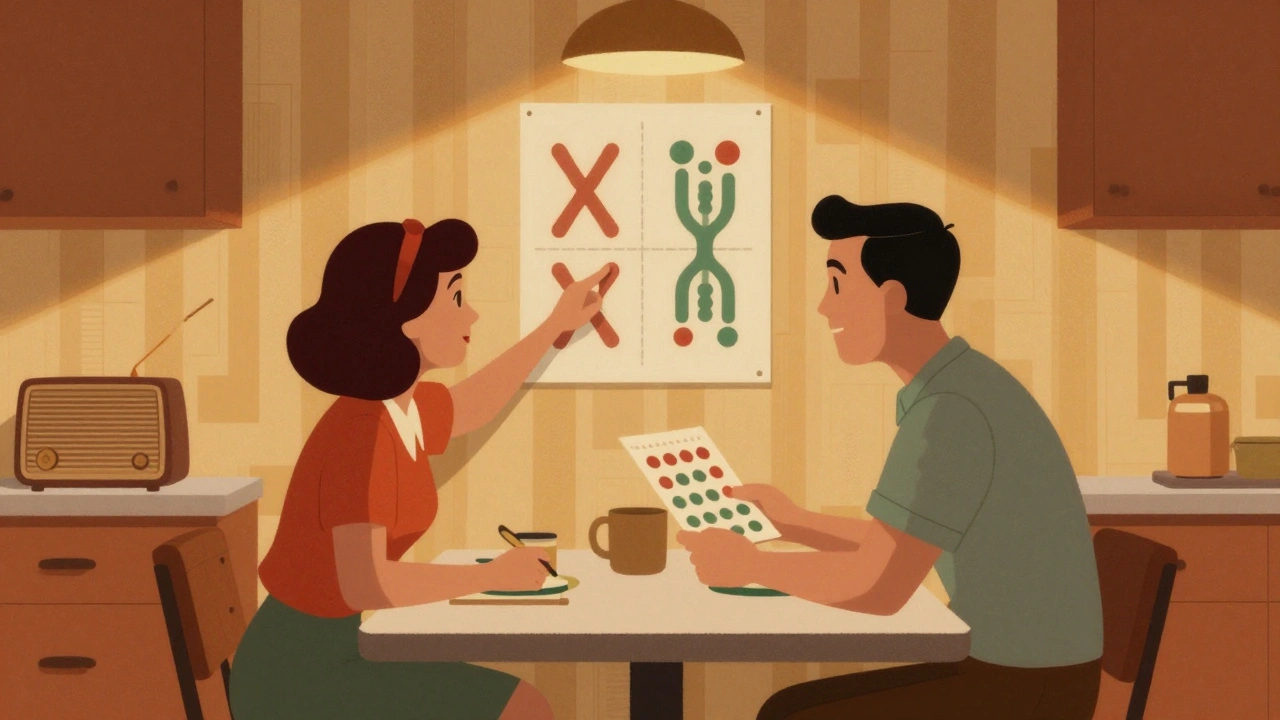
Color Blindness: Understanding Red-Green Defects and How They’re Passed Down
Red-green color blindness is a genetic condition affecting 8% of men and 0.5% of women, caused by X-linked gene variations. Learn how it's inherited, how it affects daily life, and what tools can help.
Read More