Color Vision Deficiency: What It Is, How It Affects Daily Life, and What You Can Do
When someone has color vision deficiency, a condition where the eyes can’t distinguish certain colors properly, often due to genetic factors. Also known as color blindness, it doesn’t mean seeing in black and white—it means missing key differences in hues like red, green, or blue. This isn’t rare. About 1 in 12 men and 1 in 200 women have some form of it, mostly passed down from parents. Most cases involve trouble telling red and green apart, which sounds simple until you’re trying to read a traffic light, pick ripe fruit, or match socks.
It’s not just about aesthetics. People with red-green color blindness, the most common type, caused by faulty photopigments in the retina’s cone cells might miss warning signs on labels, misread charts in school or work, or struggle with apps that rely on color coding. Even blue-yellow color deficiency, a rarer form that affects how people see blues and yellows, often goes unnoticed because it’s less disruptive in daily life. But it still matters—especially in jobs like electrician work, aviation, or graphic design where color accuracy is critical.
There’s no cure, but awareness changes everything. Apps now offer color filters, some websites use patterns instead of color alone to show data, and even traffic lights are designed with position-based cues. Knowing you or someone you care about has this condition helps you adapt—whether it’s labeling clothes with tags, using apps that identify colors, or asking for help when needed. It’s not a disability you can fix, but it’s one you can manage.
Below, you’ll find real-world insights from people who live with this every day, plus practical tips on how medications, supplements, and even everyday tools can affect color perception. Some drugs can temporarily blur color vision. Others, like certain antibiotics or cholesterol meds, may worsen it in people already at risk. You’ll also learn how to spot early signs, what tests doctors use, and how to talk to your pharmacist about potential side effects that could make things harder.
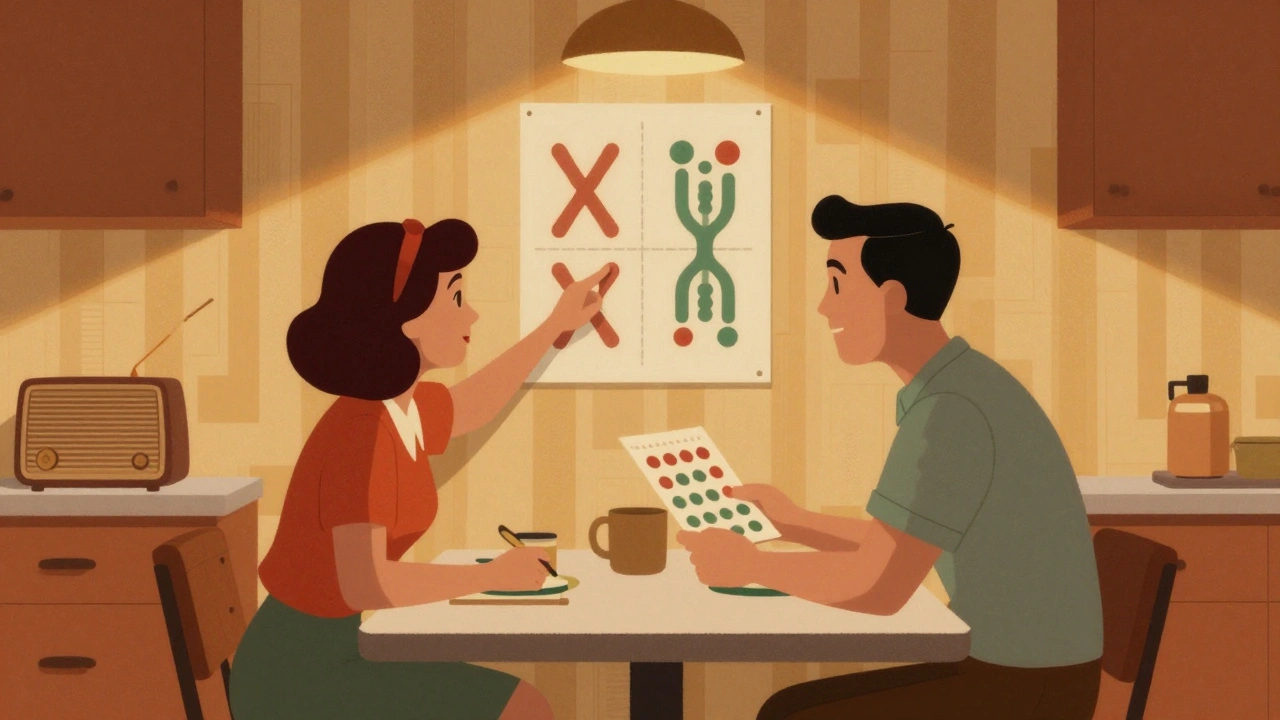
Color Blindness: Understanding Red-Green Defects and How They’re Passed Down
Red-green color blindness is a genetic condition affecting 8% of men and 0.5% of women, caused by X-linked gene variations. Learn how it's inherited, how it affects daily life, and what tools can help.
Read More