Antidepressant Augmentation: What Works and What to Avoid
When an antidepressant augmentation, the addition of a second medication to improve the effects of a primary antidepressant. Also known as combination therapy, it's a common next step when a single drug doesn't fully relieve depression symptoms. Many people try one or two antidepressants before realizing they need something more. That’s where augmentation comes in—not to replace the first drug, but to strengthen it. It’s not a last resort; it’s a well-studied strategy used in clinics every day.
Common atypical antipsychotics, medications originally developed for schizophrenia but now used to boost antidepressants like aripiprazole and quetiapine are often added to SSRIs, a class of antidepressants that increase serotonin levels in the brain like sertraline or escitalopram. These combinations work because they target different brain pathways. While SSRIs help with mood, the added drug can improve energy, focus, or motivation—things that often stay stuck even when sadness lifts. Lithium and thyroid hormone are older but still effective options, especially when patients don’t respond to newer additions. The goal isn’t to create a drug cocktail, but to fix what’s missing.
But augmentation isn’t risk-free. Adding a second drug means more side effects—weight gain, drowsiness, tremors, or metabolic changes. Some people feel better quickly, others take months. And not all combinations are backed by solid evidence. You need to know what’s proven, what’s experimental, and what’s just a guess. The posts below show real comparisons: how bupropion can be used as an augmenting agent, why some supplements backfire, and how even natural products like St. John’s wort can interfere. You’ll also find warnings about mixing antidepressants with blood thinners, thyroid meds, or alcohol. This isn’t theory—it’s what happens in real lives. What works for one person can hurt another. The key is knowing your options, asking the right questions, and tracking what actually changes for you.
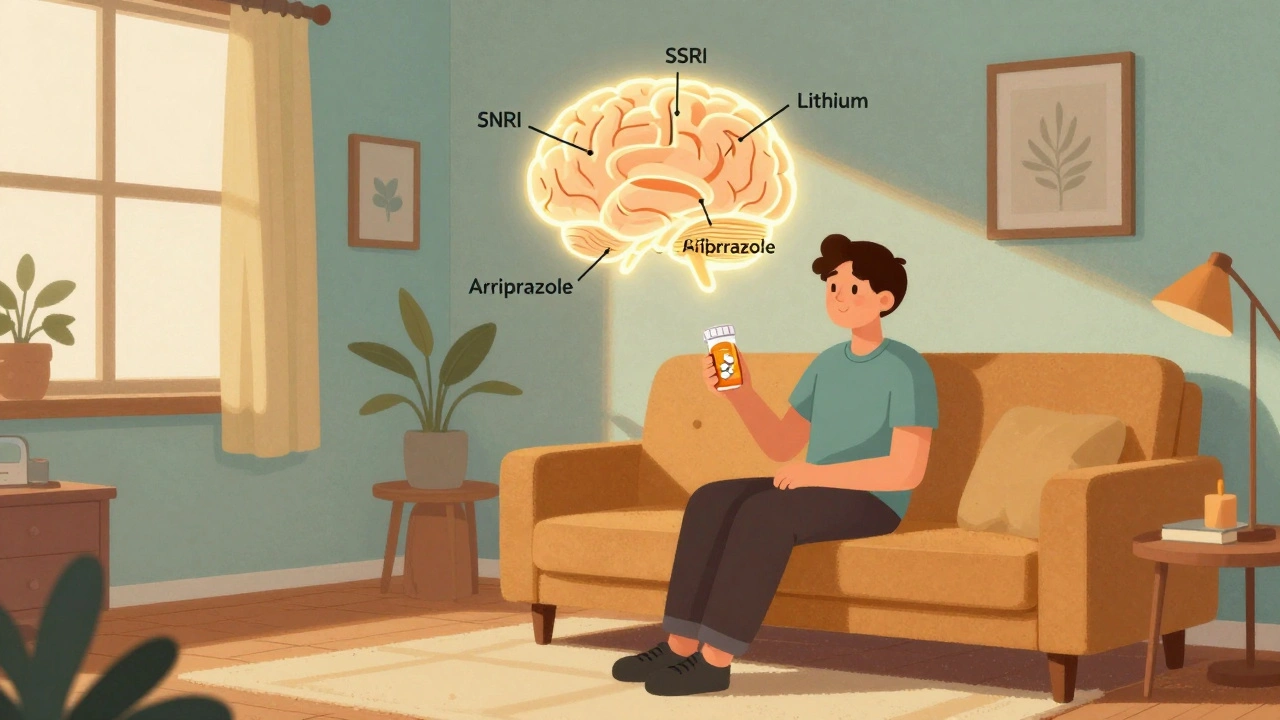
Treatment-Resistant Depression: Augmentation and Advanced Therapies That Actually Work
When antidepressants fail, treatment-resistant depression requires more than just switching pills. Learn about FDA-approved augmentations, rTMS, esketamine, and emerging therapies that actually work.
Read More