ANDA Pathway: How Generic Drugs Get Approved and Why It Matters
When you pick up a generic pill at the pharmacy, chances are it went through the ANDA pathway, a regulatory process used by the U.S. Food and Drug Administration to approve generic versions of brand-name drugs. Also known as the Abbreviated New Drug Application, it’s the main reason generic drugs cost so much less than brand names — without sacrificing safety or effectiveness. This isn’t magic. It’s science, regulation, and a law passed in 1984 called the Hatch-Waxman Act, a landmark law that balanced innovation with access by creating a faster path for generics. Before this law, generic makers had to repeat every clinical trial the original drug company did. That was expensive, slow, and kept prices high. The ANDA pathway changed that by letting generic companies prove their version works the same way — without redoing all the studies.
The FDA Office of Generic Drugs, the division inside the FDA that reviews and approves all generic drug applications makes sure every generic meets strict standards. They don’t just check the ingredients. They test whether the drug dissolves the same way in your body, whether it gets absorbed at the same rate, and whether it delivers the same amount of active medicine. This is called bioequivalence, the scientific proof that a generic performs just like the brand-name version. If it passes, the FDA says it’s interchangeable. That’s why your pharmacist can swap your brand-name drug for a generic without asking your doctor — it’s legally and medically the same.
What’s often missed is how this system affects real people. Millions rely on generics to afford blood pressure pills, diabetes meds, antibiotics, and antidepressants. Without the ANDA pathway, many wouldn’t be able to take their medicine at all. It’s not just about saving money — it’s about keeping people healthy. The process isn’t perfect. There are occasional shortages, quality issues, or delays. But the system itself — the rules, the reviews, the oversight — works. And it’s why you can buy a 30-day supply of metformin for under $5, or a generic version of a blood thinner that costs a fraction of the brand.
What you’ll find below are posts that dig into the real-world side of this system: how the FDA reviews applications, what happens when drugs get recalled, why some generics still cost too much, and how this all connects to your health. You’ll see how the ANDA pathway touches everything from vitamin B12 levels in diabetics on metformin to the safety of combination cholesterol therapies. It’s the hidden engine behind the pills in your medicine cabinet — and knowing how it works helps you make smarter choices.
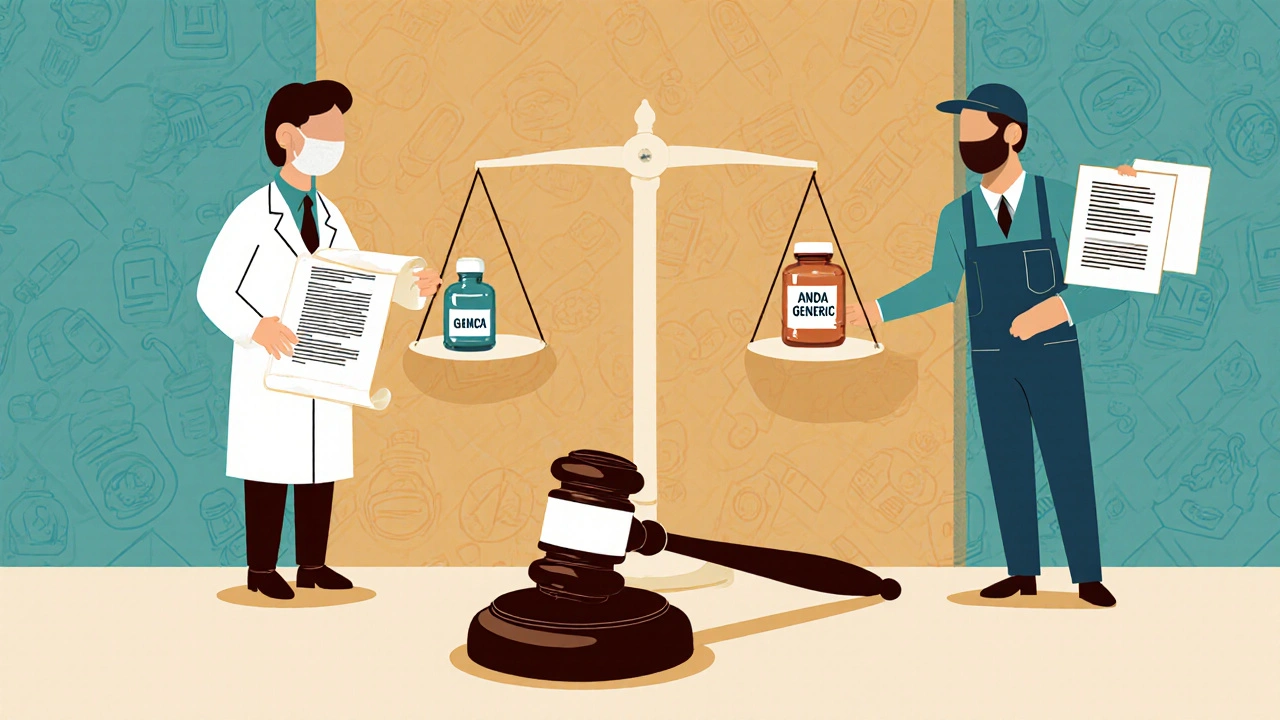
FDA Authorization of Generics: Legal Basis and Approval Process
Learn how the FDA approves generic drugs under the Hatch-Waxman Act, the science behind bioequivalence, and why generics cost up to 85% less than brand-name drugs - without sacrificing safety or effectiveness.
Read More