Adverse Drug Reactions: What They Are, How to Spot Them, and What to Do
When you take a medicine, you expect it to help—not hurt. But adverse drug reactions, unintended and harmful responses to medications at normal doses. Also known as drug side effects, these reactions range from mild rashes to life-threatening organ damage. They’re not rare. In fact, over 2 million hospitalizations each year in the U.S. are caused by these reactions, and nearly 100,000 deaths. Most people don’t realize they’re at risk until it’s too late.
These reactions don’t just happen because of the drug itself. They’re often caused by drug interactions, when two or more medications react in harmful ways inside your body. For example, mixing St. John’s wort with antidepressants can trigger serotonin syndrome. Or taking metformin for years might silently drain your vitamin B12, leading to nerve damage you mistake for diabetes worsening. Even something as simple as grapefruit juice can make your blood pressure pill dangerously strong. And pharmacology, the science of how drugs move through and affect the body explains why—differences in liver enzymes, kidney function, or genetics can turn a safe dose into a toxic one.
Some reactions are obvious—nausea, dizziness, swelling. Others hide in plain sight. Fatigue from low B12. Brain fog from a blood thinner. Sleep problems from an antipsychotic. These aren’t just "side effects"—they’re warning signs your body is reacting badly. And if you’re on multiple meds, supplements, or have chronic conditions like diabetes or heart disease, your risk goes up fast. The FDA’s Office of Generic Drugs and the Hatch-Waxman Act ensure generics are safe, but they don’t predict every possible reaction in every person.
You don’t need to be a doctor to protect yourself. Ask: Could this new symptom be from my meds? Am I taking anything else that might interfere? Has my doctor checked for interactions since my last refill? These questions matter. The posts below show real cases—like how tetracycline and isotretinoin together can raise pressure on the brain, or how mixing risperidone with alcohol can knock you out. They break down what to watch for, who’s most vulnerable, and how to talk to your provider before something goes wrong.
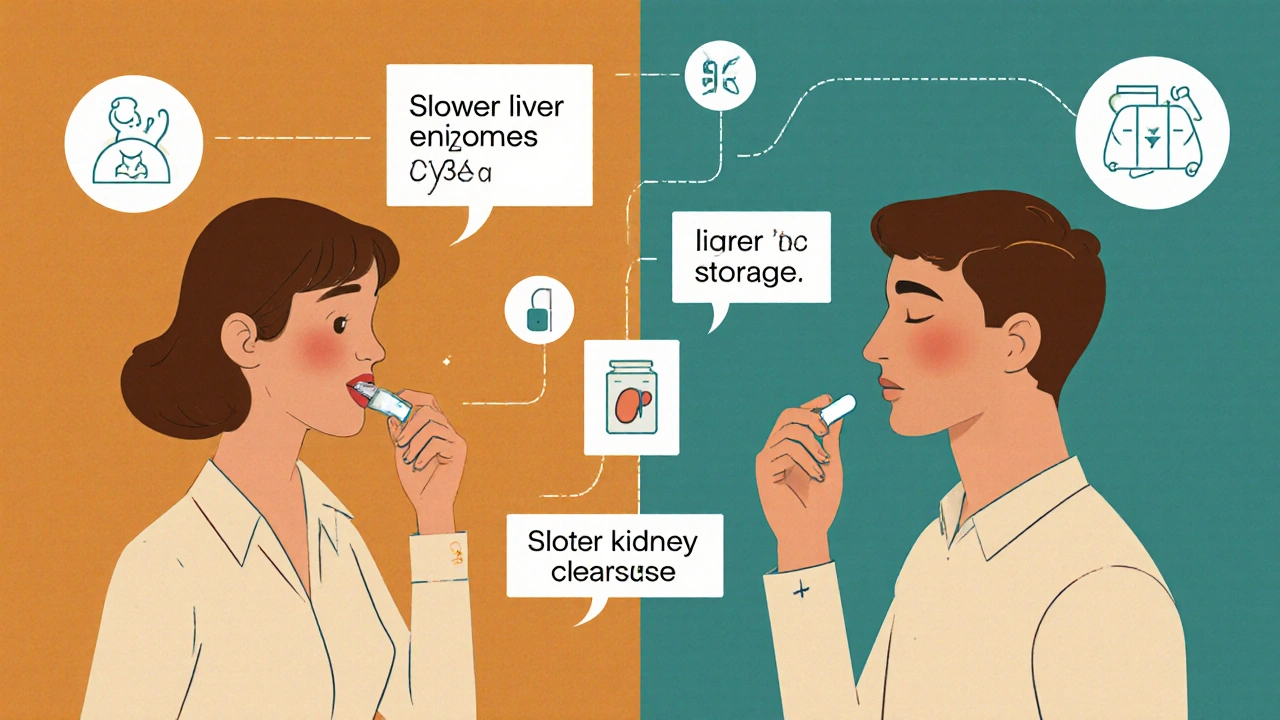
Why Women Experience More Medication Side Effects Than Men
Women experience nearly twice as many medication side effects as men due to biological differences and outdated clinical trial practices. Learn why this happens, which drugs are most affected, and what’s being done to fix it.
Read More