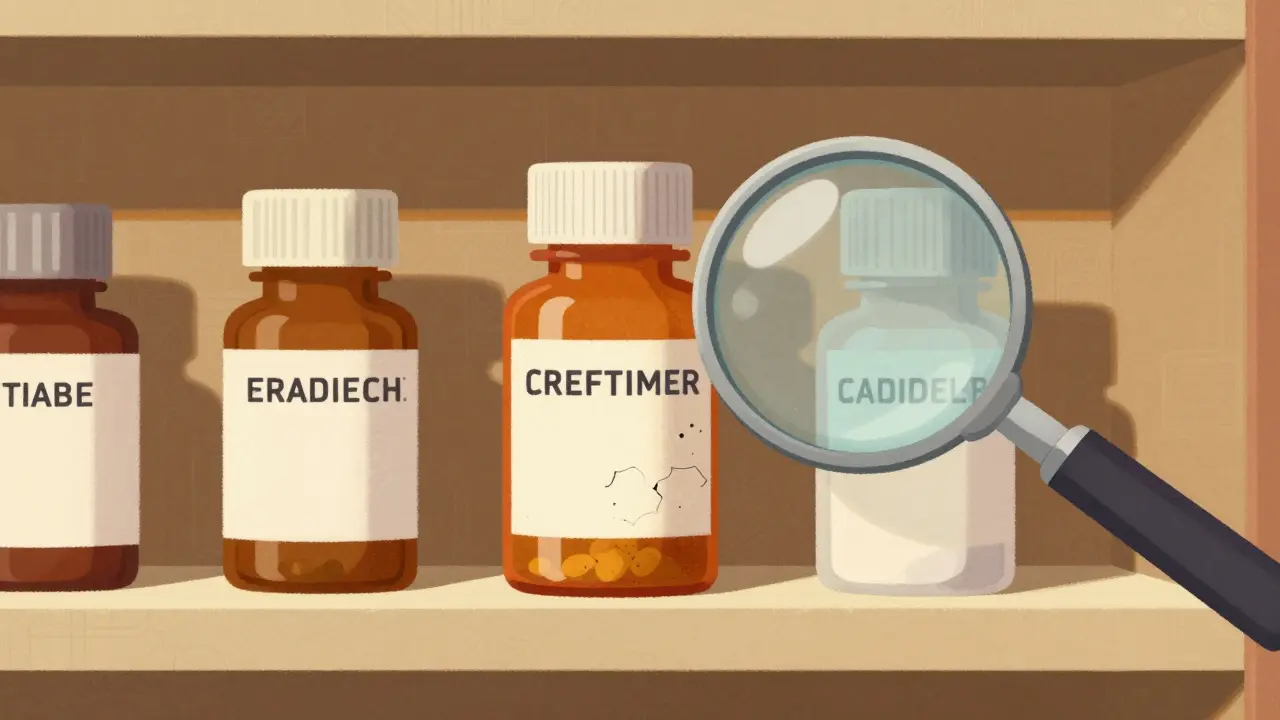
When you pick up a generic pill from the pharmacy, you assume it works just like the brand-name version. But here’s the truth: generic drugs don’t always degrade the same way. And that difference can affect safety, effectiveness, and even how long the medicine lasts on your shelf.
What Shelf Life Really Means
Shelf life isn’t just a date printed on the bottle. It’s the period during which a product remains safe, effective, and meets all quality standards. The U.S. Food and Drug Administration (FDA) defines it clearly: expiration dates exist to guarantee the product hasn’t lost its potency or become harmful. For pharmaceuticals, this isn’t guesswork-it’s science.Stability testing measures how a drug changes over time under real-world conditions. This includes checking for chemical breakdown, physical changes like clumping or discoloration, microbial contamination, and whether the drug still delivers the right dose. If any of these factors fall outside strict limits, the product is no longer safe to use-even if it looks fine.
The Four Pillars of Stability Testing
There are four key areas every drug must pass to earn its expiration date:- Chemical stability: The active ingredient must stay intact. High-Performance Liquid Chromatography (HPLC) detects even tiny amounts of breakdown products. ICH guidelines say unknown impurities must stay below 0.1%. A single pill with 0.2% of a toxic byproduct could be dangerous over time.
- Physical stability: Does the tablet still dissolve properly? Does the liquid still flow? For inhalers, the dose must be uniform. For nanoparticles used in treatments like cystic fibrosis, particles must stay under 200nm-anything bigger and they can’t reach the target cells. Agglomeration is a silent killer of effectiveness.
- Microbiological stability: Can bacteria or mold grow inside? Non-sterile products can’t exceed 100 colony-forming units per gram. Sterile products must meet a 1 in 1 million chance of contamination (SAL 10^-6). Many recalls happen because preservatives failed after moisture levels changed.
- Functional stability: Will the delivery system still work? An inhaler that spits out uneven doses, or a patch that stops sticking, isn’t just ineffective-it’s risky.
These aren’t theoretical checks. They’re legally required under FDA 21 CFR 211.166 and EMA guidelines. Skipping or cutting corners isn’t an option.
Why Accelerated Testing Can Mislead
Most companies use accelerated testing: storing a product at 40°C and 75% humidity for six months to predict what will happen over two years. It’s faster. It’s cheaper. But it’s not always right.A quality assurance professional on the American Pharmaceutical Review forum lost $250,000 and 18 months because their accelerated test showed no degradation. The real product crystallized at 24 months. Why? A polymorphic transition-a hidden change in crystal structure-that only happens slowly at room temperature. Accelerated conditions didn’t trigger it.
Dr. Kim Huynh-Ba, a former FDA stability expert, warns: “Testing at very high temperatures for a short time doesn’t mimic real degradation. The chemistry changes. You can’t just stretch the results.”
That’s why long-term studies are still mandatory. You need at least 12 months of real-time data before you can even consider extending the shelf life. And even then, you can only extrapolate up to 12 months beyond your actual data.

Generic Drugs: The Hidden Risk
Generic drugs are cheaper because they don’t repeat expensive clinical trials. But they do need to prove bioequivalence-meaning they deliver the same amount of drug into the bloodstream. What they don’t have to prove is identical stability.That’s where things get dangerous.
A 2020 FDA study found 17.3% of generic levothyroxine products had stability issues not seen in Synthroid. Why? Different excipients. One brand used a moisture-resistant coating. Another didn’t. In humid climates, the unprotected version absorbed water, causing the active ingredient to break down faster.
It’s not just levothyroxine. Insulin pens, antibiotics, and even antivirals have shown similar patterns. Generic manufacturers often use cheaper fillers, binders, or packaging. These choices might save pennies per pill-but they can shorten shelf life by months.
Storage Isn’t Optional-It’s Critical
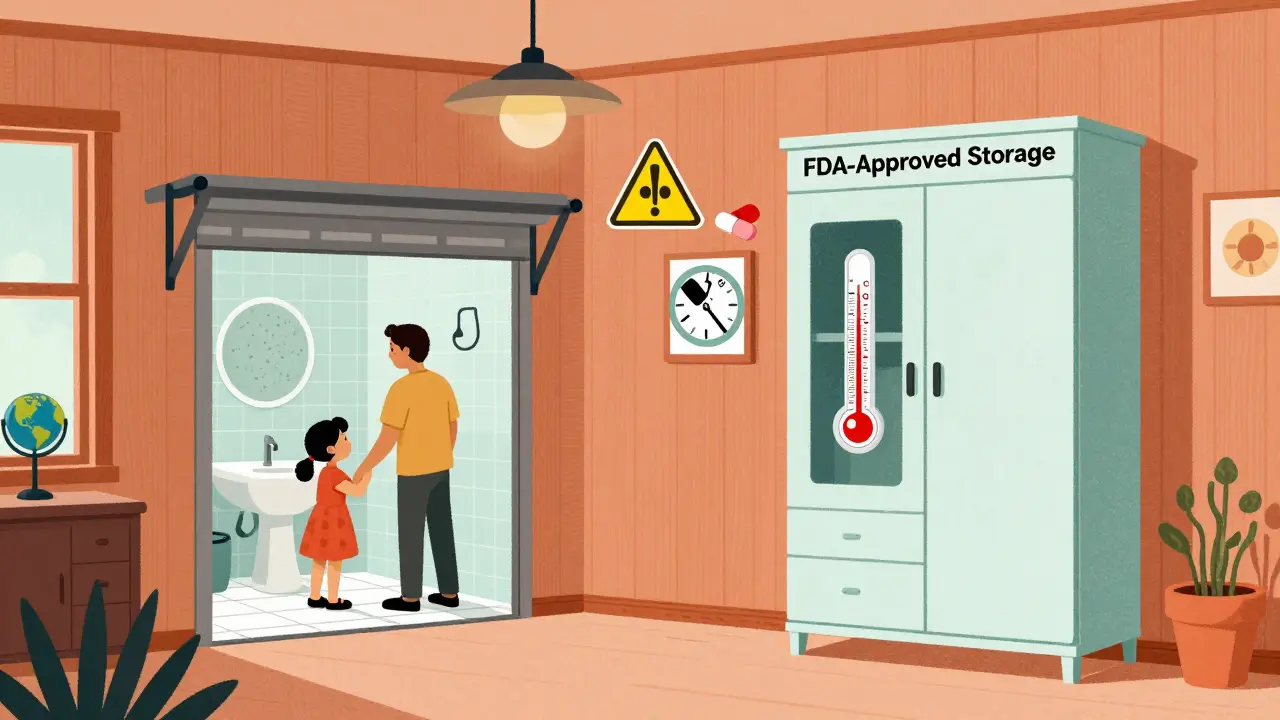
Even the best-tested drug fails if stored wrong. The FDA doesn’t just say “keep at room temperature.” They define it: 15-30°C (59-86°F). But “room temperature” isn’t enough. One FDA Form 483 observation from 2021 cited a company for writing “stored at room temperature” without recording actual temperature logs.That’s a violation. Because “room temperature” in a warehouse in Arizona is not the same as in a basement in Toronto. Temperature spikes during shipping, especially in summer, can trigger degradation. A 2022 MIT study found that rising global temperatures could reduce average drug shelf life by 4.7 months by 2050.
And it’s not just drugs. Food products face the same issues. A 2023 study by Kappa Laboratories showed that monitoring water activity (aw) and pH extended shelf life of refrigerated soups by 22% compared to standard methods.
What Happens When Stability Fails
The consequences aren’t abstract. In 2022, the Parenteral Drug Association found that 62.7% of stability professionals had experienced a recall in the past five years. The #1 cause? Microbial growth in preservative systems due to water activity changes.Imagine taking a bottle of antibiotics that’s been sitting in a hot garage for six months. The active ingredient breaks down. The preservative fails. Mold grows. You take it-and get sick. Or worse, you don’t get better because the dose is too low. That’s not hypothetical. It’s happened.
Low-income countries see this worst. The WHO reports 28.7% of medicines there fail stability testing due to poor storage during transport and in clinics. In high-income countries, it’s just 1.2%.
What’s Changing in 2026
The industry is waking up. The ICH Q12 guideline, effective since late 2023, allows companies to make post-approval changes to stability protocols without reapplying for approval-so long as they’re scientifically justified.Companies like Amgen and Merck are using Risk-Based Predictive Stability (RBPS) tools to cut testing time by 30%. These models simulate degradation pathways using machine learning and real-world data. The FDA’s 2023 pilot for continuous manufacturing showed shelf life could be determined 40% faster.
But adoption is slow. Regulatory agencies still demand traditional data. Most small manufacturers can’t afford the $1.2 million average investment per product for advanced stability science.
What You Can Do
As a consumer, you can’t test your medicine. But you can protect yourself:- Store medications in a cool, dry place-not the bathroom or a sunny windowsill.
- Check expiration dates. Don’t use anything past that date, even if it looks fine.
- If a generic drug seems less effective, talk to your pharmacist. Ask if it’s the same manufacturer as before.
- Report unusual side effects or lack of effect to your doctor and the FDA’s MedWatch program.
Pharmacists and quality teams are on the front lines. They’re the ones reading stability reports, checking storage logs, and catching failures before a pill reaches you. But they need better tools, better training, and better support.
Stability isn’t just a lab test. It’s a promise. A promise that the medicine you take won’t harm you. That it will do what it says it will. That promise depends on science, not shortcuts.
How is shelf life determined for generic drugs?
Generic drugs must undergo the same stability testing as brand-name drugs under ICH Q1A(R2) guidelines. Manufacturers test for chemical, physical, microbiological, and functional stability using validated methods. They must show the product remains within acceptable limits over time under real and accelerated conditions. While they don’t repeat clinical trials, they must prove the drug doesn’t degrade faster than the original. Differences in excipients or packaging can affect results, which is why some generics have shorter shelf lives.
Can I still use a drug after its expiration date?
It’s not recommended. While some drugs may remain chemically stable past their expiration date, there’s no guarantee of safety or potency. The FDA and WHO advise against using expired medications because degradation can produce harmful byproducts, reduce effectiveness, or allow microbial growth. For life-saving drugs like epinephrine, insulin, or antibiotics, the risk is too high.
Why do some generics fail stability tests while brand-name versions don’t?
The active ingredient is the same, but the non-active ingredients-like fillers, coatings, and preservatives-can differ. These affect how the drug interacts with moisture, heat, and light. A brand-name drug may use a moisture-resistant capsule, while a generic uses a cheaper alternative that absorbs humidity. This can cause faster chemical breakdown or microbial contamination. Manufacturing processes also vary, leading to differences in crystal structure or particle size that impact stability.
What’s the biggest cause of drug recalls related to stability?
The top cause is microbial growth in preservative systems due to changes in water activity. This often happens when packaging doesn’t seal properly, or when products are exposed to high humidity during shipping or storage. Preservatives like parabens or benzyl alcohol can lose effectiveness over time, especially if the product’s pH shifts. This is common in liquid medications, eye drops, and topical creams.
Does climate change affect drug shelf life?
Yes. A 2022 MIT study projected that by 2050, rising global temperatures could reduce average drug shelf life by 4.7 months. Warehouses and distribution centers in major cities are already exceeding 30°C for over 87 days a year-outside the approved 15-30°C range. This accelerates degradation, especially for biologics, insulin, and vaccines. Cold chain failures during transport are becoming more frequent in hot climates.


Jake Nunez
9 January 2026 - 08:40 AM
My grandma takes generics for her blood pressure and swears they work fine. But I’ve seen her bottles sit in the bathroom for years. If the science says degradation happens even if it looks fine, then maybe we’re all just gambling with our health and pretending it’s fine.
Christine Milne
11 January 2026 - 01:44 AM
The FDA’s standards are not suggestions-they are legally binding protocols grounded in decades of peer-reviewed pharmacokinetic research. To suggest that generic manufacturers can compromise on stability testing is not only scientifically illiterate but dangerously nationalistic in its disregard for regulatory integrity.
Bradford Beardall
12 January 2026 - 09:31 AM
Wait, so if a generic version uses a different binder and degrades faster in humidity, does that mean someone in Florida is getting a weaker dose than someone in Colorado? And why isn’t this front-page news? I get that generics save money, but if the drug breaks down before it even reaches the patient, what’s the point of saving $5?
McCarthy Halverson
13 January 2026 - 12:52 PM
Store meds in a cool dry place. Don’t leave them in the car. Check dates. Simple stuff. But people forget. And then wonder why it didn’t work.
Michael Marchio
15 January 2026 - 09:54 AM
Let’s be honest here. The pharmaceutical industry doesn’t want you to know that your $4 generic insulin might be half as stable as the $300 brand because of a cheaper polymer coating. They profit from the illusion of equivalence. The FDA approves based on bioequivalence, not stability equivalence. That’s not oversight-it’s a loophole dressed up as regulation. And don’t even get me started on how shipping logistics in the South are turning medicine cabinets into chemical labs.
Jake Kelly
17 January 2026 - 08:50 AM
It’s scary how much we take for granted. But I’m glad people like you are out there sharing this stuff. Knowledge is the best defense we’ve got.
Ashlee Montgomery
18 January 2026 - 09:02 AM
Stability isn’t just chemistry. It’s trust. We trust that the pill we swallow won’t turn into something else over time. That’s a quiet promise between science and the person who needs it. When that promise breaks, it’s not just the drug that fails. It’s the system.
neeraj maor
20 January 2026 - 02:51 AM
They’re lying. All of them. The FDA, the manufacturers, the ‘experts’. They know generics degrade faster. They know climate change is cooking the supply chain. They’re letting it happen because they want you dependent on their system. The real reason they won’t fix it? They profit from the chaos. Look at the patents. Look at the lobbying. This isn’t an accident. It’s engineered.
Ritwik Bose
22 January 2026 - 01:06 AM
Thank you for sharing this deeply important insight. 🙏 The global disparity in drug stability outcomes between high-income and low-income nations is not merely a technical issue-it is a moral imperative. We must advocate for equitable access to proper storage infrastructure and transparent labeling. Let us not forget that medicine is a human right, not a commodity.
Paul Bear
22 January 2026 - 08:39 AM
Per ICH Q1A(R2), the requirement for bioequivalence does not extend to polymorphic form equivalence, which is a critical oversight. The dissolution profile may be statistically equivalent at t=0, but the kinetic degradation pathways diverge due to excipient-induced nucleation effects. This is precisely why the 2020 levothyroxine study showed a 17.3% failure rate in humidity-challenged generics. The pharmacokinetic equivalence is a red herring-what matters is pharmacodynamic integrity over time, which is not adequately assessed under current regulatory frameworks.
Chris Kauwe
23 January 2026 - 10:08 AM
They say ‘America First’ but then let foreign manufacturers cut corners on drug stability because they’re too cheap to invest in proper testing. We’re importing medicine that’s literally rotting in transit and calling it healthcare. This isn’t free enterprise-it’s national betrayal. The FDA should ban any generic that doesn’t match the brand’s stability profile exactly. No compromises. No exceptions. Not when lives are on the line.