Medication-Induced Orthostatic Hypotension Risk Calculator
This calculator helps you understand your risk of orthostatic hypotension based on the medications you're taking. Note: This is not a medical diagnosis tool. Always consult with your healthcare provider for personalized advice.
Important Note
Orthostatic hypotension is a medical condition that requires professional diagnosis. This calculator is for educational purposes only and does not replace a doctor's evaluation. If you experience dizziness when standing, consult your healthcare provider immediately.
Standing up too fast and suddenly feeling lightheaded, blurry, or like you might pass out? You're not alone. This isn't just a sign of being out of shape - it could be orthostatic hypotension caused by your medications. It's a common, often overlooked side effect that affects millions of people, especially those over 65. And the scary part? It doesn't just make you feel dizzy. It increases your risk of falls, fractures, hospital stays, and even early death.
What Exactly Is Orthostatic Hypotension?
Orthostatic hypotension - also called postural hypotension - happens when your blood pressure drops too much when you stand up. The medical definition is clear: a drop of at least 20 mm Hg in systolic pressure (the top number) or 10 mm Hg in diastolic pressure (the bottom number) within three minutes of standing. That drop means less blood reaches your brain. And when your brain doesn't get enough blood, you feel dizzy, see spots, or even faint.This isn't rare. About 5% to 30% of older adults experience it, depending on how many medications they take and what other health problems they have. Up to 30% of all cases are directly caused by drugs. That makes medication-induced orthostatic hypotension one of the most common reasons people fall or feel unsteady when they get up.
Which Medications Cause Dizziness on Standing?
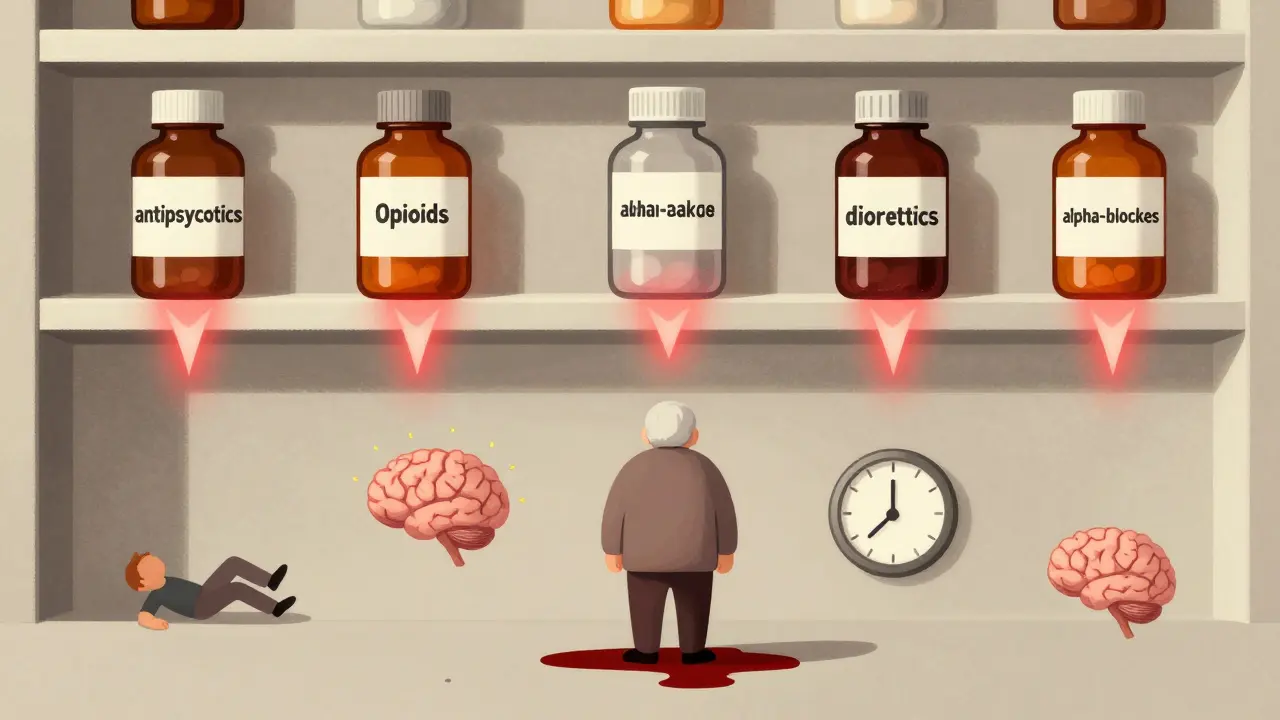
Not all drugs cause this. But some are notorious for it. Here are the top offenders, backed by clinical data:- Antipsychotics - Especially older ones like chlorpromazine and clozapine. Up to 40% of patients on high doses report dizziness when standing. Even newer ones like quetiapine can cause it in 20-30% of users.
- Opioids - Morphine, oxycodone, hydrocodone. About 15-25% of elderly patients on these drugs develop orthostatic hypotension. The risk jumps 2.3 times if they're also taking benzodiazepines or drinking alcohol.
- Tricyclic antidepressants - Drugs like amitriptyline and nortriptyline. Studies show they increase OH risk by over 3 times compared to other antidepressants.
- Alpha-blockers - Used for high blood pressure or prostate issues. Medications like doxazosin and terazosin are strong vasodilators. They can drop blood pressure so fast that standing up feels dangerous.
- Diuretics - Hydrochlorothiazide, furosemide. They reduce fluid volume. Less fluid in your blood vessels means less pressure to push blood to your brain when you stand.
- Levodopa - For Parkinson’s disease. Up to 50% of patients on levodopa develop orthostatic hypotension. It messes with the body’s natural ability to tighten blood vessels when upright.
- High blood pressure meds - ACE inhibitors, ARBs, calcium channel blockers. While they’re meant to lower blood pressure, sometimes they lower it too much - especially when combined with other drugs.
Here’s the hard truth: the more medications you take, the higher your risk. People on four or more drugs have over 5 times the risk of developing orthostatic hypotension compared to those on one or two. And if you’re over 70? Your risk triples.
Why Do These Drugs Cause Dizziness?
Your body normally adjusts when you stand. Sensors in your neck and chest detect the drop in blood pressure. Your heart beats faster. Blood vessels tighten. All of this keeps blood flowing to your brain.Medications disrupt this system in different ways:
- Blocking alpha receptors - Alpha-blockers and some antipsychotics stop your blood vessels from tightening. No constriction = low pressure.
- Lowering blood volume - Diuretics make you pee out fluid. Less fluid = less pressure.
- Slowing heart rate - Some drugs reduce heart response, so your heart doesn’t speed up enough.
- Depressing the nervous system - Opioids and sedatives blunt the signals from your brain that tell your body to react to standing.
The result? When you stand, your blood pools in your legs. Your brain gets starved. Dizziness. Blurred vision. Nausea. Sometimes, you pass out.
It’s Not Just Dizziness - The Real Dangers
People often think, “It’s just a little dizzy spell.” But the consequences are serious.- Falls - Patients with orthostatic hypotension have a 15-30% higher risk of falling. One fall can mean a hip fracture, hospitalization, or long-term disability.
- Cognitive decline - Repeated drops in blood flow to the brain may contribute to memory problems and dementia over time.
- Increased death risk - Studies show people with drug-induced orthostatic hypotension have a 24-32% higher risk of dying within 10 years, even after adjusting for other health issues.
- Delayed diagnosis - Nearly 55% of patients report symptoms for over two months before their doctor connects the dots between their meds and the dizziness.
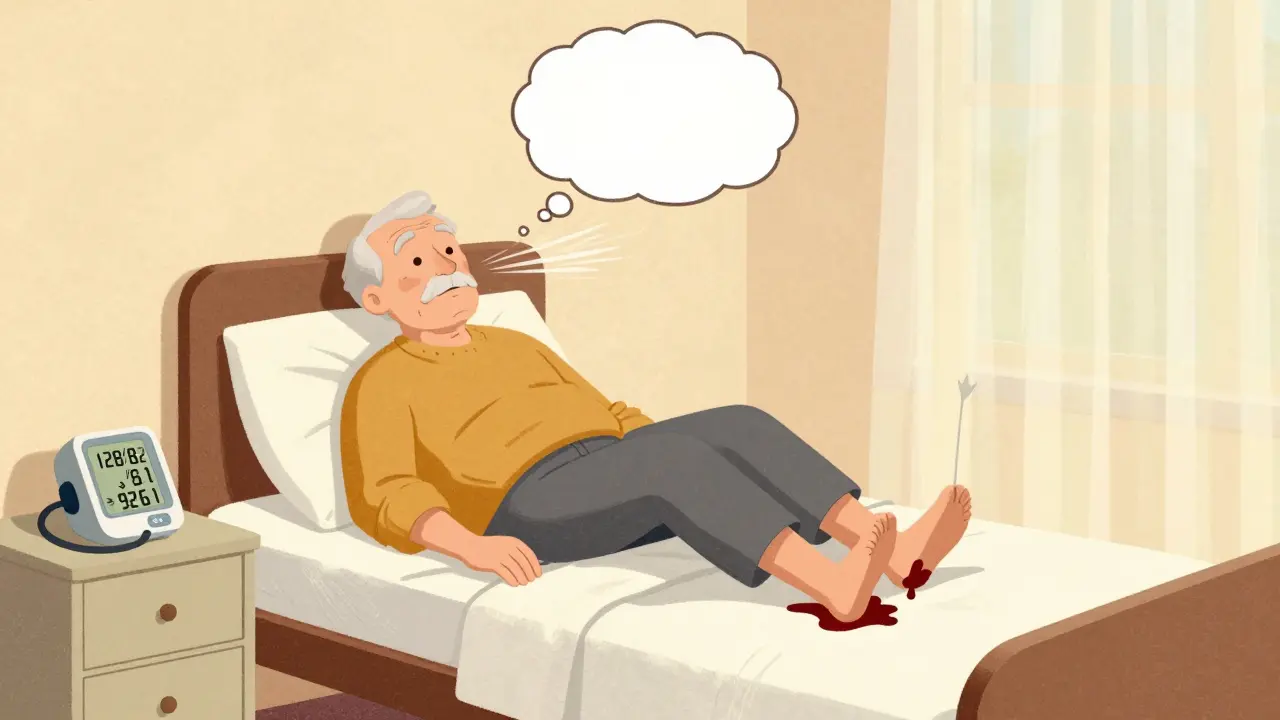
One patient on Reddit shared: “After starting quetiapine for anxiety, I fainted twice within three weeks. My blood pressure dropped from 128/82 to 92/61 in under two minutes.” That’s not normal. That’s a red flag.
How Doctors Diagnose It
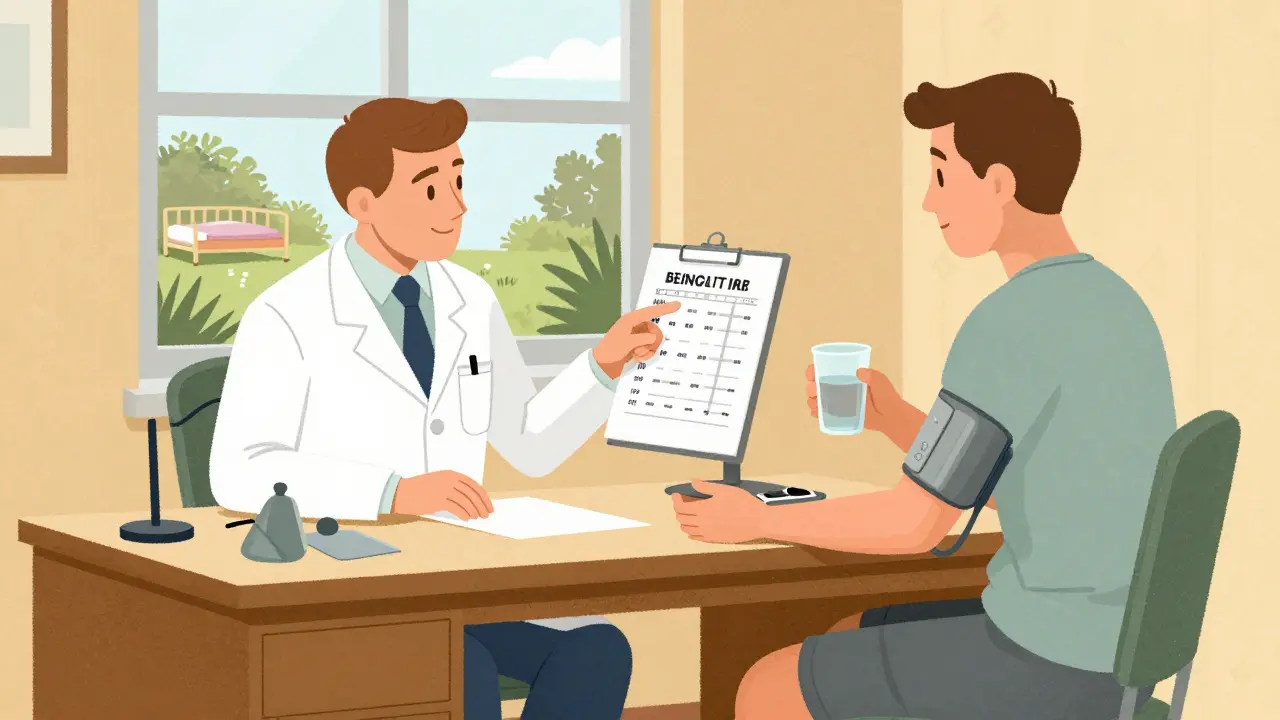
It’s simple - but often skipped. The standard test takes less than five minutes:- Have the patient lie down for five minutes.
- Measure blood pressure and heart rate.
- Have them stand up.
- Measure again at 1, 2, and 3 minutes.
If systolic pressure drops by 20 mm Hg or diastolic by 10 mm Hg - and the patient feels dizzy - it’s orthostatic hypotension. Many doctors don’t do this test unless symptoms are severe. But it should be routine for anyone over 65 on multiple medications.
And here’s a twist: up to 40% of people with orthostatic hypotension have no symptoms at all. That’s why it’s called a silent risk. You might not feel dizzy - but your body is still struggling to keep your brain fed.
What You Can Do - Without Stopping Your Meds
The good news? Medication-induced orthostatic hypotension is often reversible. You don’t have to suffer. Here’s what works:- Review your meds - Ask your doctor to review every pill you take. Can any be stopped? Lowered? Switched? For example, replacing a tricyclic antidepressant with an SSRI can cut OH risk in half.
- Change how you stand - Sit on the edge of the bed for a full minute before standing. Use a handrail. Don’t rush. Move slowly - even if you think you’re fine.
- Drink more water - Aim for 2 to 2.5 liters a day. Dehydration makes OH worse. A glass of water before standing can help.
- Wear compression stockings - These help squeeze blood back up from your legs. Not glamorous, but effective. Studies show they reduce dizziness by up to 60% in patients on multiple drugs.
- Elevate the head of your bed - Raising the head by 6-8 inches helps prevent overnight fluid shifts that worsen morning dizziness.
- Don’t skip meals - Eating causes blood to go to your gut. Standing right after a big meal can trigger dizziness. Wait 30 minutes after eating before standing.
One patient story: A 78-year-old woman on hydrochlorothiazide and lisinopril kept falling. Her doctor removed the diuretic. Within 72 hours, her dizziness was gone. No more falls. No new meds. Just a simple switch.
When Medication Adjustment Isn’t Enough
If lifestyle changes don’t help, your doctor might consider:- Midodrine - A medication that tightens blood vessels. It’s FDA-approved for orthostatic hypotension. Works in 65% of cases, but can cause high blood pressure when lying down.
- Fludrocortisone - Helps your body hold onto salt and water. Used less now due to side effects like swelling and heart strain.
But these are last-resort options. The real win? Prevention through smarter prescribing.
The Bigger Picture
This isn’t just about one person feeling dizzy. It’s a public health issue. In 2022, OH-related falls cost Medicare $31 billion. About 30-40% of those costs came from drug-induced cases. Since 2020, the FDA requires all new drugs with over 5% OH incidence to list it as a side effect. The American Geriatrics Society’s Beers Criteria now flags 12 high-risk medications for older adults.And the problem is growing. By 2040, over 80 million Americans will be 65 or older. That means more people on multiple drugs. More risk. More falls. More hospitalizations.
Doctors are starting to catch on. 82% of geriatric practices now screen for orthostatic hypotension routinely. But many primary care offices still don’t. If you’re on multiple medications and feel dizzy when standing - don’t wait. Ask for a blood pressure check while standing. It’s simple. It’s quick. And it could save your life.
Key Takeaways
- Orthostatic hypotension is a common, dangerous side effect of many medications - especially in older adults.
- Antipsychotics, opioids, tricyclic antidepressants, diuretics, and alpha-blockers are the biggest culprits.
- A drop of 20/10 mm Hg within three minutes of standing confirms the diagnosis.
- It increases fall risk by 15-30% and death risk by 24-32% over 10 years.
- Simple changes - drinking water, standing slowly, wearing compression stockings - can help a lot.
- Medication review is the most effective way to fix it. Often, you can reduce or replace the drug causing the problem.





Jhoantan Moreira
4 February 2026 - 12:52 PM
Been there, done that 😅 After starting quetiapine for anxiety, I’d nearly kiss the floor every time I got up. Took me 3 months to connect the dots. Now I sit for a full minute, drink water first, and wear those ugly compression socks. No more fainting. Life’s better when you don’t faceplant in the kitchen.
Also, shoutout to the doc who actually checked my BP standing up. Most just nod and say ‘you’re old.’
Geri Rogers
5 February 2026 - 07:08 AM
YEAH, AND THIS IS WHY MEDS AREN’T MAGIC BULLETS. I’M A PHARMACIST AND I SEE THIS DAILY. PEOPLE GET PRESCRIBED 6 DRUGS LIKE THEY’RE CANDY, THEN COMPLAIN THEY’RE ‘FEELING WEIRD.’
STOP BLAMING AGE. START BLAMING PRESCRIBING. THAT WOMAN WHO GOT OFF HYDROCHLOROTHIAZIDE? SHE’S THE WINNER. HER DOCTOR ACTUALLY LISTENED. WHY IS THAT SO RARE?
🩺 PRO TIP: IF YOU’RE ON 4+ MEDS AND GET DIZZY - ASK FOR A MEDICATION RECONCILIATION. NOT A ‘CHECKUP.’ A FULL REVIEW. DO IT NOW.
Janice Williams
5 February 2026 - 13:36 PM
It is, indeed, a lamentable state of affairs that the medical establishment continues to abdicate its responsibility to the elderly population by prescribing pharmacological regimens that are demonstrably hazardous. The normalization of polypharmacy in geriatric care represents a systemic failure of clinical judgment, and one that is exacerbated by patient complacency and a culture of pharmaceutical overreliance.
It is not merely ‘dizziness’ - it is iatrogenic hypoperfusion. The consequences are not anecdotal; they are statistically significant, and yet, physicians continue to dismiss these symptoms as ‘normal aging.’ This is malpractice disguised as compassion.
Rachel Kipps
7 February 2026 - 04:37 AM
i didnt know this was so common… my grandma keeps saying she feels lightheaded when she stands but i thought it was just old age. i’m gonna ask her dr to check her bp standing up. thanks for the info.
also, compression socks sound weird but i guess if they help…
Alex LaVey
7 February 2026 - 04:52 AM
As someone who’s helped care for my dad through his meds journey - this hits hard. He was on 7 drugs. Fainted twice. We thought it was just ‘getting old.’
Turns out? One diuretic, one beta-blocker, and an old-school antidepressant were the culprits. We cut two, switched one, and added water + compression socks. He’s walking without a cane now.
Doctors don’t always know this stuff. But YOU can ask. You can push. You can save someone’s dignity - and maybe their life.
Justin Fauth
8 February 2026 - 12:29 PM
AMERICA IS BEING POISONED BY BIG PHARMA AND LAZY DOCTORS. I’VE SEEN GRANDMAS FALLING IN WALKING CLINICS BECAUSE SOMEONE GAVE THEM OPIOIDS FOR A BACKACHE AND A DIURETIC FOR ‘FLUID.’
WE’RE NOT OLD - WE’RE OVERDRUGGED. AND THE SYSTEM WON’T FIX IT BECAUSE THEY MAKE MONEY OFF THE FALLS, THE HOSPITALS, THE REHAB.
STOP TAKING MEDS YOU DON’T NEED. ASK FOR A REVIEW. OR KEEP FALLING. YOUR CHOICE.
Meenal Khurana
9 February 2026 - 03:11 AM
Water and standing slow. That’s it.
Shelby Price
10 February 2026 - 08:28 AM
My mom’s on amitriptyline for nerve pain. She’s been dizzy for months. I never connected it. Now I’m printing this out and taking it to her next appointment. Maybe she doesn’t need that pill after all…
Also, the part about ‘silent’ OH is scary. What if she’s not even telling us she feels it?
Jesse Naidoo
12 February 2026 - 06:15 AM
So you’re saying if I’m on 5 meds and I feel like I’m gonna pass out when I get up… it’s not just me being weak? I thought I was just out of shape. I’m 52. Not 80. Is this really because of the meds? Or am I just a hypochondriac? I feel like everyone’s telling me I’m fine but I’m not fine. I’m scared.
Zachary French
13 February 2026 - 18:50 PM
Let me be crystal clear, because the medical-industrial complex has been gaslighting seniors for decades - this isn’t ‘dizziness.’ This is cerebral hypoperfusion induced by pharmaceutical negligence. The fact that you’re still standing means your autonomic nervous system is fighting a war it was never meant to win.
And if your doc hasn’t checked your orthostatic vitals? They’re not your doc. They’re a pill-dispenser. Demand a BP check - standing, sitting, lying down. Do it. Now. Your brain is starving.
Also - compression stockings are not ‘ugly.’ They’re tactical armor. Wear them with pride.
Daz Leonheart
14 February 2026 - 14:45 PM
I’ve been helping my mom with her meds for years. We cut the diuretic, added water, and started sitting up slow. She hasn’t fallen in 8 months. It’s not glamorous. It’s not a new pill. But it worked.
You don’t need to suffer. Ask for help. And if your doctor brushes you off - find a new one. Your life matters more than their 10-minute visit.