
If you have Meniere’s disease, you know how sudden vertigo attacks can turn your world upside down. The spinning, the ringing in your ears, the feeling of fullness - it’s not just annoying. It’s disabling. And while medications and injections are options, the most effective, safest, and most widely recommended first step is something you can start today: changing what you eat and drink.
Why Salt Is the Enemy in Meniere’s Disease
Meniere’s disease isn’t caused by an infection or a tumor. It’s a mystery, but one key clue is fluid buildup in the inner ear - called endolymphatic hydrops. This excess fluid puts pressure on delicate structures that control balance and hearing. And sodium? It’s the main driver of that fluid retention. Every time you eat salt, your body holds onto water to balance the sodium. That extra water doesn’t just swell your ankles - it swells the inner ear. The result? More vertigo, worse hearing, louder tinnitus. Research dating back to the 1920s first noticed this link. Today, every major medical group - from the American Academy of Otolaryngology to the British Ménière’s Society - agrees: reducing sodium is the foundation of treatment. The target? Between 1,500 and 2,000 milligrams of sodium per day. That’s less than one teaspoon of table salt. For comparison, the average American eats over 3,400 mg daily. Most of it isn’t from the salt shaker. It’s hidden in bread, canned soup, deli meats, frozen meals, and restaurant food. A 2024 study published in Acta Otolaryngologica followed 50 patients with moderate to severe Meniere’s. Those who cut sodium to 1,500 mg/day and drank 35 ml of water per kilogram of body weight (about 2.5 liters for a 70 kg person) saw:- A 12.3 dB improvement in hearing at key frequencies
- A drop in tinnitus severity from 58.7 to 32.4 on a standard scale
- A 54% reduction in dizziness handicap scores
- A 33% improvement in inner ear pressure markers
How Much Water Should You Drink? More Than You Think
You might think, “If salt makes me retain fluid, maybe I should drink less water.” That’s the opposite of what you should do. Dehydration triggers your body to hold onto even more sodium and water as a survival mechanism. That makes inner ear pressure worse. The goal isn’t to reduce total fluid - it’s to control sodium so your body doesn’t feel the need to hoard water. The 2024 study used a precise formula: 35 milliliters of water per kilogram of body weight. For a 150-pound person (68 kg), that’s about 2.4 liters daily. For a 200-pound person (91 kg), it’s nearly 3.2 liters. Spread it out. Don’t chug it all at once. Sip throughout the day. Avoid sugary drinks, caffeine, and alcohol - they disrupt fluid balance and can trigger attacks.What to Eat: A Simple Low-Sodium Guide
You don’t need to become a nutritionist. Just follow these rules:- Choose fresh over packaged. Fresh vegetables, fruits, lean meats, eggs, and plain rice or potatoes have almost no sodium.
- Read labels like a detective. Anything with more than 140 mg of sodium per serving is high. Look for “no salt added,” “unsalted,” or “low sodium.”
- Avoid processed meats. Bacon, ham, salami, hot dogs, and deli slices are sodium bombs. Even “low-fat” versions are loaded.
- Ditch the condiments. Ketchup, soy sauce, mustard, relish, and Worcestershire sauce pack 100-300 mg per tablespoon. Use fresh herbs, lemon juice, garlic, pepper, or salt-free spice blends instead.
- Cook without salt. Season with black pepper, paprika, cumin, rosemary, or chili flakes. You’ll be surprised how flavorful food becomes.
- Don’t eat out. Restaurant meals average 2,000-3,000 mg of sodium per dish. Even “healthy” salads can have 1,500 mg from dressings and croutons.
- Snack smart. Choose unsalted nuts, fresh fruit, plain popcorn, or rice cakes with no added salt.
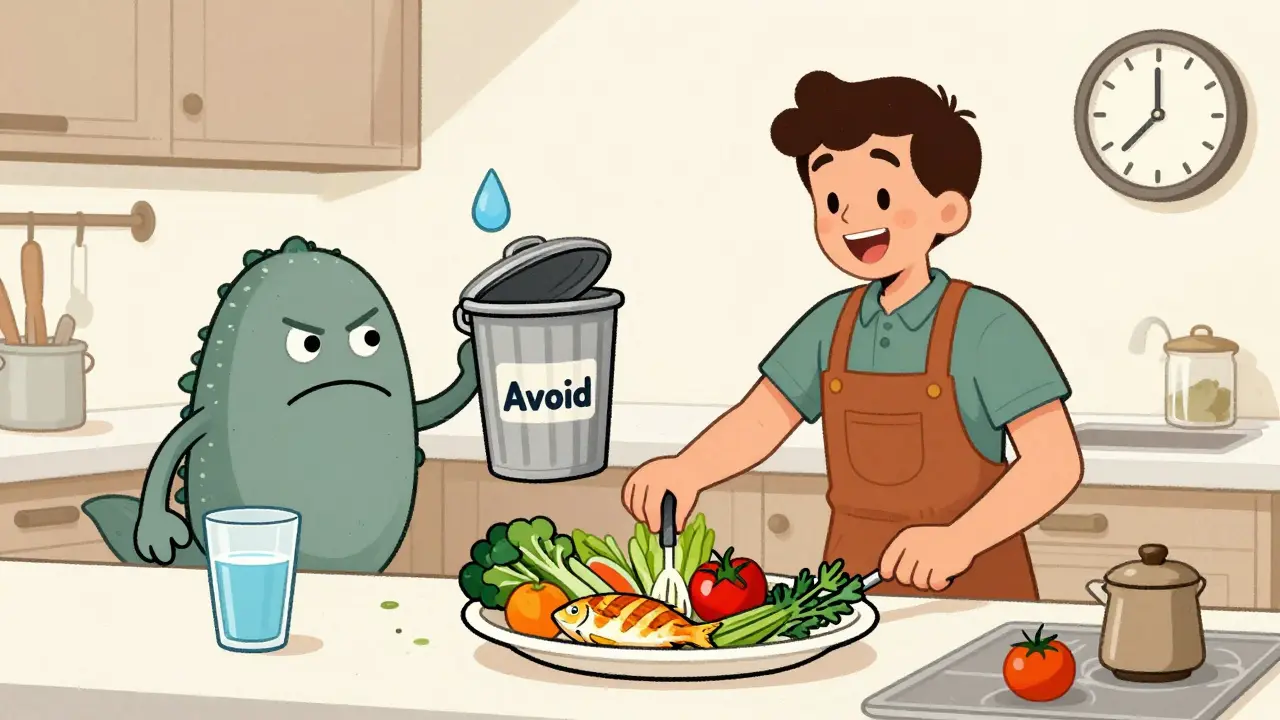
What to Avoid: Hidden Sodium Traps
Most people think they’re eating clean - until they check the label. Here’s where sodium hides:- Bread: One slice can have 150-250 mg. That’s half your daily limit before lunch.
- Canned vegetables: Even “no salt added” versions may have sodium in the liquid. Rinse them under water to remove 30-40% of the sodium.
- Instant soups and noodles: A single packet can contain over 1,000 mg.
- Pre-made sauces and dressings: Even “light” versions are often salt-heavy.
- Breakfast cereals: Some have more sodium than potato chips.
- Cheese: Processed cheese, parmesan, and feta are high. Stick to fresh mozzarella or cottage cheese labeled “low sodium.”
Why Diet Beats Pills - And When It’s Not Enough
Doctors often prescribe diuretics like hydrochlorothiazide to flush out fluid. But these drugs cause side effects: dizziness, muscle cramps, low potassium, kidney stones. They work for about 60% of people - but only while you take them. Dietary sodium restriction? It works for 68% of patients, according to Dr. Richard Miyashita’s research. And it doesn’t come with side effects. It’s free. You can do it forever. But diet isn’t magic. Some people still have attacks. That’s okay. Diet is the base layer - like wearing a seatbelt. You still need airbags for serious crashes. If diet and hydration don’t help enough, the next steps are:- Intratympanic steroid injections: Steroids injected into the middle ear reduce inflammation. 60-75% success rate. No hearing loss risk.
- Gentamicin injections: These destroy part of the balance nerve. 80-90% stop vertigo - but carry a 15-30% risk of permanent hearing loss.
- Surgery: Only for severe, uncontrolled cases. Options include endolymphatic sac decompression or vestibular nerve section.
Real-Life Challenges - And How to Beat Them
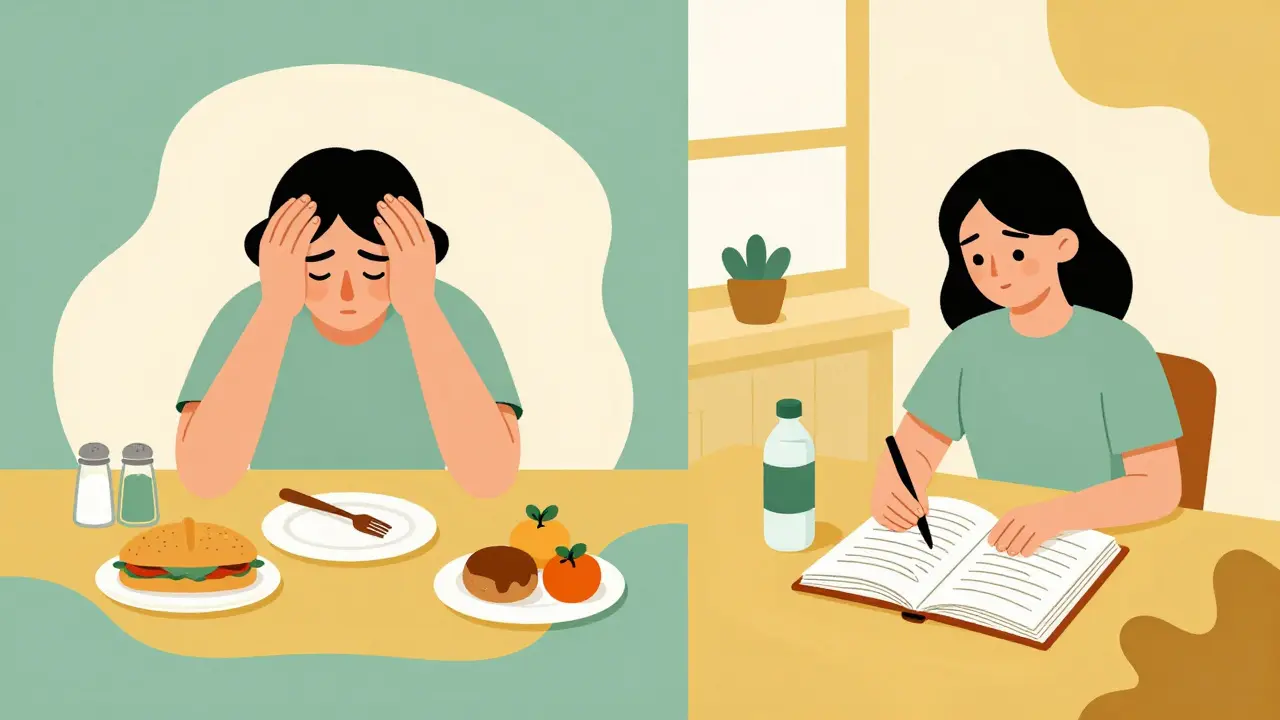
Changing your diet isn’t easy. You’ll face obstacles:- Food tastes bland at first. Your taste buds adapt in 2-4 weeks. Suddenly, you’ll notice how salty everything else tastes - and you’ll prefer your food without it.
- Dining out is hard. Call ahead. Ask for no salt. Request sauces on the side. Order grilled chicken or fish with steamed veggies. Most restaurants will accommodate you if you ask.
- Family meals feel awkward. Cook one meal with low sodium. Use herbs and spices to make it delicious. Your family might even prefer it.
- You forget to check labels. Keep a small notebook or use a free app like MyFitnessPal. Log your sodium intake daily for the first month. It’s eye-opening.
The Bottom Line: You Have Control
Meniere’s disease can feel like a storm you can’t stop. But here’s the truth: you can reduce the frequency and intensity of those storms - without drugs, without needles, without surgery. Start with sodium. Keep it under 2,000 mg a day. Shoot for 1,500 if you can. Drink water steadily all day. Avoid caffeine, alcohol, and processed foods. Give it 3 months. Track your attacks. Notice your hearing. Listen to your tinnitus. This isn’t a cure. But it’s the most powerful tool you have. And it’s one you control every single day.Can I ever eat salt again with Meniere’s disease?
You don’t need to eliminate salt forever, but you should treat it like a rare treat - not a daily habit. Occasional meals with moderate sodium won’t ruin your progress if you’re mostly low-sodium. But if you eat high-sodium food regularly, your symptoms will return. Think of it like diabetes: you can have dessert once in a while, but you can’t eat cake every day.
Is a low-sodium diet only for people with severe Meniere’s?
No. It’s recommended for everyone diagnosed with Meniere’s, regardless of severity. Even mild cases benefit. The goal isn’t just to stop vertigo - it’s to protect your hearing. Studies show hearing loss progresses slower in people who stick to low sodium. The earlier you start, the better your long-term outcomes.
Do I need to avoid all processed foods?
You don’t need to avoid them completely, but you must read labels. Some frozen vegetables, canned beans, and whole-grain breads have under 100 mg per serving. Rinse canned foods. Choose “no salt added” versions. If you can’t find a low-sodium option, skip it. Your inner ear can’t afford the risk.
Can drinking too much water make Meniere’s worse?
Only if you drink it all at once or have kidney problems. The goal is steady hydration - 35 ml per kg of body weight spread evenly over the day. Chugging 3 liters in an hour can cause temporary fluid shifts that trigger dizziness. Sip. Don’t gulp. If you’re unsure, ask your doctor about your ideal water intake.
How long does it take to see results from a low-sodium diet?
Some people feel better in 2-4 weeks. Others take 3-6 months. Hearing improvements often show up later than vertigo reduction. Keep a symptom journal. Track how many attacks you have each week. You’ll see the trend. Don’t quit before 3 months - your body needs time to reset its fluid balance.
Are there any supplements that help with Meniere’s?
No supplement has proven effectiveness in large, controlled studies. Some people try magnesium, vitamin D, or ginkgo biloba, but there’s no solid evidence they reduce attacks. Don’t waste money. Focus on sodium, water, and avoiding triggers like caffeine and stress. These are the only interventions with proven results.
Can I still drink coffee or alcohol?
Both can trigger attacks. Caffeine constricts blood vessels in the inner ear, reducing circulation. Alcohol causes dehydration and disrupts fluid balance. Many people find that eliminating both cuts their attack frequency in half. If you can’t quit completely, limit coffee to one small cup in the morning and avoid alcohol entirely.
What if my doctor doesn’t mention diet?
Many doctors focus on medications because they’re quicker to prescribe. But dietary management is the first-line recommendation in official clinical guidelines. Bring a printout of the 2020 American Academy of Otolaryngology guidelines or the 2024 Acta Otolaryngologica study to your next appointment. Ask: “Can we start with sodium restriction before moving to drugs?” Most will agree - especially if you’re motivated to try it.




Nancy Kou
21 December 2025 - 05:47 AM
This changed my life. I was having 3-4 vertigo attacks a week. After 6 weeks of sticking to under 1500mg sodium and sipping water all day, I had zero. Zero. I still can't believe it. No meds, no shots. Just food and water. I wish I'd known this 5 years ago.
Hussien SLeiman
23 December 2025 - 04:25 AM
Let me guess - you're one of those people who thinks salt is the root of all evil? Interesting how you ignore the fact that the entire premise of Meniere's being fluid-based is still theoretical. The inner ear's fluid dynamics are incredibly complex, and reducing sodium doesn't address neural adaptation, vascular compromise, or autoimmune triggers. You're promoting a simplistic, outdated model that ignores decades of neuro-otological research. The fact that this is even presented as 'first-line treatment' is embarrassing.
Lynsey Tyson
24 December 2025 - 19:17 PM
I get what you're saying, Hussien, but I've seen too many people improve with this approach to dismiss it. Even if it's not the whole story, why not try the low-risk, no-side-effect option first? I tried the diuretic - ended up with muscle cramps and dizziness worse than the Meniere's. This diet? I feel like I got my life back. Maybe it's not perfect, but it's the best thing I've found.
Edington Renwick
26 December 2025 - 13:18 PM
Oh please. You're all drinking water like it's holy water now. I've had Meniere's for 12 years. I've done the low-sodium thing. I've drunk 3 liters a day. I still got hit with a 3-day attack last month. You think this is a cure? It's a placebo with a grocery list. The real issue? Big Pharma doesn't profit from salt-free bread. So they let you think you're in control. You're not. You're just being manipulated by wellness influencers.
Sarah McQuillan
27 December 2025 - 18:02 PM
Wow. So you're saying the American Academy of Otolaryngology is just in on the scam? And the British Meniere's Society? And that 2024 study with 50 patients showing real, measurable improvements? You're not a skeptic - you're just mad because your diet is boring. Try adding lemon and garlic. It's not that hard.
Aboobakar Muhammedali
28 December 2025 - 07:29 AM
i read this and cried a little. my mom had menieres and she never knew about this. she just took pills until she lost her hearing. i started this last week. i drink water every hour. i read every label. i cooked chicken with just pepper and lime. it tastes so good. i dont feel like i have to suffer anymore. thank you for writing this
anthony funes gomez
30 December 2025 - 02:34 AM
While the sodium-hydration hypothesis is plausible within the framework of osmotic equilibrium and endolymphatic homeostasis, it remains a reductionist model that fails to account for the neurovascular coupling anomalies observed in functional MRI studies of the vestibular nucleus complex. The primary pathophysiological driver may be a dysregulated baroreceptor feedback loop, with sodium restriction serving as a secondary modulatory variable - not a root cause. That said, the clinical efficacy data is compelling enough to warrant first-line implementation pending further mechanistic elucidation.
Laura Hamill
31 December 2025 - 08:08 AM
THIS IS A GOVERNMENT COVER-UP. They don't want you to know that salt is actually a natural anti-viral and the real cause of Meniere's is 5G radiation messing with your inner ear fluid. The FDA and WHO are in cahoots with Big Salt. They banned the real cure - magnesium chloride drops - because it's too cheap. Drink sea salt water. It's the only way. 🌊💀
Alana Koerts
31 December 2025 - 13:41 PM
1500mg? That's unrealistic. And who tracks this? You're asking people to become nutritionists on top of dealing with vertigo. Also, the study had 50 people. That's not statistically significant. And where's the control group? This is anecdotal nonsense dressed up as science. I'm not falling for it.
Mark Able
1 January 2026 - 21:27 PM
Hey I'm trying this. But I work in a bakery. Every day I smell bread. I lick my fingers after handling dough. Is that bad? I don't eat it. Just... you know. Touching it. Does that count? I'm scared I'm sabotaging myself.
Chris Clark
2 January 2026 - 07:16 AM
As someone from India where we use a lot of salt in pickles and chutneys, this was eye-opening. I switched to lemon, mint, and roasted cumin powder. My uncle tried it after 20 years of Meniere's - no more spinning. He says his ears feel 'lighter'. Also, if you're in the US, Trader Joe's has amazing low-sodium spice blends. Try their 'No Salt Added' Everything Seasoning. Game changer.
Dorine Anthony
3 January 2026 - 04:48 AM
I'm 72. Been diagnosed since 2010. I started this diet 8 months ago. I haven't had a full attack since. My hearing is stable. My tinnitus is quieter. I still eat out once a month. I ask for no salt. They're used to it. This isn't magic. It's just… common sense. Why didn't my doctor just tell me this?
Dominic Suyo
4 January 2026 - 17:48 PM
Let’s be brutally honest - this isn’t medicine. It’s dietary asceticism masquerading as science. You’re replacing one form of medical authority (the pill-pushing doc) with another (the wellness guru with a spreadsheet). The fact that you’re celebrating not being medicated as some kind of victory suggests you’ve internalized the neoliberal myth that health is purely a personal responsibility. The real problem? Our food system is designed to make you sick. And now you’re blaming yourself for eating the poison they sold you. Pathetic.