When you take a pill, you expect it to work exactly as it should. But for some medications, even a tiny change in strength can be dangerous-maybe even deadly. These are called narrow therapeutic index (NTI) drugs. They’re not rare. In fact, they’re used every day to treat life-threatening conditions. And if they’re even slightly expired, the risk goes up fast.
What Makes a Drug Have a Narrow Therapeutic Index?
A narrow therapeutic index means the difference between the dose that helps you and the dose that hurts you is razor-thin. The FDA defines NTI drugs as those where small changes in blood concentration can cause serious harm-like blood clots, seizures, or heart failure. For most medications, a 20% drop in potency might just mean it’s a little less effective. For NTI drugs, that same drop could mean your treatment stops working entirely.
Take warfarin, for example. It’s used to prevent strokes in people with irregular heartbeats or artificial heart valves. The target blood level is so precise that doctors measure it with a test called INR. A normal range is 2.0 to 3.0. If your INR goes above 4.0, you risk dangerous bleeding. If it drops below 2.0, you could develop a clot. A 10% loss in warfarin’s potency after expiration could push your INR out of range-without you even noticing.
Other common NTI drugs include:
- Lithium (for bipolar disorder)
- Digoxin (for heart failure)
- Phenytoin (for seizures)
- Levothyroxine (for hypothyroidism)
- Carbamazepine (for epilepsy and nerve pain)
- Ciclosporin (for organ transplant patients)
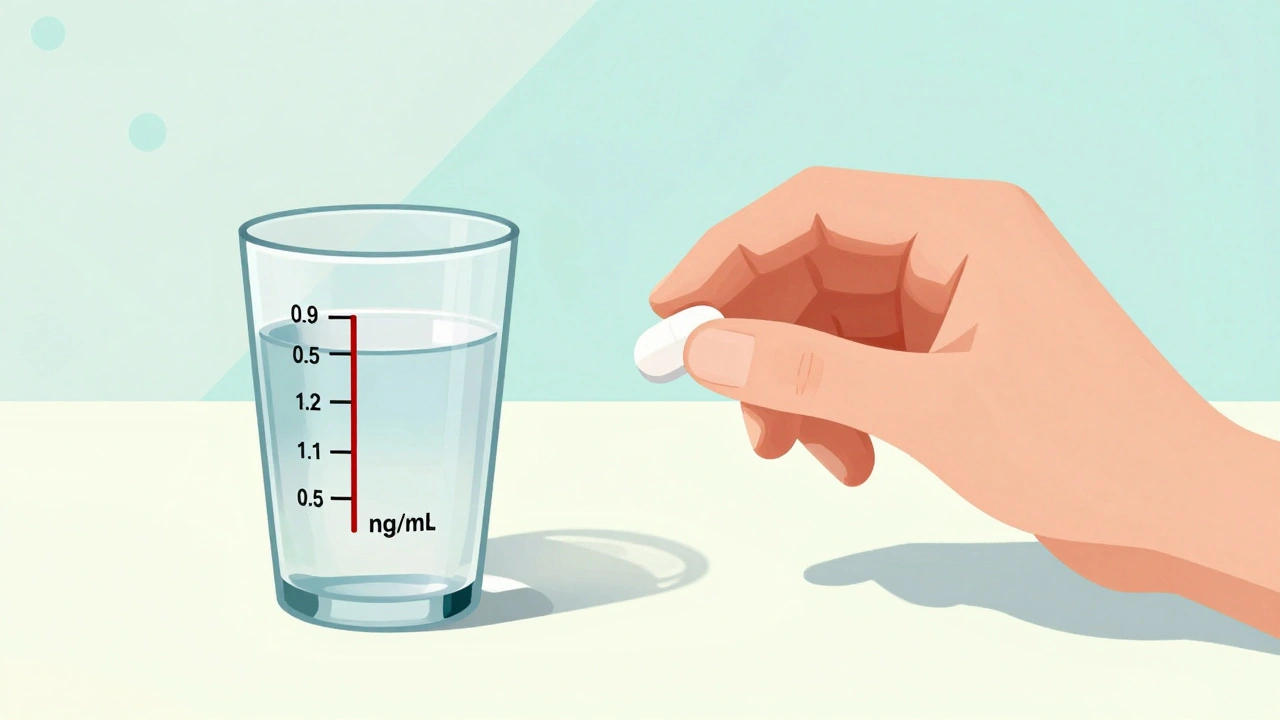
Each of these has a therapeutic window that’s often less than 2:1. That means the toxic level is barely higher than the effective level. For digoxin, the safe range is 0.5 to 0.9 ng/mL. Toxicity starts above 1.2 ng/mL. That’s only a 33% increase from the top of the safe zone to the danger zone.
Why Expiration Dates Aren’t Just Suggestions for NTI Drugs
Every medication has an expiration date. That’s not a marketing gimmick. It’s the last day the manufacturer guarantees the drug will work as labeled-under proper storage conditions. For most drugs, this means at least 90% potency. But for NTI drugs, even 5% degradation can be critical.
The FDA requires generic versions of NTI drugs to meet stricter bioequivalence standards than regular drugs. While most generics must be 80-125% as potent as the brand name, NTI drugs must fall within 90-111%. That’s a much tighter range. Why? Because small differences matter. If a tablet loses 5% of its strength after expiration, it’s now outside that 90% lower limit. It’s no longer considered bioequivalent. And if your body absorbs it differently because of age or storage, the risk multiplies.
Think of it like this: You’re driving a car that only works if your foot is on the gas pedal between 1.5 and 2.5 inches. If the pedal gets stiff or worn down-even a little-you might press too lightly and stall, or press too hard and crash. That’s what happens with expired NTI drugs. Your body doesn’t know the difference. It just reacts to what’s in your bloodstream.
What Happens When NTI Drugs Expire?
Most medications don’t suddenly turn toxic when they expire. But NTI drugs are different because of how sensitive their effects are.
For example:
- Warfarin: Degradation can reduce anticoagulant effect. A patient with a mechanical heart valve might develop a clot without warning.
- Lithium: Even a small drop in blood levels can trigger a return of manic or depressive episodes. Patients often don’t notice the change until it’s severe.
- Levothyroxine: A 10% loss in potency can cause fatigue, weight gain, or worsening depression. In older adults, this can mimic aging-but it’s entirely drug-related.
- Digoxin: If potency drops, heart failure symptoms return. If it increases (due to unpredictable degradation), you risk fatal arrhythmias.
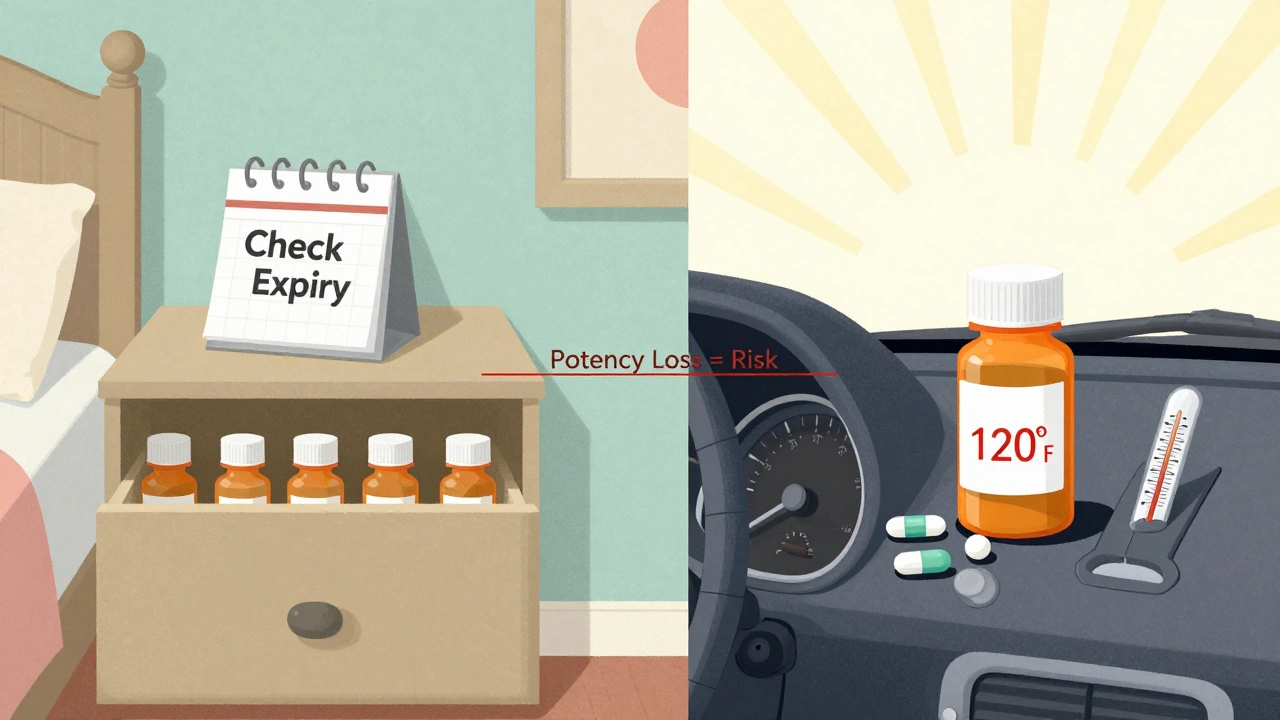
There’s also the issue of storage. NTI drugs are often sensitive to heat, moisture, and light. A bottle left in a bathroom cabinet or a hot car can degrade faster than expected. The label says “store at room temperature,” but “room temperature” can mean 68°F to 77°F. In Calgary, winters are cold, but summer heat in a car can easily hit 120°F. That’s enough to speed up chemical breakdown.

Why Pharmacists Are Especially Cautious
Pharmacists know the risks. The North Carolina Board of Pharmacy and the Institute for Safe Medication Practices classify NTI drugs as high-alert medications. That means they require extra checks-double verification, patient counseling, and sometimes even barcode scanning before dispensing.
One study found that 67% of pharmacists feel extra caution is needed when switching brands or generics of warfarin. That’s because even small formulation differences can affect absorption. Now imagine that same drug is also expired. The combination of formulation change and potency loss creates a perfect storm.
Many pharmacies won’t dispense expired NTI drugs-even if they’re only a month past the date. Some hospitals have policies that automatically discard any NTI medication past its expiration, no exceptions. That’s not overcaution. That’s based on real clinical consequences.
What Patients Should Do
If you take any NTI medication, here’s what you need to do:
- Never use expired NTI drugs. Even if they look fine. Even if they’re only a week past the date.
- Store them properly. Keep them in a cool, dry place-not the bathroom, not the car, not a sunlit windowsill. A bedroom drawer is better.
- Check your supply every 3 months. Set a reminder on your phone. If your prescription is due in 60 days, don’t wait until day 59 to refill.
- Ask your pharmacist. If you’re unsure whether your medication is still good, ask. They can tell you if it’s an NTI drug and what the risks are.
- Don’t share or reuse. Your dose is tailored to you. Someone else’s leftover pills-even if they’re the same name-could be dangerous.
Many people think, “It’s just a pill. It’s probably still okay.” But with NTI drugs, “probably” isn’t good enough. There’s no room for guesswork.
What’s Being Done About It?
Regulators are starting to pay attention. The FDA now requires replicate bioequivalence studies for four key NTI drugs: tacrolimus, phenytoin, levothyroxine, and carbamazepine. That means manufacturers must prove their generic versions are extremely consistent-within ±11% of the brand name, not ±25%.
Some pharmaceutical companies are now testing stability beyond the labeled expiration date for NTI drugs. One study found that 78% of major manufacturers now do extended stability testing for these critical medications. But that doesn’t mean it’s safe to use them past the date on the bottle. Those tests are for internal quality control, not patient use.
Professional groups like the American Pharmacists Association are pushing for clearer labeling on NTI drugs-maybe even warning stickers or special packaging. But until then, the burden is on you.
Bottom Line: When It Comes to NTI Drugs, Don’t Risk It
Medications with a narrow therapeutic index aren’t just “stronger” drugs. They’re precision tools. One milligram too much or too little can change your outcome. Expiration dates exist to protect you-not because companies want to sell more pills, but because science says potency declines over time.
For most drugs, using something a few months past expiration might be harmless. For NTI drugs, it’s not worth the gamble. Your life isn’t a lab experiment. You don’t get a second chance if the drug fails.
If you take warfarin, lithium, digoxin, or any other NTI medication, treat it like a loaded gun. Handle it carefully. Store it right. Replace it on time. And never, ever use an expired one.
Are all generic drugs unsafe if they’re expired?
No-not all generic drugs are risky when expired. Most medications lose potency slowly and safely. But for narrow therapeutic index (NTI) drugs like warfarin, lithium, or digoxin, even small changes in strength can be dangerous. The issue isn’t the brand or generic status-it’s the drug’s inherent sensitivity. If it’s an NTI drug, expiration matters. If it’s not, the risk is much lower.
Can I tell if my NTI medication has gone bad by looking at it?
Not reliably. NTI drugs often look, smell, and taste the same even after they’ve degraded. A tablet might not change color or crack, and a liquid might not cloud up. The chemical breakdown happens at a molecular level. You can’t see it. That’s why expiration dates exist-to tell you when the manufacturer can no longer guarantee safety or effectiveness.
What should I do if I accidentally took an expired NTI drug?
If you took a single dose of an expired NTI drug, don’t panic-but don’t ignore it either. Contact your pharmacist or doctor right away. They’ll ask what drug it was, how long past expiration it was, and whether you’ve noticed any new symptoms. For drugs like warfarin or digoxin, they may want to run a blood test to check your levels. It’s better to be safe than sorry.
Why aren’t expiration dates longer for NTI drugs if they’re so important?
Expiration dates aren’t set based on how long the drug lasts-they’re set based on how long the manufacturer has tested it. Most drugs are tested for 2-3 years. Extending that requires expensive, long-term stability studies. For NTI drugs, the risk is so high that manufacturers don’t push expiration dates further. They’d rather replace the drug than risk patient harm.
Is it safe to use NTI drugs that were stored in the fridge?
Only if the label says to. Some NTI drugs, like certain injectables or liquids, require refrigeration. But most pills-like levothyroxine or carbamazepine-should be kept at room temperature. Refrigerating them can cause moisture buildup, which degrades the tablet coating and affects absorption. Always follow the storage instructions on the bottle.
Next Steps: Protect Yourself
Make a list of all your medications. Highlight any that are known NTI drugs. Set calendar reminders to check their expiration dates every three months. When you refill, ask your pharmacist: “Is this an NTI drug?” If they hesitate, ask again. You deserve to know.
If you’re caring for someone who takes one of these drugs, help them manage their supply. Keep a backup in a cool, dry place. Don’t wait until the last minute. And if you ever feel unsure-don’t guess. Call your doctor. Call your pharmacist. Your life depends on the right dose.




Louis Llaine
7 December 2025 - 10:57 AM
So let me get this straight - I’m supposed to throw out my $20 warfarin pill because it’s 3 weeks past the date, but I’ll keep eating that expired salsa from the back of the fridge? 🤦♂️
Kyle Oksten
7 December 2025 - 20:51 PM
The real issue isn’t expiration dates - it’s the systemic failure to educate patients on pharmacokinetics. NTI drugs aren’t ‘special’ because they’re dangerous; they’re dangerous because we treat them like ordinary pills. The body doesn’t care about labels - it responds to concentration gradients. If we want safety, we need real-time therapeutic monitoring, not just calendar checks. This isn’t about fear. It’s about precision medicine being treated like a suggestion.
Sam Mathew Cheriyan
9 December 2025 - 15:26 PM
lol i heard the gov't makes these dates up so pharma can sell more pills 😏 my cousin took his digoxin 2 years past exp and he’s still alive - probably the FDA is just scared of competition. also i store all my meds in the glovebox, it’s ‘room temp’ right? 🤓
Ernie Blevins
11 December 2025 - 14:09 PM
you’re all overthinking this. pills don’t work anymore after the date. period. if you’re lazy to refill, that’s your problem. stop pretending you’re a scientist. just take your damn pills on time or die. simple.
Nancy Carlsen
11 December 2025 - 18:01 PM
This is so important!! 💪 I just got my levothyroxine refilled and I set a reminder to check the date every 3 months 📅✨ You’re not just taking a pill - you’re protecting your whole life. So proud of you for learning this!! 🌟❤️
Jennifer Anderson
12 December 2025 - 21:39 PM
i never realized how much i take for granted until i read this. my mom takes lithium and i always thought ‘eh, it’s probably fine’. not anymore. gonna help her organize her meds this weekend. thanks for this 🙏
Kyle Flores
14 December 2025 - 07:18 AM
I’ve been on carbamazepine for 12 years. I used to keep it in the bathroom till I read this. Now it’s in a sealed container in my nightstand. Small change. Huge difference. If you’re on an NTI drug, treat it like your life depends on it - because it does. 🙏
Ryan Sullivan
14 December 2025 - 07:28 AM
The entire NTI paradigm exposes the fragility of modern pharmacoeconomics. Manufacturers are incentivized to maximize shelf-life profitability, yet regulatory frameworks remain archaic. Bioequivalence thresholds are statistically arbitrary when applied to clinical outcomes. This is not a patient education problem - it is a structural failure of risk governance. The FDA’s 90–111% window is a mathematical illusion masking systemic vulnerability.
Olivia Hand
15 December 2025 - 19:48 PM
Interesting. But if 78% of manufacturers do extended stability testing, why isn’t that data public? If the drug is still potent at 5 years, shouldn’t we be able to know? Or is this another case of ‘trust us, we’re the experts’ without transparency?
Desmond Khoo
16 December 2025 - 21:30 PM
My grandma takes levothyroxine and I made her a little chart with expiration dates and emoji alerts 🚨📅. She laughs but she follows it now. You don’t need to be a doctor to keep someone safe - just care enough to check. 💙
Jane Quitain
18 December 2025 - 02:32 AM
omg i just realized i had warfarin in my purse all summer 😭 i’m so sorry i didn’t know better but now i’m gonna be better! thank you for this post!!
Helen Maples
18 December 2025 - 17:06 PM
Correction: The FDA does not require generics to be 90–111% bioequivalent for all NTI drugs - only for specific ones under the FDA’s NTI Drug Products Guidance. This is a critical distinction. Misrepresenting regulatory standards undermines trust. Always verify the specific drug’s requirements - not generalizations. Your life depends on accuracy, not assumptions.