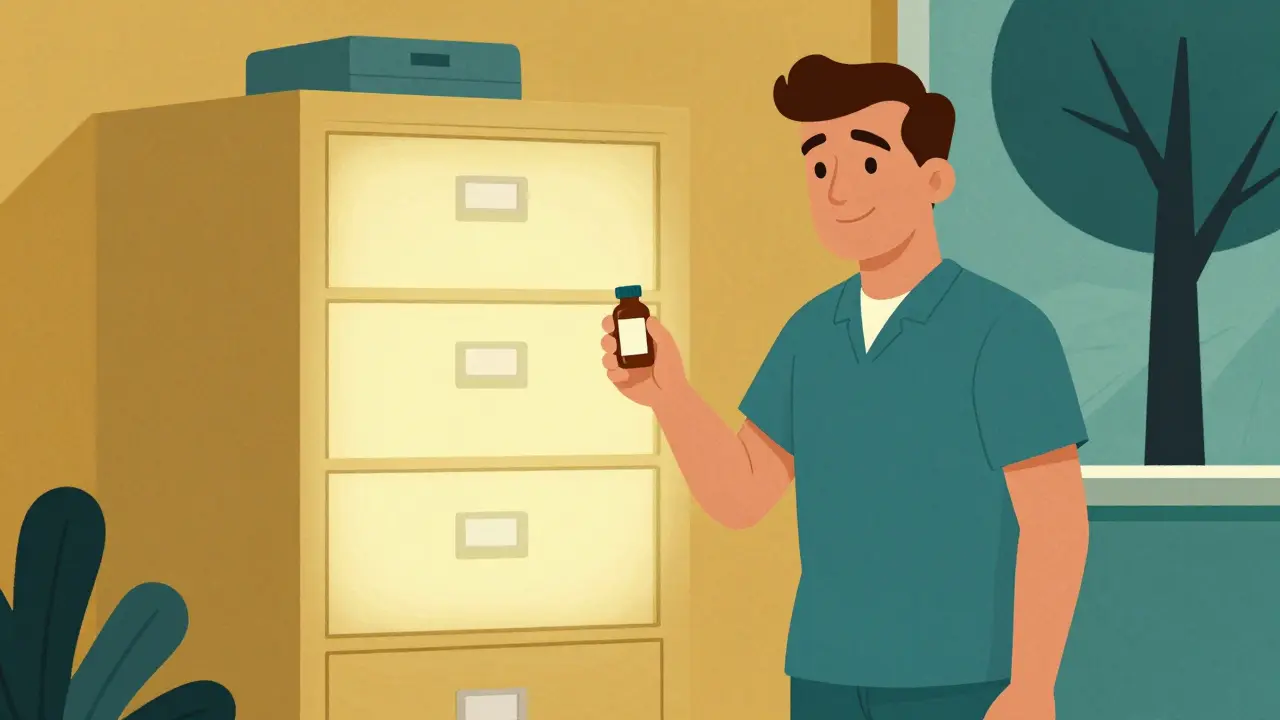
You might be taking a medication that saved your life, yet still carries risks you never saw in a standard doctor’s office visit. That’s exactly where Patient Registries come in. While clinical trials check if a drug works in a controlled environment, these registries track how it performs out in the real world. They are vital for catching rare or long-term side effects that smaller studies simply miss. If your healthcare provider mentions joining a registry, you are being asked to contribute data that could make future treatments safer for everyone, including yourself.
Many people feel intimidated by the word "registry," assuming it involves invasive testing or weeks of paperwork. The reality is much simpler. Some take less than ten minutes to sign up, while others track your progress over decades. Understanding your options helps you decide whether participation makes sense for your situation. In this guide, we’ll walk through exactly how these systems work, which ones might require your involvement, and how you can protect your privacy while contributing.
What Is a Patient Registry for Drug Safety?
To understand your role, you first need to know what the system actually does. A Drug Safety Registryis an organized system that uses observational study methods to collect uniform clinical and demographic data to evaluate specified outcomes related to medication safety and effectiveness. Think of it as a long-term logbook. Instead of giving you a sugar pill to compare against a drug, researchers simply watch what happens when you take the medicine alongside your normal life.
The modern concept really took off in the 1990s when regulators realized that initial testing doesn't always predict how a drug behaves after years of use. The FDAUnited States Food and Drug Administration, a federal agency responsible for protecting public health by ensuring safety of human food and drugs, among other products. expanded its focus on post-marketing surveillance significantly with the 2007 Amendments Act. Now, registries cover everything from cancer medications to common heart drugs. For example, the FDA Center for Devices and Radiological Health alone has requested roughly 160 post-approval studies since 2005, many relying on these registries to check real-world effectiveness.
Different registries serve different purposes. Disease registries track everyone with a specific condition, regardless of treatment. Product registries focus only on people taking a specific medication. Then there are exposure registries, which monitor patients who encountered a specific environmental or medical factor. Knowing which type applies to you clarifies the commitment level. A product-specific registry usually means you must stay on that exact drug to remain eligible, whereas a disease registry allows you to switch treatments while still providing valuable context.
Is Participation Required or Voluntary?
This is often the first question patients ask, and the answer depends entirely on the medication in question. As of late 2023, the FDA identified 47 drugs with mandatory registry requirements. This means you literally cannot access the medication unless you enroll. This model accounts for about 37% of safety monitoring programs for high-risk medications. The goal isn’t bureaucracy; it’s safety.
Take Clozapine as a prime example. Because this antipsychotic carries a risk of agranulocytosis (a dangerous drop in white blood cells), a mandatory registry monitors blood counts. The UK Clozapine Consensus Group reported 98.7% enrollment compliance among eligible patients in 2020. Similarly, the Tysabri (natalizumab) registry achieved 98.4% enrollment because of restricted distribution requirements.
However, not all registries are forced. Many rely on voluntary sign-ups. The National Organization for Rare Disorders (NORD) Registry Program is a good example, achieving 73.2% enrollment rates in 2022 among patients approached by doctors. Voluntary registries excel at capturing broader populations, which is great for general safety trends. But there is a catch: voluntary participants tend to be younger and healthier than non-enrolled patients, which can skew data slightly. If your drug falls into a mandatory category, you don’t have a choice, but you do have rights regarding how your data is handled.
| Type | Enrollment Rate | Data Completeness | Primary Goal |
|---|---|---|---|
| Mandatory | 95-99% | Lower (78.6%) | Risk Mitigation |
| Voluntary | 60-75% | Higher (92.4%) | Broad Safety Trends |
How to Find and Join a Relevant Registry
If you suspect a registry might be appropriate for your treatment, finding it doesn’t have to be a maze. The most direct route is checking with the prescribing physician, as they are often required to inform you of mandatory programs. However, if you want to investigate proactively, several public directories exist.
ClinicalTrials.gov serves as a comprehensive directory listing thousands of active registries. As of November 2023, it listed 2,843 active patient registries. You can search specifically for keywords like “safety monitoring” or “post-marketing” to filter results. Another powerful tool is the FDA Drugs@FDA Database, updated weekly, which lists the specific registries required for approved medications. If you live outside the US, the European Medicines Agency (EMA) maintains a similar infrastructure called the EU PAS Register.
Patient advocacy organizations are also invaluable allies. Groups like the National Organization for Rare Disorders connect patients with disease-specific databases. For instance, the Cystic Fibrosis Foundation Patient Registry demonstrates superior data completeness because the community is highly engaged. The median time to onboard into these advocacy-driven registries is just 15-20 minutes for the initial setup.

What Happens After You Sign Up?
Once you agree to participate, the actual experience varies based on the registry’s technical design. Simple registries might only send you an annual survey to confirm your current status. More complex ones integrate directly with Electronic Health Records (EHR). Systems linked to EHRs show 23.5% higher data completeness because the computer pulls your lab results automatically rather than asking you to fill out a form every three months.
You should expect to read a consent form before starting. These documents typically range from 1,800 to 2,500 words and explain how your information will be stored and used. Don’t be afraid to ask for a plain-language summary. The consent process is crucial because, even though the registry belongs to a pharmaceutical company or academic institution, the laws protecting your data remain strict.
Maintaining engagement is the biggest hurdle. On average, registry participants stay involved for about 2.7 years before dropping out. Annual dropout rates hover around 18.7%. To keep retention high, many organizers use automated reminders, patient newsletters, or even transportation assistance for in-person visits. You are likely to receive regular updates on what the data is showing, which can be empowering. For example, participants in the Hunter Syndrome Family Registry reported that tracking tools helped them have 63.1% more productive conversations with their providers.
Data Privacy and Your Rights
One of the top reasons patients decline registration is fear for their personal information. A 2022 survey found that 41.2% of non-participants cited privacy and data security as their primary concern. It is a valid worry, but modern registries have robust protections.
Registries subject to FDA oversight must comply with 21 CFR Part 11 standards for electronic records. This includes strict controls on who can view your data and how it moves across networks. Furthermore, if you are in the European Union, your data is protected under the General Data Protection Regulation (GDPR), which gives you the right to request deletion of your records in many contexts. Even in North America, de-identification practices mean your name is stripped from the dataset before analysis. Researchers see statistics, not names.
The trade-off is significant. By contributing, you help identify patterns that save lives. Without real-world data, rare adverse events might go unnoticed for years until a major tragedy occurs. If you are worried about specific security measures, ask the registry coordinator about encryption protocols and who exactly has access to the raw files. Transparency builds trust, and reputable registries welcome these questions.

Trends Shaping Future Participation
By 2026, the landscape has shifted toward patient-controlled data sharing. Platforms like MyDataCan now let individuals manage access to their registry data across multiple studies simultaneously. The FDA’s MyStudies app released version 3.1 in July 2023 and has enabled hundreds of thousands of users to submit data directly through smartphones. This shift reduces the administrative burden on patients, moving from paper-based logs to digital integration.
We are also seeing a push toward standardization. The International Council for Harmonisation (ICH) expects to finalize guidelines that could standardize nearly 78% of current registry data elements across borders soon. This means you could potentially share safety data that is usable both in Canada and the United States without redundant paperwork. Blockchain technology is also piloting in some areas to enhance security, showing 92.3% acceptance in recent trials.
The market value for patient registries grew to $1.27 billion in 2023, projecting to reach $2.84 billion by 2028. This growth reflects a growing understanding that clinical trials represent only about 10-15% of a drug’s lifecycle. The remaining 85-90% happens in the real world. By participating, you become part of the essential infrastructure that ensures long-term medication safety.
Frequently Asked Questions
Do I get paid to participate in a drug safety registry?
Most drug safety registries do not offer monetary compensation to patients. Unlike clinical trials, which may pay participants for time and inconvenience, registries focus on passive observation of real-world usage. Some may reimburse travel costs or provide small gift cards for completing surveys, but financial gain is rarely the incentive.
Can I withdraw from a registry if I change my mind?
Yes, participation is generally voluntary after the initial agreement, even in mandatory access scenarios. You can stop submitting data at any time. In mandatory drug access registries, withdrawing might affect your eligibility to continue receiving the medication, so clarify this policy during the consent process.
Who sees my medical data in these registries?
Your data is shared with the registry operator, sponsors, and regulatory bodies like the FDA or Health Canada. However, your identity is usually separated from the clinical data before analysis. Researchers analyze aggregated trends, not individual patient profiles. You can ask for the list of authorized parties in the privacy notice.
Will joining a registry give me better healthcare access?
It may not guarantee better care directly, but it provides detailed longitudinal tracking of your health metrics. Participants often report feeling more informed about their conditions and having better conversations with providers due to the data available. Some disease-specific registries offer educational support and community connections.
What if I move to a different province or country?
Most large registries accommodate international movement, especially those managed by multinational companies or organizations like NORD. You should notify the registry coordinator immediately of address changes. In some cases, you may transfer to a local partner site to continue providing data consistently.





Dan Stoof
31 March 2026 - 12:23 PM
The evolution of medical oversight feels absolutely fantastic right now! 🌟 We are truly entering a golden era of pharmaceutical transparency where every life matters more than profit margins! Seeing real-world efficacy tracking ensures we aren't just guessing anymore in the lab! Patients finally get the power back through data access tools! It is incredibly inspiring to see such dedication to safety protocols!!
Christopher Curcio
31 March 2026 - 19:57 PM
The longitudinal observational endpoints are critical for pharmacovigilance algorithms especially regarding off-label adverse event clustering mechanisms.
Debbie Fradin
2 April 2026 - 15:44 PM
Another way to harvest our biological data for Big Pharma's quarterly reports how delightful indeed.
William Rhodes
3 April 2026 - 12:00 PM
Stop worrying about privacy and start caring about saving lives you selfish individuals need to step up for the collective good immediately.
Angel Ahumada
3 April 2026 - 12:52 PM
One must consider the epistemological implications of mandated surveillance yet most ignore the subtle socio-economical stratification inherent in these systems. Truly
Calvin H
4 April 2026 - 03:01 AM
Great theory until they actually try to enforce it lol.
Ruth Wambui
5 April 2026 - 13:49 PM
They say safety but its just another node in the global health grid watch your back folks the digital footprint never deletes itself.
Beccy Smart
7 April 2026 - 08:25 AM
Hope this helps everyone 😊💪 but really people stop ignoring their duties for society 🛑
Rick Jackson
8 April 2026 - 13:18 PM
Balance between contribution and rights seems reasonable here
Vikash Ranjan
9 April 2026 - 02:18 AM
Actually the US model fails compared to EU standards regarding consent protocols so don't get comfortable here.
RONALD FOWLER
10 April 2026 - 23:05 PM
just sign up if you want the meds end of story
Biraju Shah
12 April 2026 - 22:55 PM
Privacy laws are solid enough dont let fear dictate your healthcare decisions just verify the encryption standards yourself.
Carolyn Kask
14 April 2026 - 17:44 PM
You clearly missed the nuances regarding FDA jurisdiction versus international bodies when we talk about data sovereignty in 2026 specifically. Our system prioritizes patient safety above all bureaucratic hurdles that foreign nations struggle with constantly. I have reviewed the compliance documents myself and they are far more robust than what Europe currently offers to their citizens. People claim privacy concerns without understanding the strict de-identification protocols embedded in the code now. The GDPR might sound appealing but it lacks the enforcement teeth that our domestic agencies possess today. We see constant violations in other regions that do not happen within our borders due to legal accountability. It is essential to recognize the value of contributing data to our national health infrastructure without hesitation. Every single participant strengthens the collective shield against future pandemics or drug failures significantly. Those who refuse are often acting out of misplaced fear rather than any genuine evidence of risk involved. Historical data shows higher survival rates in cohorts utilizing these mandated safety checks effectively. International observers simply do not appreciate the scale of our medical innovation engine driving these changes forward. We should focus on maintaining our lead in pharmaceutical safety science globally instead of hesitating. The technology stack utilized by these registries is proprietary to us and highly secure from external threats. Citizens ought to understand their civic duty in maintaining such high standards for public health security everywhere. Ultimately the American framework remains superior for public safety outcomes despite the criticism from overseas observers who cannot comprehend the regulatory depth.