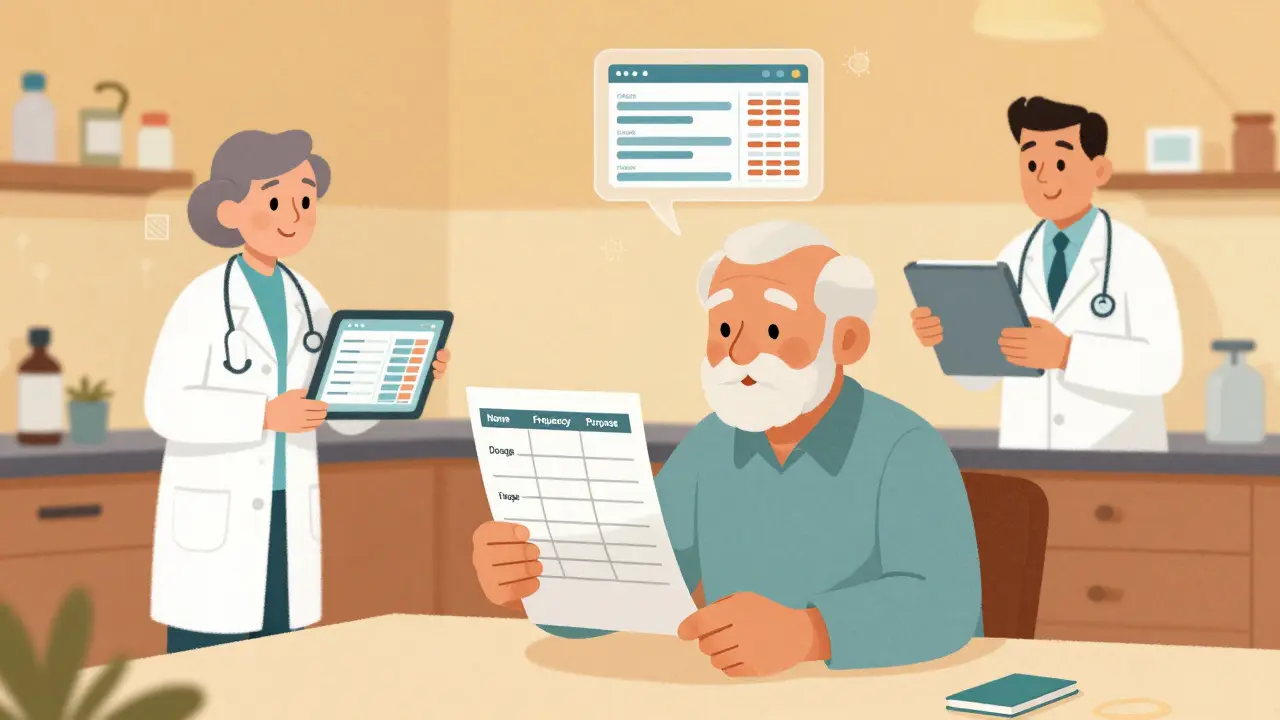
Managing medications gets complicated fast when you see more than one doctor. Maybe you’ve got a primary care provider, a cardiologist, a rheumatologist, and a pharmacist-all prescribing or adjusting drugs. But here’s the problem: they might not be talking to each other. And that’s where dangerous mistakes happen.
In 2023, nearly 70% of patients seeing three or more providers experienced at least one medication-related error. That’s not rare. That’s normal in today’s fragmented system. One specialist adds a new painkiller. Another prescribes a blood thinner. No one checks if they clash. The result? ER visits, hospital stays, even deaths that could’ve been avoided.
Why Medication Communication Breaks Down
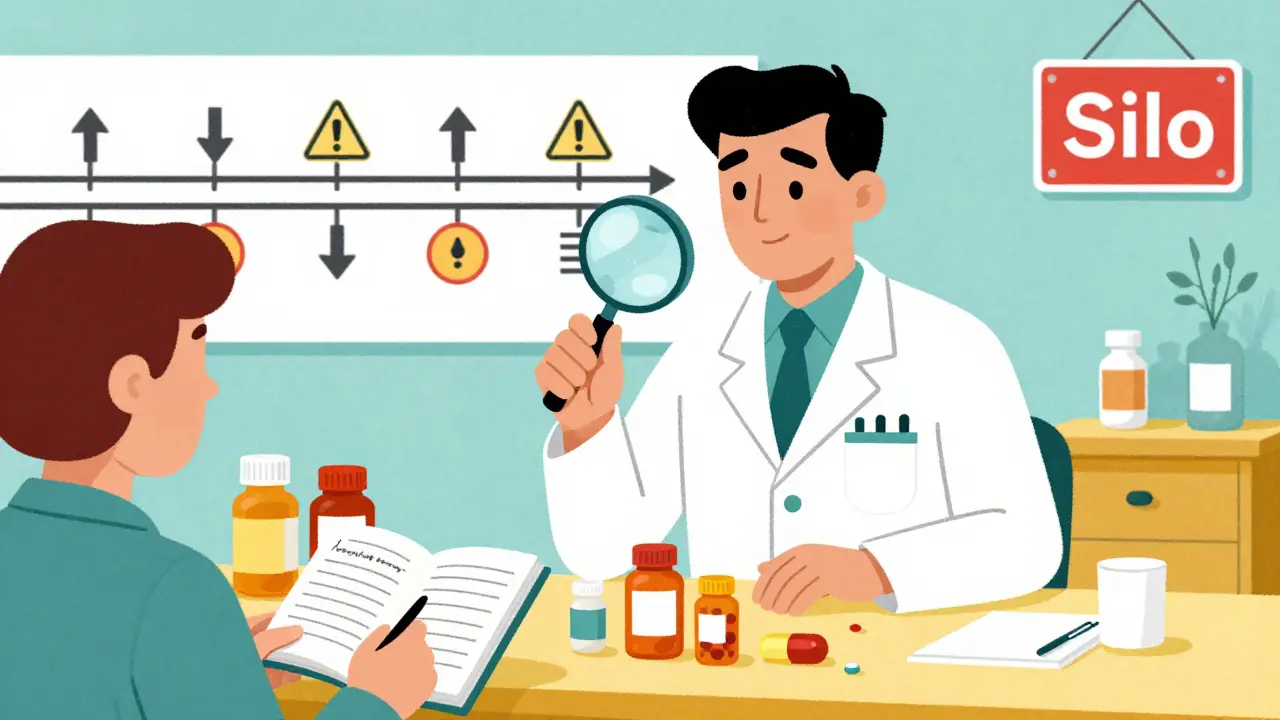
It’s not that doctors are careless. It’s that the system is broken. Electronic health records (EHRs) were supposed to fix this. But most systems don’t talk to each other. A doctor in one hospital can’t see what a specialist at another clinic prescribed. Pharmacists often don’t get updates until the patient walks in with a new bottle.
Studies show that 57% of patients say specialists change their meds without telling their primary care doctor. And 83% of patients assume their providers are sharing info-when they’re not. This isn’t negligence. It’s structural. Healthcare is split into silos. Each provider focuses on their piece, not the whole picture.
Worse, patients are left to be the glue. You’re expected to remember every pill, every dose, every side effect-and then explain it all to each new provider. No wonder 58% of elderly patients feel overwhelmed managing their meds.
The Four Essential Elements of a Medication List
Here’s the simplest, most powerful tool you can use: a clear, updated medication list. Not a scribble on a napkin. Not a note in your phone. A real list with four key pieces of info for every drug:
- Name-both brand and generic (e.g., Lisinopril, not just "blood pressure pill")
- Dosage-how much (e.g., 10 mg, not "one pill")
- Frequency-how often (e.g., once daily at bedtime, not "take as needed")
- Purpose-why you’re taking it (e.g., "for high blood pressure," not "for my heart")
Update this list every time a med is added, changed, or stopped. Keep a printed copy in your wallet and a digital version on your phone. Bring it to every appointment-even if you think they already have it. Providers rarely pull up the full history unless you hand it to them.
Patients who use this method reduce medication errors by 37%, according to Tulane University’s 2023 research. It’s not fancy. It’s just basic.
Who Should Be on Your Medication Team
You’re not alone in this. There are people who can help-but you have to ask them to step in.
Pharmacists are your secret weapon. They’re trained to spot interactions, duplications, and dosing issues. Yet most people only see them when they pick up a prescription. That’s too late. Ask your pharmacist to review all your meds-prescription, over-the-counter, and supplements-at least once a year. Clinical pharmacists involved in care teams boost medication adherence by 32% and patient confidence by 63%.
Your primary care provider should be the quarterback. They’re the only one who sees your full history. Make sure they’re aware of every specialist visit. If a specialist changes something, ask them to send a summary to your PCP. If they don’t, do it yourself.
Nurses and care coordinators in ACOs (Accountable Care Organizations) or Medicare Advantage plans often handle this work. If you’re enrolled in one, ask who your care coordinator is. They’re paid to prevent these exact problems.
How to Make Sure Providers Actually Talk
Don’t wait for them to communicate. Force the conversation.
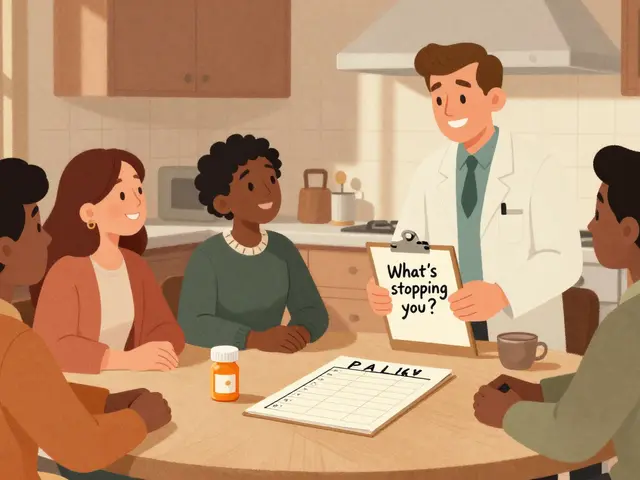
At every appointment, say this: "I’m seeing other providers about my health. Can you please confirm you have my full medication list? And can you let me know if you’re changing anything so I can tell my other doctors?"
Use the Teach-Back Method: After they explain a new med, say, "Just to make sure I got it right-you’re saying I take this twice a day with food because it helps with my joint pain, right?" Studies show this cuts misunderstandings by 45%.
Ask for written summaries after specialist visits. Don’t assume the referral letter is enough. Many don’t include updated meds. Request a printed or emailed summary that lists changes.
For complex cases, ask if your care team offers a medication reconciliation service. This is a formal process where someone reviews all your meds at transitions-like after a hospital stay. It’s required in new CMS programs, but you still have to ask for it.
Track What Matters Beyond the Pills
Side effects aren’t always obvious. A new drug might make you dizzy, tired, or moody. But if you don’t track it, you’ll forget to mention it.
Keep a simple health journal. Just a notebook or a note app. Write down:
- Any new symptoms (headaches, nausea, swelling)
- Changes in sleep, appetite, or mood
- Missed doses or skipped pills
- Over-the-counter meds or supplements you took
Patients who track this have 22% fewer adverse drug events, according to UCSF. You don’t need to be perfect. Just write one line a day. When you go to your next appointment, bring it. It’s gold.
What Works: Real Cases
One Medicare beneficiary in Ohio saw five different specialists. Each added a new drug. She started feeling faint and confused. Her PCP didn’t know what was going on. Then she asked her pharmacist to do a full review. They found five dangerous interactions-two of them could’ve caused a stroke. The pharmacist called each provider, coordinated changes, and within two weeks, she felt like herself again.
An ACO in Minnesota saved a patient from a "prescribing cascade"-where one drug causes a side effect, so another drug is added to fix it, and then another to fix that. The care team caught the chain before it spiraled. They cut three unnecessary meds and saved the patient from months of confusion.
These aren’t miracles. They’re results of someone taking charge.

What Doesn’t Work: The Myths
Myth: "My doctors all use the same system so they can see everything."
Reality: Only 38% of providers can access full medication histories across different systems. EHRs are still broken.
Myth: "I’ll remember what I’m taking."
Reality: The average patient takes 7-8 medications. Memory fails. Even doctors forget.
Myth: "The pharmacist will catch it."
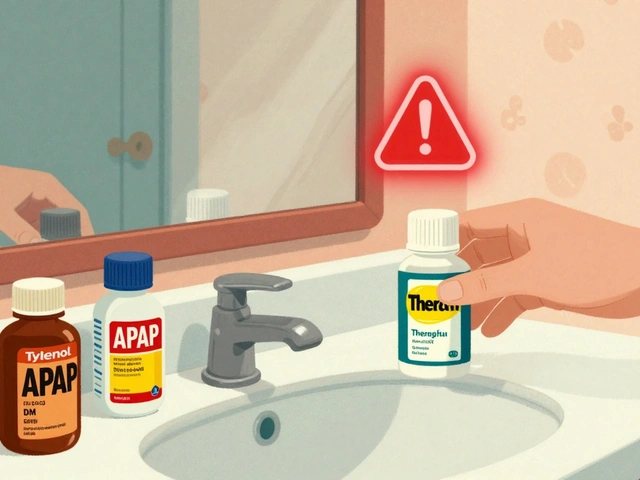
Reality: Pharmacists only see what’s in front of them. If you don’t tell them about a new med from another doctor, they can’t help.
Myth: "I don’t need to say anything-I’m not causing problems."
Reality: If you don’t speak up, no one will fix it. You’re the only one who sees the whole picture.
Where Things Are Heading
There’s progress. The 21st Century Cures Act demanded better EHR sharing. AI tools are now scanning records in seconds to find drug conflicts. By 2025, 78% of independent pharmacies will offer formal medication therapy management.
But none of that matters if you don’t act today. The systems are improving-but not fast enough. The responsibility still falls on you.
Every time you update your list, ask a question, or bring your journal, you’re not just being organized. You’re saving your life.
Start Today: Your 5-Minute Action Plan
- Open your phone or grab a notebook. Write down every medication you’re taking-prescription, OTC, vitamins, herbs.
- For each one, add: name, dose, frequency, purpose.
- Print it. Save it on your phone. Give a copy to your primary care provider.
- Next time you see any provider, say: "Can you check this list and let me know if anything needs to change?"
- Ask your pharmacist to review your meds in the next month.
You don’t need to fix the system. Just fix your piece of it. Do this, and you’ll be ahead of 90% of patients.




jonathan soba
29 January 2026 - 20:36 PM
Let’s be real - this list is just another corporate wellness pamphlet dressed up as life advice. You think handing a piece of paper to a doctor who’s rushing between 12 patients in 8 minutes is going to change anything? The system doesn’t care if you live or die. It cares about billing codes. Your 'medication reconciliation' is a checkbox. Your journal? A footnote. You’re not saving your life - you’re performing obedience for a machine that’s already decided you’re disposable.
And don’t get me started on pharmacists 'being your secret weapon.' They’re overworked, underpaid, and legally barred from changing anything without a doctor’s signature. You think they’re gonna call five specialists on your behalf? Please. They’re just scanning barcodes and hoping you don’t ask why your blood pressure med costs $400.
This isn’t empowerment. It’s gaslighting with bullet points.
matthew martin
30 January 2026 - 15:06 PM
Okay, I’m gonna say something radical: this post is the closest thing to a survival manual we’ve got in this dumpster fire of a healthcare system.
I used to be the guy who just shrugged and said, 'They know better than me.' Then my grandma ended up in the ER because three docs prescribed her three different anticoagulants and no one checked. She didn’t even know what they were for. She just trusted them.
After that, I made her a laminated card - name, dose, frequency, purpose - and forced every specialist to sign off on it. We didn’t fix the system. We just hacked it. And guess what? She’s still here, two years later, walking her dog every morning.
You don’t need a revolution. You need a pen, a printer, and the guts to say, 'Wait - I’m not just a case number.'
Do the damn list. It’s not glamorous. But it’s armor.
Chris Urdilas
31 January 2026 - 05:18 AM
So let me get this straight - the entire U.S. healthcare system is built on the assumption that patients are their own personal pharmacists, data clerks, and communication liaisons… and we’re supposed to be grateful for a 5-minute action plan?
Look, I get it. The advice is solid. The list? Brilliant. The teach-back method? Genius.
But here’s the punchline: this entire post is basically a TED Talk disguised as a Reddit post, and the real message is: 'You’re on your own, buddy - good luck!'
Meanwhile, the guy who wrote this probably has a care coordinator on speed dial and a nurse who texts him reminders. Meanwhile, I’m calling my PCP’s office at 6:45 AM because the automated system says 'Your call is important to us' - and then hangs up.
So yeah. Do the list. But also scream into the void. Someone needs to burn this system down and start over.
Also - I printed mine on neon yellow paper. It’s now taped to my fridge. My cat judges me daily. Worth it.
Irebami Soyinka
31 January 2026 - 09:54 AM
Y’all in America think this is bad? 😂 In Nigeria, we don’t even have EHRs - we have aunties who remember your meds because they’ve seen you since you were a baby.
My uncle takes 11 pills a day. His sister writes them down in a notebook with a red pen. When he goes to the clinic, she walks in with it. No app. No printer. Just trust, memory, and Nigerian stubbornness.
You think you’re overwhelmed? Try explaining to a doctor why you’re taking 'that white pill from the big pharmacy' and 'that green one from the roadside guy who speaks Igbo.'
Stop romanticizing your laminated cards. We’ve been doing this with duct tape and prayer for decades. Your 'system' is the problem - not your memory.
Also - why are you all so quiet about how insurance companies block meds? 😭
doug b
1 February 2026 - 21:01 PM
Just do the list. Seriously.
I was skeptical too. Thought it was extra work. Then I forgot to tell my cardiologist about the new ibuprofen I started for my back. He doubled my blood thinner. I almost bled out in the shower.
Now I update the list every Sunday night. I keep it in my wallet. I hand it to every provider. I don’t care if they roll their eyes. I’ve got my life to protect.
You don’t need to fix the system. Just protect yourself. One list at a time.
Do it. Now.
Mindee Coulter
3 February 2026 - 04:27 AM
I started doing this after my mom had a bad reaction and I realized I couldn’t even tell you what she was on without checking her pill organizer. Now I have a shared Google Doc with my whole family. We update it together. It’s not perfect but it’s something. My dad even prints a copy for his doctor now. Small wins.
Rhiannon Bosse
4 February 2026 - 18:38 PM
Okay but what if the list gets stolen? 🤔
What if your phone dies? What if your printer is hacked by Big Pharma? What if your 'care coordinator' is actually a data broker selling your med history to insurers so they can deny you coverage later?
I’ve seen the documentaries. The EHRs are monitored. Your 'medication journal' is being scraped by AI to predict your 'health risk score.' They’re not helping you - they’re profiling you.
And don’t even get me started on the fact that the '5-minute action plan' is just a corporate wellness product disguised as empowerment. They want you to think you’re in control so you stop demanding real change.
Meanwhile, my cousin’s brother died because his meds weren’t reconciled after a hospital stay. No one apologized. No one got fired.
So yeah. Make the list. But also protest. And maybe burn a copy of your insurance card. Just saying.
❤️ #MedicationRebellion
James Dwyer
5 February 2026 - 19:14 PM
This is the most practical thing I’ve read all year. I’m not a medical expert, but I know this: if you don’t take charge, no one else will. I’ve been using the list for six months. My anxiety dropped because I stopped feeling like a burden. I’m not fixing the system - I’m just not letting it break me.
Do the list. Bring it. Say the words. You’ve got this.