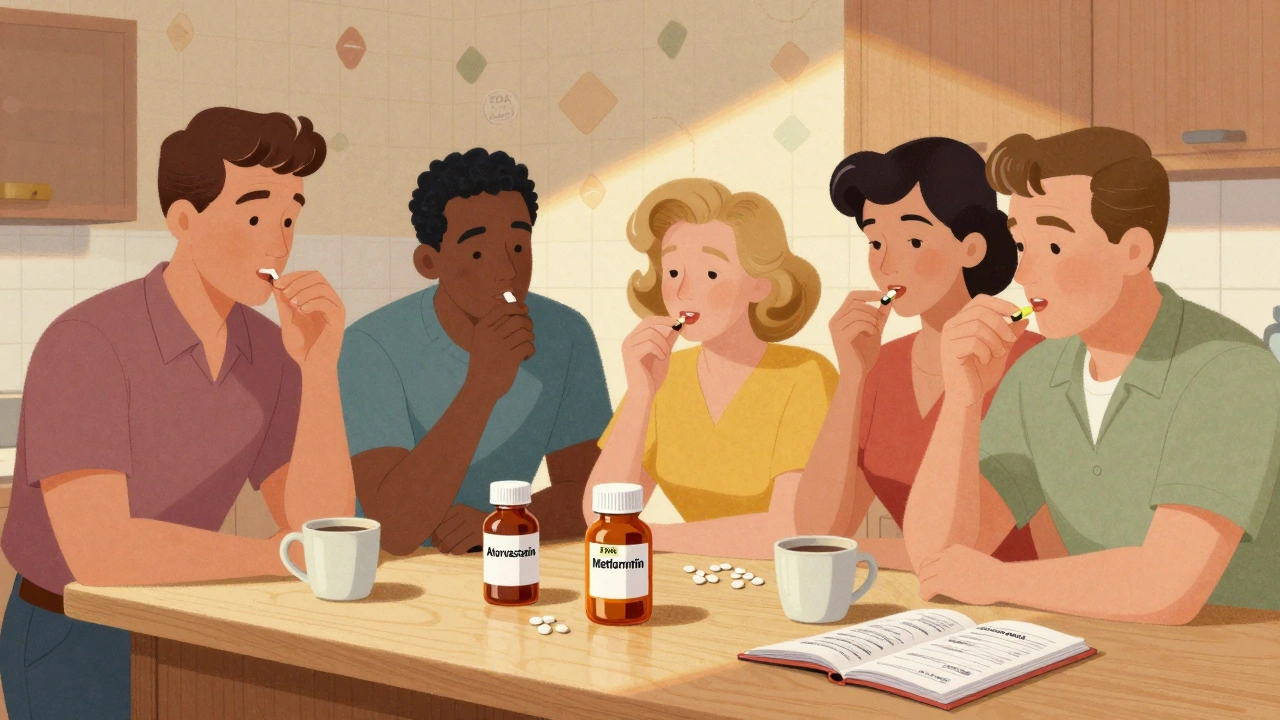
For millions of people managing chronic conditions like high blood pressure, diabetes, or hypothyroidism, switching from a brand-name medication to a generic version isn’t just a cost-saving move-it’s often the only way to keep taking the medicine they need. But when your health depends on daily pills, the idea of switching can bring up real fears: Will it still work? Will I feel worse? What if my symptoms come back? The truth is, for most people, generics work just as well. But not everyone has the same experience. Here’s how to make the switch safely, what to watch for, and when to speak up.
What Exactly Are Maintenance Medications?
Maintenance medications are the daily or weekly drugs you take long-term to control chronic illnesses. These aren’t for quick fixes. They’re for life. Think of them like a car’s oil change-you don’t skip it, or things break down. Common examples include:- Atorvastatin (for high cholesterol)
- Metformin (for type 2 diabetes)
- Levothyroxine (for underactive thyroid)
- Lisinopril (for high blood pressure)
- Sertraline (for depression)
- Albuterol inhalers (for asthma)
These drugs are taken every day, sometimes for decades. And they’re expensive-especially the brand names. Lipitor (atorvastatin) used to cost over $375 for a 30-day supply. Now, the generic version? As low as $0.99 at many pharmacies. That’s not a typo. That’s the difference between paying out of pocket and being able to afford your medicine month after month.
Why Generics Are Just as Effective (Most of the Time)
The U.S. Food and Drug Administration (FDA) doesn’t approve generics lightly. To be sold as a generic, a drug must meet strict standards:- Same active ingredient
- Same strength and dosage form (tablet, capsule, etc.)
- Same way it’s taken (by mouth, injection, inhaler)
- Same rate and amount of absorption into your bloodstream
This last point is called bioequivalence. It means your body gets the same amount of medicine in the same amount of time as the brand name. The FDA requires the generic’s absorption to fall within 80-125% of the brand’s. That’s not a wide gap-it’s a tight, scientifically proven range. In fact, 90% of all prescriptions filled in the U.S. are for generics. And for 85% of chronic condition treatments, generics are the standard.
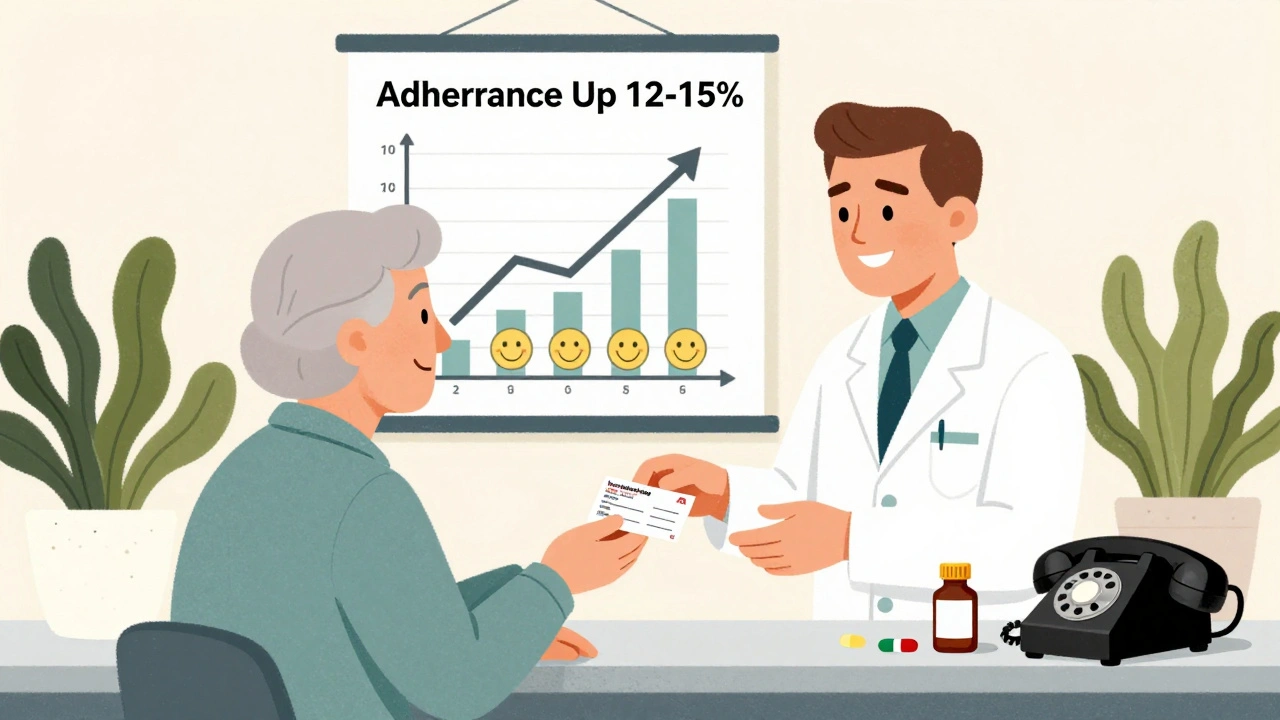
Studies show people on generics are actually more likely to stick with their treatment. Why? Because they can afford it. One study in the American Journal of Managed Care found that switching to generics led to 12-15% higher adherence and 23% fewer hospital visits for complications. That’s not just saving money-it’s saving health.
When Generics Might Cause Trouble
Not all drugs are created equal when it comes to switching. Some have what’s called a narrow therapeutic index. That means the difference between the right dose and a harmful one is tiny. Even small changes in how the drug is absorbed can cause problems. These include:- Levothyroxine (for thyroid disease)
- Warfarin (a blood thinner)
- Phenytoin (for seizures)
For these, switching between different generic brands-even if they’re both FDA-approved-can cause fluctuations. A 2021 study in the Journal of Managed Care & Specialty Pharmacy found that 1-3% of patients needed to stay on brand-name versions to keep their condition stable. For levothyroxine, the Endocrine Society reports that 5-8% of patients see changes in their TSH levels after switching manufacturers. That’s not common, but it’s real.
One Reddit thread with over 140 comments from people who switched from Synthroid to generic levothyroxine showed 63% reported feeling worse-fatigue, brain fog, weight gain. The other 37% said they felt fine. The difference? Often, it’s the inactive ingredients-fillers, dyes, coatings-that can affect people with sensitivities. For some, it’s a small change in the pill’s shape or coating that makes it harder to swallow. For others, it’s a dye that triggers mild allergic reactions.
What to Do When You Switch
If your pharmacy switches your medication to a generic, don’t panic. But don’t ignore it either. Here’s what to do:- Ask your pharmacist: “Is this the same generic I’ve been taking?” If it’s a new manufacturer, note the name on the bottle.
- Track your symptoms: Use a simple notebook or the FDA’s free Medication Tracker app. Write down how you feel-energy, mood, sleep, pain, heart rate-daily for the first 30 days.
- Don’t assume it’s all in your head: If you feel different, it’s not imaginary. Some people genuinely react to changes in inactive ingredients.
- Give it time: Most people adjust within 2-4 weeks. If symptoms persist beyond 6 weeks, talk to your doctor.
- Request consistency: If you find a generic brand that works, ask your pharmacy to stick with it. Some states now require pharmacies to use the same manufacturer unless you or your doctor asks for a change.
For people with asthma or COPD using inhalers, the American Lung Association recommends working with a respiratory therapist during the switch. Sometimes, the problem isn’t the drug-it’s the technique. A new inhaler design can feel different, making you think the medicine isn’t working.
Insurance, Costs, and Getting Brand-Name When You Need It
Most insurance plans automatically switch you to generics. Blue Cross Blue Shield of Kansas, for example, requires generics for all maintenance drugs unless your doctor proves it’s medically necessary. Getting a brand-name drug approved usually means:- Two failed attempts with generics
- Documentation of side effects or lab changes
- Written justification from your doctor
Approval rates for brand-name maintenance drugs are under 14%. But there are exceptions. If you’re on levothyroxine and your TSH levels start to swing, your doctor can request a prior authorization to stay on one brand. Same with warfarin-some patients need the same generic every time to keep their INR stable.
Thanks to the Inflation Reduction Act of 2022, Medicare beneficiaries now pay no more than $35 per month for insulin-whether it’s brand, biosimilar, or generic. That’s helped push even more people toward affordable options.
What Experts Say
Dr. Aaron Kesselheim, a Harvard Medical School professor and FDA advisor, says: “For the vast majority of maintenance medications, generics are therapeutically equivalent and represent a tremendous value.” The American College of Physicians agrees, estimating that switching to generics saves patients $1,200 a year if they have multiple chronic conditions.But Dr. Elizabeth Pearce, past president of the American Thyroid Association, is clear: “For levothyroxine, patients stabilized on a specific brand should maintain that product.” She’s not against generics-she’s against unnecessary switches in sensitive cases.
The bottom line? Generics are safe and effective for most people. But medicine isn’t one-size-fits-all. Your body might respond differently than your neighbor’s.
Real Stories, Real Results
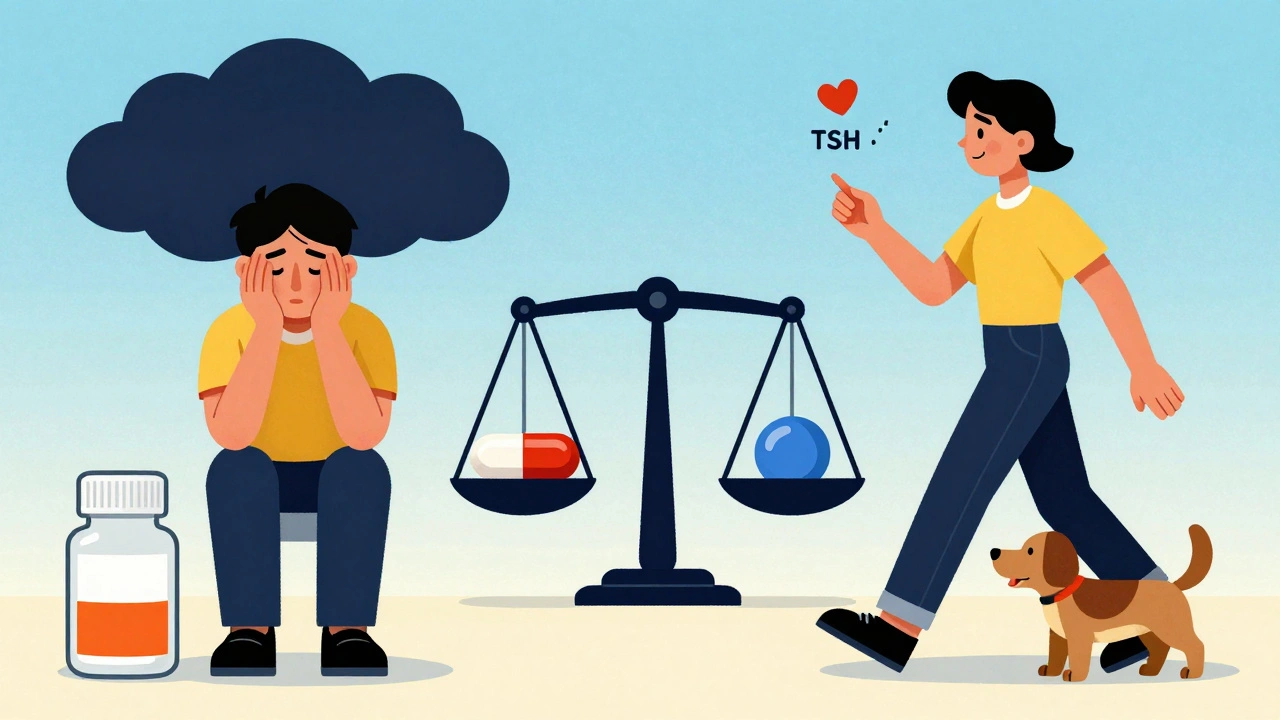
A 68-year-old from Calgary switched from brand-name Lipitor to generic atorvastatin and saved $370 a month. His cholesterol stayed under control. No side effects.A 42-year-old with depression switched from brand-name Zoloft to sertraline. At first, she felt more anxious. After two weeks, it faded. She’s now saving $200 a month and feels just as stable.
But a 55-year-old with hypothyroidism switched from Synthroid to a new generic and developed severe fatigue and weight gain. Her TSH jumped from 2.1 to 7.8. After switching back, it dropped to 2.4 in four weeks. She now only takes the same generic brand-no exceptions.
These aren’t outliers. They’re common experiences.
What You Can Do Now
- Check your next prescription. Is it generic? If not, ask if there’s a lower-cost option. - If you’re on a narrow therapeutic index drug (thyroid, blood thinner, seizure med), ask your doctor if you should stay on one manufacturer. - Keep a symptom journal for 30 days after any switch. - Talk to your pharmacist about inactive ingredients. If you’re allergic to dyes or lactose, they can help you find a version without them. - Don’t stop your meds because you’re worried. Talk first.Generic maintenance medications aren’t second-rate. They’re a lifeline. For many, they’re the only reason they can keep taking their medicine. But your body knows when something changes. Listen to it. Track it. Speak up. And know this: you’re not alone. Millions are making the same switch-some with ease, some with caution. You have the right to be safe, informed, and in control.
Are generic maintenance medications as safe as brand-name ones?
Yes, for most people. The FDA requires generics to have the same active ingredient, strength, dosage form, and absorption rate as the brand-name version. They’re tested in clinical studies to prove they work the same way in the body. Over 90% of prescriptions in the U.S. are for generics, and they’ve been used safely for decades.
Can switching to a generic make me feel worse?
It’s possible, but uncommon. Most people feel no difference. However, for drugs with a narrow therapeutic index-like levothyroxine, warfarin, or phenytoin-small changes in how the drug is absorbed can cause symptoms to return or worsen. Also, some people react to inactive ingredients like dyes or fillers in the pill. If you feel different after switching, track your symptoms and talk to your doctor.
Why do some generics cost so much less than others?
The price difference comes from how many companies make the same generic. When a drug’s patent expires, multiple manufacturers can produce it. The more companies making it, the lower the price. For example, atorvastatin is made by over 20 companies, so it costs less than $1. But if only one or two companies make a generic, the price can be higher. Supply chain issues or manufacturing shortages can also cause price spikes.
Should I always stick with the same generic manufacturer?
If you’re on a drug with a narrow therapeutic index-like thyroid medication or blood thinners-it’s a good idea. Even though all generics are FDA-approved, small differences in manufacturing can affect how your body absorbs the drug. If you find one that works, ask your pharmacist to fill your prescription with the same brand each time. Some states now require pharmacies to do this unless you or your doctor asks for a change.
Can I ask my doctor to keep me on the brand-name drug?
Yes, but it’s not easy. Most insurance plans require you to try generics first. To get approved for the brand name, your doctor must show that you’ve had problems with two or more generics-like lab changes, side effects, or worsening symptoms. Approval rates are low-under 14%-but it’s possible if you have clear medical reasons.
How long does it take to adjust to a generic medication?
Most people adjust within 2 to 4 weeks. Your body needs time to get used to any new formulation, even if the active ingredient is the same. If you notice changes in how you feel-fatigue, mood shifts, dizziness, or worsening symptoms-track them daily for at least 30 days. If symptoms don’t improve or get worse after 6 weeks, contact your doctor. Don’t stop the medication on your own.
Are there any chronic conditions where generics aren’t recommended?
Generics are recommended for almost all chronic conditions. But for drugs with a narrow therapeutic index-like levothyroxine, warfarin, phenytoin, and some seizure medications-doctors often recommend sticking with one manufacturer. Some patients with multiple sclerosis or severe depression also report more side effects after switching, though research often shows it’s due to disease progression, not the drug. Always discuss your concerns with your provider.
Next Steps: What to Do Today
- Look at your last prescription. Is it generic? If not, ask your pharmacy if a lower-cost option is available. - If you’re on thyroid, blood thinner, or seizure meds, check if you’ve been switched between manufacturers. If so, ask your pharmacist to stick with one. - Start a simple symptom log for the next 30 days. Note energy, mood, sleep, and any physical changes. - Talk to your pharmacist about inactive ingredients. If you have allergies or sensitivities, they can help you find a version without them. - Don’t assume your feelings are “all in your head.” If something feels off, it’s worth investigating.Managing a chronic condition is hard enough. You shouldn’t have to choose between affordability and feeling well. Generics make it possible to do both-for most people, most of the time. But your health is personal. Know your options. Track your response. And never be afraid to speak up.




Frank Nouwens
9 December 2025 - 19:45 PM
Generics are a triumph of modern pharmacoeconomics. The FDA’s bioequivalence standards are among the most rigorously enforced in the world, and the data supporting their efficacy is overwhelming. For the vast majority of patients, cost savings do not equate to compromised outcomes. In fact, improved adherence due to affordability often leads to better long-term health metrics.
Nikki Smellie
11 December 2025 - 16:41 PM
Have you ever wondered who really owns the generic manufacturers? 🤔 Big Pharma owns them too-same labs, same executives, same profit margins. They just slap a new label on it and call it ‘generic.’ The FDA? A revolving door. I’ve seen my TSH jump 3 points after switching. Coincidence? I think not. 🧪📉
Michaux Hyatt
13 December 2025 - 14:15 PM
Hey everyone-just wanted to say if you’re nervous about switching, you’re not alone. I switched from brand-name levothyroxine to generic and was terrified. But I tracked my energy, sleep, and mood daily for a month. Turned out? I felt better. Saved $300/month. The key is consistency-if you find one brand that works, stick with it. And talk to your pharmacist about fillers. Some have lactose, dyes, or gluten-tiny things, but they matter.
Jack Appleby
14 December 2025 - 20:14 PM
One must interrogate the very epistemology of bioequivalence. The 80–125% absorption window is not a scientific consensus-it is a regulatory compromise, a statistical sleight-of-hand masquerading as precision. To assert that a drug with a 25% variance in bioavailability is ‘therapeutically equivalent’ is not merely inaccurate-it is intellectually dishonest. The anecdotal evidence from thyroid patients alone-fatigue, cognitive fog, weight gain-is not noise. It is a chorus of physiological dissent.
Regan Mears
16 December 2025 - 15:55 PM
I’ve been on warfarin for 12 years. Switched generics twice-both times, my INR went haywire. One was a 0.8 spike, another a 1.5 drop. I almost had a clot. Now? My doctor wrote a letter, my insurance approved it, and I get the same generic every time. It’s not about being ‘difficult.’ It’s about survival. If you’re on a narrow-therapeutic-index drug, don’t let anyone tell you it’s ‘all in your head.’ You’re not being dramatic-you’re being smart.
David Palmer
17 December 2025 - 03:14 AM
So you’re telling me I can’t even get my cheap pills without some corporate middleman changing the color of the pill? I swear, next they’ll make me pay extra to pick the flavor of my sugar coating. 😒
Doris Lee
17 December 2025 - 16:38 PM
You got this. Seriously. If you feel off after switching, write it down. Track it. Don’t second-guess yourself. A lot of us have been there. You’re not weak for noticing changes-you’re awake. And that’s powerful. 💪
Ben Greening
19 December 2025 - 10:58 AM
It’s worth noting that the 1-3% of patients who experience instability on generics often have comorbidities or polypharmacy. The issue isn’t always the generic-it’s the interaction with other meds, or underlying disease progression. Context matters. A blanket dismissal of generics is as flawed as a blanket endorsement.
Michelle Edwards
19 December 2025 - 20:05 PM
My mom switched to generic levothyroxine and felt like a zombie for six weeks. We were ready to give up. Then we called her pharmacist-they found the brand she’d been on before. Switched back. Within two weeks, she was cooking again, laughing, walking the dog. She’s been on that same generic ever since. It’s not about brand vs. generic-it’s about consistency. And listening to your body. You’re not crazy. You’re careful. And that’s a good thing.