Antiviral Medication Interaction Checker
This tool helps you identify potential interactions between your antiviral medications and other drugs, supplements, or herbs. Based on information from the article and clinical studies, it shows risks related to CYP3A4 and P-glycoprotein pathways.
Interaction Results
When you’re taking antiviral medications for HIV or hepatitis C, what you might not realize is that your other pills - even common ones like statins, blood thinners, or anxiety meds - could be silently changing how your treatment works. This isn’t just a theoretical concern. It’s a daily reality in clinics from Calgary to Copenhagen, where one overlooked interaction can mean the difference between viral suppression and a hospital stay. The key players behind these hidden conflicts? Two biological gatekeepers: CYP3A4 and P-glycoprotein.
What Are CYP3A4 and P-glycoprotein?
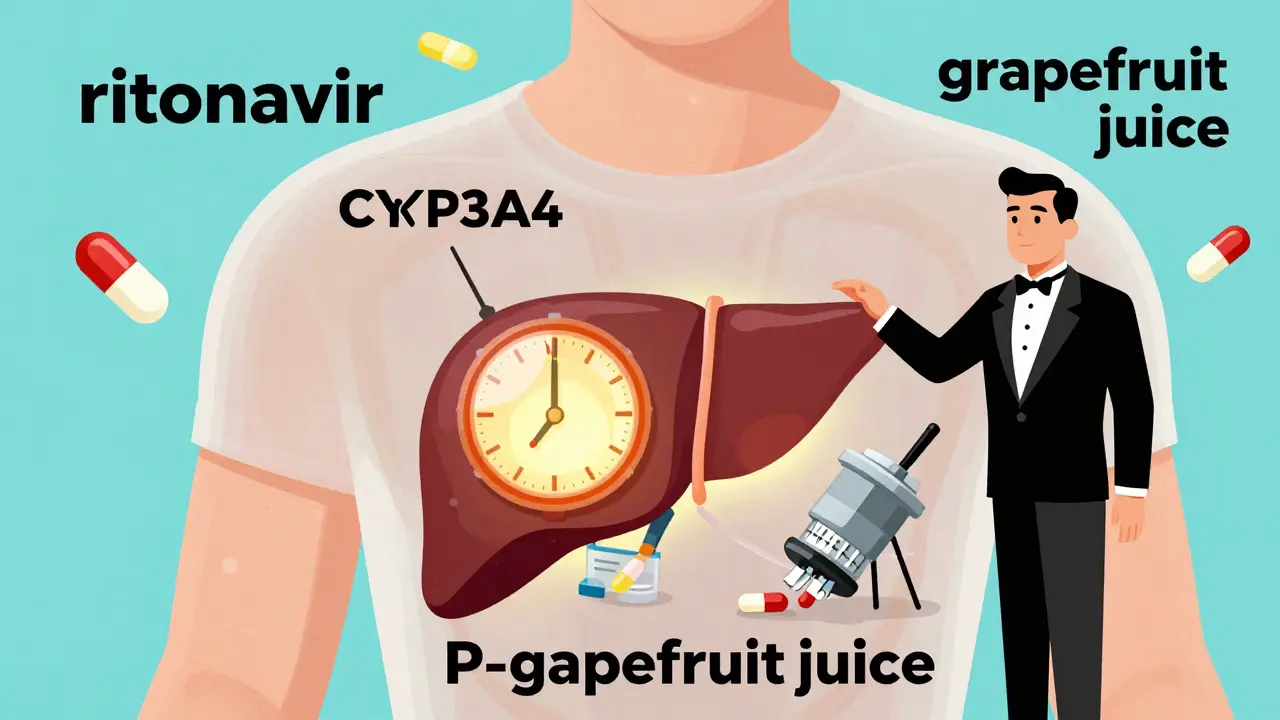
CYP3A4 is the most common enzyme in your liver and gut that breaks down drugs. Think of it like a molecular shredder - it processes about half of all prescription medications you take. Then there’s P-glycoprotein (or P-gp), a transporter protein that acts like a bouncer at the door of your cells. It pushes certain drugs out before they can be absorbed, especially in the gut and brain. Together, these two systems control how much of a drug actually gets into your bloodstream and stays there.
For antivirals like ritonavir, darunavir, or glecaprevir, this is critical. If CYP3A4 is slowed down, the antiviral builds up to toxic levels. If P-gp is blocked, too much drug floods into your system. But if they’re sped up? The drug gets cleared too fast, and the virus slips through.
Why Ritonavir Changed Everything
Ritonavir was first approved in 1996 as an HIV drug. But doctors quickly noticed something odd: when they gave it in low doses - just 100 mg a day - other HIV medications worked better. Why? Because ritonavir doesn’t just fight HIV. It also slams the brakes on CYP3A4 and blocks P-gp. It’s not a side effect - it’s a feature.
That’s how “boosting” was born. Today, ritonavir (or its cousin cobicistat) is used not as a primary treatment, but as a pharmacokinetic booster. It’s like putting a dam in front of a river so water builds up behind it. The result? Higher, longer-lasting levels of drugs like lopinavir, darunavir, or atazanavir. But here’s the catch: ritonavir doesn’t just inhibit CYP3A4. It also induces another enzyme, CYP1A2. This means it can both raise and lower drug levels depending on the medication. A 2017 meta-analysis found it increased alprazolam (a common anxiety drug) levels by 305% - while cutting duloxetine (an antidepressant) levels by 29%. That’s not a mistake. That’s pharmacology.
How These Interactions Kill - And Save Lives
The stakes aren’t theoretical. In 2021, a study of nearly 5,000 patients across Europe found that 17.3% of serious drug reactions in people with HIV and hepatitis C were due to uncaught CYP3A4 or P-gp interactions. One case: a 68-year-old man on apixaban (a blood thinner) who started darunavir/cobicistat. His anti-Xa levels - a measure of blood-thinning effect - shot up to 384 ng/mL. The safe range? 50-250 ng/mL. He nearly bled to death.
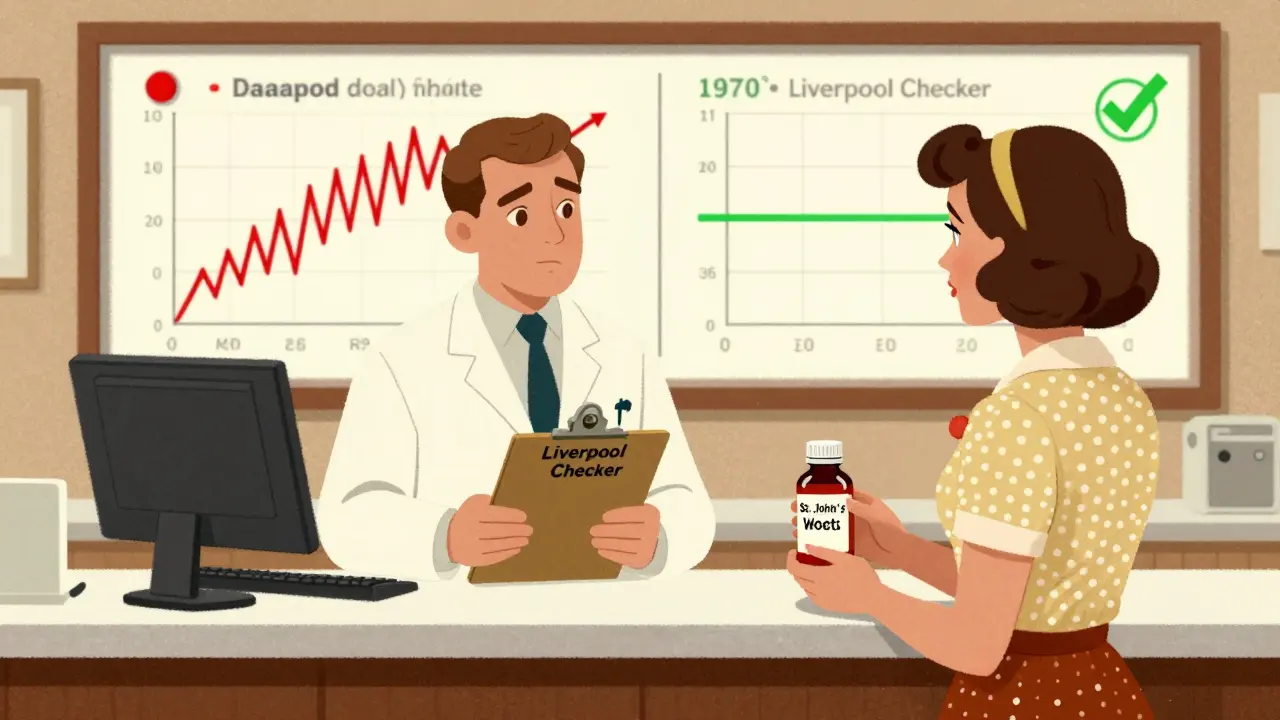
On the flip side, a 2022 study of 347 HIV patients showed that using the free University of Liverpool HIV Drug Interactions Checker reduced interaction-related problems from 18.7% to just 5.2% in one year. That’s not luck. That’s systematic screening.
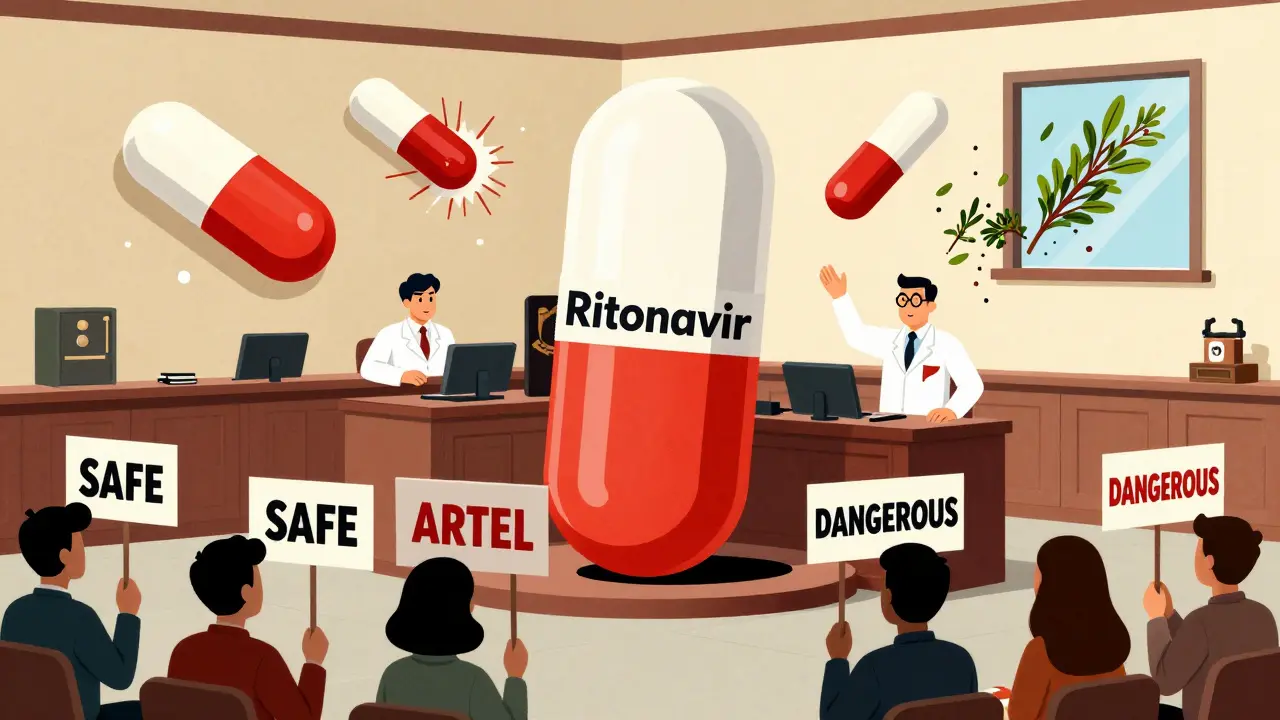
Even herbal supplements matter. St. John’s wort - a common mood booster - can drop ritonavir levels by 57%. Grapefruit juice? It can raise them by 23%. These aren’t myths. They’re measurable, documented, and deadly if ignored.
Comparing Antiviral Regimens
Not all antiviral combos are created equal when it comes to interactions. Here’s how they stack up:
| Regimen | CYP3A4 Inhibition | P-gp Substrate | Key Risk Medications | Management Difficulty |
|---|---|---|---|---|
| Ritonavir-boosted (e.g., Kaletra) | Very High (AUC ↑ 11x) | Yes | Simvastatin, warfarin, midazolam | High - requires 27% more adjustments |
| Cobicistat-boosted (e.g., Biktarvy) | High (AUC ↑ 5x) | Yes | Atorvastatin, metformin, creatinine elevations | Moderate - no CYP1A2 induction |
| Glecaprevir/Pibrentasvir | Mild | Yes | Cyclosporine (OATP1B1 risk) | Low - only 17% need dose changes |
| Sofosbuvir-based | Negligible | Yes | Amiodarone, digoxin | Moderate - P-gp dominates |
For example, the combo of paritaprevir/ritonavir/ombitasvir/dasabuvir can spike simvastatin levels by over 1,700%. That’s not a typo. That’s a statin overdose waiting to happen. Meanwhile, newer regimens like glecaprevir/pibrentasvir have far fewer issues - but still can’t be mixed with cyclosporine because of a different transporter, OATP1B1.
What Clinicians Are Doing About It
Leading HIV and liver disease experts now treat drug interactions like a mandatory checklist - not an afterthought. The European Association for the Study of the Liver (EASL) 2023 guidelines classify interactions into four risk levels. Level 4? Contraindicated. That means no exceptions. For instance, combining grazoprevir (a hepatitis C drug) with cyclosporine can increase drug levels 17-fold. That’s not risky - it’s lethal.
Dr. David Burger from Radboud University says, “Ritonavir’s dual effect on CYP1A2 and CYP3A4 explains why some drugs seem unaffected - they’re being pulled in opposite directions.” That’s why duloxetine, despite being metabolized by two enzymes, often works fine with ritonavir. The body cancels out the conflict.
But not everyone has access to expert tools. In the U.S., only 68% of clinics use formal interaction screening. In Europe? 92%. And in the real world? Patients report being told they can’t take anything for anxiety, depression, or even heartburn because their antiviral regimen is too “fragile.” One Reddit user wrote: “My psychiatrist won’t prescribe me anything for anxiety because of my darunavir regimen - it’s like choosing between mental health and viral suppression.”
How to Protect Yourself
If you’re on an antiviral regimen, here’s what you need to do:
- Make a full list - every pill, supplement, herb, and OTC drug you take. Include sleep aids, painkillers, and even CBD oil.
- Use the Liverpool HIV Drug Interactions Checker - it’s free, updated daily, and trusted by clinics worldwide. Download the app or use the website.
- Ask your pharmacist - not just once, but every time you get a new prescription. Pharmacists are trained for this. Don’t assume they know your regimen.
- Watch for timing - some interactions peak weeks after starting. Delay starting new drugs like blood thinners for at least 30 days after beginning antiviral therapy.
- Never stop or change doses without consulting your provider. Even small changes can throw off the balance.
And if you’re prescribed a new drug? Ask: “Is this safe with my antiviral?” If they hesitate, walk out. This isn’t paranoia. It’s science.
The Future: Personalized, Not One-Size-Fits-All
Researchers are now looking beyond CYP3A4 and P-gp. Genetic testing for CYP3A5*3 (common in 85% of Caucasians) can predict how someone will handle drugs like tacrolimus. New antivirals like lenacapavir are designed to avoid these pathways entirely. But here’s the hard truth: as more people live longer with HIV - and develop diabetes, heart disease, and kidney problems - the number of drugs they take keeps rising. The average person with HIV now has 4.7 other health conditions.
That’s why experts say the next frontier isn’t just treating the virus. It’s managing the pile of pills. And that pile? It’s full of hidden traps.
Can I take ibuprofen or acetaminophen with my antiviral?
Yes, in most cases. Ibuprofen and acetaminophen are not significantly metabolized by CYP3A4 or transported by P-gp. They’re generally safe with antivirals like darunavir, cobicistat, or sofosbuvir. But if you’re on a ritonavir-boosted regimen and have liver disease, avoid high doses of acetaminophen (over 2,000 mg/day) due to added liver stress. Always check with your pharmacist before long-term use.
Is it safe to drink grapefruit juice while on antivirals?
No. Grapefruit juice inhibits CYP3A4 in the gut, which can sharply increase levels of boosted antivirals like ritonavir or cobicistat. Studies show it can raise drug concentrations by up to 23%. Even one glass a day can push levels into the toxic range. Avoid it completely. Other citrus fruits like Seville oranges and pomelos have the same effect.
Why can’t I take statins with my HIV medication?
Many statins - especially simvastatin and lovastatin - are broken down by CYP3A4. When combined with ritonavir or cobicistat, their levels can spike by 1,000% or more. This raises the risk of rhabdomyolysis - a dangerous muscle breakdown that can damage kidneys. Safer alternatives include pravastatin, rosuvastatin, or fluvastatin, which use different metabolic pathways. Always ask for a statin switch if you’re on a boosted regimen.
Do herbal supplements like St. John’s wort affect antivirals?
Yes - and dangerously. St. John’s wort induces CYP3A4 and P-gp, causing antiviral levels to crash. One study showed it dropped ritonavir concentrations by 57%. This can lead to treatment failure and drug resistance. Never take it with any HIV or hepatitis C medication. Even “natural” doesn’t mean safe.
What should I do if my doctor prescribes a new drug I’m not sure about?
Ask them to check the University of Liverpool HIV Drug Interactions Checker before prescribing. If they don’t know how, request a pharmacy consult. Many clinics now have pharmacists embedded in HIV care teams. If your provider dismisses your concern, get a second opinion. This isn’t about being difficult - it’s about survival. A single interaction can be fatal.
Final Takeaway
Antiviral medications save lives. But they don’t work in isolation. CYP3A4 and P-glycoprotein are silent gatekeepers - and if you ignore them, your treatment can unravel. The good news? We have tools. We have guidelines. We have apps that tell you exactly what’s safe. The hard part? Making sure you use them. Don’t wait for a crisis. Start today. List every pill. Check every interaction. Talk to your pharmacist. Your life might depend on it.


Gaurav Kumar
20 March 2026 - 09:12 AM
This is why India's healthcare system is superior - we don't need fancy apps to know that grapefruit juice + antivirals = disaster. My uncle took darunavir and drank juice daily. He's fine. Because we have *common sense*. 🤷♂️
David Robinson
21 March 2026 - 21:03 PM
So let me get this straight. You're telling me I can't take ibuprofen for my headache because some enzyme is doing a tango in my liver? I'm 32, healthy, and this is the level of overmedicalization we've reached? My grandma took aspirin for 60 years and never had a problem. This feels like fearmongering dressed as science.
Jeremy Van Veelen
23 March 2026 - 10:58 AM
CYP3A4 and P-gp aren't just proteins. They're the gatekeepers of modern pharmacology. They're the silent orchestra conductors of our biochemistry. When ritonavir slams the brakes on them? It's not a drug interaction. It's a symphony of molecular rebellion. And we're just lucky enough to be alive in the age where we can *see* it. The body is not a machine. It's a cathedral. And we're dancing in it.
Sanjana Rajan
24 March 2026 - 13:49 PM
Honestly? This whole post reads like a pharmaceutical ad. St. John’s wort is dangerous? Really? It’s been used for centuries. Meanwhile, your 'safe' alternatives like cobicistat are patented by Big Pharma and cost $1200/month. Don’t you think there’s a profit motive here? And why is everyone so scared of herbal supplements but not of 50mg daily doses of statins that fry your liver? Hypocrisy.
Kyle Young
25 March 2026 - 10:39 AM
I find it fascinating how we anthropomorphize biological systems. We call CYP3A4 a 'molecular shredder' and P-gp a 'bouncer.' These are not characters in a comic book. They're proteins with kinetic properties. But perhaps this metaphorical framing is necessary for laypeople to grasp the stakes. Still, I wonder: does this narrative risk reducing complex biochemistry to sensationalized storytelling? Or is it the only way to make pharmacokinetics feel urgent?
lawanna major
27 March 2026 - 02:14 AM
I’m so glad this post exists. My sister is on a boosted regimen and was prescribed melatonin for sleep. Her doctor said it was fine. She took it. Two weeks later, she was dizzy, nauseous, and her viral load spiked. We found out melatonin is metabolized by CYP3A4. She almost lost everything. Now she uses the Liverpool checker religiously. I wish every patient had access to this info. It’s not paranoia. It’s protection.
Linda Olsson
27 March 2026 - 23:42 PM
This whole 'Liverpool checker' thing is a trap. I’ve seen it happen: patients get told their meds are 'safe' by an algorithm, then end up in the ER. The algorithm doesn't know if you're a 78-year-old with kidney disease. It doesn't know if you're on 12 other drugs. It's a digital placebo. And the fact that clinics are proud of using it? That's the real scandal. We're outsourcing critical thinking to a website.
Ayan Khan
29 March 2026 - 00:26 AM
In Nigeria, we don’t have access to these apps or even basic lab monitoring. Many of us take antivirals with no interaction screening at all. But we’ve learned. We ask elders. We listen to pharmacists. We avoid grapefruit. We don’t take random herbs. We don’t need a website to know that if something makes you feel strange, you stop. Knowledge isn’t always in databases. Sometimes it’s in community. And we’ve survived.
Emily Hager
29 March 2026 - 16:10 PM
I find it deeply disturbing that the medical establishment has turned patients into data points. 'Check the app.' 'Ask your pharmacist.' 'Follow the guidelines.' But what about autonomy? What about the right to choose risk? If I want to take St. John’s wort for my depression and risk my antiviral efficacy? Isn’t that my body? My life? This isn’t medicine. It’s surveillance disguised as care.
Lauren Volpi
31 March 2026 - 11:21 AM
I read this entire thing and all I got was 'don't take anything.' What about quality of life? What about joy? I'm on an antiviral regimen and I can't have a glass of wine? I can't take my CBD gummies? I can't enjoy a weekend? They act like I'm a nuclear reactor. I'm not a lab rat. I'm a person. And I'm tired of being treated like one.
Melissa Stansbury
31 March 2026 - 18:19 PM
I’ve been on a boosted regimen for 8 years. I take 14 medications. I use the Liverpool checker. I talk to my pharmacist every time. And yes, it’s exhausting. But I’m alive. My viral load is undetectable. My liver is fine. This isn’t fear. It’s discipline. And discipline saves lives. If you’re too tired to do the work, you’re not ready for this journey. This isn’t a hobby. It’s survival.
cara s
1 April 2026 - 20:08 PM
I'm so tired of people saying 'just use the app.' Have you SEEN the interface? It's like a 1998 Geocities page. The fonts are ugly. The colors hurt my eyes. And don't get me started on the 'risk level' classifications. I'm a 52-year-old woman with fibromyalgia. I need clarity, not jargon. This isn't user-friendly. It's a barrier. And if we're serious about patient safety, we need to fix the tools, not just yell at people for not using them.
David Robinson
2 April 2026 - 23:59 PM
I'm not convinced any of this matters. I've been on darunavir for 5 years. Took Advil every day. Ate grapefruit. Never had an issue. Maybe the science is real. But maybe the real danger is overthinking it. My body's been fine. Why change what ain't broke?