UACR: What It Is, Why It Matters for Kidney Health
When your kidneys start to fail, they don’t scream—they whisper. That whisper is UACR, the urine albumin-to-creatinine ratio, a simple test that detects tiny leaks of protein in urine before symptoms show up. Also known as microalbuminuria test, it’s one of the most underused tools in preventing long-term kidney damage. Most people don’t know their UACR number, even if they have diabetes or high blood pressure—two of the biggest killers of kidneys. But here’s the truth: if your UACR is high, your kidneys are already hurt. And if you don’t act, you’re one step closer to dialysis.
UACR doesn’t just track kidney health—it’s a warning sign for your heart, too. Studies show that people with elevated UACR have a much higher risk of heart attacks and strokes, even if their blood pressure looks fine. That’s because the same damage that lets protein leak out of your kidneys also harms blood vessels everywhere. It’s not just a kidney test. It’s a full-body alarm. Albuminuria, the medical term for protein in urine, is the red flag UACR catches early—before you feel tired, swollen, or out of breath. And it’s not just for diabetics. Anyone with high blood pressure, obesity, or a family history of kidney disease should know their UACR. Yet most doctors don’t order it unless symptoms are obvious—and by then, it’s often too late.
What makes UACR so powerful is how simple it is. No needles. No fasting. Just a single urine sample. But the numbers matter. A UACR under 30 mg/g is normal. Between 30 and 300? That’s early kidney damage. Above 300? Your kidneys are in serious trouble. And the higher it goes, the faster things fall apart. That’s why tracking it yearly—even if you feel fine—is one of the smartest things you can do. You can’t fix what you don’t measure.
What you’ll find below are real stories and science-backed guides about how UACR connects to medications, lifestyle, and long-term health. From how metformin affects kidney markers to why certain blood pressure drugs lower UACR more than others, these posts cut through the noise. You’ll learn how to read your results, what to ask your doctor, and how to stop kidney damage before it steals your future. This isn’t theory. It’s survival.
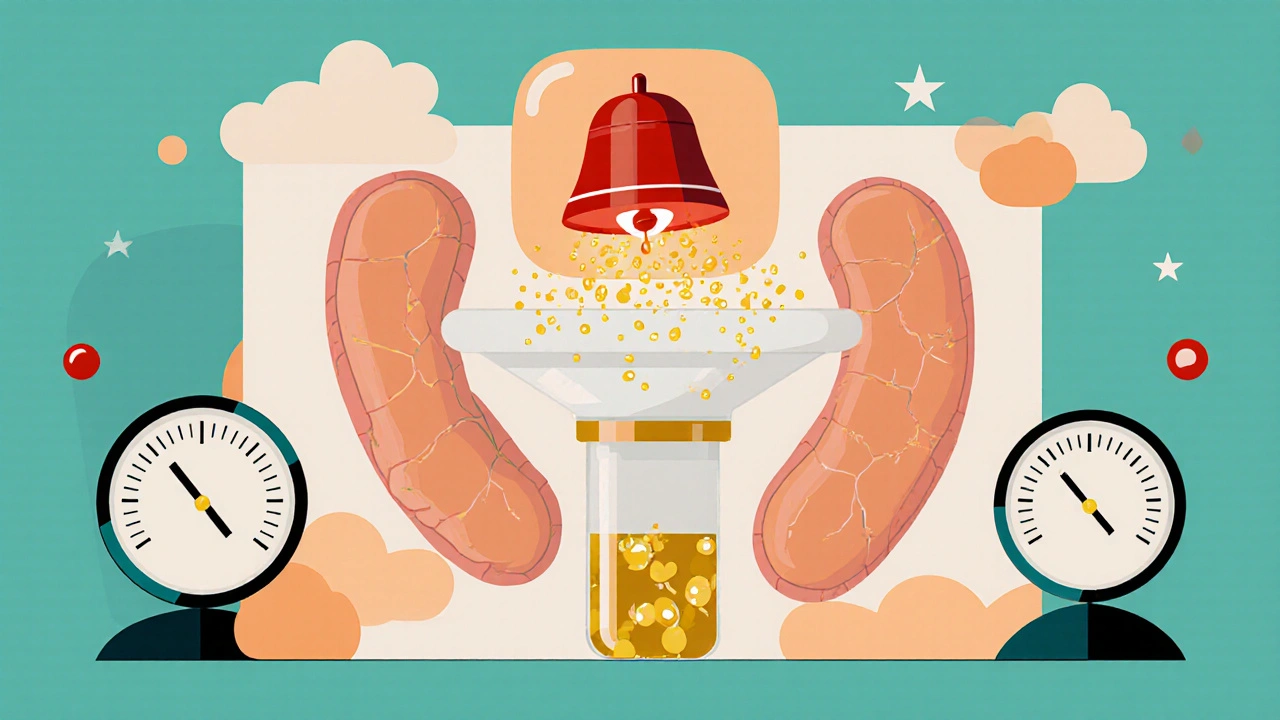
Diabetic Kidney Disease: How Early Albuminuria Signals Risk and Why Tight Control Saves Kidneys
Albuminuria is the earliest sign of diabetic kidney disease. Tight blood sugar and blood pressure control, plus modern medications, can stop or reverse damage-if caught in time.
Read More