Tight Glycemic Control: What It Means and How It Affects Your Medications
When doctors talk about tight glycemic control, the practice of keeping blood sugar levels as close to normal as possible to prevent long-term damage. It's not just about avoiding high numbers—it’s about minimizing swings, reducing organ stress, and lowering the chance of nerve, eye, and kidney problems. But here’s the catch: the tighter you push blood sugar, the more you rely on medications like insulin, metformin, or GLP-1 drugs—and the more risks you invite.
For example, metformin, a first-line diabetes drug that lowers liver glucose production can cause vitamin B12 deficiency over time, which mimics diabetic nerve damage. If you’re aiming for tight control, you might not realize your fatigue or brain fog is from a B12 drop, not poor sugar management. And insulin therapy, the most powerful tool for lowering blood sugar? It’s a double-edged sword. Too much, and you risk dangerous lows that can lead to seizures or unconsciousness. Too little, and you’re not getting the benefits of tight control at all.
It’s not just about pills. Supplements like ashwagandha, an herb often taken for stress or energy can boost thyroid hormones, which in turn can raise blood sugar—undermining your control. Even something as simple as herbal teas or magnesium supplements can interfere with how your body responds to insulin. And if you’re on blood thinners or heart meds, mixing them with diabetes drugs can lead to hidden dangers like hyperkalemia or unexpected bleeding.
Why Tight Control Isn’t One-Size-Fits-All
Not everyone needs to chase a perfect HbA1c of 6.5%. For older adults, people with heart disease, or those prone to lows, the risks often outweigh the benefits. Studies show that pushing too hard can increase hospital visits from hypoglycemia without adding years to your life. The goal isn’t perfection—it’s safety. That’s why an annual medication review with a pharmacist matters. They can spot when your insulin dose is too high, when a supplement is sabotaging your numbers, or when a drug interaction is making tight control impossible.
What you’ll find below are real, practical posts that cut through the noise. You’ll learn how metformin quietly drains B12, why ashwagandha can wreck your sugar balance, how GLP-1 drugs cause nausea that makes sticking to a plan harder, and which supplements you should avoid if you’re managing diabetes with precision. These aren’t theory pieces—they’re based on what actually happens in people’s lives when they try to keep blood sugar tight.
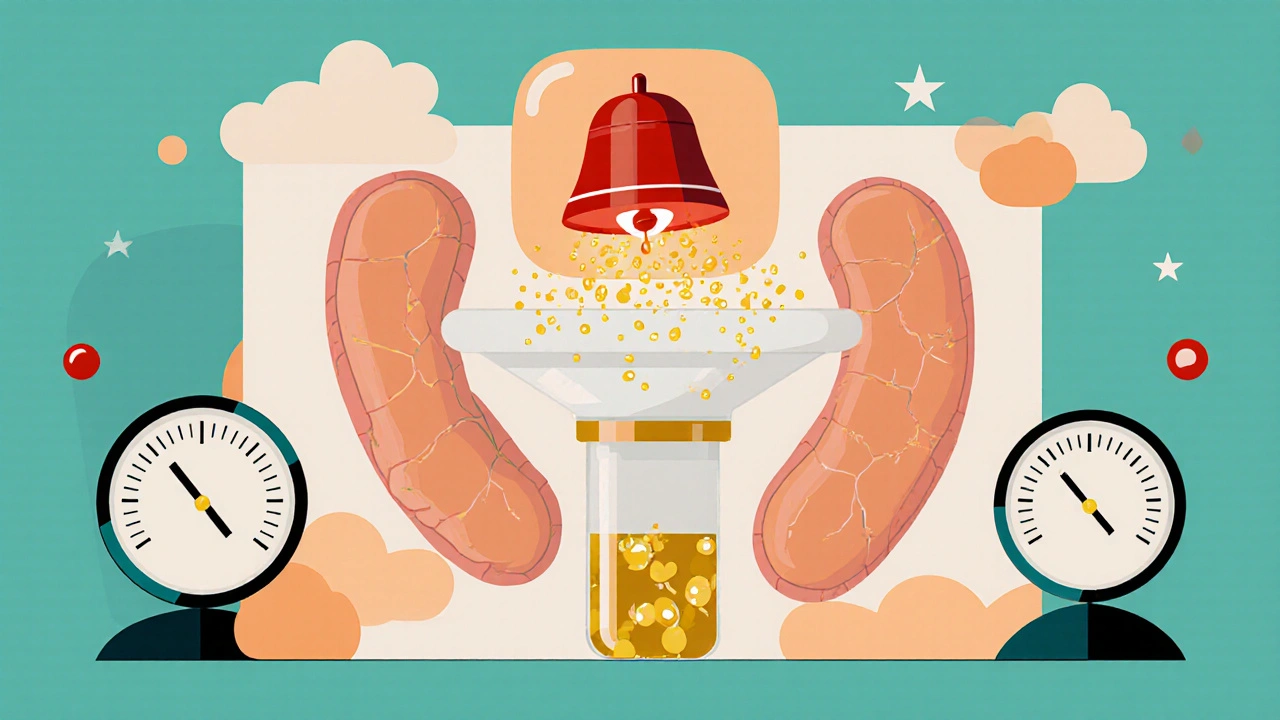
Diabetic Kidney Disease: How Early Albuminuria Signals Risk and Why Tight Control Saves Kidneys
Albuminuria is the earliest sign of diabetic kidney disease. Tight blood sugar and blood pressure control, plus modern medications, can stop or reverse damage-if caught in time.
Read More