Supplement Safety: What You Need to Know Before Taking Anything with Your Medications
When you take a supplement, a product taken to add nutrients or support health, often sold without a prescription. Also known as dietary supplement, it can seem harmless—especially if it’s labeled "natural." But supplement safety isn’t about how clean the label looks. It’s about what happens when it meets your prescription drugs. Many people don’t realize that herbal remedies, plant-based products used for health benefits, like ashwagandha or St. John’s wort can act like drugs in your body. They don’t just sit there. They change how your liver processes medications, speed up or slow down absorption, and even mimic or block the effects of your prescriptions.
Take supplement interactions, harmful or unexpected effects that happen when supplements mix with prescription or over-the-counter drugs. Ashwagandha can push your thyroid meds into dangerous territory. St. John’s wort can make your antidepressant useless—or worse, cause serotonin syndrome. Ginkgo biloba thins your blood like aspirin, and if you’re on warfarin, that’s a hospital visit waiting to happen. These aren’t rare cases. They’re common. A 2022 study in the Journal of the American Pharmacists Association found that nearly 1 in 3 adults taking prescription drugs also used supplements without telling their doctor. And most of them had no idea they were risking their health.
Supplement safety isn’t about fear. It’s about awareness. The FDA doesn’t test supplements for safety or effectiveness before they hit the shelf. Unlike pills, they don’t have to prove they work or that they won’t hurt you when mixed with other drugs. That means the bottle in your cabinet might say "pure" but still carry hidden risks. You’re not just trusting the brand—you’re trusting a system with no real guardrails.
That’s why knowing what to ask is more important than what to take. Is this supplement going to mess with my blood pressure meds? Will it make my diabetes drug stop working? Could it cause bleeding during surgery? These aren’t questions for Google. They’re questions for your pharmacist—right now, before you swallow that capsule.
The posts below cover real cases: how vitamin B12 drops from metformin, how modafinil alternatives affect sleep chemistry, why mixing ashwagandha with levothyroxine can trigger over-replacement, and how even something as simple as vitamin E can turn a blood thinner into a danger zone. You’ll find what actually works, what’s risky, and what to avoid—not because it’s trendy, but because it’s proven to cause harm.
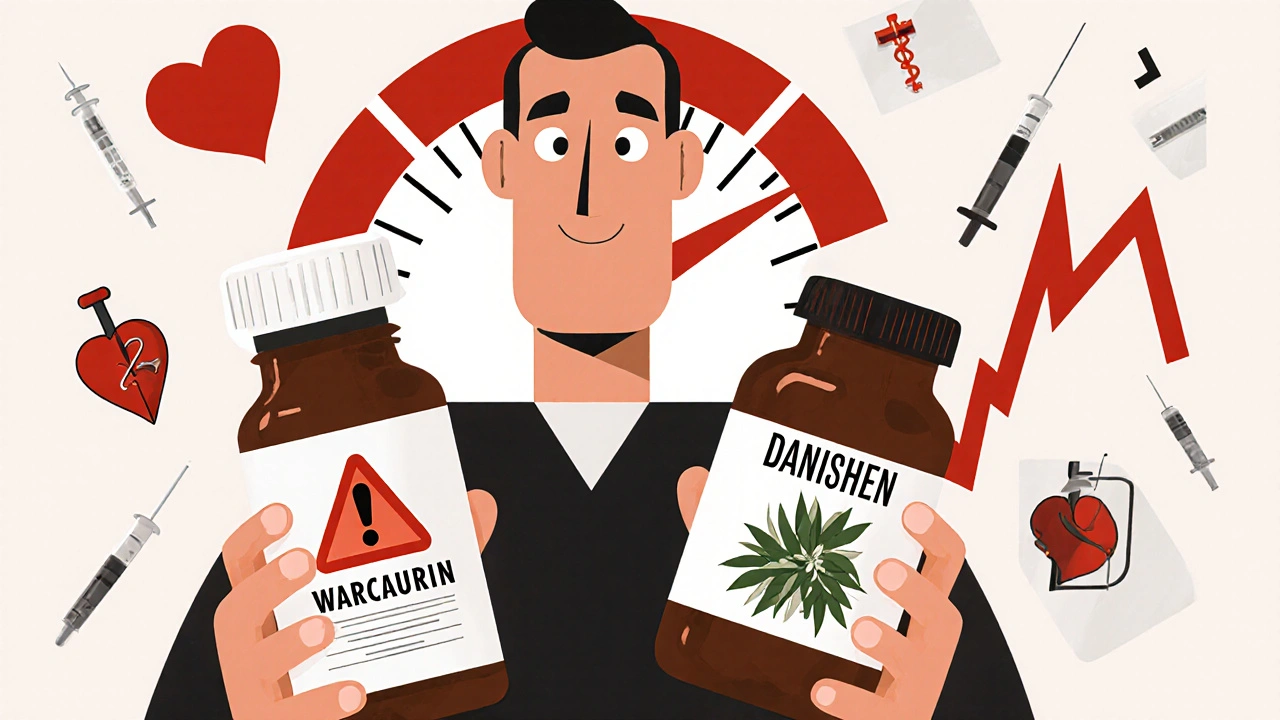
Danshen and Heart Medications: Serious Interaction Risks You Can't Ignore
Danshen, a popular herbal supplement for heart health, can dangerously interact with blood thinners like warfarin and Eliquis, causing life-threatening bleeding. Learn why this herb is not safe-even if it's labeled natural.
Read More