Ptosis: What It Is, Why It Happens, and How Medications Can Affect It
When your ptosis, a condition where the upper eyelid droops down over the eye. Also known as blepharoptosis, it can block part of your vision and make you look tired—even when you’re not. It’s not just a sign of aging. Sometimes, it shows up because of something you’re taking. Medications like Botox, a neurotoxin used for wrinkles and migraines can accidentally weaken the muscle that lifts your eyelid. Even statins, cholesterol-lowering drugs often prescribed for heart health have been linked to rare cases of eyelid drooping, especially in older adults.
Ptosis isn’t always obvious. You might notice yourself tilting your head back to see better, or using your forehead muscles to lift your eyelids. It can happen suddenly after an injection, or creep in slowly over months. The cause matters. If it’s from nerve damage due to diabetes or a stroke, treatment looks different than if it’s from a drug reaction. Some people develop ptosis after long-term use of anticholinergics or even certain antibiotics. It’s not common, but it’s real—and often missed because doctors focus on the main reason you’re taking the medicine, not the side effect.
What you’ll find here isn’t just medical jargon. These are real stories and studies from people who noticed their eyelid drooping after starting a new pill or shot. Some found relief by switching meds. Others needed surgery. A few didn’t realize it was the drug until they stopped taking it. This collection gives you the facts you need to spot the signs, ask the right questions, and decide what to do next—whether it’s talking to your doctor, adjusting your dose, or just keeping an eye on things.
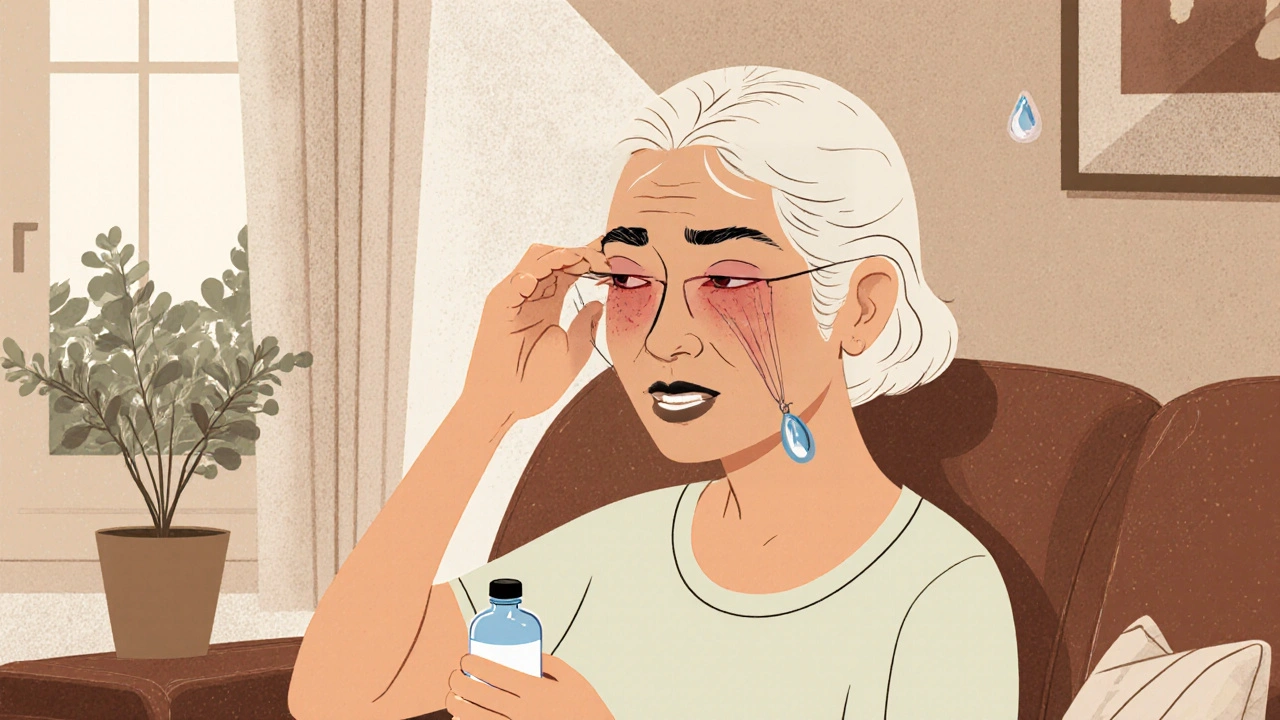
Eyelid Disorders: Understanding Ptosis, Entropion, and When Surgery Is Needed
Ptosis and entropion are common eyelid disorders that can block vision and damage the cornea. Learn the signs, causes, and surgical fixes-plus what you can do before surgery to protect your eyes.
Read More