Pharmaceutical Supply Chain: How Medicines Get from Lab to Your Pharmacy
When you pick up a pill at the pharmacy, it didn’t just appear there. It traveled through a complex pharmaceutical supply chain, the end-to-end system that moves drugs from raw ingredients to patients, involving manufacturing, regulation, distribution, and storage. Also known as the drug distribution network, it’s the invisible backbone of every prescription and over-the-counter medicine you use. This system isn’t just about shipping boxes—it’s about safety, timing, and precision. A single dose of metformin or a bottle of ibuprofen might pass through dozens of hands and facilities before it lands in your cabinet. And if any step fails, the medicine might be delayed, contaminated, or even counterfeit.
The FDA Office of Generic Drugs, the branch responsible for reviewing and approving generic medications in the U.S. plays a central role in keeping this chain trustworthy. They don’t just sign off on labels—they demand proof that a generic drug behaves exactly like the brand-name version, down to how fast it dissolves and how your body absorbs it. This is called bioequivalence, the scientific standard ensuring generics work the same as their brand-name counterparts without being identical in appearance. Without this rule, you couldn’t trust that your $5 generic is just as safe as the $50 brand. The Hatch-Waxman Act gave the FDA the power to enforce this, and today, over 90% of prescriptions in the U.S. are filled with generics because of it.
But bioequivalence is only half the story. The pharmaceutical supply chain, the full network of manufacturers, wholesalers, distributors, and pharmacies also has to handle temperature control, anti-tampering measures, and global logistics. A vaccine shipped from Germany to a clinic in Texas needs different handling than a bottle of vitamin B12 pills made in India and sold online. The FDA’s generic drug approval, the process that validates whether a drug meets safety and performance standards before it hits the market doesn’t end at the factory gate. They audit facilities, inspect warehouses, and track recalls. If a batch of pills is found to contain a toxic impurity, the entire chain must be traced and cleaned up—fast.
What you see on the shelf is the final step of a system built on science, regulation, and logistics. You don’t need to know every detail—but you should know that the system is designed to protect you. The same agency that approves your generic blood pressure pill also monitors how it’s stored, shipped, and sold. And if something goes wrong—like a drug shortage or a counterfeit batch—it’s this chain that gets fixed first.
Below, you’ll find real-world breakdowns of how this system affects your health: why some drugs cost less, how regulators keep them safe, and what happens when things go wrong. These aren’t theory pieces—they’re practical guides written by people who’ve seen the supply chain up close. Whether you’re taking metformin, switching to a generic, or wondering why your prescription suddenly changed, the answers are here.
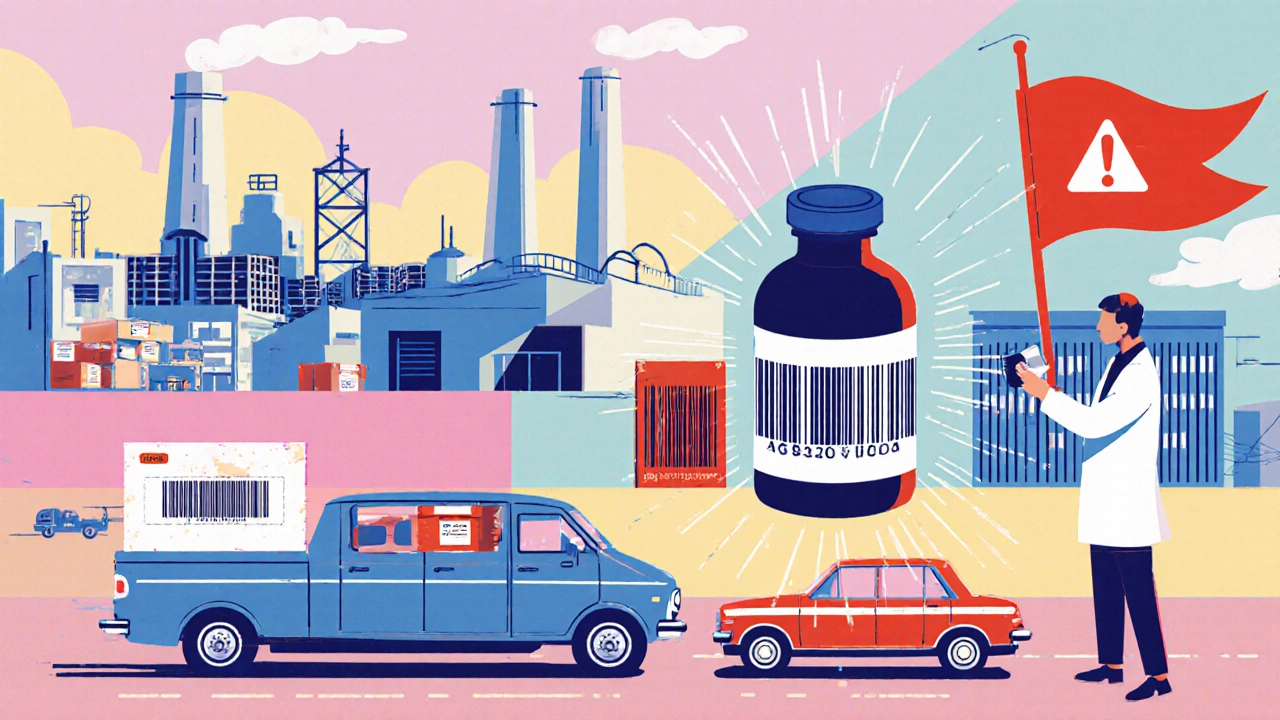
Supply Chain Security: How Legitimate Drugs Are Protected from Counterfeits
Learn how the DSCSA system uses serialization, electronic tracking, and real-time verification to stop counterfeit drugs before they reach patients. A deep look at the technology, costs, and gaps in U.S. pharmaceutical supply chain security.
Read More