Herbal Supplements and Blood Thinners: Risks, Interactions, and What You Need to Know
When you take herbal supplements, natural plant-based products used for health benefits, often without a prescription. Also known as botanicals, they’re sold as teas, capsules, or tinctures and marketed as safe because they’re "natural." But that’s a dangerous myth when mixed with blood thinners, medications that prevent dangerous clots by slowing blood coagulation. Also known as anticoagulants, these include warfarin, apixaban, and rivaroxaban—drugs prescribed after strokes, heart attacks, or for atrial fibrillation. The truth? Some herbs act like invisible drugs inside your body, and they don’t play nice with prescription blood thinners.
Take garlic, a common supplement used for heart health and immune support. It can thin your blood just like aspirin. Add it to warfarin, and your risk of bruising, nosebleeds, or even internal bleeding skyrockets. Same with ginkgo biloba, a popular herb for memory and circulation. Studies show it increases bleeding time, and people on blood thinners who take it have been hospitalized for brain bleeds after minor falls. Even St. John’s wort, an herb used for mild depression, can make warfarin less effective by speeding up how fast your liver breaks it down—leaving you unprotected from clots. These aren’t rare cases. They’re documented, preventable errors.
Here’s the hard part: herbal supplements aren’t tested like drugs. The FDA doesn’t require proof of safety or interaction data before they hit store shelves. A bottle labeled "100% natural" could contain anything—contaminants, inconsistent doses, or hidden drugs. One batch of turmeric might have zero blood-thinning effects. The next might be loaded with coumarin, a natural anticoagulant. And most people don’t tell their doctors they’re taking them. Why? Because they assume it’s harmless. But if you’re on a blood thinner, your supplement isn’t harmless—it’s a wildcard.
What should you do? First, stop guessing. Make a list of every pill, tea, or capsule you take—yes, even the ones you bought online or got from a friend. Second, bring that list to your pharmacist or doctor. Don’t say "I take some herbs." Say exactly what they are and how much. Third, if your provider says it’s safe, ask for proof. Not a blog post. Not a YouTube video. Actual clinical data. There are safer alternatives for many goals—like omega-3s for heart health or vitamin D for immunity—that don’t interfere with anticoagulants. You don’t need to quit supplements entirely. You just need to know which ones are safe with your meds.
Below, you’ll find real, evidence-based posts that break down exactly which herbs are risky, how they interact with specific blood thinners, what symptoms to watch for, and how to talk to your doctor without sounding paranoid. This isn’t theory. It’s what people have learned the hard way—and what you can use to stay safe.
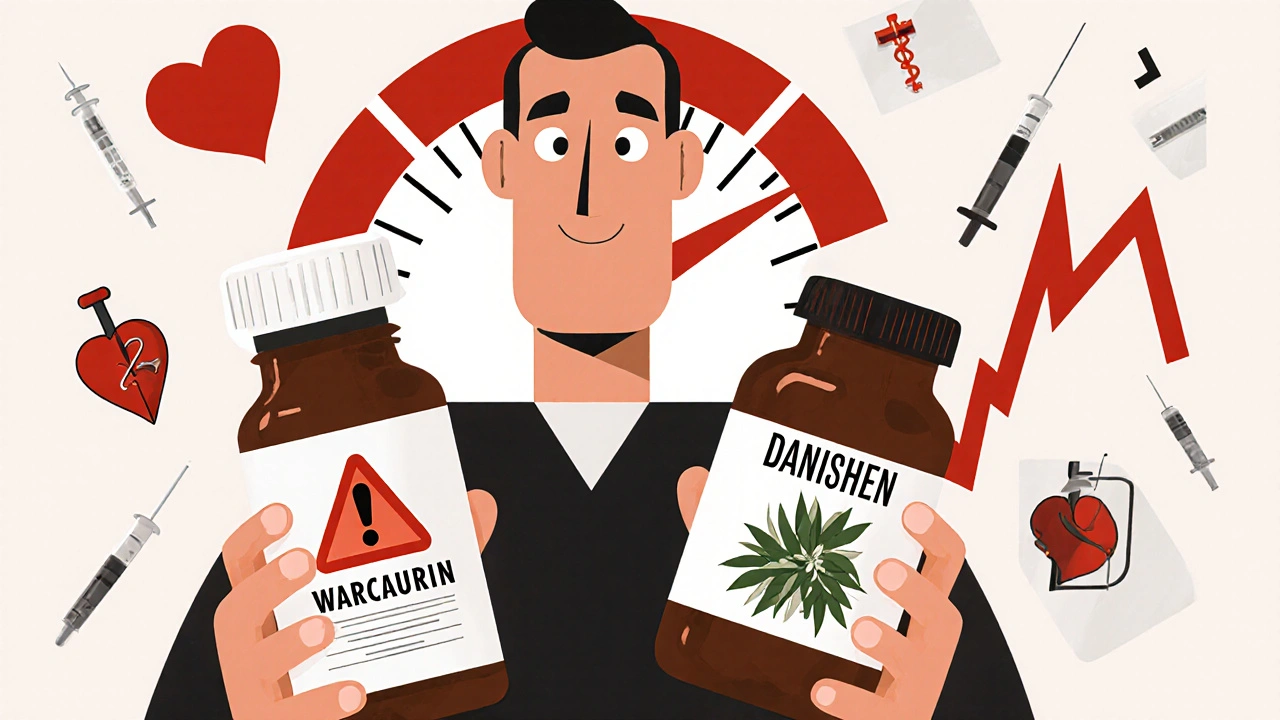
Danshen and Heart Medications: Serious Interaction Risks You Can't Ignore
Danshen, a popular herbal supplement for heart health, can dangerously interact with blood thinners like warfarin and Eliquis, causing life-threatening bleeding. Learn why this herb is not safe-even if it's labeled natural.
Read More