GDUFA Explained: How the FDA Speeds Up Generic Drug Approval
When you pick up a generic pill that costs a fraction of the brand-name version, you’re seeing the result of GDUFA, the Generic Drug User Fee Amendments, a U.S. law that gives the FDA funding and clear timelines to review generic drug applications. Also known as Generic Drug User Fee Act, it’s not just bureaucracy—it’s what keeps life-saving medications affordable and available. Before GDUFA, generic approvals could take years. Now, thanks to user fees paid by drug makers, the FDA has the staff and resources to review applications faster—without lowering safety standards.
GDUFA doesn’t just speed things up; it changes how the system works. It requires drug companies to submit complete, high-quality data upfront, so the FDA doesn’t waste time asking for missing info. This means fewer delays and more consistent quality across generics. The law also ties performance goals to funding—like approving 90% of applications within 10 months—so the FDA is held accountable. This is why you now see dozens of generic versions of popular drugs hitting the market within months of the brand losing patent protection. It’s not magic. It’s a system designed to work.
GDUFA also connects directly to other parts of the drug system you might not think about. For example, the Hatch-Waxman Act, the 1984 law that created the pathway for generic drugs to get approved without repeating full clinical trials. Also known as Drug Price Competition and Patent Term Restoration Act, it’s the foundation GDUFA built on. Without Hatch-Waxman, generics wouldn’t exist. Without GDUFA, they’d take too long to reach you. Together, they’re why you can buy metformin or simvastatin for $4 a month. And GDUFA’s focus on facility inspections ties into drug serialization, the system that tracks every pill from factory to pharmacy to fight counterfeits. Also known as DSCSA, this tracking isn’t just about safety—it’s part of the same goal: making sure the right medicine gets to the right person, on time, every time.
What you’ll find in the posts below isn’t just a list of articles. It’s a real-world look at how GDUFA’s rules shape what’s on your shelf. From how bioequivalence testing proves a generic works just like the brand, to why some drugs still take longer to come out as generics, to how supply chain rules keep them safe—every post ties back to the system GDUFA created. You’re not just reading about drugs. You’re reading about the invisible rules that make them affordable, safe, and ready when you need them.
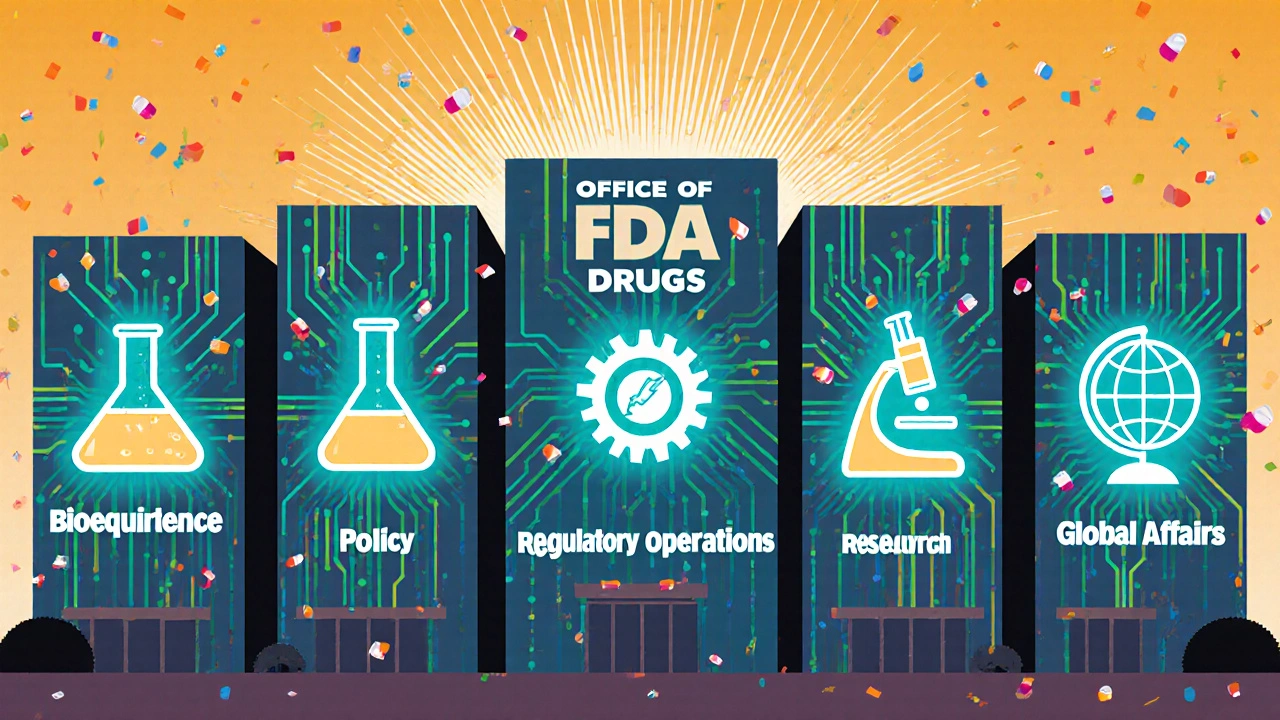
FDA Office of Generic Drugs: Role, Responsibilities, and Structure Explained
The FDA's Office of Generic Drugs ensures safe, affordable generic medications reach patients by reviewing applications, enforcing bioequivalence standards, and managing regulatory policy under GDUFA and the Hatch-Waxman Act.
Read More